


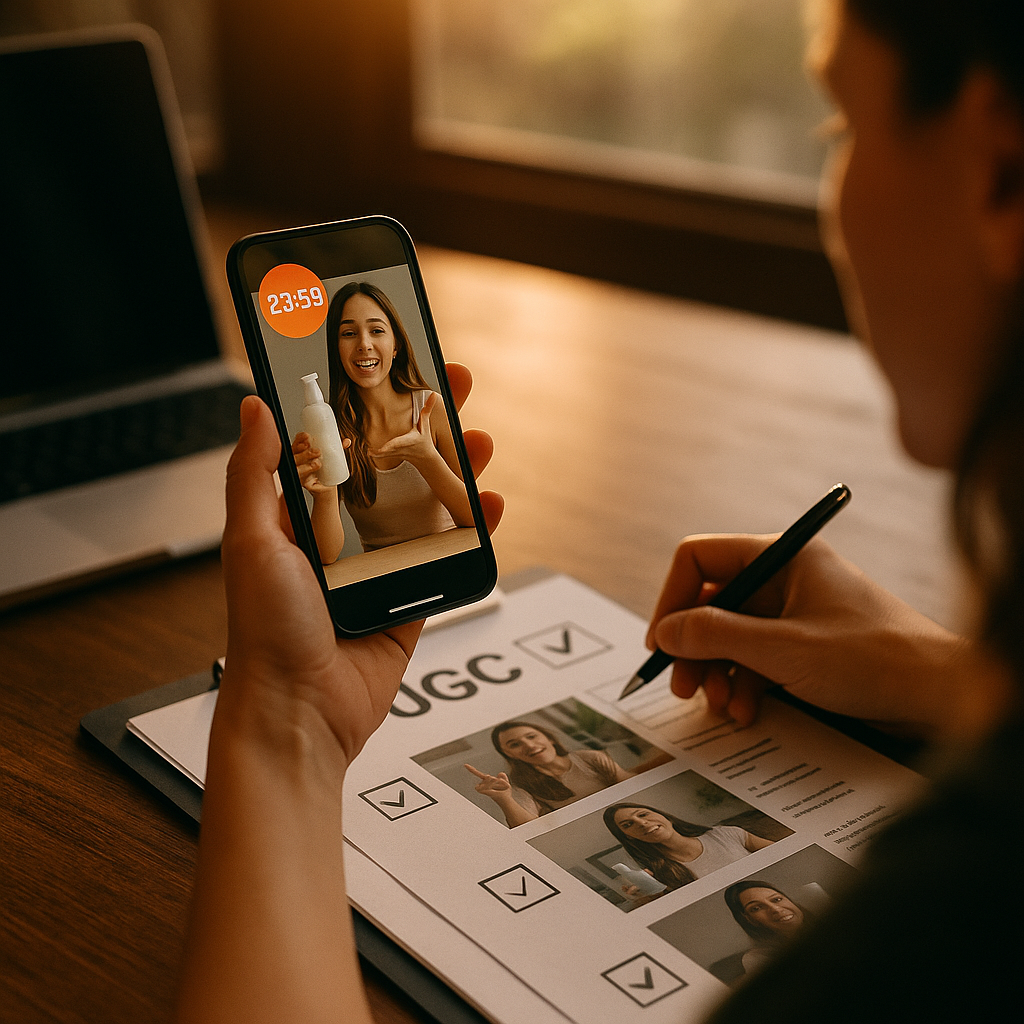
Eighteen months ago, a UGC trend had a four-day shelf life. Enough time to brief a creator, get legal sign-off, shoot, edit, and post before the moment passed. Today that window is roughly 24 hours, sometimes less. If your approval chain still takes 72 hours, you’re not late to the trend. You’re publishing its eulogy. The UGC trend cycle compression happening across TikTok, Instagram Reels, and YouTube Shorts is rewriting what “agile” actually means for brand marketing teams.
What Actually Compressed, and Why
It’s not that creators got faster. It’s that the machinery surfacing trends got faster, and audiences got more ruthless about discarding stale content. Platform recommendation engines now reward novelty within hours of a sound, format, or meme gaining traction, then throttle it once saturation hits. A trend that used to build over four days now spikes, peaks, and dies inside a single news cycle because the algorithm itself is optimizing for freshness at a pace no human editorial calendar was built to match.
Three forces converged here. First, TikTok’s sound and effect discovery tools got dramatically more efficient at surfacing emerging formats to interested users, which means adoption curves that used to take days now take hours. Second, creator supply exploded. With millions of active UGC creators publishing daily, any viable format gets replicated, remixed, and exhausted faster simply because more people are trying it simultaneously. Third, audiences developed trend fatigue radar. Gen Z and younger millennial users can spot a “we’re doing this because everyone else is” post from a mile away, and they scroll past it. That punishes brands who are slow, because by the time they post, the format already reads as dated rather than current.
A trend cycle that once gave brands four days of relevance now gives them roughly one. The math on content approval hasn’t caught up to the math on content decay.
The Data Behind the Squeeze
Platform-reported engagement data and third-party trend trackers both point the same direction: half-life is shrinking. Industry benchmarking from Sprout Social has repeatedly flagged declining average engagement windows for trend-based content, and eMarketer forecasts continue to show short-form video consumption climbing while individual content lifespan shrinks in parallel. More videos competing for the same attention pool means each one gets less runway before the feed moves on.
This isn’t limited to TikTok. Instagram’s Reels algorithm and YouTube Shorts both prioritize recency signals aggressively, which means a UGC format that’s already been posted a thousand times by the time your brand account gets to it will underperform regardless of production quality. We’ve covered this dynamic in depth in relation to how the hourly trend cycle forces brands to rebuild approval speed, and the underlying pattern hasn’t reversed. It’s accelerated.
Why Four-Day Approval Chains Are Now a Liability
Most brand marketing orgs still run creative approval like it’s a print campaign. Draft, legal review, brand safety check, stakeholder sign-off, scheduling. Each step might only take a few hours, but stacked together they eat the entire trend window. By the time a piece of UGC clears every gate, the trend it was built around has already cycled out of relevance.
This is the operational reality that’s forcing a rethink of monthly and even weekly content calendars. Static planning cycles simply cannot flex fast enough to catch a trend that lives and dies in a day. Some brands have already moved toward rapid response rosters instead, keeping a bench of pre-vetted creators on retainer specifically so they can greenlight content within hours, not days, when a relevant trend emerges.
The risk of standing still isn’t just missed reach. It’s brand perception. A late trend post signals a brand that’s out of touch, which is arguably worse than not participating at all. Audiences forgive absence. They mock lateness.
Brand Agility Now Means Pre-Approved, Not Fast-Tracked
Here’s the uncomfortable truth for a lot of legal and compliance teams: there is no version of a 24-hour trend cycle that accommodates a traditional case-by-case review process. The fix isn’t making approvals faster. It’s making fewer things require approval in the first place.
Brands that are winning this cycle have shifted toward pre-approved creative frameworks. Instead of reviewing every individual piece of content, they establish guardrails once (tone, prohibited claims, visual brand elements, disclosure requirements) and then trust vetted creators to operate within those guardrails without a fresh legal sign-off each time. This mirrors what we’ve seen in canvas-style UGC casting, where brands prioritize creators who can reliably execute within a brief over creators who need heavy direction on every post.
Delivery scoring rubrics play a similar role. Rather than approving content pre-publish, some brands now score creator output post-publish against a consistent rubric and use that data to decide which creators earn expanded trust and looser oversight going forward. That approach, detailed in our coverage of how delivery scoring rubrics replace follower-based casting briefs, effectively front-loads the risk management work so it doesn’t bottleneck every single post.
The Compliance Question Nobody Wants to Answer
Faster publishing without proportional risk controls is how brands end up in front of the FTC. Disclosure requirements don’t disappear just because your approval window shrank. If anything, compressed cycles increase the odds that a rushed post skips a required disclosure or makes an unsubstantiated claim, because there’s less human review time to catch it.
The practical answer is building disclosure and claims compliance directly into creator contracts and briefing templates, so it travels with the creator rather than living in a review step that no longer fits the timeline. Brands should also revisit guidance from the FTC’s endorsement disclosure rules and make sure their fast-turnaround creator agreements still explicitly require compliant tagging, even when the content itself gets minimal internal review. Speed is not a valid excuse for a compliance gap, and regulators have made that clear repeatedly.
Speeding up publishing without rebuilding compliance guardrails doesn’t create agility. It creates exposure that surfaces later, usually at the worst possible time.
What This Means for Budget and Roster Structure
Trend cycle compression also changes how brands should think about creator rosters. A single “hero creator” model, where a brand works with two or three large-scale partners on a quarterly cadence, cannot react to a 24-hour trend window. You need volume and diversity of relationships to have someone available, on-brief, and willing to turn content around same-day whenever a relevant trend appears.
This is part of why nano and micro creator relationships have grown in strategic importance rather than shrinking. Smaller creators tend to be faster to greenlight, cheaper to activate on short notice, and often more embedded in the exact niche communities where trends originate. It’s a dynamic we explored in how nano creator views beat follower count in reach budgets, and it applies directly here: a roster of twenty responsive nano creators will outperform two slow-moving macro partners when the trend window is measured in hours.
Budget allocation should follow the same logic. Instead of front-loading spend into a handful of scheduled campaign moments, hold a working reserve specifically for reactive activation. HubSpot’s marketing benchmarking research has consistently shown that brands with flexible, unallocated budget reserves outperform rigid quarterly spend plans on engagement metrics, largely because they can act when opportunity actually appears rather than when the calendar says they should.
A Quick Gut Check for Marketing Leaders
- Can your legal team pre-approve a content framework instead of reviewing individual posts?
- Do you have creators on retainer who can turn content around same-day?
- Is any part of your budget unallocated and available for reactive spend?
- Does your disclosure compliance travel with the creator contract, not a manual review step?
If you answered no to more than one of these, your organization is still structured for the four-day cycle. That’s not a hypothetical problem. It’s costing reach every week.
Platforms Are Betting on Speed Too
It’s worth noting that platforms themselves have quietly acknowledged this shift. TikTok’s advertising tools now include trend-spotting and rapid creative testing features designed explicitly for brands that need to move within a compressed window, and Meta’s business suite has similarly leaned into faster creative iteration tools for Reels. When the platforms themselves are building infrastructure around 24-hour reaction times, that’s a strong signal the compression isn’t a temporary blip. It’s the new baseline.
Where This Goes Next
Don’t expect the cycle to slow back down. If anything, as AI-assisted editing tools shrink production time further, the window could compress again. The brands that will hold up aren’t the ones chasing every trend. They’re the ones that rebuilt their approval infrastructure once, so speed stopped being a special project and became the default operating mode.
Frequently Asked Questions
Why did UGC trend cycles compress so quickly?
Platform algorithms now reward novelty and throttle saturated formats within hours, creator supply has grown enough that any viable trend gets replicated and exhausted fast, and audiences have gotten sharper at spotting and scrolling past dated content.
How can brands speed up approvals without increasing compliance risk?
Shift from post-by-post legal review to pre-approved creative frameworks and creator contracts that bake in disclosure requirements upfront, so individual pieces of content don’t need a fresh sign-off before publishing.
Do smaller creators respond faster to trends than large influencers?
Generally yes. Nano and micro creators tend to have shorter internal approval needs, lower production overhead, and closer proximity to the niche communities where trends actually start.
Should brands still plan content calendars if trends move this fast?
Yes, but calendars should reserve space and budget for reactive content rather than scheduling every post weeks in advance. A hybrid model, planned pillars plus a reactive reserve, tends to perform best.
What happens if a brand ignores trend cycle compression?
Content arrives after the trend has already peaked and started to feel dated, which reads to audiences as out of touch rather than simply absent, and tends to underperform relative to both reach and brand perception.
Frequently Asked Questions
Why did UGC trend cycles compress so quickly?
Platform algorithms now reward novelty and throttle saturated formats within hours, creator supply has grown enough that any viable trend gets replicated and exhausted fast, and audiences have gotten sharper at spotting and scrolling past dated content.
How can brands speed up approvals without increasing compliance risk?
Shift from post-by-post legal review to pre-approved creative frameworks and creator contracts that bake in disclosure requirements upfront, so individual pieces of content don’t need a fresh sign-off before publishing.
Do smaller creators respond faster to trends than large influencers?
Generally yes. Nano and micro creators tend to have shorter internal approval needs, lower production overhead, and closer proximity to the niche communities where trends actually start.
Should brands still plan content calendars if trends move this fast?
Yes, but calendars should reserve space and budget for reactive content rather than scheduling every post weeks in advance. A hybrid model, planned pillars plus a reactive reserve, tends to perform best.
What happens if a brand ignores trend cycle compression?
Content arrives after the trend has already peaked and started to feel dated, which reads to audiences as out of touch rather than simply absent, and tends to underperform relative to both reach and brand perception.
Top Influencer Marketing Agencies
The leading agencies shaping influencer marketing in 2026
Agencies ranked by campaign performance, client diversity, platform expertise, proven ROI, industry recognition, and client satisfaction. Assessed through verified case studies, reviews, and industry consultations.
Moburst

-
2

The Shelf
Boutique Beauty & Lifestyle Influencer AgencyA data-driven boutique agency specializing exclusively in beauty, wellness, and lifestyle influencer campaigns on Instagram and TikTok. Best for brands already focused on the beauty/personal care space that need curated, aesthetic-driven content.Clients: Pepsi, The Honest Company, Hims, Elf Cosmetics, Pure LeafVisit The Shelf → -
3

Audiencly
Niche Gaming & Esports Influencer AgencyA specialized agency focused exclusively on gaming and esports creators on YouTube, Twitch, and TikTok. Ideal if your campaign is 100% gaming-focused — from game launches to hardware and esports events.Clients: Epic Games, NordVPN, Ubisoft, Wargaming, Tencent GamesVisit Audiencly → -
4

Viral Nation
Global Influencer Marketing & Talent AgencyA dual talent management and marketing agency with proprietary brand safety tools and a global creator network spanning nano-influencers to celebrities across all major platforms.Clients: Meta, Activision Blizzard, Energizer, Aston Martin, WalmartVisit Viral Nation → -
5

The Influencer Marketing Factory
TikTok, Instagram & YouTube CampaignsA full-service agency with strong TikTok expertise, offering end-to-end campaign management from influencer discovery through performance reporting with a focus on platform-native content.Clients: Google, Snapchat, Universal Music, Bumble, YelpVisit TIMF → -
6

NeoReach
Enterprise Analytics & Influencer CampaignsAn enterprise-focused agency combining managed campaigns with a powerful self-service data platform for influencer search, audience analytics, and attribution modeling.Clients: Amazon, Airbnb, Netflix, Honda, The New York TimesVisit NeoReach → -
7

Ubiquitous
Creator-First Marketing PlatformA tech-driven platform combining self-service tools with managed campaign options, emphasizing speed and scalability for brands managing multiple influencer relationships.Clients: Lyft, Disney, Target, American Eagle, NetflixVisit Ubiquitous → -
8

Obviously
Scalable Enterprise Influencer CampaignsA tech-enabled agency built for high-volume campaigns, coordinating hundreds of creators simultaneously with end-to-end logistics, content rights management, and product seeding.Clients: Google, Ulta Beauty, Converse, AmazonVisit Obviously →