


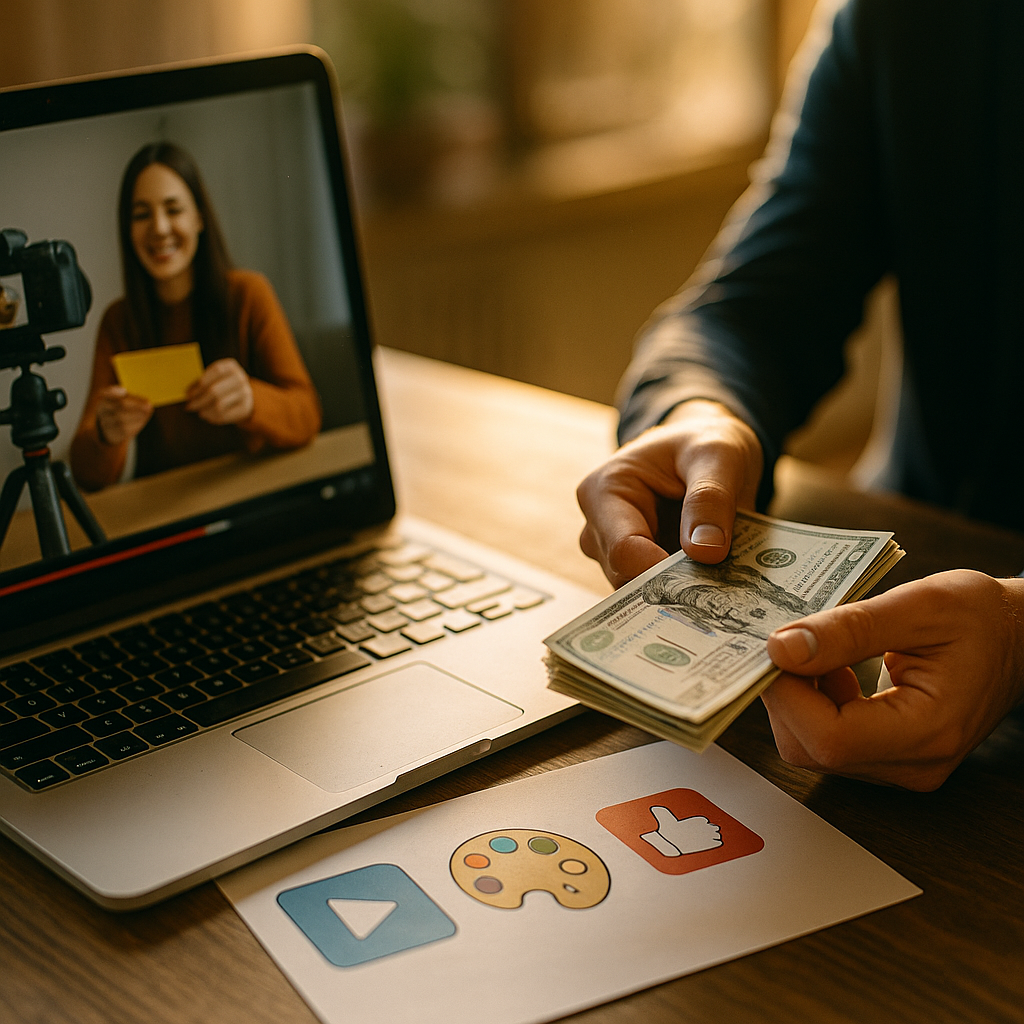
Here’s an uncomfortable number: brands that treat every creator deal as a single transaction are routinely overpaying for reach they don’t need and underpaying for trust they can’t replicate. A $15,000 creator invoice might include $3,000 worth of media, $4,000 worth of production, and $8,000 worth of borrowed credibility, bundled into one line item nobody ever unpacks. That’s the problem. Most procurement teams are buying three distinct products and pricing them as one.
Creator Deals Aren’t One Thing. They’re Three.
Ask ten brand marketers what they’re paying for when they sign a creator, and you’ll get ten versions of “awareness” or “content.” Neither answer survives contact with a finance team asking for cost-per-outcome. The truth is that a typical creator agreement bundles three separable products: media (distribution to an audience), creative (a finished asset), and endorsement (the creator’s personal credibility transferred to your brand). Each has its own market price, its own risk profile, and its own ROI logic. Collapse them into one number and you lose the ability to negotiate, benchmark, or even diagnose why a campaign underperformed.
A creator rate card isn’t a price. It’s three prices stapled together, and almost nobody asks which one is doing the heavy lifting.
This matters more now than it did two years ago. Blended CPMs on influencer content have compressed hard, as covered in our piece on sub five dollar blended CPMs, which means the media component of a creator deal is cheaper to buy elsewhere than ever. If media is getting commoditized, brands need to know exactly how much of their creator spend is actually media, versus creative production, versus the harder-to-price endorsement premium.
Product One: Media, aka Rented Reach
This is the easiest product to price because it’s the most benchmarkable. Media is the audience a creator delivers: impressions, views, reach against a defined demographic. It behaves like programmatic inventory. You can compare it against paid social CPMs on Meta’s ad platform or TikTok’s ad manager and get a real number.
The mistake brands make is assuming a creator’s audience is worth more than the open market simply because it’s “owned” by a person rather than a platform. Sometimes it is. Often it isn’t. If a creator’s engagement rate tracks the platform average and their audience overlaps heavily with your existing paid targeting, you’re not buying anything special. You’re buying reach at a markup, dressed up as partnership.
Product Two: Creative, the Asset You Actually Keep
This is the finished video, photo set, or script. It has production value independent of whoever posts it, which is why so many brands now license creator content for use in paid media, retail displays, or owned channels. Vertical formats have become the default unit of creative, a shift we broke down in our analysis of vertical video ad briefs.
Pricing creative separately forces a useful question: would this asset perform if a different creator, or your own in-house team, had made it? If yes, you’re mostly paying for production skill, and you should be comparing rates against freelance editors and UGC specialists, not influencer rate cards. The surge in dedicated UGC hiring, covered in our piece on in-house editing pods, exists precisely because brands figured out that creative and endorsement don’t have to come from the same person.
Product Three: Endorsement, the One You Can’t Benchmark
This is the hard one. Endorsement is the transfer of trust: a creator’s audience believing a recommendation because it comes from someone they already follow, not because a brand paid for placement. It’s the product that justifies premium pricing, and it’s also the one brands most frequently overpay for without proof it’s working.
Endorsement value shows up in behavior you can’t get from a media buy: unprompted repeat purchases, branded search lift, comments that read like genuine advocacy rather than disclosure-compliant copy. It’s also the product most exposed to regulatory risk. The FTC’s endorsement guidelines and the UK’s ICO disclosure rules exist specifically because endorsement, unlike media or creative, can mislead an audience if it’s not clearly labeled as paid.
Why Bundling All Three Hurts Your Budget
When brands buy creator deals as a single bundle, three bad things happen. First, you can’t tell whether a campaign failed because the media reach was wrong, the creative was weak, or the endorsement didn’t land. Second, you negotiate against a single inflated rate card instead of three separately benchmarkable markets. Third, and most costly, you keep paying endorsement-level prices for what is actually just media.
Retention data backs this up. Brands that track creator performance by individual retention and output rather than blended follower count are making sharper renewal decisions, a trend detailed in our piece on retention rate benchmarks. The same logic applies to deal structure. You can’t optimize what you’ve never separated.
If you can’t say which of the three products drove your campaign’s result, you don’t have a measurement problem. You have a contract structure problem.
There’s also a budgeting angle. Multi-year retainer deals, which we’ve tracked replacing one-off campaigns in our coverage of retainer models, make the unbundling problem worse if brands don’t address it early. A two-year contract priced as one blended number locks in inefficiency for 24 months. Unbundle at the negotiation stage, not at the renewal review.
How to Actually Unbundle a Creator Deal
This isn’t theoretical. Brands running mature creator programs are already structuring contracts around these three components, even if they don’t use this exact language. Here’s a practical approach for the next renewal cycle.
- Price media against paid social benchmarks. Pull current CPM data from platforms directly or from third-party trackers like eMarketer or Statista, and use that as your ceiling for the reach component of any deal.
- Price creative against production market rates. Get quotes from freelance editors or UGC agencies for comparable output, then use that as your benchmark for the content component, independent of who’s posting it.
- Isolate endorsement value through controlled tests. Run the same asset through paid distribution with no creator attached, then compare performance against the organic post. The delta is a rough proxy for what you’re actually paying the endorsement premium for.
- Write usage rights and whitelisting into separate line items. If you want to run a creator’s content as a paid ad, that’s an additional media buy, not a bonus included in the original fee.
- Revisit rates every two quarters, not every renewal. Media prices move fast. A rate locked in during a high-CPM quarter can be renegotiated down once distribution costs fall.
None of this requires new tooling. It requires a different question at the negotiation table: not “what does this creator cost,” but “what am I buying, and what’s each piece worth on its own.” Agencies that have adopted this framing are reportedly outperforming in-house teams on cost control, a pattern explored in our report on the agency reversal trend, largely because they’re pricing deals component by component rather than accepting blended rate cards at face value.
What About Mega Creators and Franchise Deals?
Larger, more complex partnerships complicate the model but don’t invalidate it. When a brand licenses a creator’s franchise, a recurring series, a branded format, a recognizable bit, the endorsement component often becomes the dominant product, and legal terms need to reflect that. We’ve covered how franchise-style creator deals are forcing brands to rewrite licensing contracts to account for IP ownership, not just posting cadence.
Mega-creator rosters bring a different risk. At scale, brands sometimes buy media and endorsement from names they haven’t vetted closely enough, which is the exact failure mode described in our analysis of roster vetting gaps. Unbundling helps here too: if you can’t verify the endorsement is credible, don’t pay the endorsement premium. Pay the media rate and nothing more, until the relationship earns trust pricing.
Tools like Sprout Social and HubSpot now offer enough attribution granularity that brands have little excuse for treating creator ROI as a black box. The data to separate these three products already exists inside most martech stacks. What’s missing is the contract language and internal process to act on it.
The Next Step
Before your next creator renewal, break the invoice into three columns: media, creative, endorsement. Price each against its own market, not the blended rate card you’ve always used. You’ll likely find you’ve been overpaying for reach and underpaying for trust, and fixing that ratio is the single highest-leverage move left in influencer budgeting.
FAQs
What are the three products inside a typical creator deal?
Media (the audience reach a creator delivers), creative (the finished content asset), and endorsement (the transfer of personal trust and credibility to a brand). Most contracts price all three as a single bundled fee.
Why does unbundling creator deals matter for ROI?
Because each product has a different market price and performance signal. Bundling them hides whether a campaign’s success came from reach, production quality, or genuine audience trust, making it impossible to optimize spend or negotiate accurately on renewal.
How do brands benchmark the media portion of a creator deal?
By comparing the creator’s effective CPM against standard paid social rates on platforms like Meta or TikTok, and against third-party ad spend data from sources such as eMarketer or Statista.
Can brands license creator content without paying for endorsement?
Yes. If a brand only wants the finished asset for owned or paid channels without the creator’s name attached to a personal recommendation, that’s a creative licensing deal, not an endorsement deal, and should be priced accordingly.
Does unbundling creator deals create legal or compliance risk?
No, it typically reduces it. Clear separation of usage rights, whitelisting terms, and disclosure obligations makes it easier to comply with FTC endorsement guidelines and similar regulations like those from the UK’s ICO.
FAQs
What are the three products inside a typical creator deal?
Media (the audience reach a creator delivers), creative (the finished content asset), and endorsement (the transfer of personal trust and credibility to a brand). Most contracts price all three as a single bundled fee.
Why does unbundling creator deals matter for ROI?
Because each product has a different market price and performance signal. Bundling them hides whether a campaign’s success came from reach, production quality, or genuine audience trust, making it impossible to optimize spend or negotiate accurately on renewal.
How do brands benchmark the media portion of a creator deal?
By comparing the creator’s effective CPM against standard paid social rates on platforms like Meta or TikTok, and against third-party ad spend data from sources such as eMarketer or Statista.
Can brands license creator content without paying for endorsement?
Yes. If a brand only wants the finished asset for owned or paid channels without the creator’s name attached to a personal recommendation, that’s a creative licensing deal, not an endorsement deal, and should be priced accordingly.
Does unbundling creator deals create legal or compliance risk?
No, it typically reduces it. Clear separation of usage rights, whitelisting terms, and disclosure obligations makes it easier to comply with FTC endorsement guidelines and similar regulations like those from the UK’s ICO.
Top Influencer Marketing Agencies
The leading agencies shaping influencer marketing in 2026
Agencies ranked by campaign performance, client diversity, platform expertise, proven ROI, industry recognition, and client satisfaction. Assessed through verified case studies, reviews, and industry consultations.
Moburst

-
2

The Shelf
Boutique Beauty & Lifestyle Influencer AgencyA data-driven boutique agency specializing exclusively in beauty, wellness, and lifestyle influencer campaigns on Instagram and TikTok. Best for brands already focused on the beauty/personal care space that need curated, aesthetic-driven content.Clients: Pepsi, The Honest Company, Hims, Elf Cosmetics, Pure LeafVisit The Shelf → -
3

Audiencly
Niche Gaming & Esports Influencer AgencyA specialized agency focused exclusively on gaming and esports creators on YouTube, Twitch, and TikTok. Ideal if your campaign is 100% gaming-focused — from game launches to hardware and esports events.Clients: Epic Games, NordVPN, Ubisoft, Wargaming, Tencent GamesVisit Audiencly → -
4

Viral Nation
Global Influencer Marketing & Talent AgencyA dual talent management and marketing agency with proprietary brand safety tools and a global creator network spanning nano-influencers to celebrities across all major platforms.Clients: Meta, Activision Blizzard, Energizer, Aston Martin, WalmartVisit Viral Nation → -
5

The Influencer Marketing Factory
TikTok, Instagram & YouTube CampaignsA full-service agency with strong TikTok expertise, offering end-to-end campaign management from influencer discovery through performance reporting with a focus on platform-native content.Clients: Google, Snapchat, Universal Music, Bumble, YelpVisit TIMF → -
6

NeoReach
Enterprise Analytics & Influencer CampaignsAn enterprise-focused agency combining managed campaigns with a powerful self-service data platform for influencer search, audience analytics, and attribution modeling.Clients: Amazon, Airbnb, Netflix, Honda, The New York TimesVisit NeoReach → -
7

Ubiquitous
Creator-First Marketing PlatformA tech-driven platform combining self-service tools with managed campaign options, emphasizing speed and scalability for brands managing multiple influencer relationships.Clients: Lyft, Disney, Target, American Eagle, NetflixVisit Ubiquitous → -
8

Obviously
Scalable Enterprise Influencer CampaignsA tech-enabled agency built for high-volume campaigns, coordinating hundreds of creators simultaneously with end-to-end logistics, content rights management, and product seeding.Clients: Google, Ulta Beauty, Converse, AmazonVisit Obviously →