


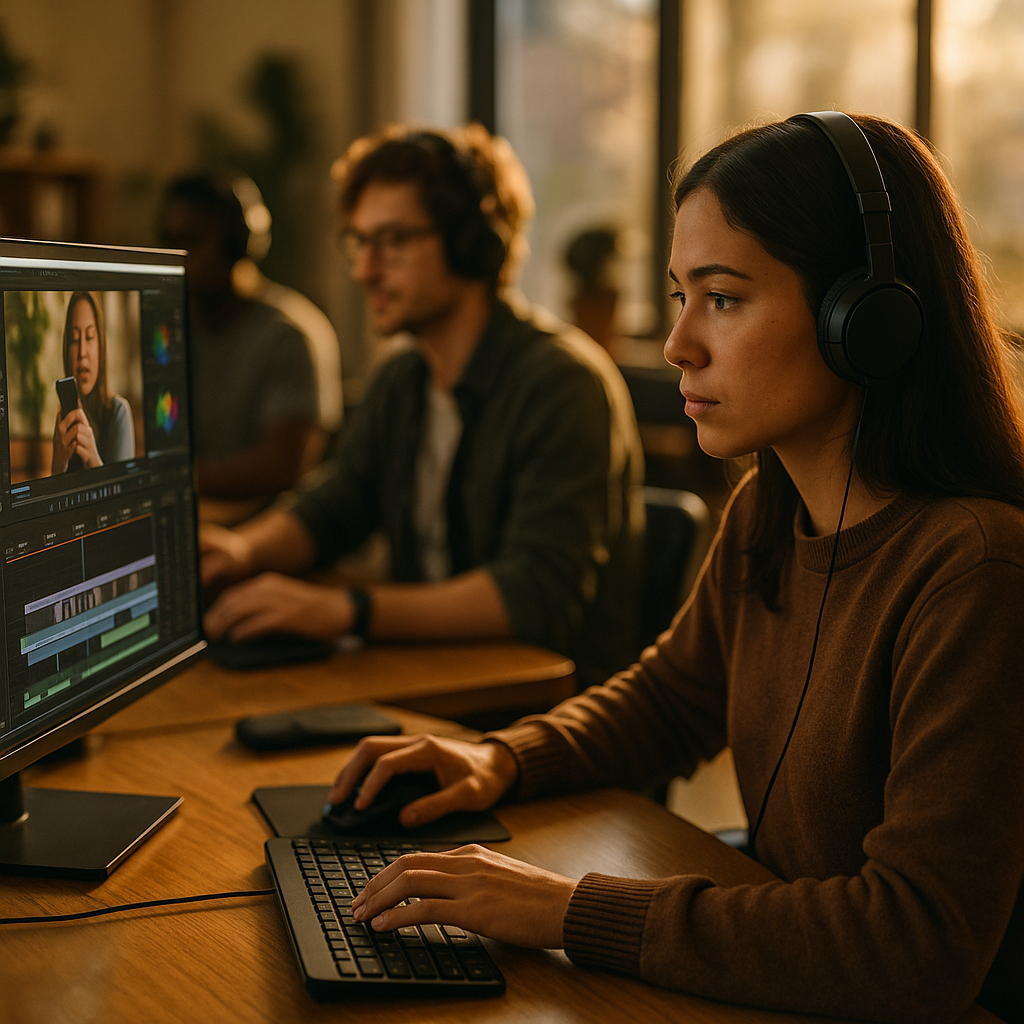
Job boards don’t lie. Postings mentioning “UGC creator,” “short-form editor,” or “content producer” have climbed sharply across marketing departments over the past year, and the hiring surge for UGC and editing skills is not a blip. It’s a structural signal. Brands are quietly admitting that creator content has outgrown the agency-only model, and they need production muscle sitting inside the building.
That shift has real consequences for org charts, budgets, and who reports to whom. Let’s unpack what’s actually happening and why it matters to anyone running a creator program right now.
Why the Job Titles Are Suddenly Everywhere
Scroll through LinkedIn job listings and you’ll notice a pattern: brands that once outsourced everything to agencies are now building internal “content pods.” Titles like Social Video Editor, UGC Coordinator, and In-House Creator Liaison didn’t exist on most marketing teams three years ago. Now they’re showing up at mid-market DTC brands, B2B SaaS companies, and even regional retailers.
Part of this is cost. Agency retainers for high-volume short-form content got expensive fast, especially once brands realized they needed dozens of content variants per month, not one polished hero video per quarter. Part of it is speed. Trends die in hours, not weeks, and waiting on an external team to turn around an edit means missing the window entirely. The 24 hour UGC trend decay problem forced a lot of brands to rethink who touches the edit timeline.
When editing and content wrangling move in-house, it’s rarely about cutting costs alone. It’s about owning the speed-to-publish advantage that external vendors structurally can’t match.
The Agency Model Isn’t Dying, It’s Being Redrawn
To be clear, agencies aren’t disappearing. Strategy, creator sourcing, contract negotiation, and campaign measurement still largely live with specialized partners or hybrid teams. What’s changing is the production layer. Brands want the ability to spin up a quick-turn edit, reformat a creator’s raw clip for three platforms, or stitch together a reactive post without routing it through a six-step approval chain involving an external vendor.
This mirrors a broader pattern covered in our piece on rapid response rosters replacing monthly calendars. Teams that used to plan a quarter out now need someone on staff who can react same-day. That requires editing talent sitting a Slack message away, not a project brief away.
What This Says About Team Structure
Here’s the uncomfortable truth for marketing leaders: if your team doesn’t have at least one person who can shoot, edit, and publish short-form content without external help, you’re structurally behind. Not creatively behind, structurally behind. The brands winning attention right now have compressed the distance between “idea” and “published post” to almost zero, and that compression only happens with in-house production capacity.
- Flatter approval chains. In-house editors report directly to the social or content lead, cutting out agency handoff delays.
- Blended skill sets. New hires are expected to shoot, edit, caption, and understand platform-native formatting, not just one of those tasks.
- Smaller but faster teams. A two-person internal pod with the right editing software can now outpace a slower six-person agency account team on turnaround time.
- Creator liaison roles. Someone has to manage the relationship with UGC creators and freelance editors, and that role increasingly sits inside the brand, not the agency.
This also connects to how brands are treating creators more like media partners than one-off vendors. Our analysis of how creators as media companies are reshaping line items shows the same underlying logic: brands want direct, fast relationships, not layered intermediaries.
Is This Just Cost Cutting Dressed Up as Strategy?
Fair question. Some of it is. Marketing budgets tightened in places, and swapping a $15,000 monthly agency retainer for a $70,000 salaried editor can look like savings on paper. But that framing misses the bigger driver: volume. Brands aren’t producing one campaign a month anymore. They’re producing dozens of content pieces a week across TikTok, Reels, Shorts, and increasingly LinkedIn. That volume math simply doesn’t work with an external-only model unless you’re writing enormous checks.
Data from eMarketer has tracked the steady climb in short-form video ad spend, and platforms themselves are reinforcing the shift. The Meta Reels algorithm favoring raw, unpolished ads over studio-grade production is a direct incentive for brands to build scrappy, fast internal teams rather than outsource to agencies chasing high-gloss output.
There’s also a budget justification angle. Teams that scaled creator spend fast are now being asked to prove the ROI of every line item, a pressure documented in our coverage of the 93 percent budget surge forcing internal justification. An in-house editor whose output you can track against performance is easier to defend in a budget review than a vague agency line item.
The Skills Brands Are Actually Hunting For
It’s not just “can you use CapCut.” Job descriptions increasingly ask for a specific blend:
- Native platform editing (CapCut, Premiere Rush, or in-app TikTok and Reels tools) for fast turnaround formats.
- Caption and hook writing, since the first two seconds determine retention more than production value.
- Basic performance literacy, meaning the ability to read a dashboard and adjust edits based on watch-through data.
- Rights and usage awareness, so content doesn’t trigger a compliance headache down the line.
- Comfort working directly with creators, briefing them, and sometimes appearing on camera themselves.
That last point is underrated. Many of the new hires aren’t just editors, they’re hybrid creator-editors who can both shoot UGC-style content and cut it themselves. This mirrors how non-endemic categories have had to build entirely new muscle. See how non-endemic brands are building creator ops once reserved for beauty and fashion.
Compliance and Risk Don’t Disappear When Production Moves In-House
Bringing editing in-house doesn’t remove the need for disclosure compliance, usage rights tracking, or FTC-aligned practices. If anything, it raises the stakes, because there’s no external agency acting as a buffer or compliance checkpoint. Marketing leaders need to make sure in-house teams understand disclosure requirements as outlined by the FTC, especially when editors are also appearing in content or working directly with creators on contracts.
The same applies to international teams. Brands operating in the UK need to keep ICO guidance in view when handling creator and audience data inside new in-house workflows.
What Leaders Should Do With This Signal
If you’re a marketing director or VP watching this trend from the outside, don’t wait for a full org redesign to act. Start smaller.
- Audit your current turnaround time from “creator delivers raw footage” to “content goes live.” If it’s measured in days, you have a structural gap.
- Identify one hybrid hire, someone who can edit and understand platform mechanics, before building a full pod.
- Reassess agency contracts to shift strategy and sourcing work to partners while pulling fast-turn editing in-house.
- Build editing skill into existing social team job descriptions rather than treating it as a separate specialist function.
Tools matter here too. Platforms like HubSpot and Sprout Social are increasingly building workflow features meant to support exactly this kind of in-house, fast-turn production model, which tells you the martech vendors see the same shift we’re describing.
This also connects to retention. Programs with strong in-house production tend to show up in our creator retention rate as program health metric coverage as having stickier creator relationships, likely because faster internal turnaround makes the whole partnership feel less bureaucratic for the creator too.
Frequently Asked Questions
Why are brands hiring for UGC and editing skills instead of relying on agencies?
Volume and speed. Brands now need dozens of short-form content pieces weekly, and agency turnaround times often can’t match the pace trends move at. In-house editors cut the handoff delay and let teams react same-day.
Does hiring in-house editors mean brands are cutting agency budgets entirely?
Not usually. Agencies still handle strategy, creator sourcing, and larger campaign production. The shift is mostly at the fast-turn editing and reactive content layer, where in-house teams can move faster and cheaper.
What skills should marketing leaders prioritize when hiring for these roles?
Look for native platform editing ability, hook and caption writing, basic performance data literacy, and comfort working directly with creators. Hybrid creator-editors who can both shoot and cut content are increasingly valuable.
What compliance risks come with building an in-house UGC and editing team?
Disclosure requirements, usage rights tracking, and data handling don’t go away when production moves in-house. Teams need clear guidance aligned with FTC disclosure rules and, for UK operations, ICO data guidance.
How many people does a brand need to start an in-house content pod?
Many brands start with just one or two hybrid hires who can shoot, edit, and publish independently, then scale the pod as volume and performance data justify further headcount.
Visible FAQ (duplicate block as required)
Why are brands hiring for UGC and editing skills instead of relying on agencies?
Volume and speed. Brands now need dozens of short-form content pieces weekly, and agency turnaround times often can’t match the pace trends move at. In-house editors cut the handoff delay and let teams react same-day.
Does hiring in-house editors mean brands are cutting agency budgets entirely?
Not usually. Agencies still handle strategy, creator sourcing, and larger campaign production. The shift is mostly at the fast-turn editing and reactive content layer, where in-house teams can move faster and cheaper.
What skills should marketing leaders prioritize when hiring for these roles?
Look for native platform editing ability, hook and caption writing, basic performance data literacy, and comfort working directly with creators. Hybrid creator-editors who can both shoot and cut content are increasingly valuable.
What compliance risks come with building an in-house UGC and editing team?
Disclosure requirements, usage rights tracking, and data handling don’t go away when production moves in-house. Teams need clear guidance aligned with FTC disclosure rules and, for UK operations, ICO data guidance.
How many people does a brand need to start an in-house content pod?
Many brands start with just one or two hybrid hires who can shoot, edit, and publish independently, then scale the pod as volume and performance data justify further headcount.
The hiring data is a preview, not a prediction: teams that build in-house editing capacity now will set the turnaround standard everyone else gets measured against. Start with one hybrid hire, track the turnaround time gap, and let the ROI case build itself.
Top Influencer Marketing Agencies
The leading agencies shaping influencer marketing in 2026
Agencies ranked by campaign performance, client diversity, platform expertise, proven ROI, industry recognition, and client satisfaction. Assessed through verified case studies, reviews, and industry consultations.
Moburst

-
2

The Shelf
Boutique Beauty & Lifestyle Influencer AgencyA data-driven boutique agency specializing exclusively in beauty, wellness, and lifestyle influencer campaigns on Instagram and TikTok. Best for brands already focused on the beauty/personal care space that need curated, aesthetic-driven content.Clients: Pepsi, The Honest Company, Hims, Elf Cosmetics, Pure LeafVisit The Shelf → -
3

Audiencly
Niche Gaming & Esports Influencer AgencyA specialized agency focused exclusively on gaming and esports creators on YouTube, Twitch, and TikTok. Ideal if your campaign is 100% gaming-focused — from game launches to hardware and esports events.Clients: Epic Games, NordVPN, Ubisoft, Wargaming, Tencent GamesVisit Audiencly → -
4

Viral Nation
Global Influencer Marketing & Talent AgencyA dual talent management and marketing agency with proprietary brand safety tools and a global creator network spanning nano-influencers to celebrities across all major platforms.Clients: Meta, Activision Blizzard, Energizer, Aston Martin, WalmartVisit Viral Nation → -
5

The Influencer Marketing Factory
TikTok, Instagram & YouTube CampaignsA full-service agency with strong TikTok expertise, offering end-to-end campaign management from influencer discovery through performance reporting with a focus on platform-native content.Clients: Google, Snapchat, Universal Music, Bumble, YelpVisit TIMF → -
6

NeoReach
Enterprise Analytics & Influencer CampaignsAn enterprise-focused agency combining managed campaigns with a powerful self-service data platform for influencer search, audience analytics, and attribution modeling.Clients: Amazon, Airbnb, Netflix, Honda, The New York TimesVisit NeoReach → -
7

Ubiquitous
Creator-First Marketing PlatformA tech-driven platform combining self-service tools with managed campaign options, emphasizing speed and scalability for brands managing multiple influencer relationships.Clients: Lyft, Disney, Target, American Eagle, NetflixVisit Ubiquitous → -
8

Obviously
Scalable Enterprise Influencer CampaignsA tech-enabled agency built for high-volume campaigns, coordinating hundreds of creators simultaneously with end-to-end logistics, content rights management, and product seeding.Clients: Google, Ulta Beauty, Converse, AmazonVisit Obviously →