


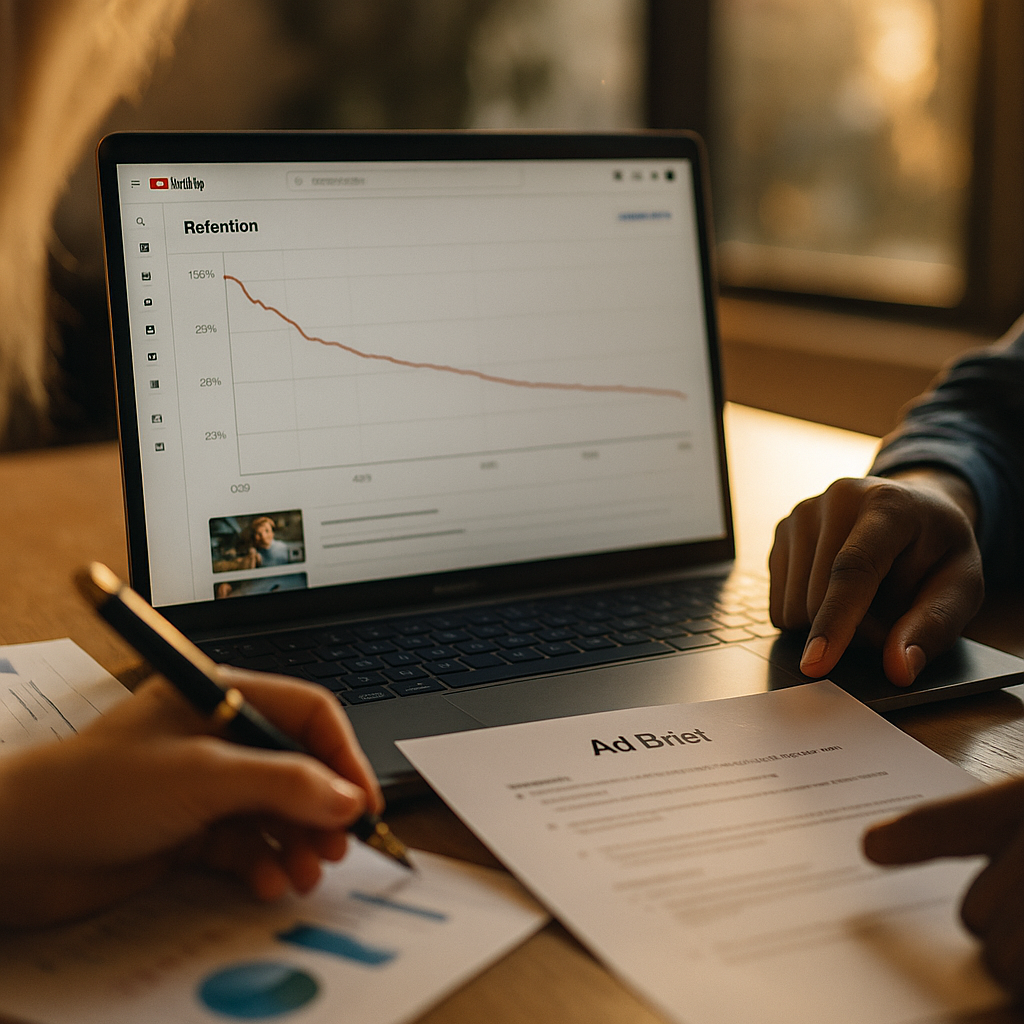
Average watch time on short form video now determines ad spend allocation more than follower count ever did. At VidSummit 2026, the loudest conversation wasn’t about reach or virality. It was about retention, the unglamorous metric that separates creators who get renewed brand deals from creators who get one shot and ghosted. Brands that ignored retention curves for years are now scrambling to build entire briefs around them.
The Retention Signal Brands Keep Missing
Reach tells you who saw something. Retention tells you whether anyone cared. For years, brand teams chased impressions and follower counts because those numbers were easy to put in a slide deck. Retention, by contrast, requires actually watching the audience retention graph in a creator’s analytics dashboard, something most brand managers never asked to see until recently.
That’s changing fast. Several panels at VidSummit featured creators pulling up live retention curves from TikTok and YouTube Shorts, showing exactly where viewers dropped off in the first three seconds, and where they came back. One creator with 2.3 million followers admitted her sponsored content retention averaged 15 percentage points lower than her organic content. Brands sitting in that room took notes, because that gap is where wasted ad budget lives.
A creator’s follower count predicts almost nothing about how long a brand’s message actually stays on screen. Retention curves do.
What VidSummit’s Top Creators Actually Do Differently
The highest-retention creators at this year’s event shared a few consistent habits, and none of them involved expensive production.
- They front-load a visual or audio pattern break in the first 1.5 seconds, not a logo or brand name.
- They treat the first 7 seconds as a separate creative decision from the rest of the video, often scripting it last.
- They avoid a hard sell before the 50 percent watch mark, saving the call to action for after retention has already been earned.
- They reuse proven retention structures across multiple brand deals instead of reinventing format every time.
This last point matters for brand teams managing multiple creator relationships. If a creator has a retention structure that consistently performs, locking that creator into a longer arrangement makes more sense than a single campaign. That’s part of why multi year retainers have become more common in creator contracts over the past cycle.
The Hook Is Not the Whole Job
Brands obsess over hooks. Understandably so, since platforms reward the first few seconds heavily in their distribution algorithms. But several VidSummit speakers pushed back on hook-only thinking. A strong hook that leads into a flat middle still bleeds viewers by the ten-second mark. Retention is a full-video discipline, not a three-second trick.
One editor who works across a roster of 40-plus creators described her job as “pacing engineering.” She maps retention dips against script beats, then rebuilds the middle third of the video, the part brands almost never review in approval workflows. That gap, the unreviewed middle, is costing brands measurable watch time.
Retention Data Is Becoming a Negotiating Chip
Creators are now walking into brand negotiations with retention benchmarks instead of just rate cards. A creator who can prove 70 percent average retention through the midpoint of a video has leverage that a creator with strong reach but weak retention simply doesn’t. This mirrors a broader shift already covered in our reporting on how creator retention rate becomes a program health metric, where brand teams now track retention across their entire creator roster, not just individual campaigns.
What does this mean operationally? Procurement and brand teams need retention benchmarks written into briefs and contracts, the same way they already demand engagement rate minimums. Without that, you’re paying for attention you’re not actually getting.
Why Platform Algorithms Are Forcing This Conversation
Retention isn’t just a creative nicety anymore, it’s an algorithmic currency. TikTok, Instagram Reels, and YouTube Shorts all weight watch time and completion rate heavily in their distribution logic. A video with strong retention gets pushed further into the For You feed or Shorts shelf, regardless of how polished it looks. Our earlier coverage of how Meta’s Reels algorithm favors raw ads over studio polish showed the same pattern: platforms reward content that keeps people watching, not content that looks expensive.
This creates a genuine tension for brand marketing teams used to heavy production review cycles. A video that passes every brand safety and style guideline checkpoint can still underperform if it was over-polished in a way that kills retention. Meanwhile, a rougher, faster-paced cut from a creator’s own editing process often retains viewers longer because it feels native to the platform.
YouTube’s push toward retention-tied monetization overlays is another signal worth watching. As we noted in our piece on YouTube Shorts overlays tying merchant links to watch time, the platform is now literally gating commerce features behind retention thresholds. If a brand’s sponsored Short doesn’t hold attention, the merchant link doesn’t get the same visibility. Retention is no longer just a vanity metric, it’s a gatekeeper for revenue features.
Speed Still Matters, But Not More Than Watch Time
There’s a temptation to assume retention and speed-to-publish are competing priorities. They’re related but distinct. Fast turnaround matters for trend relevance, which is why rapid response rosters have replaced monthly content calendars on many brand teams. But a fast video with weak retention still underperforms a slightly slower video that holds attention. The goal isn’t choosing one over the other, it’s building creator workflows that protect both.
Brands that pre-approve creative frameworks, rather than individual finished videos, tend to move faster without sacrificing retention quality. This is part of why the shift toward pre-approving content frameworks has gained traction as trend lifecycles shrink.
Building a Retention First Brief
So what should a brand actually change in its briefing process? A few practical shifts came up repeatedly at VidSummit sessions this year:
- Ask creators for their average retention percentage at the 3-second, 15-second, and 50 percent marks before signing a deal.
- Stop mandating logo placement in the first two seconds. It tanks retention and creators know it.
- Review the middle third of draft videos, not just the hook and the CTA.
- Build retention benchmarks into performance bonuses, not just engagement or sales metrics.
- Give creators latitude on pacing. Scripted word-for-word reads almost always underperform on retention versus creator-paraphrased messaging.
None of this requires a bigger budget. It requires brand teams to treat retention as a creative input, not just a post-campaign report metric. According to industry benchmarking from Sprout Social, brands that incorporate platform-native performance signals into their briefs see measurably better campaign consistency across creator partners. Similarly, eMarketer has flagged watch-time metrics as an increasingly central KPI in short form video ad planning for the coming year.
Platforms themselves are nudging advertisers in this direction too. TikTok’s advertising resources now emphasize completion rate alongside click-through rate in campaign reporting, and Meta’s business tools surface retention-adjacent metrics like “3-second video views” more prominently than they did a few cycles ago. The infrastructure for retention-first measurement already exists. Most brand teams just haven’t rebuilt their internal processes to use it.
FAQs
Frequently Asked Questions
What does retention mean in short form video marketing?
Retention refers to the percentage of viewers who keep watching a video at specific timestamps, such as 3 seconds, 15 seconds, or the midpoint. It measures sustained attention rather than just initial views or total reach.
Why is retention more important than reach for brand campaigns?
Reach only confirms that a video was shown to a viewer. Retention confirms whether the viewer actually absorbed the message, which directly affects whether a brand’s call to action or product mention gets seen at all.
How can brands request retention data from creators?
Brands can ask creators to share screenshots or exports of platform analytics dashboards showing audience retention graphs for past sponsored content, then build minimum retention benchmarks into campaign briefs and contracts.
Does high production value improve retention?
Not necessarily. Several platform algorithms favor native-feeling, less polished content because it retains viewers longer than heavily produced ads that feel out of place in a short form feed.
What is VidSummit and why does it matter to brand marketers?
VidSummit is an annual conference focused on video content strategy, bringing together creators, platform representatives, and marketers to discuss trends shaping short form and long form video performance, including retention, monetization, and audience growth.
Next step: Pull the retention graphs from your last three creator campaigns before your next brief goes out. If the midpoint drop-off exceeds 40 percent, the problem isn’t the creator, it’s the brief.
Frequently Asked Questions
What does retention mean in short form video marketing?
Retention refers to the percentage of viewers who keep watching a video at specific timestamps, such as 3 seconds, 15 seconds, or the midpoint. It measures sustained attention rather than just initial views or total reach.
Why is retention more important than reach for brand campaigns?
Reach only confirms that a video was shown to a viewer. Retention confirms whether the viewer actually absorbed the message, which directly affects whether a brand’s call to action or product mention gets seen at all.
How can brands request retention data from creators?
Brands can ask creators to share screenshots or exports of platform analytics dashboards showing audience retention graphs for past sponsored content, then build minimum retention benchmarks into campaign briefs and contracts.
Does high production value improve retention?
Not necessarily. Several platform algorithms favor native-feeling, less polished content because it retains viewers longer than heavily produced ads that feel out of place in a short form feed.
What is VidSummit and why does it matter to brand marketers?
VidSummit is an annual conference focused on video content strategy, bringing together creators, platform representatives, and marketers to discuss trends shaping short form and long form video performance, including retention, monetization, and audience growth.
Top Influencer Marketing Agencies
The leading agencies shaping influencer marketing in 2026
Agencies ranked by campaign performance, client diversity, platform expertise, proven ROI, industry recognition, and client satisfaction. Assessed through verified case studies, reviews, and industry consultations.
Moburst

-
2

The Shelf
Boutique Beauty & Lifestyle Influencer AgencyA data-driven boutique agency specializing exclusively in beauty, wellness, and lifestyle influencer campaigns on Instagram and TikTok. Best for brands already focused on the beauty/personal care space that need curated, aesthetic-driven content.Clients: Pepsi, The Honest Company, Hims, Elf Cosmetics, Pure LeafVisit The Shelf → -
3

Audiencly
Niche Gaming & Esports Influencer AgencyA specialized agency focused exclusively on gaming and esports creators on YouTube, Twitch, and TikTok. Ideal if your campaign is 100% gaming-focused — from game launches to hardware and esports events.Clients: Epic Games, NordVPN, Ubisoft, Wargaming, Tencent GamesVisit Audiencly → -
4

Viral Nation
Global Influencer Marketing & Talent AgencyA dual talent management and marketing agency with proprietary brand safety tools and a global creator network spanning nano-influencers to celebrities across all major platforms.Clients: Meta, Activision Blizzard, Energizer, Aston Martin, WalmartVisit Viral Nation → -
5

The Influencer Marketing Factory
TikTok, Instagram & YouTube CampaignsA full-service agency with strong TikTok expertise, offering end-to-end campaign management from influencer discovery through performance reporting with a focus on platform-native content.Clients: Google, Snapchat, Universal Music, Bumble, YelpVisit TIMF → -
6

NeoReach
Enterprise Analytics & Influencer CampaignsAn enterprise-focused agency combining managed campaigns with a powerful self-service data platform for influencer search, audience analytics, and attribution modeling.Clients: Amazon, Airbnb, Netflix, Honda, The New York TimesVisit NeoReach → -
7

Ubiquitous
Creator-First Marketing PlatformA tech-driven platform combining self-service tools with managed campaign options, emphasizing speed and scalability for brands managing multiple influencer relationships.Clients: Lyft, Disney, Target, American Eagle, NetflixVisit Ubiquitous → -
8

Obviously
Scalable Enterprise Influencer CampaignsA tech-enabled agency built for high-volume campaigns, coordinating hundreds of creators simultaneously with end-to-end logistics, content rights management, and product seeding.Clients: Google, Ulta Beauty, Converse, AmazonVisit Obviously →