


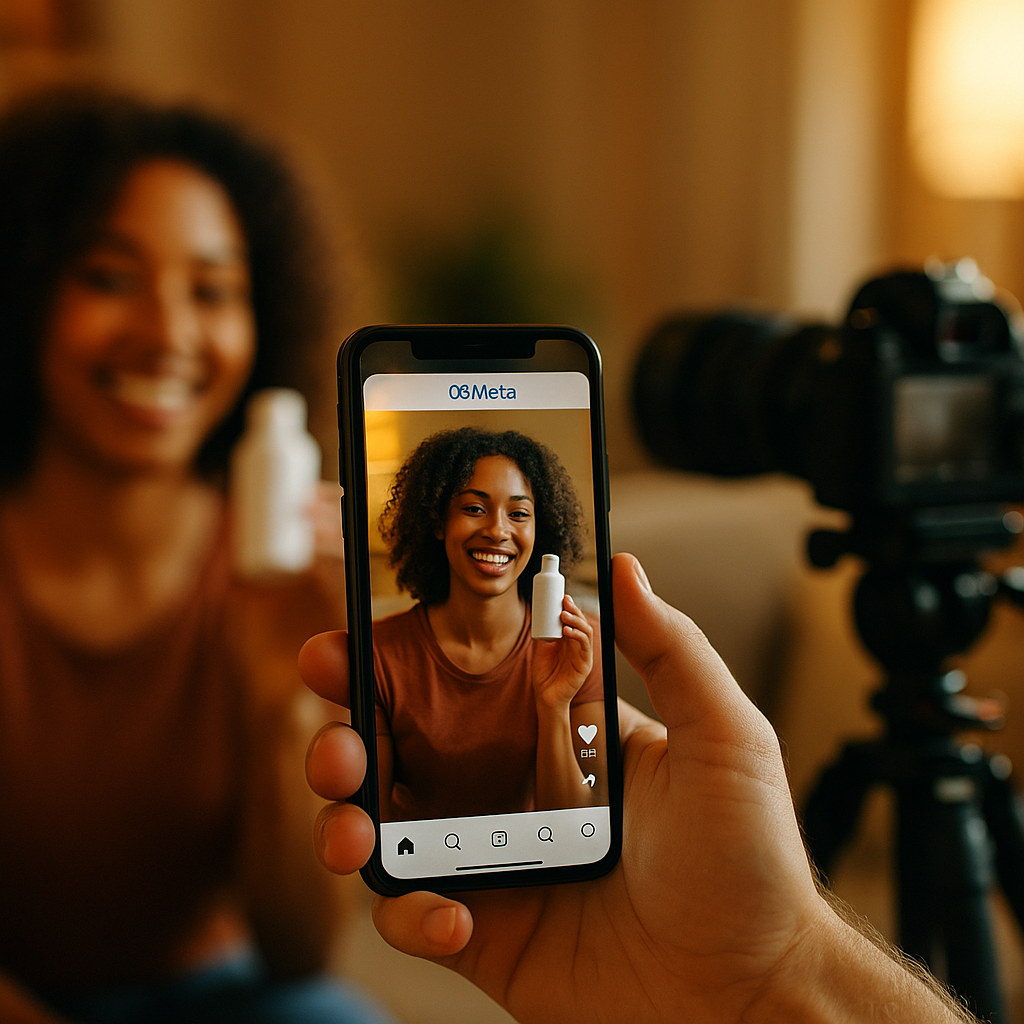
Meta just told brands something uncomfortable: your polished branded content is getting outranked by a nineteen-second video shot on someone’s iPhone. Internal signals from Meta’s ad platform now show the Reels algorithm update weighting creator-made vertical ads above traditional branded content, with early testers reporting cost-per-result drops of 20 to 35 percent on creator-shot assets. If your media plan still leans on studio production, it’s time to rethink the brief.
What Actually Changed in Meta’s Ranking Signals
Meta hasn’t published a full technical breakdown, but agency buyers running split tests inside Ads Manager are seeing a consistent pattern. Vertical video that reads as creator-native, meaning handheld framing, native captions, direct-to-camera delivery, is getting more inventory and lower CPMs than the same message shot with studio lighting and a brand’s usual voiceover polish. The system appears to be scoring watch-through behavior and engagement velocity in the first three seconds, and creator-style footage is simply winning that window more often.
This isn’t a hunch. It lines up with what Meta has said publicly for over a year: Reels rewards content that mirrors organic viewing patterns, not content that announces itself as an ad. The update seems to formalize that preference inside the paid auction, not just the organic feed.
Early buyer data suggests creator-shot vertical ads are clearing the Reels auction at meaningfully lower CPMs than studio-produced branded content, even when the underlying offer and CTA are identical.
Why Meta Is Making This Bet
Meta’s business is attention, plain and simple. Reels still trails TikTok in raw engagement metrics in most third-party benchmarks, and Meta knows it. Prioritizing creator-made vertical ads is a direct play to close that gap by importing the aesthetic that made TikTok’s For You page addictive in the first place. If users scroll past anything that smells like a commercial, Meta loses ad revenue. So the platform is nudging advertisers, through the auction itself, toward formats that keep people watching.
There’s also a supply-side incentive. Meta wants more creators producing ad-ready content directly for brands inside its ecosystem, whether through Partnership Ads, branded content tools, or its expanding creator marketplace. Favoring creator-shot vertical ads in ranking gives brands a reason to route more budget through those tools instead of external production houses. It’s a retention play for Meta’s own ad infrastructure as much as it is a user experience fix.
The Production Shift Brands Can’t Ignore
For years, the playbook was simple: brief a creator, get raw footage, hand it to an internal or agency editor, polish it, then run it as a branded content ad. That workflow is now working against advertisers. The more an ad looks edited, scored, and branded, the more it seems to underperform in the Reels auction relative to lighter-touch creator cuts.
That means brands need to rebuild their approval pipelines around speed and authenticity rather than production value. This isn’t a new theme for anyone tracking the shift toward pre-approved UGC workflows, but Meta’s algorithm change adds real financial pressure behind it. Teams that still route every asset through a three-week revision cycle are going to pay more for less reach.
Practically, this looks like:
- Shifting budget from polished studio shoots to volume creator partnerships
- Loosening brand guidelines on captions, filters, and pacing for paid social specifically
- Building faster legal and usage-rights turnaround so raw creator cuts can go live within days, not weeks
- Testing multiple creator-shot variants per concept instead of one hero branded asset
Casting Now Matters More Than Editing
If the algorithm rewards native-feeling delivery, then who you cast becomes the primary lever, not how you cut the footage afterward. Brands that built rigid follower-count casting briefs are going to struggle here, because raw delivery skill and camera comfort matter more than audience size when the ad itself needs to feel unbranded. This tracks with the broader industry move toward delivery-based casting rubrics over pure reach metrics, and it echoes what’s already happening on UGC casting platforms that pay for acting skill over follower count.
Practically, media buyers should be asking creators for audition-style vertical clips before signing contracts, specifically testing how they perform in a genuine handheld, direct-address format. A creator with 8,000 followers who can deliver a hook in the first two seconds may outperform a 200,000-follower creator who reads from a script like it’s a commercial voiceover.
Risk and Compliance Don’t Disappear, They Get Harder
Here’s the catch nobody wants to say out loud: making ads look less like ads raises disclosure stakes. The FTC’s endorsement guidelines still require clear and conspicuous disclosure regardless of how organic the content feels, and Meta’s own branded content tools exist specifically to keep that compliant. Brands chasing the algorithm’s preference for raw, undisclosed-feeling content risk drifting into gray-area territory if they skip proper tagging just to preserve the aesthetic.
Legal and brand safety teams should review the FTC’s current endorsement disclosure rules before loosening creative guidelines, and confirm every creator-made vertical ad still runs through Meta’s official branded content or Partnership Ads tagging, even when it’s optimized to look unbranded. Skipping disclosure to chase a lower CPM is not a savings, it’s a liability sitting on the balance sheet.
Native-feeling doesn’t mean undisclosed. Brands that strip disclosure to chase algorithmic favor are trading a short-term CPM win for regulatory exposure.
What This Means for Budget Allocation
Expect procurement conversations to shift meaningfully over the next few quarters. Agencies that built pricing models around studio production and heavy post will need to renegotiate scopes, similar to the renegotiations already happening across bundled martech and production pricing. Brands should expect line items to shift away from editing and post-production hours and toward creator sourcing, rights management, and rapid legal review.
This also intersects with the rate inflation already squeezing categories like CPG, where rising creator rates are forcing budget rework. If Meta’s auction now rewards creator-shot content structurally, demand for skilled, camera-comfortable creators will climb further, and rate cards will follow. Brands locking in retainers now, before the update fully propagates through the ad auction, will likely secure better terms than those waiting until Q3 pricing resets.
How to Test This Without Blowing Up Your Media Plan
You don’t need to abandon branded content entirely. Run a controlled split: allocate 60 percent of a Reels budget to creator-shot vertical variants and 40 percent to your current branded content format, then compare cost-per-result and hold rate over a two-week window using Meta’s Meta Business Suite reporting. If the gap holds beyond a single flight, that’s your signal to shift the production model permanently rather than treat it as a one-off test. Tools like Sprout Social or your existing social listening stack can help track organic engagement shifts in parallel, since a genuine algorithm change usually shows up on both the paid and organic side.
Worth noting: this shift also compounds with existing pressure to move faster on trend cycles, something covered in depth in the piece on rebuilding approval speed for hourly trend cycles. Slow-moving brands are now getting squeezed from two directions at once: algorithmic preference for raw content, and a trend cycle that punishes late publishing.
Frequently Asked Questions
FAQs
What is the Meta Reels algorithm update prioritizing exactly?
Early buyer data indicates Meta’s Reels ranking system is favoring vertical ads that look and feel creator-made, such as handheld footage and direct-to-camera delivery, over traditionally produced branded content with studio-level polish.
Does this mean branded content ads no longer work on Meta?
No. Branded content still runs and can still perform well, but it appears to face a higher cost-per-result in the Reels auction compared to creator-shot alternatives promoting the same offer, based on current advertiser testing.
Do brands still need to disclose paid partnerships if the content looks organic?
Yes, absolutely. FTC disclosure requirements apply regardless of how native or unbranded content appears, and Meta’s official branded content and Partnership Ads tools should still be used to tag sponsored posts correctly.
How should brands adjust their creator briefs for this update?
Prioritize creators who can deliver authentic, camera-comfortable performances over creators chosen purely for follower count, and shorten approval timelines so raw footage can go live without heavy post-production delays.
Will this trend spread to other platforms besides Meta?
It’s likely. TikTok’s algorithm has favored native-feeling content for years, and platforms tend to converge on ranking signals that keep users watching longer, so expect similar preferences to surface across other short-form video ad auctions.
Next step: Run a two-week split test comparing creator-shot vertical ads against your current branded content format inside Ads Manager, and use the cost-per-result gap, not internal preference, to decide where your next production budget actually goes.
FAQs
What is the Meta Reels algorithm update prioritizing exactly?
Early buyer data indicates Meta’s Reels ranking system is favoring vertical ads that look and feel creator-made, such as handheld footage and direct-to-camera delivery, over traditionally produced branded content with studio-level polish.
Does this mean branded content ads no longer work on Meta?
No. Branded content still runs and can still perform well, but it appears to face a higher cost-per-result in the Reels auction compared to creator-shot alternatives promoting the same offer, based on current advertiser testing.
Do brands still need to disclose paid partnerships if the content looks organic?
Yes, absolutely. FTC disclosure requirements apply regardless of how native or unbranded content appears, and Meta’s official branded content and Partnership Ads tools should still be used to tag sponsored posts correctly.
How should brands adjust their creator briefs for this update?
Prioritize creators who can deliver authentic, camera-comfortable performances over creators chosen purely for follower count, and shorten approval timelines so raw footage can go live without heavy post-production delays.
Will this trend spread to other platforms besides Meta?
It’s likely. TikTok’s algorithm has favored native-feeling content for years, and platforms tend to converge on ranking signals that keep users watching longer, so expect similar preferences to surface across other short-form video ad auctions.
Top Influencer Marketing Agencies
The leading agencies shaping influencer marketing in 2026
Agencies ranked by campaign performance, client diversity, platform expertise, proven ROI, industry recognition, and client satisfaction. Assessed through verified case studies, reviews, and industry consultations.
Moburst

-
2

The Shelf
Boutique Beauty & Lifestyle Influencer AgencyA data-driven boutique agency specializing exclusively in beauty, wellness, and lifestyle influencer campaigns on Instagram and TikTok. Best for brands already focused on the beauty/personal care space that need curated, aesthetic-driven content.Clients: Pepsi, The Honest Company, Hims, Elf Cosmetics, Pure LeafVisit The Shelf → -
3

Audiencly
Niche Gaming & Esports Influencer AgencyA specialized agency focused exclusively on gaming and esports creators on YouTube, Twitch, and TikTok. Ideal if your campaign is 100% gaming-focused — from game launches to hardware and esports events.Clients: Epic Games, NordVPN, Ubisoft, Wargaming, Tencent GamesVisit Audiencly → -
4

Viral Nation
Global Influencer Marketing & Talent AgencyA dual talent management and marketing agency with proprietary brand safety tools and a global creator network spanning nano-influencers to celebrities across all major platforms.Clients: Meta, Activision Blizzard, Energizer, Aston Martin, WalmartVisit Viral Nation → -
5

The Influencer Marketing Factory
TikTok, Instagram & YouTube CampaignsA full-service agency with strong TikTok expertise, offering end-to-end campaign management from influencer discovery through performance reporting with a focus on platform-native content.Clients: Google, Snapchat, Universal Music, Bumble, YelpVisit TIMF → -
6

NeoReach
Enterprise Analytics & Influencer CampaignsAn enterprise-focused agency combining managed campaigns with a powerful self-service data platform for influencer search, audience analytics, and attribution modeling.Clients: Amazon, Airbnb, Netflix, Honda, The New York TimesVisit NeoReach → -
7

Ubiquitous
Creator-First Marketing PlatformA tech-driven platform combining self-service tools with managed campaign options, emphasizing speed and scalability for brands managing multiple influencer relationships.Clients: Lyft, Disney, Target, American Eagle, NetflixVisit Ubiquitous → -
8

Obviously
Scalable Enterprise Influencer CampaignsA tech-enabled agency built for high-volume campaigns, coordinating hundreds of creators simultaneously with end-to-end logistics, content rights management, and product seeding.Clients: Google, Ulta Beauty, Converse, AmazonVisit Obviously →