


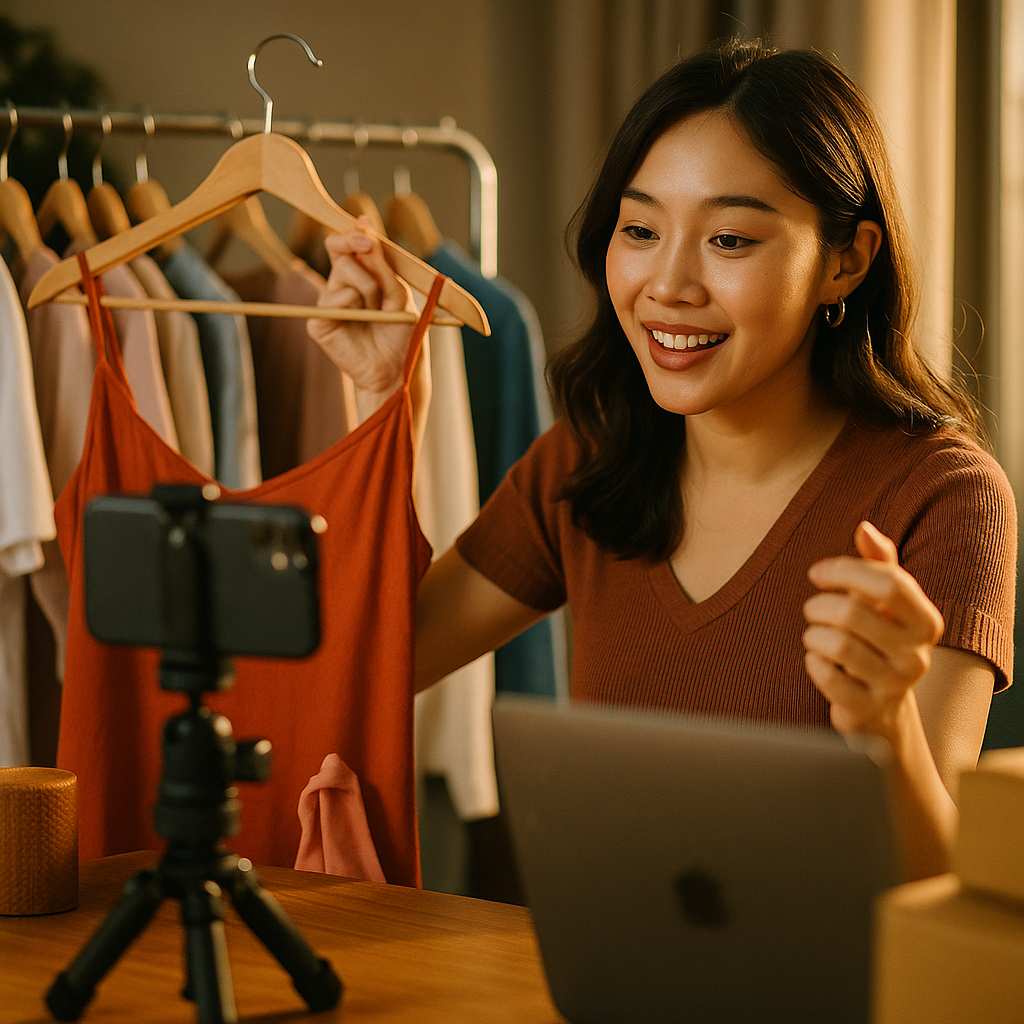
Scroll-and-tap static posts used to be the backbone of creator income. Not anymore. New platform data shows livestream commerce now generates more creator revenue than static feed content across TikTok Shop, Instagram, and YouTube combined, and the gap is widening every quarter. If your influencer budget still treats livestream as a bonus line item, you’re funding yesterday’s model.
The Numbers Behind the Shift
Livestream commerce isn’t a novelty import from Chinese platforms anymore. TikTok Shop’s live sessions regularly outsell static product posts by a factor of three to five on a per-creator basis, according to data shared by creators and agencies tracking GMV across content formats. Amazon Live, YouTube Shopping, and Instagram Live Shopping have all expanded their creator tooling in the past year, which tells you where the platforms think the money is going.
This isn’t just a Gen Z phenomenon confined to beauty hauls and unboxings. Home goods, supplements, electronics accessories, even B2B software demos are moving into live formats because the conversion math works. A static post asks someone to imagine a product. A livestream lets them watch someone else use it, ask questions in real time, and buy before the doubt creeps in.
Creators report that a single well-run livestream can generate more commission revenue in ninety minutes than a week of static posts, which is reshaping how talent negotiates deals and how brands plan content calendars.
Why Static Posts Are Losing Ground
Static content isn’t dying. It’s being demoted. Feed posts still build discovery and brand awareness, but they’ve lost their monopoly on bottom-funnel conversion. Platforms have quietly throttled organic reach on static posts while boosting algorithmic distribution for live and shoppable video, nudging creators (and brands) toward the format that keeps users on-platform longer.
There’s also a trust dynamic at play. Audiences have grown wary of overly polished, obviously sponsored static content. Livestream feels unscripted, even when it’s rehearsed. That perceived authenticity translates directly into purchase intent, which is exactly the kind of signal brands chasing GMV as a core KPI have been hunting for.
Static posts also carry a structural disadvantage: they’re asynchronous. A livestream creates urgency, scarcity, and social proof in real time, limited-time discount codes, visible purchase counters, live Q&A that overcomes objections instantly. Try replicating that with a carousel post. You can’t.
What This Means for Brand Budgets
If livestream now drives the majority of creator-attributed revenue, static-post-heavy contracts are misallocating spend. Brands need to renegotiate deliverables, shifting from “three feed posts and a story” to “one livestream session with a static recap clip for retargeting.” That’s a fundamentally different production, legal, and measurement model.
It also changes how finance teams evaluate payback. Livestream campaigns often require upfront investment in inventory holds, real-time customer service staffing, and platform commerce fees, but they compress the CAC payback period because the purchase happens in the same session as the pitch. Compare that to static posts, where attribution windows stretch across days and conversion paths get muddied by multi-touch journeys.
Brands already struggling with ROI visibility shouldn’t expect livestream to fix that problem automatically. The same measurement gaps plaguing CMOs apply here too, arguably worse, because live commerce data lives in platform-native dashboards that don’t always sync cleanly with brand analytics stacks.
Operational Realities Nobody Talks About
Livestream commerce looks glamorous from the outside. Behind the scenes, it’s logistics hell if you’re not prepared. Someone has to manage real-time inventory sync so creators don’t oversell stock that’s already gone. Someone has to staff live chat moderation to catch FTC-relevant disclosure requirements and handle customer questions before they turn into complaints. Someone has to reconcile commission payouts against actual fulfilled orders, not just clicked links.
This is why the creator operations function has become a real job title rather than a side task bolted onto marketing. Programs that used to run on spreadsheets and Slack threads now need dedicated staff, a trend already visible in creator operations strategist hiring and the broader push toward AI-first operations models that can handle the volume and speed livestream commerce demands.
Payouts are shifting too. Flat per-post fees make less sense when revenue is generated live and tracked to the dollar. Expect more contracts tied to performance thresholds, not unlike the shift already happening with payout models tied to funded accounts rather than posts. Livestream makes performance-based comp easier to justify because the data is immediate and unambiguous.
Risk and Compliance: The Part Legal Teams Need to Hear
Live, unscripted commerce content creates compliance exposure that static posts never did. There’s no editing window. A creator can misstate a product claim, forget a disclosure, or respond to a chat question in a way that triggers regulatory scrutiny, and it’s already broadcast before anyone on the brand side can intervene.
The FTC’s endorsement guidelines still apply fully to live content, disclosures need to happen verbally and on-screen, not buried in a bio link. Brands running live commerce at scale should build pre-session briefing protocols, real-time moderation backup, and post-stream content audits into their standard operating procedure, not treat them as optional extras.
Livestream’s biggest advantage, real-time unscripted selling, is also its biggest liability. Brands that skip compliance prep are one bad clip away from a regulatory headache.
This dovetails with broader concerns raised by programs lacking clear strategy and guardrails. Livestream amplifies both the upside and the downside of weak program governance.
How AI Tools Are Changing the Live Commerce Equation
AI is quietly becoming the infrastructure layer underneath livestream commerce. Real-time captioning, automated product tagging during live sessions, chat sentiment monitoring, and post-stream clip generation for static recap content are all being handled by AI tools that didn’t exist in mainstream creator workflows a couple years ago.
Brands that have already closed the AI adoption gap in creator workflows are better positioned to scale livestream programs without proportionally scaling headcount. Those still running manual processes will find livestream commerce expensive to operate well, because the real-time nature of the format punishes slow, manual intervention.
Platforms are also investing in AI-assisted shopping features inside live streams, auto-generated product carousels, predictive restock alerts, and personalized discount triggers based on viewer behavior. TikTok’s advertising platform and Meta’s business tools have both expanded shoppable live features, signaling where platform investment priorities sit for the next several quarters.
Is This a Platform-Specific Trend or Industry-Wide?
It’s industry-wide, but unevenly distributed. TikTok Shop remains the clearest case study, but YouTube’s push into live shopping and Instagram’s continued investment in Live Shopping features suggest this isn’t a single-platform fad. Even LinkedIn, traditionally static-post territory for B2B, has started experimenting with live event formats tied to product launches, though adoption lags behind consumer platforms, something reflected in the B2B platform preference data brands are tracking closely.
Retail categories are adopting livestream commerce faster than others. Beauty, fashion, and consumer electronics lead. Food and beverage, home goods, and wellness are catching up quickly. B2B is the laggard, understandably, since enterprise buying cycles don’t lend themselves to impulse live purchases the way consumer goods do.
Data from eMarketer’s creator economy research and Statista’s social commerce tracking both point to sustained growth in live shopping penetration across major markets, reinforcing that this isn’t a temporary spike tied to one platform’s algorithm change.
What Brands Should Do Right Now
- Audit current creator contracts and identify which deliverables are static-only, then renegotiate toward hybrid live plus recap formats.
- Build or license real-time inventory and fulfillment integrations before committing to large-scale livestream campaigns.
- Establish pre-stream compliance briefings and post-stream content review as standard practice, not an afterthought.
- Shift KPI reporting from engagement metrics toward GMV and conversion data tied specifically to live sessions.
- Evaluate whether existing MarTech and measurement vendors can actually ingest live commerce data, many can’t yet.
None of this requires abandoning static content entirely. Static posts still serve top-of-funnel discovery and retargeting assets pulled from live sessions. But treating static and live as equal-weight line items in a budget is no longer defensible given the revenue data.
Takeaway
Livestream commerce has already overtaken static posts as the primary creator revenue driver, and brands still allocating budget and measurement frameworks around the old static-first model are leaving money on the table. Start by renegotiating one creator contract this quarter to include a live commerce component, measure it against your current static benchmarks, and let the GMV data make the case for the rest of your program.
FAQs
Why is livestream commerce generating more revenue than static posts?
Livestream creates real-time urgency, visible social proof, and instant objection-handling through live Q&A, all of which compress the path from interest to purchase in ways a static post cannot replicate.
Does this mean brands should stop using static content entirely?
No. Static content still drives discovery, retargeting, and brand awareness. It should be repositioned as a supporting asset to livestream campaigns rather than the primary conversion driver.
What compliance risks come with livestream commerce specifically?
Live, unscripted content increases the risk of missed disclosures or unverified claims since there’s no editing window before broadcast. Brands need pre-stream briefings and real-time moderation to manage FTC compliance.
How should brands structure creator payouts for livestream campaigns?
Performance-based compensation tied to actual conversion or GMV during the live session is becoming more common than flat per-post fees, since live commerce data is tracked in real time and leaves little ambiguity.
Which platforms currently lead in livestream commerce adoption?
TikTok Shop is the clearest leader, with YouTube Shopping and Instagram Live Shopping expanding quickly. B2B platforms like LinkedIn are experimenting but remain well behind consumer-facing platforms in adoption.
Top Influencer Marketing Agencies
The leading agencies shaping influencer marketing in 2026
Agencies ranked by campaign performance, client diversity, platform expertise, proven ROI, industry recognition, and client satisfaction. Assessed through verified case studies, reviews, and industry consultations.
Moburst

-
2

The Shelf
Boutique Beauty & Lifestyle Influencer AgencyA data-driven boutique agency specializing exclusively in beauty, wellness, and lifestyle influencer campaigns on Instagram and TikTok. Best for brands already focused on the beauty/personal care space that need curated, aesthetic-driven content.Clients: Pepsi, The Honest Company, Hims, Elf Cosmetics, Pure LeafVisit The Shelf → -
3

Audiencly
Niche Gaming & Esports Influencer AgencyA specialized agency focused exclusively on gaming and esports creators on YouTube, Twitch, and TikTok. Ideal if your campaign is 100% gaming-focused — from game launches to hardware and esports events.Clients: Epic Games, NordVPN, Ubisoft, Wargaming, Tencent GamesVisit Audiencly → -
4

Viral Nation
Global Influencer Marketing & Talent AgencyA dual talent management and marketing agency with proprietary brand safety tools and a global creator network spanning nano-influencers to celebrities across all major platforms.Clients: Meta, Activision Blizzard, Energizer, Aston Martin, WalmartVisit Viral Nation → -
5

The Influencer Marketing Factory
TikTok, Instagram & YouTube CampaignsA full-service agency with strong TikTok expertise, offering end-to-end campaign management from influencer discovery through performance reporting with a focus on platform-native content.Clients: Google, Snapchat, Universal Music, Bumble, YelpVisit TIMF → -
6

NeoReach
Enterprise Analytics & Influencer CampaignsAn enterprise-focused agency combining managed campaigns with a powerful self-service data platform for influencer search, audience analytics, and attribution modeling.Clients: Amazon, Airbnb, Netflix, Honda, The New York TimesVisit NeoReach → -
7

Ubiquitous
Creator-First Marketing PlatformA tech-driven platform combining self-service tools with managed campaign options, emphasizing speed and scalability for brands managing multiple influencer relationships.Clients: Lyft, Disney, Target, American Eagle, NetflixVisit Ubiquitous → -
8

Obviously
Scalable Enterprise Influencer CampaignsA tech-enabled agency built for high-volume campaigns, coordinating hundreds of creators simultaneously with end-to-end logistics, content rights management, and product seeding.Clients: Google, Ulta Beauty, Converse, AmazonVisit Obviously →