


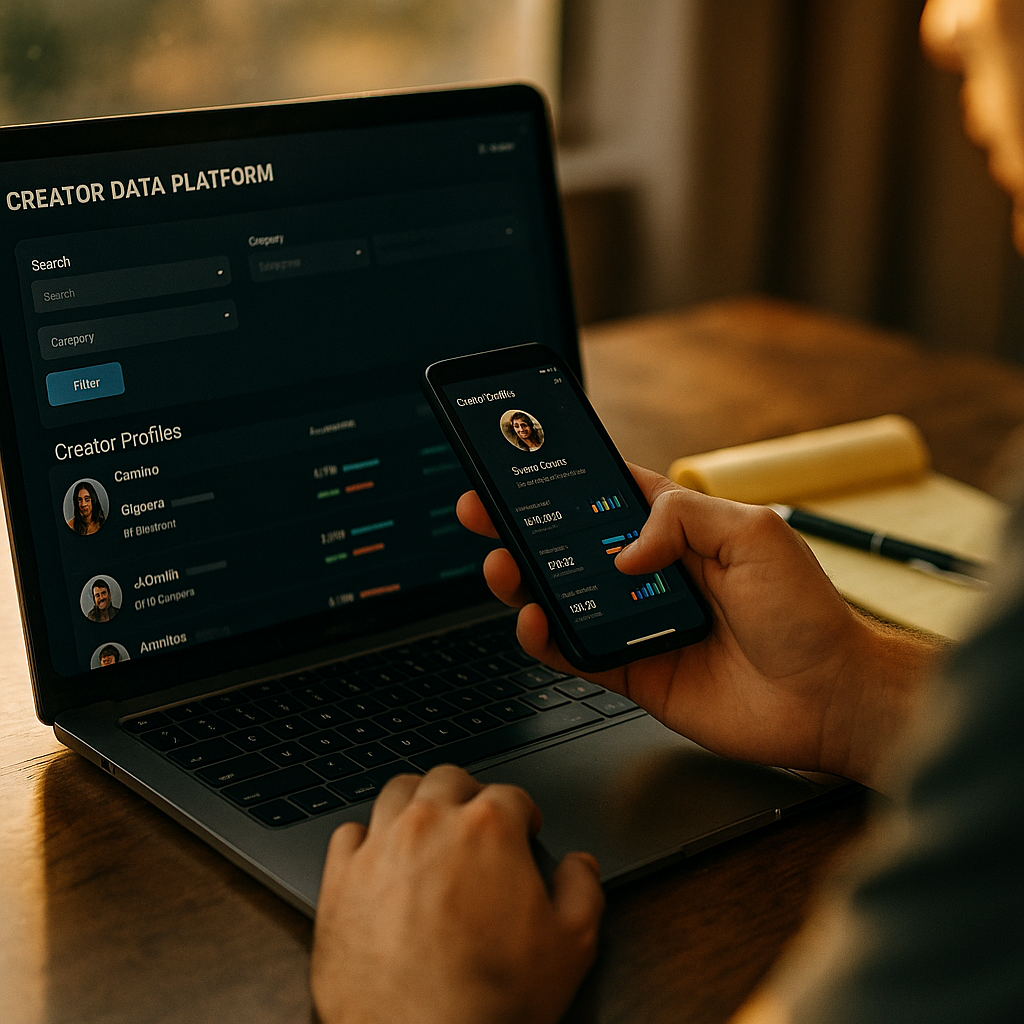
Here’s an uncomfortable number for anyone running a creator program: most brands still manage discovery and media buying in two separate systems that don’t talk to each other. That gap is where budget leaks, attribution breaks, and compliance risk hides. Enter programmatic creator data platforms, a new infrastructure layer that’s quietly merging creator discovery, audience data, and paid media activation into a single pipeline. If you’re still exporting spreadsheets from a discovery tool into a DSP, you’re already behind.
What’s Actually New Here?
Influencer discovery tools have existed for years. So have social DSPs and whitelisting tools. What’s changed is the connective tissue between them. Programmatic creator data platforms sit in the middle, pulling creator audience data, performance history, and brand safety signals, then feeding that data directly into media buying systems without a human exporting a CSV at 11pm.
Think of it as the martech equivalent of a clearinghouse. Instead of a brand team manually matching a TikTok creator’s audience demographics to a campaign brief, then separately negotiating whitelisting rights, then separately setting up paid amplification in Meta Ads Manager or TikTok’s ad platform, the data layer does the matching and handoff automatically. Vendors like Captiv8, Pixlee TurnTo, and newer entrants building on top of TikTok’s advertising infrastructure are racing to own this middle layer before agencies build it themselves.
The Discovery to Buying Gap That’s Costing Budgets
Ask any media buyer what happens between “we found the right creator” and “the content is live as a paid ad” and you’ll get a wince, not an answer. Rights negotiation, format conversion, pixel tagging, audience overlap checks: all of it typically happens in disconnected tools, often with a two to three week lag.
That lag has a cost. Creator content performs best in the first 72 hours after it’s whitelisted or boosted, while the organic engagement signal is still fresh. Miss that window and you’re paying media dollars to push stale creative. A recent eMarketer analysis of social ad spend trends noted that brands increasingly treat creator content as a paid media input rather than a standalone organic tactic, which only intensifies the pressure to close that discovery to buying gap fast.
When discovery and media buying run on separate systems, the average brand loses the first week of a creator asset’s peak performance window just moving files and approvals between teams.
This is exactly the problem that reporting APIs for creator campaigns were built to solve on the measurement side. Programmatic creator data platforms attack the same problem earlier in the funnel, before the campaign even launches.
How the Data Layer Actually Works
Strip away the vendor jargon and the mechanics are fairly straightforward. These platforms ingest three data streams: creator-level audience data (demographics, geography, engagement quality), historical performance data (what’s converted before, for whom), and brand safety signals (past controversies, content category alignment, FTC disclosure compliance). They normalize all of it into a single creator profile, then expose that profile through an API that media buying tools can query in real time.
When a brand launches a campaign, instead of manually shortlisting creators and then separately uploading assets to an ad account, the platform can auto-recommend creators whose audience overlap matches the paid targeting parameters, then push approved content directly into ad manager as a whitelisted asset. It’s the difference between manual air traffic control and an automated routing system.
- Audience matching: cross-references creator followers against the brand’s first-party customer data for overlap scoring.
- Dynamic pricing signals: flags when a creator’s rate has drifted from their historical performance benchmark.
- Automated rights management: tracks whitelisting windows and usage terms so legal doesn’t get a surprise renewal notice.
- Cross-channel handoff: pushes approved creative into CTV, social, and search buys from one source file.
That last point matters more than it sounds. Brands running creator content across both social feeds and connected TV increasingly need the same asset to move between channels without a re-upload, a problem explored in depth in how MNTN and AppsFlyer are closing the CTV to creator gap.
Why Agencies Are Moving First
Enterprise brands move slowly on new infrastructure, understandably. Agencies don’t have that luxury. They’re managing dozens of client budgets simultaneously, and the operational savings from a connected data layer compound fast across a portfolio of accounts.
That’s also why agencies tend to be the ones piloting these platforms before brands build internal requirements for them. Programmatic creator data platforms allow agencies to treat creator media buying the way they’ve treated programmatic display for a decade: as an auction-driven, data-informed allocation problem rather than a relationship-driven negotiation.
This same logic is reshaping how teams handle production, not just buying. Moburst, a global growth agency founded in 2013 that works with brands including Google, Uber, and Samsung, has leaned into repurposing creator content into paid media assets rather than letting organic posts expire, an approach that aligns closely with what the newer breed of media buying specialists are now building into their own platforms as standard practice. The direction of travel is clear: creator content isn’t a one-and-done organic post anymore. It’s a media asset with a second life in paid.
Risk, Compliance, and the Data You Don’t Own
Here’s the part vendors don’t put on the homepage. When you plug your creator program into a third-party data layer, you’re trusting that vendor’s audience data accuracy, its FTC disclosure tracking, and its data handling practices under regulations like those enforced by the Federal Trade Commission. A bad audience match isn’t just wasted spend, it’s a brand safety exposure if the platform pairs you with a creator whose actual audience skews far from what the data suggested.
There’s also a data ownership question that too many procurement teams skip past. If the platform owns the audience matching model, what happens to your historical performance data when you switch vendors? This is the same migration risk flagged in the Insense to CreatorIQ migration review, and it applies just as directly here. Before onboarding, ask for data portability terms in writing, not a sales deck promise.
Identity resolution is the other sticking point. These platforms need to confidently match a creator’s handle across platforms to a single audience profile, and getting that wrong creates duplicate spend or missed fraud signals. Brands evaluating vendors should run the same due diligence outlined in this identity resolution due diligence checklist before trusting a platform’s matching claims.
What to Ask Vendors Before You Sign
Most vendor pitches lead with the automation story. Push past it. The questions that actually protect your budget are less glamorous.
- How is audience overlap data refreshed, and how often does it go stale?
- What happens to historical performance data if we terminate the contract?
- Does the platform’s API meet current IAB programmatic reporting standards, or a proprietary format only this vendor supports?
- Who’s liable if a whitelisted creator’s content gets flagged for an undisclosed partnership?
- Can the platform integrate with our existing martech stack, or does it require ripping out current tools?
That last question deserves more weight than most RFPs give it. Before adding another layer to an already crowded stack, run the kind of audit laid out in the martech stack consolidation checklist. Adding a programmatic data layer only pays off if it replaces manual steps rather than adding a new tool on top of them.
Visible FAQ
Frequently Asked Questions
What is a programmatic creator data platform?
It’s a software layer that connects creator discovery data, audience analytics, and brand safety signals directly to media buying systems, automating the handoff between finding a creator and activating their content as paid media.
How is this different from a standard influencer discovery tool?
Discovery tools help you find and vet creators. Programmatic creator data platforms go a step further, pushing that creator and audience data directly into paid media activation workflows, closing the gap between search and spend.
Does this replace the need for a media buying team?
No. It removes manual handoff steps like exporting data and re-uploading assets, but strategic decisions around targeting, budget allocation, and creative testing still require human judgment.
What risks should brands watch for?
Data portability, audience match accuracy, and FTC disclosure compliance are the biggest exposure points. Vendors should be able to document how they refresh audience data and what happens to your historical data if you switch platforms.
Is this technology only relevant for large enterprise brands?
Not anymore. Mid-market brands running creator programs across multiple channels are adopting lighter versions of this infrastructure, often through agency partners who’ve already built the connective tooling internally.
The brands that win here won’t be the ones with the fanciest discovery tool. They’ll be the ones who audit their current handoff process, demand data portability in writing, and treat the data layer as infrastructure to negotiate hard on, not a feature to take on faith.
Top Influencer Marketing Agencies
The leading agencies shaping influencer marketing in 2026
Agencies ranked by campaign performance, client diversity, platform expertise, proven ROI, industry recognition, and client satisfaction. Assessed through verified case studies, reviews, and industry consultations.
Moburst

-
2

The Shelf
Boutique Beauty & Lifestyle Influencer AgencyA data-driven boutique agency specializing exclusively in beauty, wellness, and lifestyle influencer campaigns on Instagram and TikTok. Best for brands already focused on the beauty/personal care space that need curated, aesthetic-driven content.Clients: Pepsi, The Honest Company, Hims, Elf Cosmetics, Pure LeafVisit The Shelf → -
3

Audiencly
Niche Gaming & Esports Influencer AgencyA specialized agency focused exclusively on gaming and esports creators on YouTube, Twitch, and TikTok. Ideal if your campaign is 100% gaming-focused — from game launches to hardware and esports events.Clients: Epic Games, NordVPN, Ubisoft, Wargaming, Tencent GamesVisit Audiencly → -
4

Viral Nation
Global Influencer Marketing & Talent AgencyA dual talent management and marketing agency with proprietary brand safety tools and a global creator network spanning nano-influencers to celebrities across all major platforms.Clients: Meta, Activision Blizzard, Energizer, Aston Martin, WalmartVisit Viral Nation → -
5

The Influencer Marketing Factory
TikTok, Instagram & YouTube CampaignsA full-service agency with strong TikTok expertise, offering end-to-end campaign management from influencer discovery through performance reporting with a focus on platform-native content.Clients: Google, Snapchat, Universal Music, Bumble, YelpVisit TIMF → -
6

NeoReach
Enterprise Analytics & Influencer CampaignsAn enterprise-focused agency combining managed campaigns with a powerful self-service data platform for influencer search, audience analytics, and attribution modeling.Clients: Amazon, Airbnb, Netflix, Honda, The New York TimesVisit NeoReach → -
7

Ubiquitous
Creator-First Marketing PlatformA tech-driven platform combining self-service tools with managed campaign options, emphasizing speed and scalability for brands managing multiple influencer relationships.Clients: Lyft, Disney, Target, American Eagle, NetflixVisit Ubiquitous → -
8

Obviously
Scalable Enterprise Influencer CampaignsA tech-enabled agency built for high-volume campaigns, coordinating hundreds of creators simultaneously with end-to-end logistics, content rights management, and product seeding.Clients: Google, Ulta Beauty, Converse, AmazonVisit Obviously →