


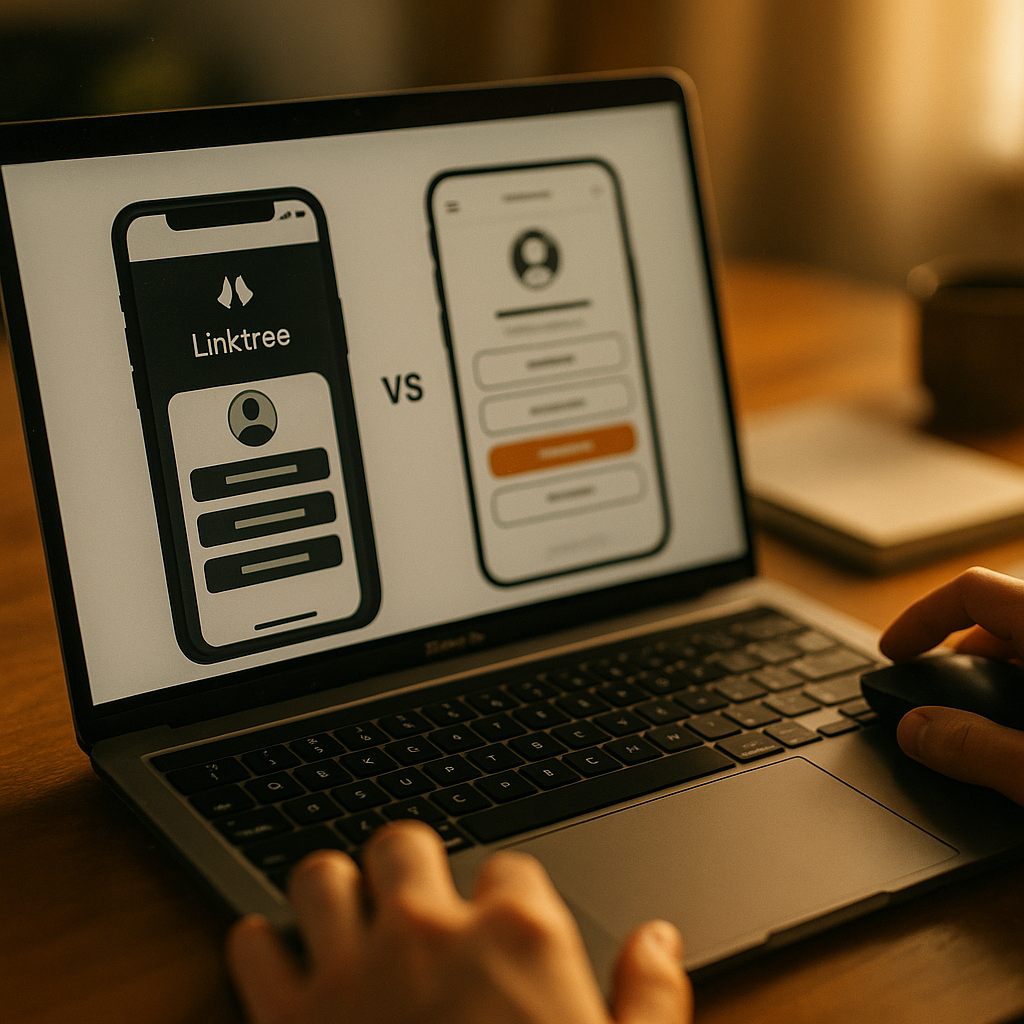
One link. That’s all TikTok gives a creator’s bio, and that single constraint spawned a billion-dollar category. Linktree now claims over 50 million users, but “most popular” and “best for your brand’s reporting stack” are two very different things. If your influencer program still treats link in bio as an afterthought rather than a measurement layer, you’re leaving attribution data on the table every single post.
This isn’t a love letter to Linktree. It’s a buyer’s audit of the whole link in bio category, built for marketers who need click data that actually reconciles with their attribution stack, not just a pretty landing page.
Why the Single Link Rule Still Shapes Buying Decisions
TikTok, Instagram, and YouTube all restrict bio links to one clickable URL (Instagram allows a few more in specific placements, but the constraint is real everywhere that matters). That scarcity forced an entire tooling category into existence: link in bio aggregators that let creators and brands house multiple destinations behind a single tap.
For brands, the implication is operational, not cosmetic. Every campaign that drives to a creator’s bio link is routing through a third-party redirect layer you likely don’t control. That layer sits between your media spend and your attribution data. Get the tool wrong and you inherit blind spots: no UTM persistence, no pixel firing, no export to your analytics stack.
A link in bio tool is not a design widget. It’s an unmanaged node in your attribution chain, and most brands never audit it the way they’d audit an ad network or a CRM integration.
Linktree’s Position: Dominant, Not Default
Linktree earned its scale by being first and free. The core tier still works fine for a creator posting a handful of affiliate links. But brands running paid influencer programs at volume start hitting friction fast: limited native analytics, capped integrations on lower tiers, and a reporting dashboard that wasn’t built with media buyers in mind.
Linktree’s paid tiers (Starter, Pro, Premium) add Google Analytics and Meta Pixel integration, plus commerce features like Linktree Shop. That’s a meaningful upgrade from the free tier. It still falls short of what a performance marketing team needs if the bio link is a primary conversion path rather than a brand awareness touchpoint.
The real question for brand teams isn’t “is Linktree good.” It’s “does Linktree’s data model match how we attribute spend.” For many mid-funnel awareness campaigns, it’s fine. For TikTok Shop-driven commerce programs, it often isn’t, and that gap is exactly why TikTok Shop attribution tools have become their own buying category.
Where the Free Tier Breaks
- No persistent UTM parameter management across multiple creator links
- Limited click-through data retention on free and entry tiers
- No native fraud or bot-click filtering, a real issue when paid traffic spikes bot activity
- Basic export options that don’t map cleanly to standard reporting APIs
None of these are fatal for organic creator partnerships. They become real problems the moment a brand is running paid amplification against that same bio link and trying to tie spend to revenue.
The Challenger Set: Beacons, Later, Koji, and Milkshake
Linktree isn’t competing in a vacuum anymore. Beacons has leaned hard into creator monetization, bundling storefronts, email capture, and media kits alongside the link page, making it attractive for brands running affiliate and ambassador programs that need built-in payout tracking. Later’s Linkin.bio integrates directly with its scheduling and social listening suite, which matters if your team already lives inside Later for content calendars. Koji pushed harder into interactive commerce blocks before pivoting its product focus, and Milkshake (owned by Instagram-parent Meta’s ecosystem adjacent apps) targets a more visual, Gen Z aesthetic with simpler analytics.
The honest comparison point for brand teams isn’t features, it’s data portability. Can the tool export clean, timestamped click data that your attribution vendor can ingest without a manual cleanup pass? Most can’t, out of the box.
What Brand Teams Should Actually Evaluate
Stop evaluating link in bio tools on design templates. Evaluate them the way you’d evaluate any martech vendor entering your stack: integration depth, data ownership, and exit cost.
- UTM and pixel persistence. Does the tool let you append and retain custom UTM parameters per creator, per campaign, without manual rebuilding each time?
- Native integrations. Google Analytics 4 and Meta Pixel support are table stakes now. Ask about server-side tagging support too, since browser-based tracking keeps degrading.
- API access for reporting. If you can’t pull raw click and conversion data via API, you’re stuck manually exporting CSVs every reporting cycle. That doesn’t scale past a handful of creators.
- Bot and fraud filtering. Paid traffic to bio links attracts click fraud. Few link in bio tools filter for this natively, which is why fraud detection has become its own layer, as covered in attribution fraud detection approaches brands are now bolting onto their stack.
- Data residency and privacy compliance. If you’re running programs in the EU or UK, check how the vendor handles consent and data storage. The UK ICO has been increasingly active on adtech data flows, and link in bio tools that fire third-party pixels are squarely in scope.
If a link in bio vendor can’t answer “where does the click data live and can we export it raw,” treat that as a disqualifying red flag, not a minor gap.
Integration Debt Is the Hidden Cost
Here’s the thing nobody puts in the vendor comparison chart: switching link in bio tools mid-program is disruptive. Every creator in your network has that URL saved in their bio. Migrating means re-briefing creators, re-testing redirects, and risking a window where links simply don’t resolve correctly. That’s lost conversions, not a hypothetical.
This is the same integration debt problem brands hit when swapping any platform in a creator tech stack, the kind of friction detailed in platform migration red flags analysis for larger CRM-style tools. Link in bio tools are smaller in scope but carry the same operational risk: once creators adopt a URL pattern, changing it has a real cost in campaign continuity.
The practical fix is treating link in bio selection as a stack decision up front, not a creator-level preference. Standardize on one vendor across your ambassador program, document the UTM taxonomy, and build it into creator onboarding rather than leaving it to individual choice.
Does Link in Bio Data Actually Reconcile With Your Attribution Stack?
This is the question most brands skip. A link in bio click isn’t a conversion, it’s an intermediate step. If that click data doesn’t flow into whatever system calculates creator payouts or ROI, you’re running two disconnected reporting layers that never agree.
Brands serious about closing this gap are pushing vendors to support clean API handoffs, similar to what’s now expected from a reporting API for creator campaigns. If your link in bio tool can’t feed that API, it’s creating a measurement gap your finance team will eventually notice when the numbers don’t tie out.
For teams already running intelligent attribution tools across paid and organic creator spend, the link in bio layer either plugs in cleanly or becomes the weak link (no pun intended) that undermines an otherwise solid measurement setup.
Commerce Features: Useful or Distraction?
Linktree Shop, Beacons’ storefront tools, and similar commerce add-ons let creators sell directly from the bio link page. For brands running affiliate programs, this can be genuinely useful: it shortens the path from discovery to purchase without routing through a third app.
But commerce features also add complexity to payout reconciliation. If a creator sells through a Linktree storefront and also promotes via TikTok Shop, you now have two separate commerce rails to reconcile for the same creator relationship. That’s manageable at small scale. It gets messy fast once you’re running dozens of creators across multiple commerce surfaces, which is part of why TikTok Shop SKU attribution has become its own specialized problem rather than something bio link tools solve natively.
According to eMarketer research on social commerce growth, creator-driven purchase paths increasingly span multiple platforms within a single campaign. That multi-surface reality is exactly why link in bio tools can’t be the sole attribution source of truth anymore. They’re one node, not the whole chain.
A Practical Vetting Checklist Before You Standardize
Before locking your creator network into one link in bio vendor, run this short audit:
- Request a sample raw data export and check if it maps to your existing reporting schema without manual cleanup
- Confirm whether UTM parameters survive link edits and redirects
- Ask directly about bot traffic filtering methodology, not just “do you have it”
- Check contract terms for data portability if you terminate the relationship
- Test load time and redirect speed on mobile, since every extra second of latency costs clicks
This kind of vendor discipline mirrors what smart teams already apply during broader martech stack consolidation efforts. Link in bio tools got a pass for years because they seemed low stakes. They aren’t, not when they sit directly in your conversion path.
For deeper benchmarks on how creator discovery and vetting tools handle data quality more broadly, the comparisons in AI creator discovery databases apply a similar logic: scale alone doesn’t guarantee usable, clean data for your reporting stack.
FAQs
Frequently Asked Questions
Is Linktree still the best link in bio tool for brands in 2026?
It depends on your use case. Linktree remains the default for organic reach and creator familiarity, but brands running paid traffic or TikTok Shop commerce programs often need deeper analytics and API access that competitors or paid Linktree tiers provide more completely.
What’s the main risk of using a free link in bio tool for paid campaigns?
Free tiers typically lack UTM persistence, pixel integration, and bot filtering. That means your click data won’t reconcile cleanly with paid media reporting, creating attribution gaps that are hard to detect until payout time.
Can link in bio tools integrate with existing attribution platforms?
Most offer basic Google Analytics or Meta Pixel integration on paid tiers, but few provide full API access for raw data export. Brands should confirm API availability before standardizing across a creator program.
How do commerce features like Linktree Shop affect payout tracking?
They add a separate sales rail that must be reconciled alongside other commerce channels like TikTok Shop. This increases reporting complexity, especially when creators sell through multiple surfaces simultaneously.
Should brands standardize on one link in bio vendor across their creator network?
Yes, for any program running paid amplification or payout-linked performance. Standardization simplifies UTM taxonomy, reduces migration risk, and ensures consistent data flows into your broader attribution stack.
Audit your current link in bio vendor against your attribution stack this quarter, not after the next campaign launches. The gap between “clicks tracked” and “revenue reconciled” is where budget quietly disappears.
Frequently Asked Questions
Is Linktree still the best link in bio tool for brands in 2026?
It depends on your use case. Linktree remains the default for organic reach and creator familiarity, but brands running paid traffic or TikTok Shop commerce programs often need deeper analytics and API access that competitors or paid Linktree tiers provide more completely.
What’s the main risk of using a free link in bio tool for paid campaigns?
Free tiers typically lack UTM persistence, pixel integration, and bot filtering. That means your click data won’t reconcile cleanly with paid media reporting, creating attribution gaps that are hard to detect until payout time.
Can link in bio tools integrate with existing attribution platforms?
Most offer basic Google Analytics or Meta Pixel integration on paid tiers, but few provide full API access for raw data export. Brands should confirm API availability before standardizing across a creator program.
How do commerce features like Linktree Shop affect payout tracking?
They add a separate sales rail that must be reconciled alongside other commerce channels like TikTok Shop. This increases reporting complexity, especially when creators sell through multiple surfaces simultaneously.
Should brands standardize on one link in bio vendor across their creator network?
Yes, for any program running paid amplification or payout-linked performance. Standardization simplifies UTM taxonomy, reduces migration risk, and ensures consistent data flows into your broader attribution stack.
Top Influencer Marketing Agencies
The leading agencies shaping influencer marketing in 2026
Agencies ranked by campaign performance, client diversity, platform expertise, proven ROI, industry recognition, and client satisfaction. Assessed through verified case studies, reviews, and industry consultations.
Moburst

-
2

The Shelf
Boutique Beauty & Lifestyle Influencer AgencyA data-driven boutique agency specializing exclusively in beauty, wellness, and lifestyle influencer campaigns on Instagram and TikTok. Best for brands already focused on the beauty/personal care space that need curated, aesthetic-driven content.Clients: Pepsi, The Honest Company, Hims, Elf Cosmetics, Pure LeafVisit The Shelf → -
3

Audiencly
Niche Gaming & Esports Influencer AgencyA specialized agency focused exclusively on gaming and esports creators on YouTube, Twitch, and TikTok. Ideal if your campaign is 100% gaming-focused — from game launches to hardware and esports events.Clients: Epic Games, NordVPN, Ubisoft, Wargaming, Tencent GamesVisit Audiencly → -
4

Viral Nation
Global Influencer Marketing & Talent AgencyA dual talent management and marketing agency with proprietary brand safety tools and a global creator network spanning nano-influencers to celebrities across all major platforms.Clients: Meta, Activision Blizzard, Energizer, Aston Martin, WalmartVisit Viral Nation → -
5

The Influencer Marketing Factory
TikTok, Instagram & YouTube CampaignsA full-service agency with strong TikTok expertise, offering end-to-end campaign management from influencer discovery through performance reporting with a focus on platform-native content.Clients: Google, Snapchat, Universal Music, Bumble, YelpVisit TIMF → -
6

NeoReach
Enterprise Analytics & Influencer CampaignsAn enterprise-focused agency combining managed campaigns with a powerful self-service data platform for influencer search, audience analytics, and attribution modeling.Clients: Amazon, Airbnb, Netflix, Honda, The New York TimesVisit NeoReach → -
7

Ubiquitous
Creator-First Marketing PlatformA tech-driven platform combining self-service tools with managed campaign options, emphasizing speed and scalability for brands managing multiple influencer relationships.Clients: Lyft, Disney, Target, American Eagle, NetflixVisit Ubiquitous → -
8

Obviously
Scalable Enterprise Influencer CampaignsA tech-enabled agency built for high-volume campaigns, coordinating hundreds of creators simultaneously with end-to-end logistics, content rights management, and product seeding.Clients: Google, Ulta Beauty, Converse, AmazonVisit Obviously →