


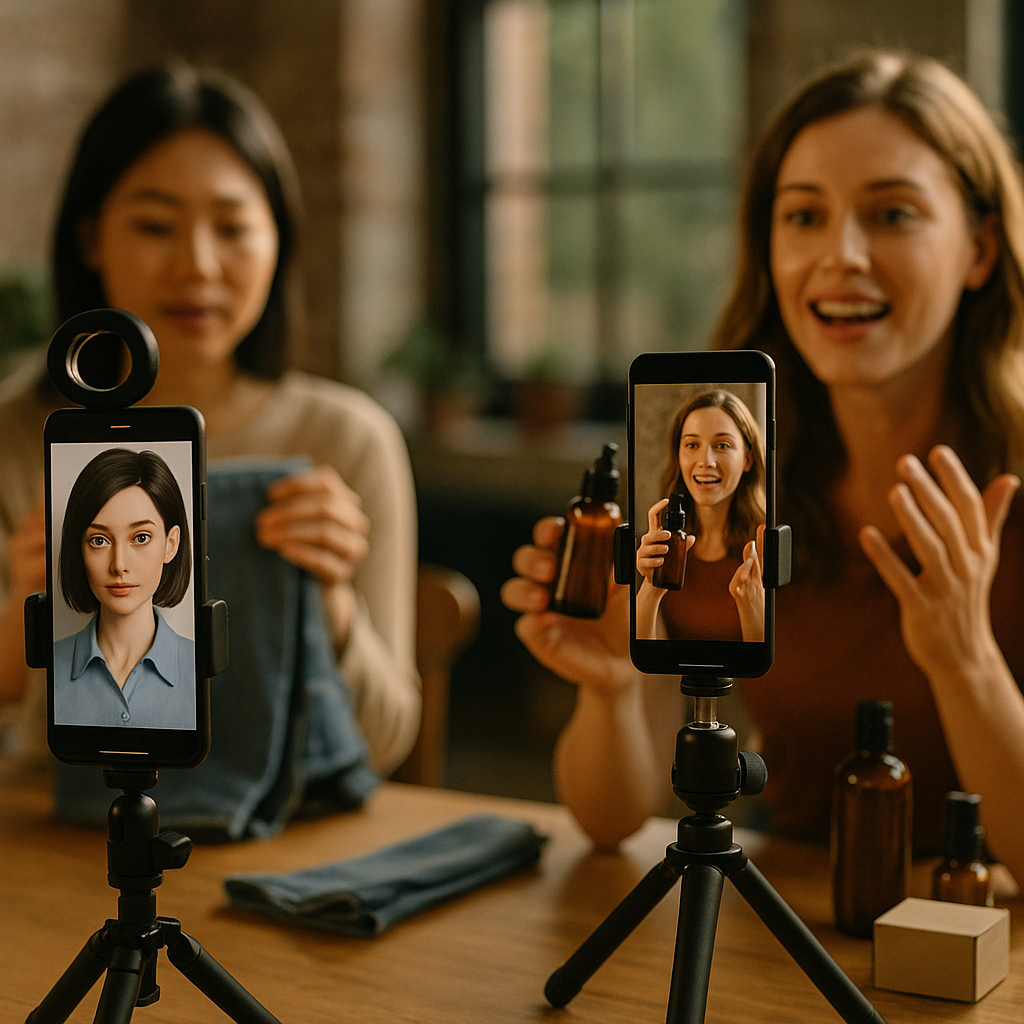
TikTok Shop sellers running AI avatars report labor cost cuts of up to 80 percent per stream. That number alone has procurement teams asking whether human hosts are becoming optional. But cost savings and conversion rates are two very different scoreboards, and brands betting budget on one without checking the other are setting themselves up for a painful quarter. So can AI livestream hosts replace human sellers on TikTok Shop, or is this another case of automation solving the wrong problem?
The Economics Are Real, and That’s Why This Question Won’t Go Away
Let’s start with why brands are even entertaining this. A human livestream host on TikTok Shop, especially one who can sell for six or eight hours a day, costs real money. Agencies in the US and UK market mid-tier hosts anywhere from 50 to 200 dollars an hour, and top performers command far more plus commission. AI hosts, by contrast, run on a flat software fee or per-stream licensing cost, and they don’t need breaks, sleep, or a greenroom.
Platforms like Vinci, Silkroad, and TikTok’s own emerging virtual host tools let sellers generate a digital presenter that reads a script, responds to pinned comments, and runs 24/7. For a seller in a saturated category like phone accessories or beauty dupes, that uptime matters. TikTok Shop’s algorithm rewards consistent live hours, and a tireless AI host can hold a slot at 3 a.m. that no human wants.
The pitch isn’t that AI hosts sell better. It’s that they sell constantly, and constancy compounds in an algorithm built on watch time and frequency.
Where AI Hosts Actually Win
Strip away the hype and there are genuine use cases where AI hosts outperform the human alternative on pure ROI math.
- Overnight and off-peak coverage. Keeping a channel live during low-traffic hours without paying overtime.
- Repetitive catalog reads. SKUs with simple, low-emotion purchase decisions (phone cases, kitchen gadgets, basic apparel) don’t need charisma, they need clear specs repeated often.
- Multi-language scaling. One brand can run simultaneous AI streams in English, Spanish, and Indonesian without hiring three separate teams.
- Testing new scripts fast. Swapping a CTA or offer structure takes minutes with an AI host versus re-briefing a human talent roster.
This is the same logic playing out across other marketing functions right now. Teams are learning to split tasks by risk and complexity rather than asking AI to do everything, a pattern explored in how brands bucket marketing tasks by AI risk. Livestream hosting is turning out to be a textbook case: low-stakes, repetitive segments go to AI, high-stakes conversion moments stay human.
Where Human Sellers Still Win, and the Data Backs It
Here’s the uncomfortable part for anyone pitching full AI replacement. Conversion rate, not watch time, is what pays the bills, and multiple seller case studies circulating in TikTok Shop agency networks show human-hosted streams converting at two to four times the rate of AI-hosted equivalents on considered purchases, meaning anything above roughly 30 dollars or anything requiring a size, fit, or ingredient judgment call.
Why the gap? A few reasons that any seasoned seller already knows intuitively:
- Real-time objection handling. A viewer asks “does this work on oily skin?” and a human host can improvise a credible answer pulled from genuine use. Most AI hosts still loop back to scripted responses that feel canned.
- Trust signals. Micro-expressions, tone shifts, and unscripted reactions (dropping a product, laughing at a comment) are trust cues viewers register subconsciously. AI avatars, even photorealistic ones, still trigger a faint “uncanny valley” discomfort for a meaningful share of viewers.
- Urgency and social proof in the moment. Humans read the room. They can spike urgency when orders spike, go quiet when the chat goes cold, and adjust pacing. Most AI hosts run a fixed script regardless of live chat sentiment, though this is improving fast.
AI hosts win on hours logged. Human hosts still win on dollars per hour. Brands optimizing for the wrong metric end up with great uptime stats and a flat revenue line.
The Hybrid Model Is Where the Smart Money Is Going
The most sophisticated TikTok Shop sellers right now aren’t choosing AI or human, they’re sequencing both. A typical hybrid schedule looks like this: AI hosts cover the 11 p.m. to 7 a.m. block and weekday mid-mornings, holding shelf presence and catching impulse buyers. Human hosts take the high-traffic evening and weekend slots where conversion-sensitive, higher-ticket items get pushed hard with live Q&A and urgency tactics.
This mirrors a broader shift in how agencies are structuring AI governance generally: not “replace the human” but “orchestrate the handoff.” The same workflow-audit discipline brands are applying to agentic workflow audits for AI ROI applies directly here. Sellers who treat the AI host as a tool slotted into a broader production calendar, rather than a wholesale replacement, are the ones posting the best blended margins.
There’s also a procurement layer most brands underestimate. Picking the right AI host vendor isn’t that different from vetting a creator matching engine, you need proof of performance against your actual SKUs, not a generic demo reel. The due diligence process outlined in SKU-trained creator matching vetting is a useful template: ask for conversion data on comparable product categories before signing a contract, not just uptime guarantees.
Compliance Is the Part Nobody’s Pricing In Yet
This is where things get genuinely risky for brands moving fast. TikTok Shop’s ad policies and the FTC’s endorsement guidance both require clear disclosure when content involves paid promotion, and the FTC has been explicit that AI-generated endorsers or synthetic spokespeople don’t get a pass just because they aren’t human. If your AI host claims “I use this every day” or implies personal experience it doesn’t have, that’s a deceptive practice risk, full stop. Check current guidance directly at the FTC’s official site before scripting any AI host claims.
There’s a parallel playing out in regulated industries already. Pharma marketers using AI-driven field agents have had to build compliance scaffolding around every automated claim, a model detailed in how AI field force models scale compliantly. TikTok Shop sellers in beauty, supplements, and wellness categories should be borrowing that playbook now, not after a platform strike or an FTC inquiry.
Disclosure fatigue is also a live issue. Platforms are starting to auto-flag templated or synthetic-feeling sponsored content, a trend covered in how detection systems flag templated sponsored content. An AI host running the same script across dozens of SKUs with minor swaps is exactly the pattern these systems are built to catch. Brands should assume their AI livestream scripts will eventually face the same scrutiny as AI-generated ad copy.
What This Means for Budget Allocation Next Quarter
If you’re a brand or agency deciding where to put next quarter’s livestream budget, the honest framework is this: use AI hosts to buy hours and consistency, use human hosts to buy conversion and trust. Don’t make it a binary either/or decision in your planning docs, because the sellers winning right now aren’t choosing a side.
Run a simple test before committing real budget. Put the same SKU through a two-week split, AI host versus human host, same time slots, same script structure. Track conversion rate and average order value, not just views or watch time. That single test will tell you more than any vendor pitch deck, and it mirrors the kind of operational audit approach that separates real efficiency gains from fake AI discounts in other marketing functions.
For benchmark context on where creator commerce spend is heading broadly, eMarketer’s creator economy data and Statista’s social commerce reports both show livestream shopping budgets growing faster than static content budgets, which means this AI-versus-human question only gets more expensive to answer wrong.
FAQs
Frequently Asked Questions
Can AI livestream hosts legally sell on TikTok Shop without disclosure?
No. If the stream involves paid promotion or a synthetic presenter making product claims, FTC endorsement guidance requires clear disclosure regardless of whether the host is human or AI generated.
Do AI hosts convert as well as human sellers on TikTok Shop?
Generally no, for considered or higher-ticket purchases. Case data from agencies shows human hosts converting two to four times better on items requiring judgment calls like fit, ingredients, or quality concerns. AI hosts perform closer to parity on simple, low-cost SKUs.
What is the cheapest way to test an AI livestream host before committing budget?
Run a two-week split test on one SKU, same script and time slots, comparing an AI host against a human host. Measure conversion rate and average order value, not just watch time or hours streamed.
Are AI livestream hosts allowed to make personal experience claims?
No. Claims like “I use this every day” from a synthetic host that has no personal experience are considered deceptive under FTC guidance and carry real platform and legal risk.
Is a hybrid AI and human livestream model the best approach right now?
For most sellers, yes. AI hosts are strongest for off-peak hours and repetitive low-ticket catalog reads, while human hosts still drive better conversion during high-traffic, high-stakes selling windows.
The seller who wins the next twelve months won’t be the one who picks AI or human, it’ll be the one who builds the test, reads the conversion data honestly, and schedules each host where the math actually works.
Top Influencer Marketing Agencies
The leading agencies shaping influencer marketing in 2026
Agencies ranked by campaign performance, client diversity, platform expertise, proven ROI, industry recognition, and client satisfaction. Assessed through verified case studies, reviews, and industry consultations.
Moburst

-
2

The Shelf
Boutique Beauty & Lifestyle Influencer AgencyA data-driven boutique agency specializing exclusively in beauty, wellness, and lifestyle influencer campaigns on Instagram and TikTok. Best for brands already focused on the beauty/personal care space that need curated, aesthetic-driven content.Clients: Pepsi, The Honest Company, Hims, Elf Cosmetics, Pure LeafVisit The Shelf → -
3

Audiencly
Niche Gaming & Esports Influencer AgencyA specialized agency focused exclusively on gaming and esports creators on YouTube, Twitch, and TikTok. Ideal if your campaign is 100% gaming-focused — from game launches to hardware and esports events.Clients: Epic Games, NordVPN, Ubisoft, Wargaming, Tencent GamesVisit Audiencly → -
4

Viral Nation
Global Influencer Marketing & Talent AgencyA dual talent management and marketing agency with proprietary brand safety tools and a global creator network spanning nano-influencers to celebrities across all major platforms.Clients: Meta, Activision Blizzard, Energizer, Aston Martin, WalmartVisit Viral Nation → -
5

The Influencer Marketing Factory
TikTok, Instagram & YouTube CampaignsA full-service agency with strong TikTok expertise, offering end-to-end campaign management from influencer discovery through performance reporting with a focus on platform-native content.Clients: Google, Snapchat, Universal Music, Bumble, YelpVisit TIMF → -
6

NeoReach
Enterprise Analytics & Influencer CampaignsAn enterprise-focused agency combining managed campaigns with a powerful self-service data platform for influencer search, audience analytics, and attribution modeling.Clients: Amazon, Airbnb, Netflix, Honda, The New York TimesVisit NeoReach → -
7

Ubiquitous
Creator-First Marketing PlatformA tech-driven platform combining self-service tools with managed campaign options, emphasizing speed and scalability for brands managing multiple influencer relationships.Clients: Lyft, Disney, Target, American Eagle, NetflixVisit Ubiquitous → -
8

Obviously
Scalable Enterprise Influencer CampaignsA tech-enabled agency built for high-volume campaigns, coordinating hundreds of creators simultaneously with end-to-end logistics, content rights management, and product seeding.Clients: Google, Ulta Beauty, Converse, AmazonVisit Obviously →