


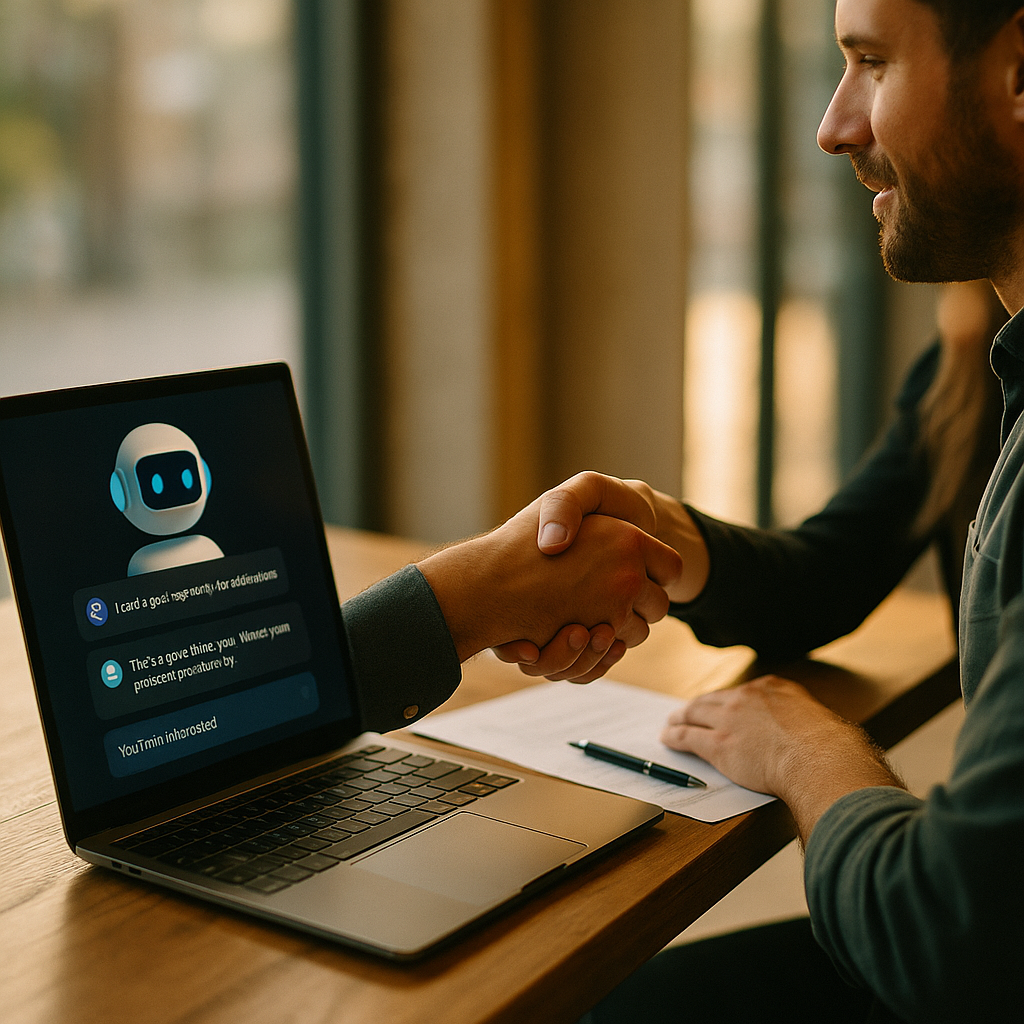
Here’s an uncomfortable number for anyone running a creator budget: agencies report that negotiating a single mid-tier creator deal still eats up three to six hours of back-and-forth email and DM haggling. Now a wave of AI powered media buying co-pilots promises to compress that into minutes. The pitch sounds great. The reality is messier. Can software actually close a creator deal, or does it just make humans faster at closing their own?
What These Co-Pilots Actually Do
Strip away the marketing language and most AI media buying co-pilots do three things well: they scrape historical rate data across platforms, they draft outreach and counteroffers based on benchmarked CPMs, and they flag when a creator’s ask deviates from market norms. Think of them as a very well-read junior buyer who never sleeps and never forgets a past deal.
Tools like these plug into influencer marketplaces, CRM data, and sometimes even scrape public rate cards to build a pricing model. Some go further, auto-generating counteroffer language and scheduling follow-ups. A few even simulate negotiation outcomes before a human ever sends a message.
The fastest-growing use case for AI in influencer marketing isn’t content creation anymore. It’s the unglamorous back office work of sourcing, pricing, and negotiating deals at scale.
Where the Machine Wins
Speed and consistency are the obvious wins. A co-pilot can pull comparable rates from thousands of past deals in seconds, something a human negotiator would need days to assemble manually. That data advantage alone changes the power dynamic in a negotiation. Brands walking in with benchmarked numbers close deals faster and often at better rates.
Scale is the second advantage. If you’re running a seeding program with 500 micro-creators, you simply cannot staff enough humans to negotiate each one individually without blowing the budget on overhead. This is where co-pilots genuinely replace headcount, not augment it. Similar logic has already reshaped how brands handle seeding and matching decisions, where volume makes manual review impractical.
According to eMarketer, brands are increasingly allocating creator budgets toward long-tail micro and nano creators precisely because automation makes that volume manageable. Without software doing the heavy lifting on pricing logic, that shift wouldn’t be financially viable.
Where It Falls Apart: The Trust Problem
Here’s what no vendor demo shows you. A creator with 40,000 engaged followers isn’t a spreadsheet row. They have a manager who knows the brand turned down a competitor last quarter. They remember how a campaign brief felt rushed. They negotiate based on relationship history, not just benchmarked CPM data.
AI co-pilots are brilliant at pattern matching but terrible at reading the room. They can’t sense when a creator is testing the waters versus genuinely walking away. They can’t pick up on the subtext when a talent manager says “let me think about it” and actually means “come back with 15% more.” Human negotiators build rapport over multiple deals. That relational capital compounds, and it’s precisely what gets destroyed when a brand replaces a trusted point of contact with a bot drafting form-letter counteroffers.
There’s also a reputational risk angle. A poorly calibrated AI negotiator that lowballs a creator’s manager based on outdated comp data can torch a relationship a brand spent two years building. This mirrors concerns raised around decision agents operating without governance, where automation moves faster than the oversight needed to catch mistakes.
Who’s Actually Using These Tools Right Now
Agencies running high-volume micro-influencer programs are the earliest adopters, largely because the deal sizes are small enough that a slightly imperfect negotiation doesn’t carry much downside risk. Enterprise brands, by contrast, are using co-pilots mostly for research and benchmarking, not for closing. They want the data advantage without ceding the final handshake to software.
That split makes sense. A $500 nano-creator deal and a $150,000 celebrity endorsement contract are not the same negotiation, and treating them identically is where brands get burned. The three bucket framework for marketing tasks applies cleanly here: low-stakes, high-volume work goes to automation; high-stakes, relationship-driven work stays with humans; everything in between needs a human reviewing AI output before it ships.
Can Co-Pilots Replace Negotiators, or Just Their Prep Work?
Ask vendors directly and most will admit, off the record, that full replacement isn’t the realistic near-term outcome. What’s actually happening is role compression. The junior buyer who used to spend a day building a rate comparison sheet now gets that in ten minutes. The senior negotiator who used to track twenty open conversations in a spreadsheet now has a co-pilot flagging which ones need attention today.
That’s a real efficiency gain, and it’s measurable in headcount terms. But it’s not the same as replacing the actual negotiation. HubSpot’s research on B2B sales automation found a similar pattern: AI compresses prep and follow-up time dramatically, but closing high-value deals still correlates strongly with human relationship management. Creator deals, especially above the micro-influencer tier, behave more like B2B sales than programmatic ad buys.
AI negotiation tools don’t eliminate the need for a skilled buyer. They raise the bar for what that buyer needs to focus on: judgment calls, relationship stakes, and brand risk, not spreadsheet math.
The Compliance and Risk Layer Nobody Talks About
There’s a quieter issue brands need to think through before handing negotiation authority to an algorithm: who’s accountable when an AI agent commits to contract terms that violate disclosure rules or brand safety policy? The FTC’s endorsement guidelines put compliance responsibility squarely on the brand, regardless of whether a human or an AI tool drafted the deal terms.
If a co-pilot auto-approves a contract missing required disclosure language, that’s the brand’s problem, not the software vendor’s. This is exactly the kind of gap explored in coverage of approval thresholds for automated content decisions, and it applies just as directly to deal terms as it does to published posts. Smart teams are building approval thresholds into their co-pilot workflows: anything above a certain dollar value or anything touching regulated categories (health, finance, alcohol) routes to a human before the contract gets sent.
This is also where procurement teams are starting to ask harder questions. Several platforms marketed as autonomous negotiation tools have faced scrutiny similar to what’s documented in procurement testing of AI matching engines. Vendors oversell the autonomy, and buyers discover during implementation that a human still needs to review every contract before signature.
Building a Hybrid Workflow That Actually Works
The brands getting the most value aren’t choosing between AI and human negotiators. They’re sequencing the work deliberately.
- Use the co-pilot for rate benchmarking and initial outreach drafts, not final terms.
- Set a dollar threshold (many teams land around $5,000 to $10,000 per deal) above which a human must review before anything gets sent to the creator.
- Audit the AI’s negotiation logs quarterly to catch drift, like a tool consistently lowballing a specific creator category.
- Keep human relationship owners assigned to top-tier creators regardless of deal size, because repeat business depends on continuity.
This approach mirrors what’s emerging in broader marketing automation, as covered in agentic workflow audits: the ROI case for AI collapses fast if nobody’s checking the output against real-world outcomes. Negotiation is no different. A co-pilot that saves time but quietly erodes creator relationships isn’t actually saving money, it’s deferring a cost.
It’s also worth asking vendors to show their work. If a platform claims it closed X number of deals autonomously, ask for the renegotiation rate on those deals six months later. Tools that look efficient in a demo sometimes reveal their limits only after a creator’s manager stops responding entirely, something that echoes the pattern seen with copilot speed claims versus real build costs in adjacent martech categories.
What This Means for Budget Planning
From a pure ROI standpoint, AI co-pilots pay for themselves fastest in high-volume, low-stakes negotiation. If your program runs hundreds of nano and micro-creator deals a quarter, the labor savings are real and immediate. Statista’s data on influencer marketing spend growth suggests this long-tail segment is exactly where budgets are expanding fastest, which makes automation timing fortunate rather than coincidental.
For anything involving six-figure contracts, exclusivity clauses, or multi-year ambassador deals, treat the co-pilot as a research assistant, not a closer. The cost of a botched negotiation at that tier, in dollars and in reputation, dwarfs whatever time savings the AI offers.
Bottom line: run a 90-day pilot where your co-pilot handles only sub-$5,000 deals end-to-end, keep humans on everything above that line, and compare renegotiation rates between the two groups before expanding its mandate.
Frequently Asked Questions
Can AI media buying co-pilots fully replace human negotiators for creator deals?
Not currently, and not for high-value or relationship-driven deals. They excel at rate benchmarking, drafting outreach, and handling high-volume micro-creator negotiations, but they lack the relational judgment needed for complex, high-stakes contracts.
What deal size is best suited for AI negotiation tools?
Most brands set the threshold between $5,000 and $10,000 per deal. Below that line, automation handles negotiation efficiently. Above it, human review becomes essential due to compliance and relationship risk.
Who is legally responsible if an AI co-pilot sends a non-compliant contract?
The brand remains accountable under FTC endorsement guidelines regardless of whether a human or AI drafted the terms. This makes human review of disclosure language a necessary safeguard, not an optional step.
Do AI negotiation tools actually lower creator rates?
They can, by providing benchmarked data that strengthens a brand’s negotiating position. But aggressive AI-driven lowballing can damage creator relationships and increase churn, which often costs more than the short-term savings.
How should brands evaluate an AI media buying co-pilot before buying?
Ask for renegotiation and relationship retention data, not just deal-closing speed. A tool that closes deals fast but drives creators away after one cycle isn’t delivering real ROI.
Top Influencer Marketing Agencies
The leading agencies shaping influencer marketing in 2026
Agencies ranked by campaign performance, client diversity, platform expertise, proven ROI, industry recognition, and client satisfaction. Assessed through verified case studies, reviews, and industry consultations.
Moburst

-
2

The Shelf
Boutique Beauty & Lifestyle Influencer AgencyA data-driven boutique agency specializing exclusively in beauty, wellness, and lifestyle influencer campaigns on Instagram and TikTok. Best for brands already focused on the beauty/personal care space that need curated, aesthetic-driven content.Clients: Pepsi, The Honest Company, Hims, Elf Cosmetics, Pure LeafVisit The Shelf → -
3

Audiencly
Niche Gaming & Esports Influencer AgencyA specialized agency focused exclusively on gaming and esports creators on YouTube, Twitch, and TikTok. Ideal if your campaign is 100% gaming-focused — from game launches to hardware and esports events.Clients: Epic Games, NordVPN, Ubisoft, Wargaming, Tencent GamesVisit Audiencly → -
4

Viral Nation
Global Influencer Marketing & Talent AgencyA dual talent management and marketing agency with proprietary brand safety tools and a global creator network spanning nano-influencers to celebrities across all major platforms.Clients: Meta, Activision Blizzard, Energizer, Aston Martin, WalmartVisit Viral Nation → -
5

The Influencer Marketing Factory
TikTok, Instagram & YouTube CampaignsA full-service agency with strong TikTok expertise, offering end-to-end campaign management from influencer discovery through performance reporting with a focus on platform-native content.Clients: Google, Snapchat, Universal Music, Bumble, YelpVisit TIMF → -
6

NeoReach
Enterprise Analytics & Influencer CampaignsAn enterprise-focused agency combining managed campaigns with a powerful self-service data platform for influencer search, audience analytics, and attribution modeling.Clients: Amazon, Airbnb, Netflix, Honda, The New York TimesVisit NeoReach → -
7

Ubiquitous
Creator-First Marketing PlatformA tech-driven platform combining self-service tools with managed campaign options, emphasizing speed and scalability for brands managing multiple influencer relationships.Clients: Lyft, Disney, Target, American Eagle, NetflixVisit Ubiquitous → -
8

Obviously
Scalable Enterprise Influencer CampaignsA tech-enabled agency built for high-volume campaigns, coordinating hundreds of creators simultaneously with end-to-end logistics, content rights management, and product seeding.Clients: Google, Ulta Beauty, Converse, AmazonVisit Obviously →