


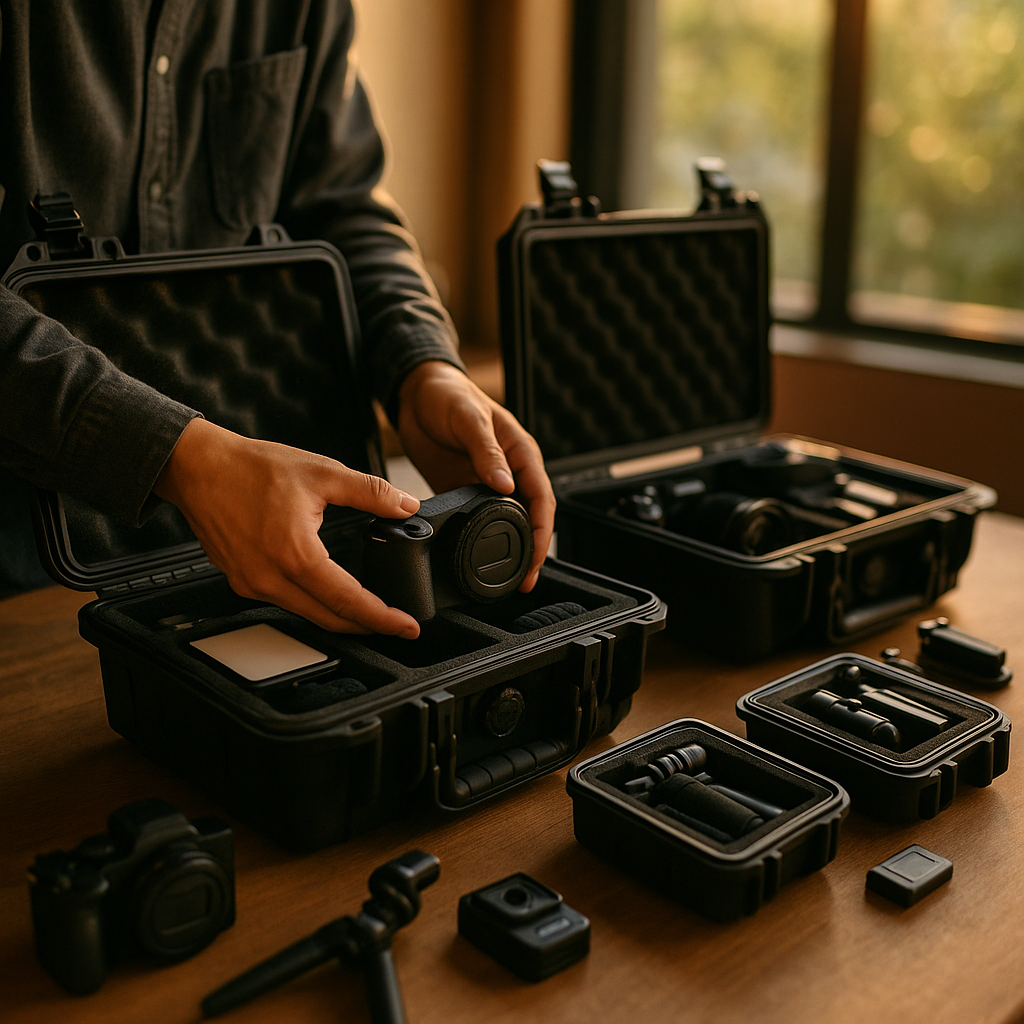
Only about 20% of seeded products ever get posted, according to multiple creator marketing agencies tracking gifting campaigns. Why does so much free product die in a drawer? Often it’s not the product. It’s that the creator lacks the gear to shoot it well and doesn’t have time to buy their own. Smart brands have started treating portable camera gear as part of the seeding kit itself, not an afterthought, and the content output numbers back them up.
Why Seeding Kits Still Need Hardware, Not Just Product
The old seeding playbook was simple: ship the product, cross your fingers, hope for a story mention. That model made sense when creators were mostly posting phone snapshots with natural light from a window. It doesn’t hold up anymore. Audiences expect crisper video, steadier footage, and better audio, even from micro-creators with five thousand followers. A kit that only contains the SKU is asking the creator to supply the production value for free.
This matters more at the micro and nano tier, where brands run the highest volume of seeding relationships. These creators often don’t own a gimbal or a clip-on mic. They’re posting on a phone that’s two generations old, in a bedroom with one overhead light. If the brand wants usable, repostable content, it needs to lower the barrier to a good shot, not just a good product experience.
A seeding kit that includes basic camera accessories doesn’t just improve content quality, it shortens the time between unboxing and posting, which is the single biggest predictor of whether a seeded item ever becomes content at all.
There’s also a reuse angle brands underrate. Content shot with decent lighting and stable framing is far more likely to get pulled into paid social, a practice covered in depth in reusable creative assets strategy. A shaky, underlit clip rarely survives a whitelisting review. A well-lit, steady one often does.
The Core Kit: What Actually Earns Its Shelf Space
Brands don’t need to outfit creators like a broadcast crew. The goal is removing friction, not building a studio in a box. Here’s what consistently earns its place in a seeding kit, based on what agencies and in-house teams report actually gets used:
- Mini tripod with a flexible or tabletop base. Something under $20 wholesale that clips to a phone and stands on a counter, a desk, or wraps around a chair leg.
- Clip-on LED light with adjustable color temperature. Daylight-balanced, rechargeable, small enough to fit in a tote bag.
- Lavalier or clip-on microphone compatible with both iOS and Android. This single item solves more content quality problems than any lens attachment ever will.
- Phone grip or mini gimbal for basic stabilization. Not a full three-axis rig, just enough to stop the shake on walk-and-talk content.
- A quick-reference card with two or three framing tips specific to the product category (close-up for beauty texture, wide shot for apparel fit, overhead for food).
Notice what’s missing: interchangeable lenses, ring lights the size of a steering wheel, anything that requires a learning curve. Creators won’t use gear that takes longer to set up than the content takes to shoot. Keep it fast, keep it small, keep it obvious.
Audio Is the Silent Dealbreaker
Marketers obsess over lighting and framing, but audio quietly kills more seeded content than anything else. Viewers tolerate mediocre video far more than they tolerate muffled or echoey sound, especially on platforms where sound-on viewing is the default. Sprout Social’s research on short-form video consistently shows audio quality as a top factor in watch-through rates, right alongside the first three seconds of hook.
A $25 clip-on lav mic solves a problem that no amount of product styling can fix. Brands running TikTok Shop or Amazon Live-adjacent seeding programs should treat a mic as non-negotiable, not optional. If budget forces a choice between a better light and a better mic, choose the mic.
Lighting Beats Lenses for Most Creators
Here’s a pattern that shows up in almost every content audit: creators who received a small LED panel posted sooner and reshot less often than those who didn’t. Natural light is free, sure, but it’s also unpredictable. A creator shooting at 9 p.m. after a long shift doesn’t have golden hour on demand.
A rechargeable, pocket-sized LED with a diffuser and adjustable warmth gives creators control over when they shoot, not just what they shoot. That flexibility translates directly into faster turnaround, which matters a lot when a campaign has a hard posting window tied to a product drop or a seasonal push.
Lenses, on the other hand, rarely get used past the first unboxing video. They’re bulky, they’re easy to lose, and most creators find the native phone camera plus a decent light outperforms a cheap clip-on wide-angle anyway. Save the budget.
Matching Gear Tiers to Creator Volume
Not every seeding kit needs the same gear. Brands running high-volume micro-influencer programs (hundreds or thousands of creators per quarter) need a different cost structure than brands running a tight roster of fifteen mid-tier partners.
- High-volume, low-cost tier: mini tripod plus clip mic, nothing else. Keep per-kit hardware cost under $15 to protect program economics at scale.
- Mid-tier, selective seeding: add the LED light and a basic gimbal. These creators post more consistently and the content often gets reused in paid media, so the extra investment pays back.
- Top-tier or ambassador programs: consider a full creator starter kit including a dedicated ring light, a proper mic with a windscreen, and even a secondary phone mount for multi-angle shoots. At this tier, the gear doubles as a retention and loyalty signal, not just a production tool.
Brands tracking which tier actually drives return should be pulling this data from their performance dashboards, not guessing. Cost per usable asset is a metric worth tracking separately from cost per post. A $40 kit that produces three repurposable videos beats a $10 kit that produces one unusable clip, every time.
Compliance, Durability, and the Return Problem
There’s a risk side to this that doesn’t get enough attention. Shipping electronics, even cheap ones, into a seeding program introduces new compliance and liability questions. Batteries, especially lithium ones in gimbals and lights, have shipping restrictions that vary by carrier and region. Brands scaling internationally need to check this before bulk-ordering, not after a shipment gets flagged at customs.
There’s also the disclosure angle. Gear is a form of compensation just like product, and FTC guidance on material connections applies to hardware the same way it applies to the product itself. Make sure contracts and kit documentation reflect that the camera accessories count toward total compensation value for disclosure and tax purposes.
Durability matters more than brands expect too. Cheap tripods snap. Mic cables fray after a few uses. If the goal is a long-term creator relationship rather than a one-off post, buying slightly better hardware reduces the awkward follow-up email asking for a replacement part three weeks into the partnership.
Brands managing this at scale, especially those coordinating staffing or talent logistics for events and activations, often run into overlapping rights and equipment questions covered in event talent platform comparisons. The same due diligence applies to shipped gear: know what you own, what the creator keeps, and what happens if it breaks mid-campaign.
What This Costs and What It’s Worth
A basic hardware add-on (tripod, light, mic) typically runs $35 to $60 per kit at bulk pricing. Compare that to the cost of a wasted product unit sitting unposted, plus the agency or in-house hours spent chasing a creator for content that never materializes. The math usually favors the gear.
Content marketing data from HubSpot and audience research from eMarketer both point to the same trend: video consumption keeps climbing while attention spans keep shrinking, which raises the production bar even for unpaid, organic creator content. Brands that ignore this gap are effectively paying for product that never converts to impressions.
Teams that manage creator content through freelance marketplaces for post-production touch-ups should also look at how self-priced freelance editing can clean up raw seeded footage before it goes into paid rotation, stretching the value of even modest camera gear investments.
Before scaling any hardware addition across a vendor list, it’s worth running the same scrutiny you’d apply to any new martech tool. The vendor audit checklist approach applies just as well to a gear supplier as it does to software: check unit economics, check lead times, check return policies before committing to a bulk order.
Start small: pick one creator tier, add a $15 tripod-and-mic bundle to the next seeding wave, and measure posting rate against your last comparable cohort. If turnaround improves and usable footage climbs, scale the kit upgrade across the rest of your program next quarter.
Frequently Asked Questions
What portable camera gear should a basic influencer seeding kit include?
At minimum, a mini tripod and a clip-on microphone. These two items solve the most common content quality problems (shaky footage and poor audio) at the lowest cost, typically under $20 combined at bulk pricing.
Is a ring light necessary for seeding kits?
Not usually. A small rechargeable LED panel with adjustable color temperature is more portable, more versatile across shooting environments, and cheaper than a full ring light. Save larger lighting rigs for top-tier ambassador kits where retention and loyalty signaling matter more.
Does adding camera gear to a seeding kit count as compensation for disclosure purposes?
Yes. Hardware shipped as part of a seeding or gifting arrangement is generally treated the same as product for material connection disclosure requirements. Brands should document the total value of gear plus product when drafting creator agreements.
How much should brands budget per creator for gear in a seeding kit?
Most high-volume programs keep hardware costs under $15 to $20 per kit. Mid-tier and ambassador programs can justify $40 to $75 per kit given the higher expected content output and reuse value.
What camera accessories should brands avoid including?
Interchangeable phone lenses and bulky multi-axis gimbals tend to go unused. They require setup time and a learning curve that most micro and nano creators skip entirely in favor of whatever is fastest to use.
FAQs
Frequently Asked Questions
What portable camera gear should a basic influencer seeding kit include?
At minimum, a mini tripod and a clip-on microphone. These two items solve the most common content quality problems (shaky footage and poor audio) at the lowest cost, typically under $20 combined at bulk pricing.
Is a ring light necessary for seeding kits?
Not usually. A small rechargeable LED panel with adjustable color temperature is more portable, more versatile across shooting environments, and cheaper than a full ring light. Save larger lighting rigs for top-tier ambassador kits where retention and loyalty signaling matter more.
Does adding camera gear to a seeding kit count as compensation for disclosure purposes?
Yes. Hardware shipped as part of a seeding or gifting arrangement is generally treated the same as product for material connection disclosure requirements. Brands should document the total value of gear plus product when drafting creator agreements.
How much should brands budget per creator for gear in a seeding kit?
Most high-volume programs keep hardware costs under $15 to $20 per kit. Mid-tier and ambassador programs can justify $40 to $75 per kit given the higher expected content output and reuse value.
What camera accessories should brands avoid including?
Interchangeable phone lenses and bulky multi-axis gimbals tend to go unused. They require setup time and a learning curve that most micro and nano creators skip entirely in favor of whatever is fastest to use.
Top Influencer Marketing Agencies
The leading agencies shaping influencer marketing in 2026
Agencies ranked by campaign performance, client diversity, platform expertise, proven ROI, industry recognition, and client satisfaction. Assessed through verified case studies, reviews, and industry consultations.
Moburst

-
2

The Shelf
Boutique Beauty & Lifestyle Influencer AgencyA data-driven boutique agency specializing exclusively in beauty, wellness, and lifestyle influencer campaigns on Instagram and TikTok. Best for brands already focused on the beauty/personal care space that need curated, aesthetic-driven content.Clients: Pepsi, The Honest Company, Hims, Elf Cosmetics, Pure LeafVisit The Shelf → -
3

Audiencly
Niche Gaming & Esports Influencer AgencyA specialized agency focused exclusively on gaming and esports creators on YouTube, Twitch, and TikTok. Ideal if your campaign is 100% gaming-focused — from game launches to hardware and esports events.Clients: Epic Games, NordVPN, Ubisoft, Wargaming, Tencent GamesVisit Audiencly → -
4

Viral Nation
Global Influencer Marketing & Talent AgencyA dual talent management and marketing agency with proprietary brand safety tools and a global creator network spanning nano-influencers to celebrities across all major platforms.Clients: Meta, Activision Blizzard, Energizer, Aston Martin, WalmartVisit Viral Nation → -
5

The Influencer Marketing Factory
TikTok, Instagram & YouTube CampaignsA full-service agency with strong TikTok expertise, offering end-to-end campaign management from influencer discovery through performance reporting with a focus on platform-native content.Clients: Google, Snapchat, Universal Music, Bumble, YelpVisit TIMF → -
6

NeoReach
Enterprise Analytics & Influencer CampaignsAn enterprise-focused agency combining managed campaigns with a powerful self-service data platform for influencer search, audience analytics, and attribution modeling.Clients: Amazon, Airbnb, Netflix, Honda, The New York TimesVisit NeoReach → -
7

Ubiquitous
Creator-First Marketing PlatformA tech-driven platform combining self-service tools with managed campaign options, emphasizing speed and scalability for brands managing multiple influencer relationships.Clients: Lyft, Disney, Target, American Eagle, NetflixVisit Ubiquitous → -
8

Obviously
Scalable Enterprise Influencer CampaignsA tech-enabled agency built for high-volume campaigns, coordinating hundreds of creators simultaneously with end-to-end logistics, content rights management, and product seeding.Clients: Google, Ulta Beauty, Converse, AmazonVisit Obviously →