


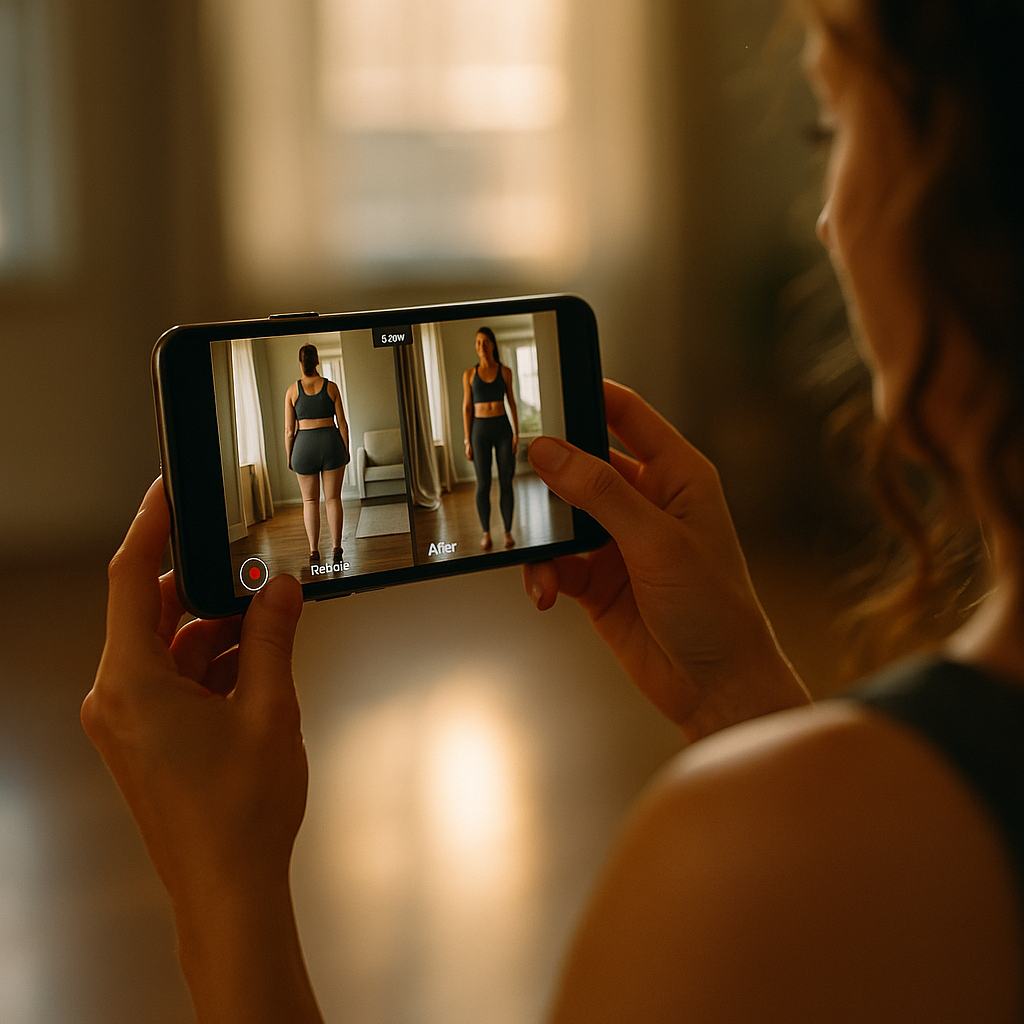
Transformation reveal videos get shared 2 to 3 times more often than standard product demos, yet most brands still botch the pacing so badly that viewers swipe away before the reveal even lands. Why? Because the “before” drags, the pivot feels fake, and the “after” shows up with no buildup to make it land. Transformation reveal content isn’t about having a dramatic result. It’s about engineering the seconds leading up to it.
The Format Everyone Copies, Few Execute Well
Scroll TikTok or Instagram Reels for five minutes and you’ll hit a transformation reveal: a messy room becomes organized, dull skin becomes glowing, a cluttered garage becomes a showroom. The format is everywhere because it works on a primal level. Humans are wired to crave resolution. We watch because we need to know what happens next.
But here’s the catch. The format’s ubiquity means audiences have gotten sophisticated. They’ve seen a thousand before-and-afters. They can smell a staged “before” from the first frame, and they’ll bounce if the pacing feels formulaic. Brands that still treat this as a simple split screen gimmick are leaving serious reach on the table.
The gap between a transformation video that gets 40,000 views and one that gets 4 million almost never comes down to the result. It comes down to how long the brand made viewers wait, and how well that wait was rewarded.
Why Pacing Determines Shareability More Than the Result Itself
Shares happen when someone feels a jolt strong enough to interrupt their own scroll and tag a friend. That jolt is a function of contrast and timing, not just the magnitude of the change. A modest transformation paced perfectly will outperform a dramatic one that rushes or stalls.
Think of the structure in three acts: the setup (before), the tension (process or pivot), and the payoff (after). Each act needs a specific duration relative to the others, and getting that ratio wrong is the single biggest reason transformation content underperforms.
- Setup (15-25% of runtime): Establish the problem with enough specificity that viewers feel it, not just see it.
- Tension (50-60% of runtime): This is where most brands rush. The process, the struggle, the “is this actually going to work” beat, is what makes the payoff earned rather than cheap.
- Payoff (15-25% of runtime): The reveal itself should be fast, almost abrupt, after a slow build. Speed contrast at the reveal is what triggers the shock response that drives shares.
This mirrors what works in other high-conversion formats. The expectation versus reality skit structure relies on the same contrast principle, just compressed into a gag rather than a literal transformation.
The Three Second Problem (It Still Applies Here)
Even in a format built on delayed gratification, the first three seconds still have to earn the rest of the watch time. This is the paradox of transformation content: you need patience in the middle, but zero patience in the opener.
The fix most editors miss: open on a flash-forward tease, a half-second glimpse of the “after,” then cut back to the real beginning. This primes curiosity without spoiling the full payoff. TikTok’s own creator guidance has repeatedly flagged hook strength in the opening moments as the top predictor of watch-through, and TikTok’s advertising resources echo this in their creative best practices for branded content. If you’re building hooks systematically rather than improvising them, it’s worth reviewing how demo hooks are scripted for the first three seconds, since the same logic applies to reveal openers.
Scripting the Middle: Where Trust Gets Built or Lost
The middle section is where brands either earn credibility or torch it. Viewers today are quick to assume a transformation is staged, filtered, or edited into dishonesty. The antidote isn’t disclaimers. It’s showing enough of the unglamorous middle that the process feels real.
Practical scripting moves that work:
- Show at least one failure or setback before the breakthrough. A transformation with zero friction reads as fake.
- Use timestamps or day counters to signal elapsed time, even if the edit compresses hours into seconds.
- Keep the creator’s face in frame during the process section. Reaction shots build parasocial trust that a pure product shot can’t.
- Avoid cutting away from the product for more than two or three seconds at a time. Viewers need continuity to believe the before and after are connected.
This is the same trust-building logic behind reverse unboxing content outperforming standard hauls on trust metrics. Audiences reward honesty about friction more than they reward polish.
Timing the Reveal: Speed Is the Whole Trick
Here’s the part brands consistently get wrong: they slow down for the reveal. Instinct says “linger on the result,” but the data says otherwise. The reveal should be fast, sometimes a single hard cut with a sound effect or beat drop, because speed amplifies the contrast with the slow build that preceded it.
Sprout Social’s research on short-form engagement patterns has consistently shown that abrupt visual or audio shifts correlate with higher completion and share rates, a principle Sprout Social’s platform insights reinforce across multiple content categories, not just transformations. The brain registers the hard cut as “something changed instantly,” which is more shareable than “something changed gradually,” even when the underlying footage shows a gradual process.
If your reveal takes more than two seconds to land, you’ve likely already lost the share. Fast cuts after a slow build consistently beat slow reveals after a fast build, across every platform we’ve tracked.
This same hard-cut philosophy shows up in split screen reaction demos that are currently cutting CPA for performance campaigns, where the split screen itself functions as a kind of instant reveal mechanic.
Sound Design Is Doing More Work Than You Think
Mute the video and watch what happens to a transformation reveal. Usually, it falls flat. Sound carries an enormous share of the emotional payload in this format, from the trending audio cue at the reveal to the ambient noise during the tension section that signals “real, unedited moment.”
Pairing a transformation reveal with a trending sound isn’t just an algorithm play, though it does help discoverability. It also gives viewers a pre-existing emotional association to borrow from. A sound that’s already linked to thousands of other satisfying reveals primes the brain before the visual payoff even arrives.
Platform Differences Actually Matter Here
Instagram Reels audiences tend to reward slightly longer tension sections than TikTok, where attention spans skew tighter and the swipe-away instinct is more aggressive. On Meta’s business platform guidance, Reels performance data has pointed toward save rates as a stronger quality signal than raw views, which matters because transformation content tends to get saved and rewatched for the “how did they do that” value, not just shared once.
YouTube Shorts, meanwhile, rewards a slightly different pacing ratio: viewers there are more patient with process footage if there’s a clear narrative thread, closer to the storytelling approach outlined in storytime format narrative hooks that lower ad CPA. Brands running the same transformation concept across platforms should re-edit pacing per platform rather than posting an identical cut everywhere. It’s a small operational lift with an outsized return.
Measuring What Actually Matters
Views are a vanity metric here. The KPIs that actually predict ROI on transformation reveal content are rewatch rate, save rate, and share-to-view ratio. If a video is getting rewatched, the pacing is working. If it’s getting saved, viewers intend to reference it later, which signals purchase consideration for product-based transformations.
For brand and agency teams building a business case for this format, tie these engagement metrics back to downstream conversion the same way teams are now doing with explainer content, where finance teams are demanding clearer KPIs tied to explainer and demo formats. Transformation content deserves the same rigor. A viral reveal that doesn’t move product or inquiries is a vanity win, not a business one.
Benchmarking against industry data helps set realistic expectations too. According to eMarketer’s social video engagement research, short-form video completion rates have been trending downward overall even as share rates for high-contrast formats like transformations have held steady or grown, a sign that audiences are getting pickier about what earns a full watch.
Common Mistakes That Kill the Format
- Front-loading the after shot in the thumbnail or caption, which kills the entire tension mechanic before the video even starts.
- Over-editing the before section with heavy filters that make the starting point look fake, which undercuts the contrast.
- Dragging the reveal with slow motion when a hard cut would hit harder.
- Skipping the failure beat in the middle, making the whole transformation feel scripted rather than earned.
- Ignoring platform-specific pacing and posting one cut everywhere.
Brands building creator briefs around this format should borrow structure from hook taxonomy systems built for pre-production at scale, since transformation reveals benefit enormously from a repeatable, tested opener library rather than one-off improvisation per creator.
Next Step
Pull your last five transformation posts and time the three acts against the 20/55/20 ratio above. If your reveals are landing slower than two seconds after the build, re-cut before you brief another creator on this format.
FAQs
What is transformation reveal content in influencer marketing?
It’s short-form video content structured around a clear before-and-after contrast, typically used by brands and creators to showcase product results, process changes, or dramatic improvements in a way designed to maximize shares and rewatches.
How long should the “before” section be in a transformation video?
Generally 15 to 25 percent of total runtime. Long enough to establish the problem with specificity, short enough that it doesn’t delay the tension and payoff that drive engagement.
Why do fast cuts work better than slow motion for the reveal moment?
Abrupt visual or audio shifts create a stronger contrast effect against the slower buildup, which the brain registers as more shocking and shareable than a gradual reveal, even when the underlying change is the same.
Which platforms perform best for transformation reveal content?
TikTok rewards tighter pacing and faster openers, Instagram Reels tends to reward slightly longer tension sections with strong save rates, and YouTube Shorts audiences are more patient with process footage if there’s a clear narrative thread.
What metrics should brands track beyond views?
Rewatch rate, save rate, and share-to-view ratio are stronger indicators of pacing success and downstream business impact than raw view counts alone.
Top Influencer Marketing Agencies
The leading agencies shaping influencer marketing in 2026
Agencies ranked by campaign performance, client diversity, platform expertise, proven ROI, industry recognition, and client satisfaction. Assessed through verified case studies, reviews, and industry consultations.
Moburst

-
2

The Shelf
Boutique Beauty & Lifestyle Influencer AgencyA data-driven boutique agency specializing exclusively in beauty, wellness, and lifestyle influencer campaigns on Instagram and TikTok. Best for brands already focused on the beauty/personal care space that need curated, aesthetic-driven content.Clients: Pepsi, The Honest Company, Hims, Elf Cosmetics, Pure LeafVisit The Shelf → -
3

Audiencly
Niche Gaming & Esports Influencer AgencyA specialized agency focused exclusively on gaming and esports creators on YouTube, Twitch, and TikTok. Ideal if your campaign is 100% gaming-focused — from game launches to hardware and esports events.Clients: Epic Games, NordVPN, Ubisoft, Wargaming, Tencent GamesVisit Audiencly → -
4

Viral Nation
Global Influencer Marketing & Talent AgencyA dual talent management and marketing agency with proprietary brand safety tools and a global creator network spanning nano-influencers to celebrities across all major platforms.Clients: Meta, Activision Blizzard, Energizer, Aston Martin, WalmartVisit Viral Nation → -
5

The Influencer Marketing Factory
TikTok, Instagram & YouTube CampaignsA full-service agency with strong TikTok expertise, offering end-to-end campaign management from influencer discovery through performance reporting with a focus on platform-native content.Clients: Google, Snapchat, Universal Music, Bumble, YelpVisit TIMF → -
6

NeoReach
Enterprise Analytics & Influencer CampaignsAn enterprise-focused agency combining managed campaigns with a powerful self-service data platform for influencer search, audience analytics, and attribution modeling.Clients: Amazon, Airbnb, Netflix, Honda, The New York TimesVisit NeoReach → -
7

Ubiquitous
Creator-First Marketing PlatformA tech-driven platform combining self-service tools with managed campaign options, emphasizing speed and scalability for brands managing multiple influencer relationships.Clients: Lyft, Disney, Target, American Eagle, NetflixVisit Ubiquitous → -
8

Obviously
Scalable Enterprise Influencer CampaignsA tech-enabled agency built for high-volume campaigns, coordinating hundreds of creators simultaneously with end-to-end logistics, content rights management, and product seeding.Clients: Google, Ulta Beauty, Converse, AmazonVisit Obviously →