


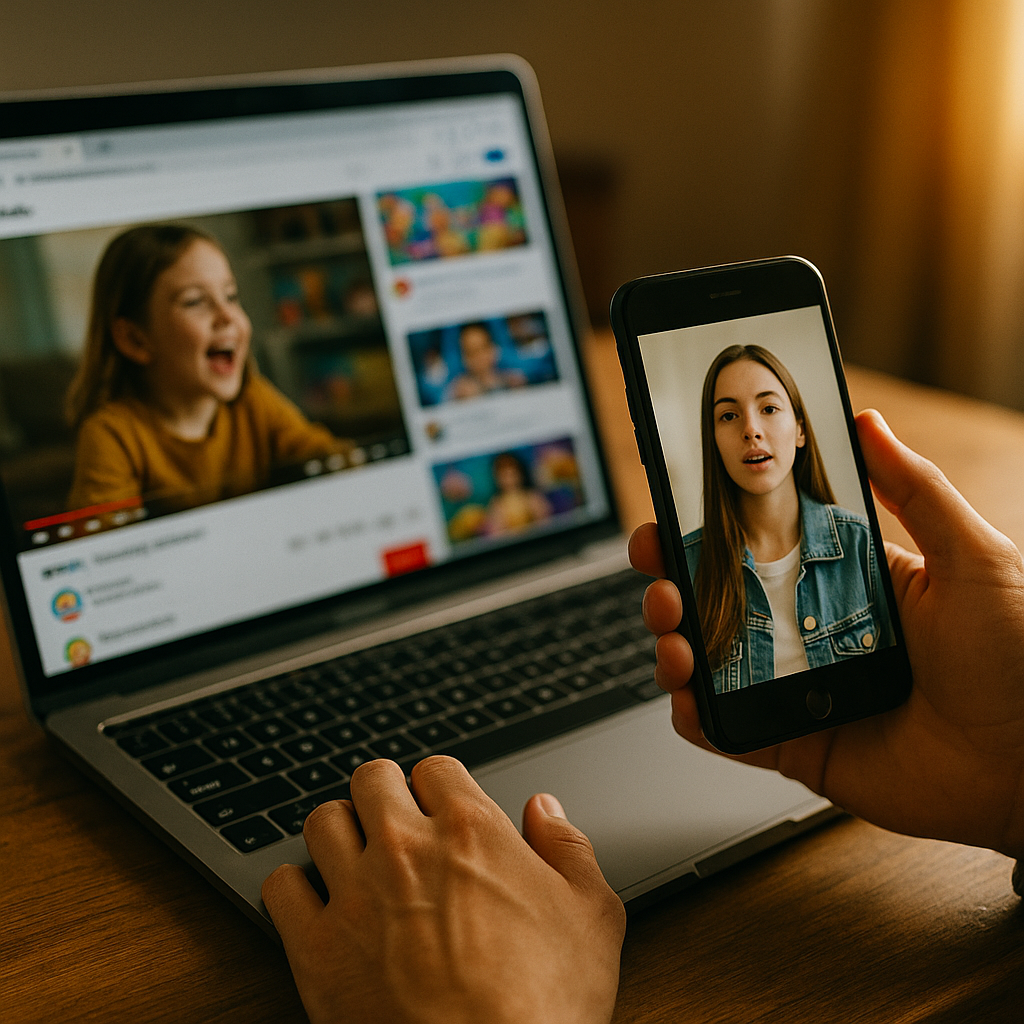
The FTC closed out its most recent enforcement sweep with more than $20 million in COPPA-related penalties tied to platforms and the brands that advertised on them. Not one of those cases involved a channel explicitly marketed as “for kids.” That’s the uncomfortable truth driving COPPA enforcement discussions this year: the rule now reaches content that merely attracts a child audience, whether or not anyone intended it to.
If your influencer program touches family vloggers, toy unboxings, gaming streamers, or even back-to-school hauls, you’re closer to this risk than you think.
The Updated COPPA Rule Nobody Finished Reading
The FTC’s amended Children’s Online Privacy Protection Act rule expanded the definition of “actual knowledge” and tightened what counts as personal information collected from kids, including persistent identifiers used for ad targeting. The amendments also formalized restrictions on using children’s data for behavioral advertising without verifiable parental consent, a practice that was already murky but now carries sharper teeth.
Here’s what most brand marketers missed: the rule shifted liability upstream. It’s no longer just the app or platform operator on the hook. Advertisers who knowingly direct campaigns toward child-attracting content, or who fail to apply reasonable screening before placing influencer deals, can be named as responsible parties. The FTC’s own guidance makes clear that “mixed audience” services carry obligations too, not just sites built exclusively for kids.
COPPA liability no longer stops at the platform. If your brand directs spend toward creator content that predictably draws a under-13 audience, you own a share of the compliance obligation, whether you labeled the campaign “family-friendly” or not.
What Counts as “Kid-Directed” Content Now?
This is where legal teams and media buyers start arguing. The FTC’s totality-of-circumstances test looks at subject matter, visual style, use of animated characters, music, language complexity, and whether the audience composition data (from the platform’s own analytics) skews young. A creator doesn’t need a “kids channel” label to trigger scrutiny.
- Unboxing and toy review content, even on general entertainment channels
- Gaming streams featuring titles rated for younger players (Roblox, Minecraft adjacent content)
- Family vlogging formats where children are featured participants, not just background
- Back-to-school, school supply, and youth fashion hauls
- Animated or cartoon-style brand content distributed through adult-facing creator accounts
Notice that last one. Brands have tried to sidestep COPPA by running kid-styled creative through adult influencer accounts, assuming the creator’s stated audience demo covers them. It doesn’t. Regulators look at actual audience composition, not channel bio claims.
Where Brands Actually Get Exposed
Three failure points show up repeatedly in enforcement actions and FTC consent decrees.
First, data collection through engagement mechanics. Giveaways, comment-to-enter contests, and quiz funnels tied to influencer campaigns often collect emails, birthdates, or device identifiers without age-gating. If a meaningful share of entrants are under 13, that’s a COPPA violation, and the brand running the promotion shares liability with the creator and the platform.
Second, retargeting pixels. A campaign that places tracking pixels on kid-adjacent creator content, then uses that data for lookalike audience building, is functionally doing exactly what the amended rule prohibits: using behavioral data from children for ad targeting. This connects directly to the targeting mechanics covered in our piece on AI inference targeting rules, which increasingly intersect with child-data restrictions across jurisdictions.
Third, commerce integrations. Livestream shopping and shoppable video features collect checkout data in real time. When minors are the visible audience for a livestream sales event, as we detailed in our coverage of livestream shopping liability gaps, the brand running the promotion inherits data handling obligations it may not have scoped for.
The Mixed-Audience Trap
Most creator content isn’t purely kid-directed or purely adult. It’s mixed. A family-of-five lifestyle channel might post grocery hauls (adult audience), kid birthday parties (mixed), and toy reviews (child-skewing) within the same week. The FTC’s mixed-audience provision requires operators to either avoid collecting personal information from the whole audience, or implement an age screen and apply COPPA protections to users who identify as under 13.
Brands rarely ask creators whether their platform implements this screen. That’s the gap auditors are now probing. If your influencer vetting checklist doesn’t include a question about age-gating on engagement mechanics, you’re flying blind on mixed-audience exposure.
This mirrors a broader pattern we’ve tracked in consent architecture. GDPR consent rule changes and COPPA’s mixed-audience test are converging on the same operational demand: prove you asked, prove you screened, prove you didn’t just assume.
Building a Kid-Adjacent Content Screen
Treat this like any other compliance control, not a one-time legal memo. Here’s a practical structure brand teams are adopting.
- Pre-campaign audience audit. Pull the creator’s actual audience age distribution from platform analytics (not stated demo) before signing any contract involving toys, games, school products, or family content formats.
- Contract language specificity. Require creators to disclose any known under-13 audience concentration and to flag content formats (animated overlays, character voiceovers) that historically skew younger.
- Engagement mechanic review. Any giveaway, quiz, or sign-up tied to the campaign needs an age gate, full stop. No exceptions for “it’s just for fun.”
- Pixel and retargeting audit. Confirm your martech stack isn’t pulling behavioral data from kid-adjacent placements into broader retargeting pools. This is the same discipline we recommend in our review of cross-device identity resolution risk.
- Documentation trail. Keep dated records of the audience audit, the contract clause, and the pixel review. If the FTC comes calling, “we didn’t know” is not a defense when a reasonable screening process would have surfaced the risk.
Agencies running influencer programs at scale should also look at how vendor data flows get logged. The incident response playbook outlined in creator CRM breach notification requirements applies here too: if a kid-adjacent data collection incident surfaces, you need a notification clock running fast.
What Enforcement Actually Looks Like
Penalties under the amended rule scale with the number of affected children and the duration of noncompliant data collection, not a flat fine. That means a campaign running for months across multiple kid-adjacent creators compounds exposure quickly. Settlements have increasingly required injunctive terms too: mandatory third-party audits, data deletion requirements, and multi-year compliance monitoring, not just a check written and forgotten.
State attorneys general have also started layering their own child-privacy statutes on top of federal COPPA actions, a trend documented in our analysis of state AG enforcement surges. Brands operating nationally can’t assume federal compliance covers them in California, Texas, or Illinois, each of which has pursued independent child-data actions.
A federal COPPA settlement doesn’t preempt a state attorney general case. Brands treating this as a single compliance checkbox are underestimating the number of regulators who can open a file.
Industry benchmarking from eMarketer shows kid-and-family content categories remain among the fastest-growing segments for brand influencer spend, which means the exposure surface is expanding, not shrinking. Marketing teams using platforms like Sprout Social for creator discovery should build age-audience filters directly into their vetting workflow rather than relying on manual legal review after the deal is signed.
Quick Gut Check for Your Current Roster
Ask three questions about every active influencer partnership touching family, gaming, or youth product categories: Does the creator’s actual audience skew under 13 for any meaningful share of views? Does any campaign mechanic collect personal data without an age gate? Does your ad tech pull retargeting signals from that content? If you answered “I don’t know” to any of these, you have a gap, and gaps are exactly what enforcement sweeps are built to find.
Next Step
Audit your current creator roster against actual audience age data this quarter, not after your next contract renewal cycle. The brands getting named in enforcement actions aren’t the ones running kids’ content on purpose, they’re the ones who never checked.
FAQs
Does COPPA apply if our influencer campaign wasn’t designed for kids?
Yes. The amended rule applies based on actual audience composition and content characteristics, not stated intent. If a creator’s content predictably attracts a significant under-13 audience, COPPA obligations can apply regardless of your original targeting plan.
Who is liable if a creator’s content turns out to be kid-directed?
Liability can extend to the platform, the creator, and the brand that commissioned or advertised through the content, particularly if the brand had reason to know about the child audience or ran data collection mechanics without an age gate.
What counts as “personal information” under COPPA for creator campaigns?
Names, emails, device identifiers, geolocation, and persistent tracking identifiers used for ad targeting all qualify. Giveaway entries, comment-to-win mechanics, and retargeting pixels are the most common collection points brands overlook.
How can brands screen creators for kid-adjacent risk before signing?
Pull actual platform audience analytics rather than relying on the creator’s stated demographic, require contract disclosure of any known young audience concentration, and audit any engagement mechanics for age-gating before launch.
Do state privacy laws add additional COPPA-style obligations?
Yes. Several states have pursued independent child-data enforcement actions that layer on top of federal COPPA cases, meaning national compliance requires checking state-level requirements as well, not just the federal rule.
Top Influencer Marketing Agencies
The leading agencies shaping influencer marketing in 2026
Agencies ranked by campaign performance, client diversity, platform expertise, proven ROI, industry recognition, and client satisfaction. Assessed through verified case studies, reviews, and industry consultations.
Moburst

-
2

The Shelf
Boutique Beauty & Lifestyle Influencer AgencyA data-driven boutique agency specializing exclusively in beauty, wellness, and lifestyle influencer campaigns on Instagram and TikTok. Best for brands already focused on the beauty/personal care space that need curated, aesthetic-driven content.Clients: Pepsi, The Honest Company, Hims, Elf Cosmetics, Pure LeafVisit The Shelf → -
3

Audiencly
Niche Gaming & Esports Influencer AgencyA specialized agency focused exclusively on gaming and esports creators on YouTube, Twitch, and TikTok. Ideal if your campaign is 100% gaming-focused — from game launches to hardware and esports events.Clients: Epic Games, NordVPN, Ubisoft, Wargaming, Tencent GamesVisit Audiencly → -
4

Viral Nation
Global Influencer Marketing & Talent AgencyA dual talent management and marketing agency with proprietary brand safety tools and a global creator network spanning nano-influencers to celebrities across all major platforms.Clients: Meta, Activision Blizzard, Energizer, Aston Martin, WalmartVisit Viral Nation → -
5

The Influencer Marketing Factory
TikTok, Instagram & YouTube CampaignsA full-service agency with strong TikTok expertise, offering end-to-end campaign management from influencer discovery through performance reporting with a focus on platform-native content.Clients: Google, Snapchat, Universal Music, Bumble, YelpVisit TIMF → -
6

NeoReach
Enterprise Analytics & Influencer CampaignsAn enterprise-focused agency combining managed campaigns with a powerful self-service data platform for influencer search, audience analytics, and attribution modeling.Clients: Amazon, Airbnb, Netflix, Honda, The New York TimesVisit NeoReach → -
7

Ubiquitous
Creator-First Marketing PlatformA tech-driven platform combining self-service tools with managed campaign options, emphasizing speed and scalability for brands managing multiple influencer relationships.Clients: Lyft, Disney, Target, American Eagle, NetflixVisit Ubiquitous → -
8

Obviously
Scalable Enterprise Influencer CampaignsA tech-enabled agency built for high-volume campaigns, coordinating hundreds of creators simultaneously with end-to-end logistics, content rights management, and product seeding.Clients: Google, Ulta Beauty, Converse, AmazonVisit Obviously →