


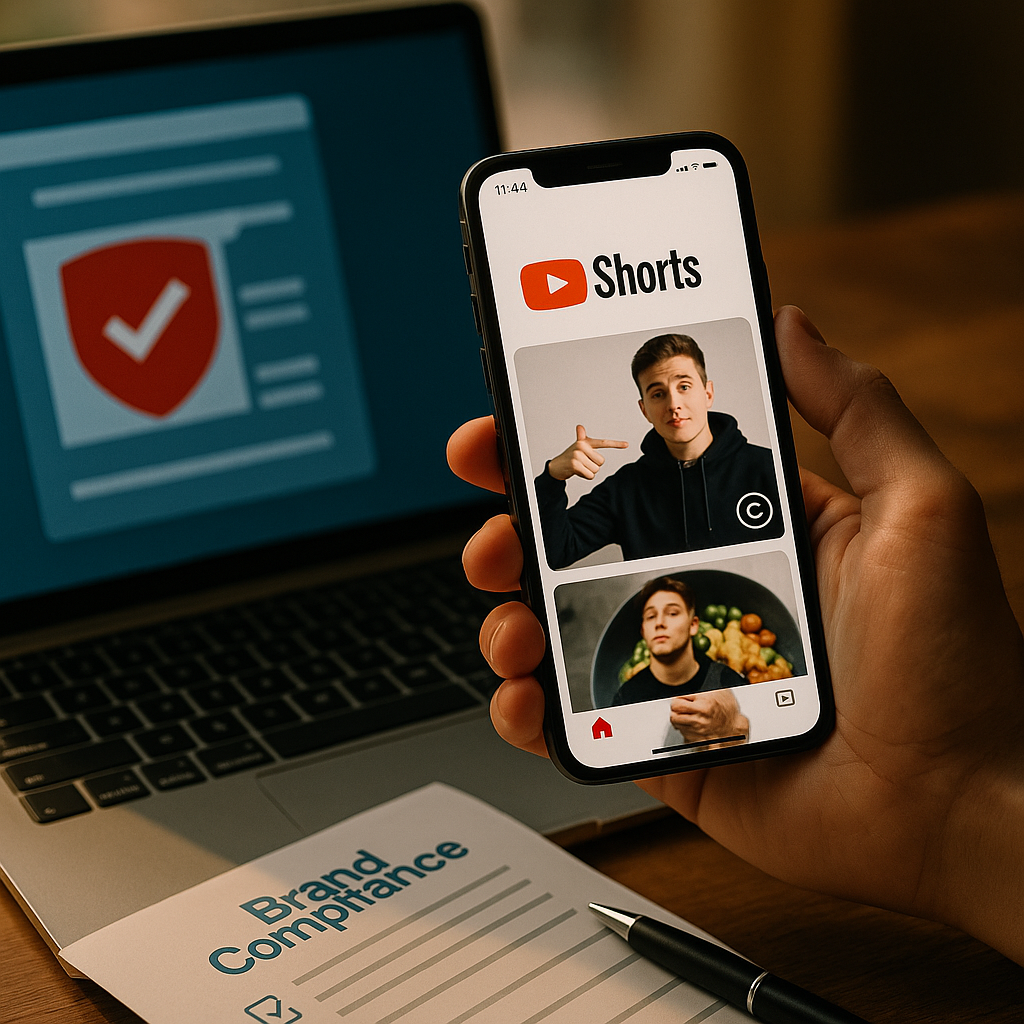
Brands reposting creator-made Shorts without alteration could see distribution drop by more than half overnight. That is the blunt reality behind YouTube’s October Shorts originality update, a policy shift that finally gives the platform’s “reused content” classifier teeth. If your brand channel runs on repurposed creator clips, the rules of engagement just changed, and ignoring them is now a measurable revenue risk, not a theoretical one.
What Actually Changed in the Shorts Originality Scoring
YouTube has quietly tightened its definition of “unoriginal content” for Shorts, and the October update moves enforcement from a manual review process to an automated, channel-level scoring system. Previously, a brand could repost a creator’s sponsored Short with a new caption and call it compliant. Not anymore. The classifier now evaluates frame-level similarity, audio waveform matching, and metadata overlap against the original upload, then assigns a channel-wide originality score that affects every video on that account, not just the flagged one.
That last part is the sleeper issue. A single repurposed clip with low originality marks can drag down distribution for an entire channel’s Shorts shelf, including content that was genuinely produced in-house. YouTube has framed this as a response to the flood of AI-assisted reposting tools that let brands batch-republish creator UGC at scale with zero editorial input.
The channel-level penalty structure means one lazy repost can suppress reach on videos you spent real budget producing. This is no longer a per-video risk, it’s a portfolio risk.
For context on how YouTube’s distribution logic has evolved leading up to this, our earlier breakdown of Shorts algorithm signals is worth revisiting, since originality scoring now sits directly inside that same ranking pipeline.
Repost, Remix, or Rights Grab? Sort Your Content First
Not all reposted creator content is treated equally under the new system, and the distinction matters for budget planning.
- Straight reposts: A creator’s Short uploaded to a brand channel with no edits beyond trimming or a title change. This is the category getting hit hardest.
- Licensed remixes: Brand-edited versions that add voiceover, new b-roll, or substantial recutting, paired with documented usage rights from the creator. These generally retain originality standing.
- Native repurposing through official tools: Content pulled through YouTube’s own repost or collab features, which carry built-in attribution and are explicitly exempted from the penalty.
If you’re unsure which bucket your current library falls into, that uncertainty is itself the problem. Most brand teams have been treating “we have usage rights” and “this counts as original content” as the same thing. They are not. YouTube’s own creator guidelines on reused content, available through Google’s support documentation, are explicit that legal permission to use a clip does not exempt it from the originality classifier.
The Repost Tax: Why Brand Channels Get Hit Faster Than Creators
Here’s the part that stings. Creator accounts reposting their own content across platforms get more algorithmic latitude than brand accounts reposting someone else’s work, even with a signed agreement in hand. YouTube’s logic, based on its own public statements, treats brand channels as lower-trust originality sources by default because the historical pattern of brand Shorts activity skews heavily toward aggregation rather than production.
In practice, that means a brand channel needs a higher ratio of demonstrably original or heavily transformed content just to maintain baseline distribution, compared to a creator posting the exact same clip. It’s not fair in the abstract sense, but it is consistent with how the platform has treated reused content on long-form video for years. This mirrors the trajectory we saw with Instagram’s originality update last year, where brand accounts absorbed a disproportionate share of the reach penalty compared to the creators whose content they were amplifying.
Operational Fixes: A Compliance Checklist for the Next Thirty Days
Waiting this out is not a strategy. Here’s what needs to move immediately.
- Audit the last ninety days of Shorts uploads. Flag anything that is a near-exact repost of creator content with no substantial edit. That’s your exposure list.
- Rebuild your creator contracts. Usage rights clauses need to explicitly require creators to deliver or approve a secondary edit, not just grant repost permission. This shifts production work earlier in the workflow instead of leaving it to the brand’s social team.
- Shift repurposing budget toward transformation, not duplication. Voiceover overlays, new intros, reaction cuts, and vertical recomposition all count as meaningful transformation under the classifier’s logic.
- Route high-value creator content through native collab features rather than manual reupload. This alone resolves a meaningful share of the risk without added production cost.
- Diversify your Shorts sourcing mix so no single content category (repost, remix, or native) exceeds roughly 40% of total channel output. Concentration is what triggers the channel-level score drop.
Brands that pivoted from pure repost strategies to a 60/40 original-to-remix mix after similar updates on other platforms recovered distribution within two to three posting cycles, not months.
Teams running affiliate or shopping-linked Shorts have an added layer of complexity here, since disclosure requirements stack on top of originality compliance. If your program touches affiliate links inside Shorts descriptions, our guide on disclosure fixes for affiliate content covers the FTC-adjacent risk that often gets overlooked when teams are focused solely on reach recovery.
What About Revenue Splits on Reposted Content?
There’s a monetization dimension here too. Lower originality scores don’t just suppress reach, they also affect RPM calculations on Shorts that run mid-roll or feed-based ads. A video flagged as low-originality content tends to get deprioritized in the ad auction, which compounds the reach problem with a direct revenue hit. Brands running paid amplification alongside organic Shorts should cross-reference this against the mechanics covered in our Shorts RPM and revenue split guide, since the two systems interact more than YouTube’s documentation makes obvious.
Measuring the Fallout Without Guessing
Don’t rely on gut feel to assess whether the update is actually hurting your channel. Pull these three metrics weekly for the next quarter:
- Impressions-to-subscriber ratio on reposted versus original content. A widening gap confirms the classifier is actively discounting reposts.
- Average view duration on flagged content. YouTube’s own research, echoed in third-party analyses from eMarketer, suggests originality penalties correlate with reduced autoplay continuation, which compounds the reach loss.
- Channel-level Shorts shelf placement. If your videos are dropping out of the main Shorts feed and landing only in search results, that’s a strong signal the channel score, not individual videos, is the issue.
Benchmarking data from Statista on short-form video consumption trends can help contextualize whether a reach dip is platform-wide seasonality or specific to your channel’s compliance standing. Don’t conflate the two when reporting up to leadership.
If your team also runs influencer content across TikTok and Instagram, it’s worth noting these platforms are converging on similar logic. The same instinct that’s driving YouTube’s crackdown shows up in TikTok’s handling of low-effort reposts, detailed in our piece on algorithmic demotion and compliance protection. Building one cross-platform transformation standard, rather than platform-specific patches, will save your team rework as more networks adopt this pattern.
Frequently Asked Questions
Below are the most common questions marketing teams are asking about this update.
Does this affect content where the brand has a signed usage rights agreement with the creator?
Yes. Usage rights determine whether you’re legally allowed to post the content, but they do not exempt it from YouTube’s originality classifier. A clip can be fully licensed and still score low on originality if it’s posted without substantial editorial transformation.
How much editing is enough to count as “transformed” under the new rules?
YouTube hasn’t published an exact threshold, but industry testing suggests adding new voiceover, reframing or recutting the sequence, inserting brand-specific overlays, or combining multiple creator clips into a new narrative all meaningfully improve originality standing. Simple trims, caption swaps, or watermark additions generally do not.
Will this penalty affect our long-form YouTube content too, or just Shorts?
The October update is specific to the Shorts surface and its vertical feed ranking. Long-form reused content policies have existed separately for years and operate on a different enforcement model, though YouTube has signaled it may align the two systems eventually.
Can we recover a channel’s originality score after a drop, or is the damage permanent?
Recovery is possible. Channels that shift their posting mix toward original and heavily transformed content typically see score improvement within a few posting cycles, since the classifier evaluates rolling recent activity rather than permanent historical record.
Should we stop reposting creator content altogether?
No, but the repost needs to come with added value. Native collab and repost tools, combined with meaningful edits, let brands keep the efficiency of repurposing creator UGC without triggering the originality penalty.
Frequently Asked Questions
Does this affect content where the brand has a signed usage rights agreement with the creator?
Yes. Usage rights determine whether you’re legally allowed to post the content, but they do not exempt it from YouTube’s originality classifier. A clip can be fully licensed and still score low on originality if it’s posted without substantial editorial transformation.
How much editing is enough to count as transformed under the new rules?
YouTube hasn’t published an exact threshold, but industry testing suggests adding new voiceover, reframing or recutting the sequence, inserting brand-specific overlays, or combining multiple creator clips into a new narrative all meaningfully improve originality standing. Simple trims, caption swaps, or watermark additions generally do not.
Will this penalty affect our long-form YouTube content too, or just Shorts?
The update is specific to the Shorts surface and its vertical feed ranking. Long-form reused content policies have existed separately for years and operate on a different enforcement model, though YouTube has signaled it may align the two systems eventually.
Can we recover a channel’s originality score after a drop, or is the damage permanent?
Recovery is possible. Channels that shift their posting mix toward original and heavily transformed content typically see score improvement within a few posting cycles, since the classifier evaluates rolling recent activity rather than permanent historical record.
Should we stop reposting creator content altogether?
No, but the repost needs to come with added value. Native collab and repost tools, combined with meaningful edits, let brands keep the efficiency of repurposing creator UGC without triggering the originality penalty.
The brands that treat this as a production workflow fix, not a policy footnote, will be back to full distribution before competitors finish their first audit. Start with the ninety-day content pull this week, not next quarter.
Top Influencer Marketing Agencies
The leading agencies shaping influencer marketing in 2026
Agencies ranked by campaign performance, client diversity, platform expertise, proven ROI, industry recognition, and client satisfaction. Assessed through verified case studies, reviews, and industry consultations.
Moburst

-
2

The Shelf
Boutique Beauty & Lifestyle Influencer AgencyA data-driven boutique agency specializing exclusively in beauty, wellness, and lifestyle influencer campaigns on Instagram and TikTok. Best for brands already focused on the beauty/personal care space that need curated, aesthetic-driven content.Clients: Pepsi, The Honest Company, Hims, Elf Cosmetics, Pure LeafVisit The Shelf → -
3

Audiencly
Niche Gaming & Esports Influencer AgencyA specialized agency focused exclusively on gaming and esports creators on YouTube, Twitch, and TikTok. Ideal if your campaign is 100% gaming-focused — from game launches to hardware and esports events.Clients: Epic Games, NordVPN, Ubisoft, Wargaming, Tencent GamesVisit Audiencly → -
4

Viral Nation
Global Influencer Marketing & Talent AgencyA dual talent management and marketing agency with proprietary brand safety tools and a global creator network spanning nano-influencers to celebrities across all major platforms.Clients: Meta, Activision Blizzard, Energizer, Aston Martin, WalmartVisit Viral Nation → -
5

The Influencer Marketing Factory
TikTok, Instagram & YouTube CampaignsA full-service agency with strong TikTok expertise, offering end-to-end campaign management from influencer discovery through performance reporting with a focus on platform-native content.Clients: Google, Snapchat, Universal Music, Bumble, YelpVisit TIMF → -
6

NeoReach
Enterprise Analytics & Influencer CampaignsAn enterprise-focused agency combining managed campaigns with a powerful self-service data platform for influencer search, audience analytics, and attribution modeling.Clients: Amazon, Airbnb, Netflix, Honda, The New York TimesVisit NeoReach → -
7

Ubiquitous
Creator-First Marketing PlatformA tech-driven platform combining self-service tools with managed campaign options, emphasizing speed and scalability for brands managing multiple influencer relationships.Clients: Lyft, Disney, Target, American Eagle, NetflixVisit Ubiquitous → -
8

Obviously
Scalable Enterprise Influencer CampaignsA tech-enabled agency built for high-volume campaigns, coordinating hundreds of creators simultaneously with end-to-end logistics, content rights management, and product seeding.Clients: Google, Ulta Beauty, Converse, AmazonVisit Obviously →