


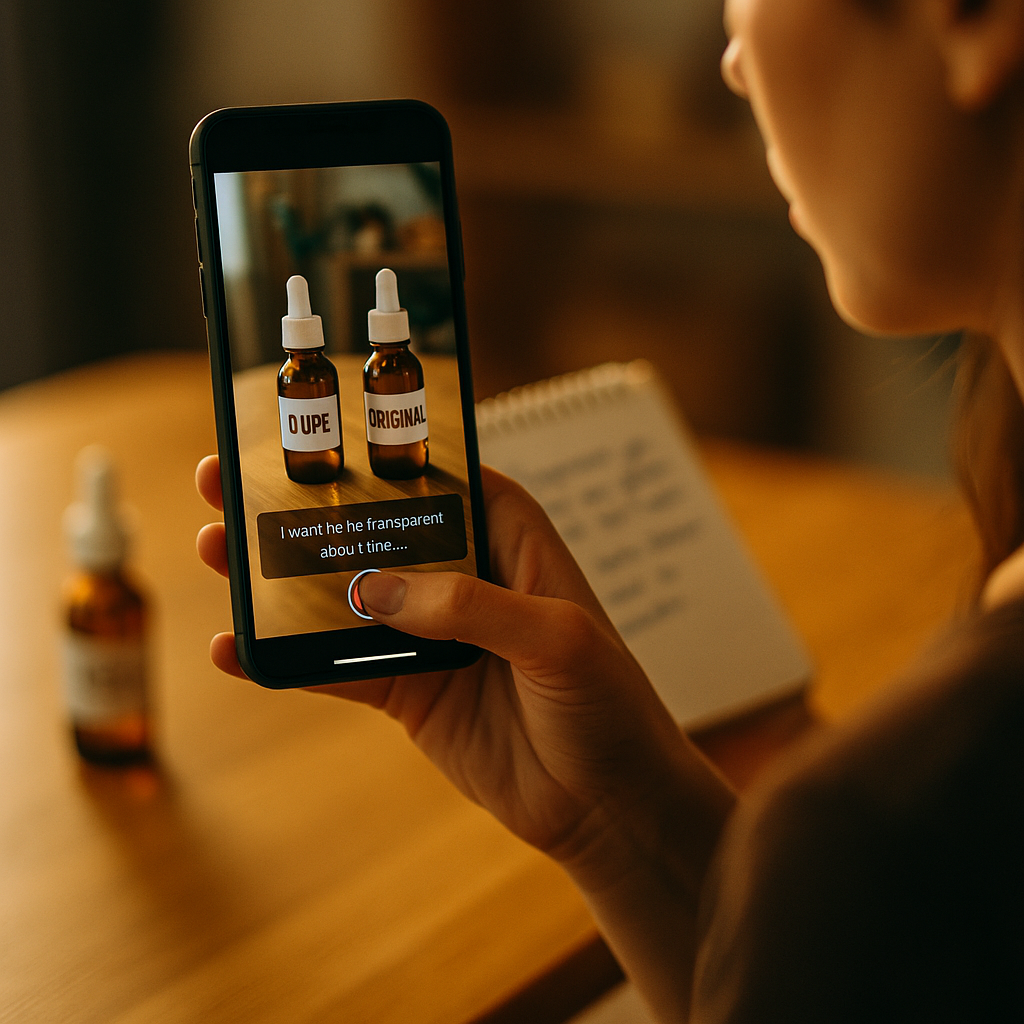
Nearly 68% of Gen Z shoppers say they’ve bought a dupe instead of the brand name product in the past year, according to Statista consumer behavior tracking. So why are premium brands still scripting comparison content like dupes don’t exist? A dupe versus original reel, done honestly, doesn’t cannibalize your sales. It protects them, by answering the question shoppers are already asking in the comments section.
Ignoring the dupe conversation doesn’t make it go away. It just means a third party creator, often one with zero brand affiliation, controls the narrative instead of you.
Why Pretending Dupes Don’t Exist Backfires
Search “dupe for” plus any premium product name and you’ll find thousands of videos, most with better engagement than the original brand’s own content. Shoppers aren’t ashamed of dupe culture anymore. It’s mainstream, celebrated even, with entire creator niches built around sniffing out cheaper alternatives.
When a premium brand stays silent, it cedes the comparison to creators who have no incentive to be fair. A dupe-focused account makes money from views and affiliate links to the cheaper product, not from defending your formula, your sourcing, or your quality control. Silence reads as either arrogance or fear, neither of which sells.
A brand that scripts its own honest comparison controls the framing. A brand that ignores the conversation lets a stranger with a ring light control it instead.
The Honesty Threshold: How Much Truth Is Too Much?
This is where most brand teams panic. Legal wants disclaimers. Marketing wants spin. The creator just wants a script that doesn’t feel like a lie.
The rule that works: concede the obvious, then pivot to the point of actual difference. If the dupe genuinely smells similar or looks similar on camera, say so. Shoppers already know this from the thousands of comparison videos circulating. Denying it erodes trust in everything else the script says.
- Concede surface similarities. Texture, scent, packaging shape, color payoff on camera. Acknowledge what’s actually comparable.
- Isolate the durability or performance gap. This is usually where premium formulas separate from dupes, longevity, fade resistance, ingredient concentration, build quality over time.
- Name the invisible costs of the cheaper option. Reformulation risk, inconsistent batches, lack of safety testing, no customer service if something goes wrong.
- Let the creator react like a real person, not a spokesperson. “Honestly this part shocked me” lands better than “our proprietary formula.”
Compliance teams should treat this like any influencer disclosure process. The FTC’s endorsement guidance applies just as much to comparison content as it does to standard product reviews, especially when a creator is paid to feature your product against a named or implied competitor.
Scripting the Structure: What Actually Works
Dupe versus original comparisons that convert follow a predictable rhythm, even when the tone feels spontaneous. Here’s the structure that’s performing well across beauty, apparel, and home goods verticals right now.
- Open with the shopper’s actual question. “Is the dupe really the same?” works better than a branded hook because it mirrors the search intent that brought people to the video in the first place. This mirrors the thinking behind discovery feed hooks that match what people are already searching for.
- Show both products side by side, unedited. No cutaways that hide a weak moment for the premium product. If the dupe applies smoothly too, show it applying smoothly. This technique borrows heavily from split screen review formats that pair visible reactions with visible proof.
- Introduce the stress test. Water exposure, time lapse, stretch test, whatever reveals the gap that matters to your category. This is the moment that actually sells the premium price, so don’t rush it.
- Let the creator react honestly to the result. Scripted surprise reads as fake. Real surprise, even mild, builds more trust than a perfect delivery.
- Close with a specific reason to pay more, not a vague one. “Worth it if you wear this daily” beats “premium quality you can trust.”
Notice what’s missing from that structure: a hard sell. The comparison format works because it feels like consumer journalism, not an ad. That’s also why multi-angle demo techniques used in multi angle product demos translate well here, showing the stress test from more than one camera angle adds credibility without adding script length.
Picking the Right Creator for Comparison Content
Not every creator can pull this off. You need someone with enough credibility that a mixed verdict doesn’t tank your reputation, but enough brand affinity that they’ll land on your side when it counts.
Micro and mid-tier creators who already review multiple brands in your category tend to outperform brand loyalists here. Their audience trusts them precisely because they’re not seen as a mouthpiece. According to Sprout Social research on creator trust, audiences rate perceived independence as one of the top three factors in whether they act on a recommendation.
Brief these creators like journalists, not actors. Give them the stress test parameters and the honest limitations of your product, then let them write their own reaction language. Overscripted comparison content gets called out in the comments within hours, and that backlash spreads faster than the original video ever did.
Where This Content Lives and How It Compounds
Dupe versus original content rarely performs as a one-off. The strongest brand programs treat it like a recurring format, almost a mini franchise, where the same creator revisits different dupes as they trend. This approach echoes the loyalty mechanics behind episodic creator series, where repeat viewership builds trust that a single video can’t.
It also pairs well with proof-driven formats further down funnel. A shopper who watches a dupe comparison and leans premium is primed for a returns proof demo or a transformation reveal that reinforces the decision they just made. Sequence your content calendar so the comparison video feeds directly into retargeting creative built around durability and satisfaction guarantees.
The brands winning the dupe conversation aren’t the loudest. They’re the ones willing to show the test where their product doesn’t win by much, because that’s the moment viewers actually believe the rest of the script.
One operational note: track engagement sentiment, not just view count, on these videos. A high view count with a comment section full of “just buy the dupe” means the script conceded too much ground without landing the differentiator. Pull the format, rework the stress test, and reship with a sharper proof point.
Legal and Platform Guardrails to Check Before Publishing
Comparison advertising has real regulatory exposure, especially when a competitor’s product is named or clearly identifiable. Before a dupe comparison goes live, confirm the following with legal and compliance:
- Disclosure language meets both FTC and, for UK audiences, ICO standards for sponsored and comparative content.
- Claims about performance, safety, or ingredients are substantiated, not just implied through editing.
- Platform ad policies are checked directly through Meta Business or TikTok Ads if the content will be boosted, since comparative claims face extra review in paid placements.
- Any named competitor has been reviewed for trademark or disparagement risk before the video is approved for spend.
None of this should slow the creative down if it’s built into the brief from the start. The brands that treat compliance as an afterthought are the ones pulling videos after they’ve already gone viral, which is the worst possible time to discover a problem.
Next Step
Pick one product where dupe chatter is already happening without you, brief a credible creator to run the honest comparison format above, and measure comment sentiment before you scale spend behind it. The goal isn’t to win every comparison outright. It’s to be the brand that showed up and told the truth first.
FAQs
Does comparing my product to a dupe hurt my premium positioning?
Not if the comparison is scripted honestly and ends on a specific, defensible reason to pay more. Vague premium claims hurt positioning. Specific, demonstrated differences reinforce it.
Can I name a specific dupe brand in sponsored content?
You can, but it increases legal exposure around trademark and disparagement claims. Many brands use “a popular dupe” or show the product with branding blurred to reduce risk while still making the comparison clear.
What if the stress test shows the dupe performing just as well?
Don’t fake the result. Use that footage to pivot toward a different differentiator, customer service, return policy, ingredient sourcing, or long-term consistency, rather than forcing a performance win that isn’t there.
Should I use brand-affiliated creators or independent reviewers for this format?
Independent or semi-independent creators who already cover multiple brands in your category tend to build more trust in comparison content than loyalists, because their audience doesn’t assume the outcome in advance.
How do I measure whether a dupe comparison video actually worked?
Track comment sentiment alongside view count and conversion rate. High views with sentiment favoring the dupe signal a weak differentiator, not a successful video.
Top Influencer Marketing Agencies
The leading agencies shaping influencer marketing in 2026
Agencies ranked by campaign performance, client diversity, platform expertise, proven ROI, industry recognition, and client satisfaction. Assessed through verified case studies, reviews, and industry consultations.
Moburst

-
2

The Shelf
Boutique Beauty & Lifestyle Influencer AgencyA data-driven boutique agency specializing exclusively in beauty, wellness, and lifestyle influencer campaigns on Instagram and TikTok. Best for brands already focused on the beauty/personal care space that need curated, aesthetic-driven content.Clients: Pepsi, The Honest Company, Hims, Elf Cosmetics, Pure LeafVisit The Shelf → -
3

Audiencly
Niche Gaming & Esports Influencer AgencyA specialized agency focused exclusively on gaming and esports creators on YouTube, Twitch, and TikTok. Ideal if your campaign is 100% gaming-focused — from game launches to hardware and esports events.Clients: Epic Games, NordVPN, Ubisoft, Wargaming, Tencent GamesVisit Audiencly → -
4

Viral Nation
Global Influencer Marketing & Talent AgencyA dual talent management and marketing agency with proprietary brand safety tools and a global creator network spanning nano-influencers to celebrities across all major platforms.Clients: Meta, Activision Blizzard, Energizer, Aston Martin, WalmartVisit Viral Nation → -
5

The Influencer Marketing Factory
TikTok, Instagram & YouTube CampaignsA full-service agency with strong TikTok expertise, offering end-to-end campaign management from influencer discovery through performance reporting with a focus on platform-native content.Clients: Google, Snapchat, Universal Music, Bumble, YelpVisit TIMF → -
6

NeoReach
Enterprise Analytics & Influencer CampaignsAn enterprise-focused agency combining managed campaigns with a powerful self-service data platform for influencer search, audience analytics, and attribution modeling.Clients: Amazon, Airbnb, Netflix, Honda, The New York TimesVisit NeoReach → -
7

Ubiquitous
Creator-First Marketing PlatformA tech-driven platform combining self-service tools with managed campaign options, emphasizing speed and scalability for brands managing multiple influencer relationships.Clients: Lyft, Disney, Target, American Eagle, NetflixVisit Ubiquitous → -
8

Obviously
Scalable Enterprise Influencer CampaignsA tech-enabled agency built for high-volume campaigns, coordinating hundreds of creators simultaneously with end-to-end logistics, content rights management, and product seeding.Clients: Google, Ulta Beauty, Converse, AmazonVisit Obviously →