


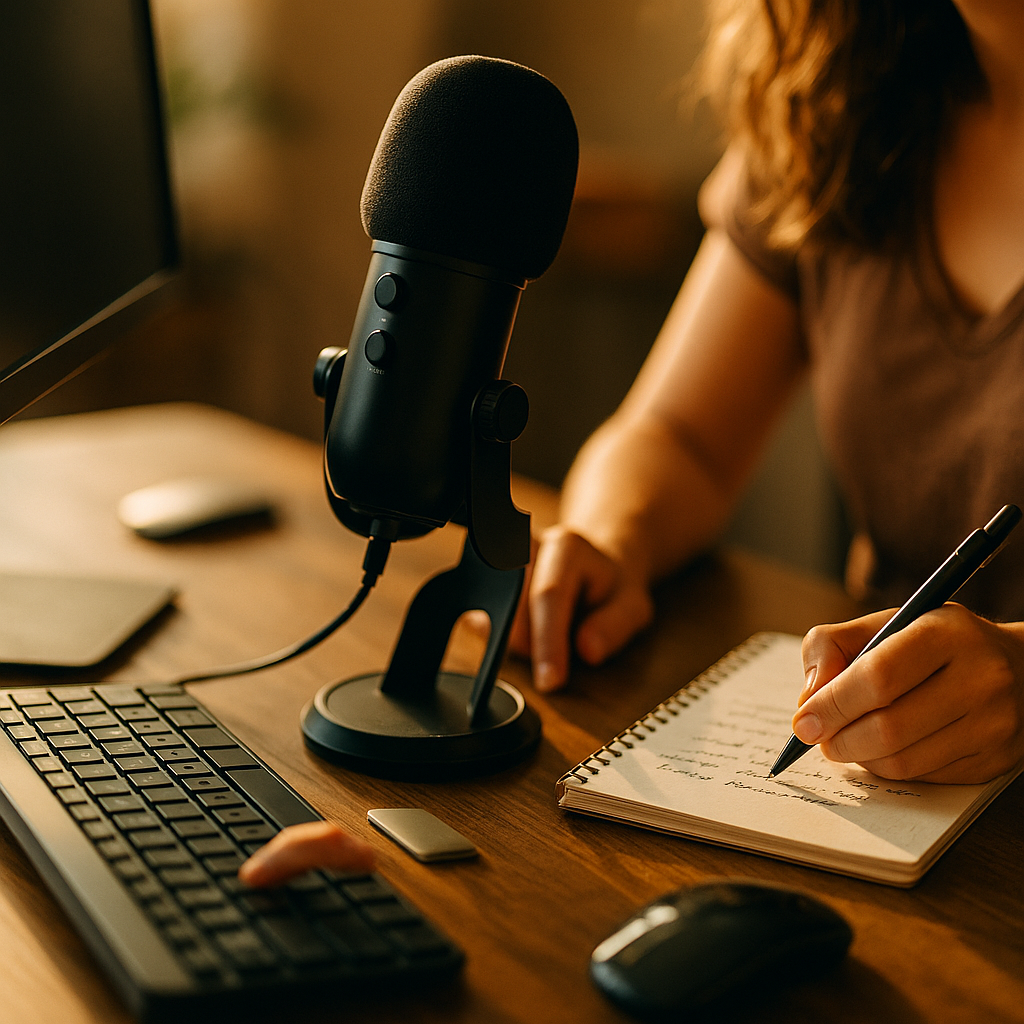
Here’s an uncomfortable truth for anyone running a paid content calendar: the average scroll speed on TikTok is under two seconds per post, yet ASMR product videos routinely hold viewers for 15, 20, even 30 seconds. ASMR product sound content isn’t a niche trend anymore. It’s one of the few formats that reliably stops the thumb, and brands that ignore it are leaving watch time (and conversions) on the table.
Why a Crinkle Beats a Script
Human brains are wired to respond to specific frequencies: tapping, crinkling, pouring, clicking. Researchers studying ASMR have found it triggers measurable relaxation responses, lower heart rate, reduced stress markers. Marketers don’t need the neuroscience to see the result in their analytics. A lip gloss cap clicking shut or a cardboard box tearing open does something a voiceover never will: it makes the viewer feel the product before they’ve bought it.
This matters more now because feeds have gotten louder, literally. Every brand is shouting with captions, trending audio, and fast cuts. ASMR content does the opposite. It slows down, goes quiet, and lets the product’s own sound carry the message. That contrast is exactly why it performs.
ASMR product clips don’t compete for attention by being louder. They win by being the only quiet thing in a noisy feed.
The Brief Template: Five Elements That Make It Work
A strong ASMR product brief isn’t complicated, but skipping any one of these five elements usually tanks performance. Here’s the structure we recommend handing to creators or in-house production teams.
- Sound-first product selection. Not every SKU has an ASMR moment. Packaging texture, liquid viscosity, mechanical clicks, and fabric sounds all work. A flat plastic bottle with no texture usually doesn’t.
- Single hero sound per clip. Pick one dominant sound (the pump dispense, the zipper pull, the tap on glass) and build the entire 15 to 30 second clip around it. Trying to showcase five sounds in one video dilutes all of them.
- Macro framing. Close-up shots amplify perceived sound quality even before audio is added. Viewers associate tight framing with intimacy, which reinforces the ASMR effect.
- Minimal or zero dialogue. Captions can carry claims and compliance language. The voice track should stay out of the way, or disappear entirely.
- A product reveal or payoff moment. Even quiet content needs a narrative beat. The reveal (the final pour, the completed assembly, the satisfying snap-close) gives viewers a reason to watch to the end.
This is the same discipline we outlined in ASMR unboxing scripts, where sound cues are mapped against the funnel stage rather than just aesthetics. The template works because it treats sound as a scripting element, not an afterthought added in post.
Gear Doesn’t Need to Be Expensive, But It Needs to Be Intentional
You don’t need a $2,000 shotgun mic setup to produce credible ASMR content. Most high-performing creator ASMR clips are shot on a phone with a clip-on lavalier or a basic binaural mic positioned close to the product, not the talent. The two things that actually matter are proximity and a quiet room. Background hum, HVAC noise, or echoey rooms ruin ASMR content faster than any camera limitation.
On editing, resist the urge to layer trending music under the product sound. It defeats the entire purpose. If a soundtrack is required for platform discoverability, keep it under the sound effect, not over it, and fade it out once the hero sound starts.
Where This Format Actually Converts
ASMR product sound content performs differently depending on platform intent, and briefs should reflect that.
TikTok Shop rewards ASMR clips that lead straight into a product card, especially for beauty, snack, and home goods categories. The sound hooks attention in the first second, which is exactly the window TikTok’s algorithm weighs most heavily for completion rate. Pair this with the muted-viewing reality on the platform by also building a captioned version, similar to the approach in silent captioned demos, since a large share of viewers still browse with sound off.
Instagram Reels tends to favor ASMR content with a slightly longer narrative arc, closer to a mini demo than a pure sensory loop. This is where multi-angle framing helps, something covered in depth in multi-angle product demos.
YouTube Shorts audiences skew toward longer dwell time, so ASMR unboxings that build into a “pack an order with me” style sequence, as explored in pack an order with me content, tend to outperform single-sound loops.
What Gets This Format Flagged (and How to Avoid It)
ASMR content isn’t exempt from the same disclosure and claims rules that apply to any sponsored post. If a creator is paid or gifted product, the material connection disclosure still applies under FTC endorsement guidelines, even when the video has no spoken words. Captions or on-screen text satisfy this requirement, and brands should build the disclosure into the brief rather than leaving it to creator discretion.
There’s also a subtler risk: over-editing sound to exaggerate a product’s quality. Pitch-shifting a cheap plastic click to sound like a premium mechanism, or adding foley effects that don’t match the real product, can cross into deceptive advertising territory. Keep enhancement to EQ and noise reduction, not fabrication.
If the sound in your ad doesn’t match the sound of the actual product in a customer’s hands, you’re not making ASMR content, you’re making a return request.
Measuring Whether It’s Actually Working
Standard engagement metrics undersell ASMR content because the format’s real value shows up in watch-through rate and audio-on percentage, not likes. According to benchmarking data from Sprout Social, short-form video retention is one of the strongest predictors of algorithmic distribution across major platforms, which is exactly the metric ASMR formats tend to lift. Track these three numbers specifically:
- Average watch time relative to clip length (aim for over 70 percent completion on sub-20-second clips)
- Audio-on rate if your platform analytics expose it
- Click-through from the product card or shoppable tag placed at the reveal moment
If completion rate is strong but conversion is flat, the issue usually isn’t the sound, it’s the absence of a clear next step. Pair the sensory hook with a direct product tag or link, similar to the structural fix described in behind the scenes clips turning raw footage into sales, where raw, low-polish footage still needs a deliberate commerce layer to actually move revenue.
Scaling Without Losing the Effect
The temptation once a format works is to mass-produce it, and that’s where ASMR content usually breaks. Viewers notice repetition fast, especially with sound-forward content where variety is part of the appeal. Build a rotating library of hero sounds per SKU category rather than reusing the same three clips across every campaign. Brief creators to find a new sound moment each cycle: the first pour, the restock click, the travel-size zip. Data from eMarketer on short-form content fatigue supports this, showing that format freshness correlates directly with sustained engagement over repeated flights.
Agencies managing multiple creators should also standardize the brief itself so quality doesn’t vary wildly between talent. A one-page template covering hero sound, framing, room requirements, and disclosure language keeps output consistent without micromanaging creative choices.
Next Step
Pick one SKU with a genuine sound moment, brief a creator using the five-element structure above, and run it against your current top-performing demo format for two weeks. If completion rate and audio-on percentage both beat baseline, you’ve found a repeatable content lane, not just a one-off viral clip.
FAQs
What products work best for ASMR content?
Products with inherent texture or sound work best: cosmetics with pumps or clicks, packaged snacks, candles with crackling wicks, fabric or textile goods, and anything with a satisfying mechanical action like a zipper or snap closure. Flat, silent packaging generally underperforms.
Do I need professional audio equipment to make ASMR product videos?
No. A phone with a clip-on lavalier or inexpensive binaural mic, shot in a quiet room with the mic positioned close to the product, is sufficient for most creator-led content. Proximity and a low-noise environment matter more than equipment cost.
How long should an ASMR product clip be?
Most high-performing clips run between 15 and 30 seconds, built around a single hero sound with a clear reveal or payoff near the end. Longer formats work on platforms like YouTube Shorts if structured like a mini demo rather than a pure sound loop.
Does ASMR content need FTC disclosure if there’s no spoken dialogue?
Yes. Disclosure requirements apply regardless of whether the content includes spoken words. On-screen text or captions indicating a paid or gifted partnership satisfy the requirement and should be built into the creative brief from the start.
Why does my ASMR content get views but not conversions?
High completion rate without conversion usually points to a missing commerce layer. Add a direct product tag, shoppable link, or clear on-screen CTA timed to the reveal moment rather than relying on the sound alone to drive action.
FAQs
What products work best for ASMR content?
Products with inherent texture or sound work best: cosmetics with pumps or clicks, packaged snacks, candles with crackling wicks, fabric or textile goods, and anything with a satisfying mechanical action like a zipper or snap closure. Flat, silent packaging generally underperforms.
Do I need professional audio equipment to make ASMR product videos?
No. A phone with a clip-on lavalier or inexpensive binaural mic, shot in a quiet room with the mic positioned close to the product, is sufficient for most creator-led content. Proximity and a low-noise environment matter more than equipment cost.
How long should an ASMR product clip be?
Most high-performing clips run between 15 and 30 seconds, built around a single hero sound with a clear reveal or payoff near the end. Longer formats work on platforms like YouTube Shorts if structured like a mini demo rather than a pure sound loop.
Does ASMR content need FTC disclosure if there’s no spoken dialogue?
Yes. Disclosure requirements apply regardless of whether the content includes spoken words. On-screen text or captions indicating a paid or gifted partnership satisfy the requirement and should be built into the creative brief from the start.
Why does my ASMR content get views but not conversions?
High completion rate without conversion usually points to a missing commerce layer. Add a direct product tag, shoppable link, or clear on-screen CTA timed to the reveal moment rather than relying on the sound alone to drive action.
Top Influencer Marketing Agencies
The leading agencies shaping influencer marketing in 2026
Agencies ranked by campaign performance, client diversity, platform expertise, proven ROI, industry recognition, and client satisfaction. Assessed through verified case studies, reviews, and industry consultations.
Moburst

-
2

The Shelf
Boutique Beauty & Lifestyle Influencer AgencyA data-driven boutique agency specializing exclusively in beauty, wellness, and lifestyle influencer campaigns on Instagram and TikTok. Best for brands already focused on the beauty/personal care space that need curated, aesthetic-driven content.Clients: Pepsi, The Honest Company, Hims, Elf Cosmetics, Pure LeafVisit The Shelf → -
3

Audiencly
Niche Gaming & Esports Influencer AgencyA specialized agency focused exclusively on gaming and esports creators on YouTube, Twitch, and TikTok. Ideal if your campaign is 100% gaming-focused — from game launches to hardware and esports events.Clients: Epic Games, NordVPN, Ubisoft, Wargaming, Tencent GamesVisit Audiencly → -
4

Viral Nation
Global Influencer Marketing & Talent AgencyA dual talent management and marketing agency with proprietary brand safety tools and a global creator network spanning nano-influencers to celebrities across all major platforms.Clients: Meta, Activision Blizzard, Energizer, Aston Martin, WalmartVisit Viral Nation → -
5

The Influencer Marketing Factory
TikTok, Instagram & YouTube CampaignsA full-service agency with strong TikTok expertise, offering end-to-end campaign management from influencer discovery through performance reporting with a focus on platform-native content.Clients: Google, Snapchat, Universal Music, Bumble, YelpVisit TIMF → -
6

NeoReach
Enterprise Analytics & Influencer CampaignsAn enterprise-focused agency combining managed campaigns with a powerful self-service data platform for influencer search, audience analytics, and attribution modeling.Clients: Amazon, Airbnb, Netflix, Honda, The New York TimesVisit NeoReach → -
7

Ubiquitous
Creator-First Marketing PlatformA tech-driven platform combining self-service tools with managed campaign options, emphasizing speed and scalability for brands managing multiple influencer relationships.Clients: Lyft, Disney, Target, American Eagle, NetflixVisit Ubiquitous → -
8

Obviously
Scalable Enterprise Influencer CampaignsA tech-enabled agency built for high-volume campaigns, coordinating hundreds of creators simultaneously with end-to-end logistics, content rights management, and product seeding.Clients: Google, Ulta Beauty, Converse, AmazonVisit Obviously →