


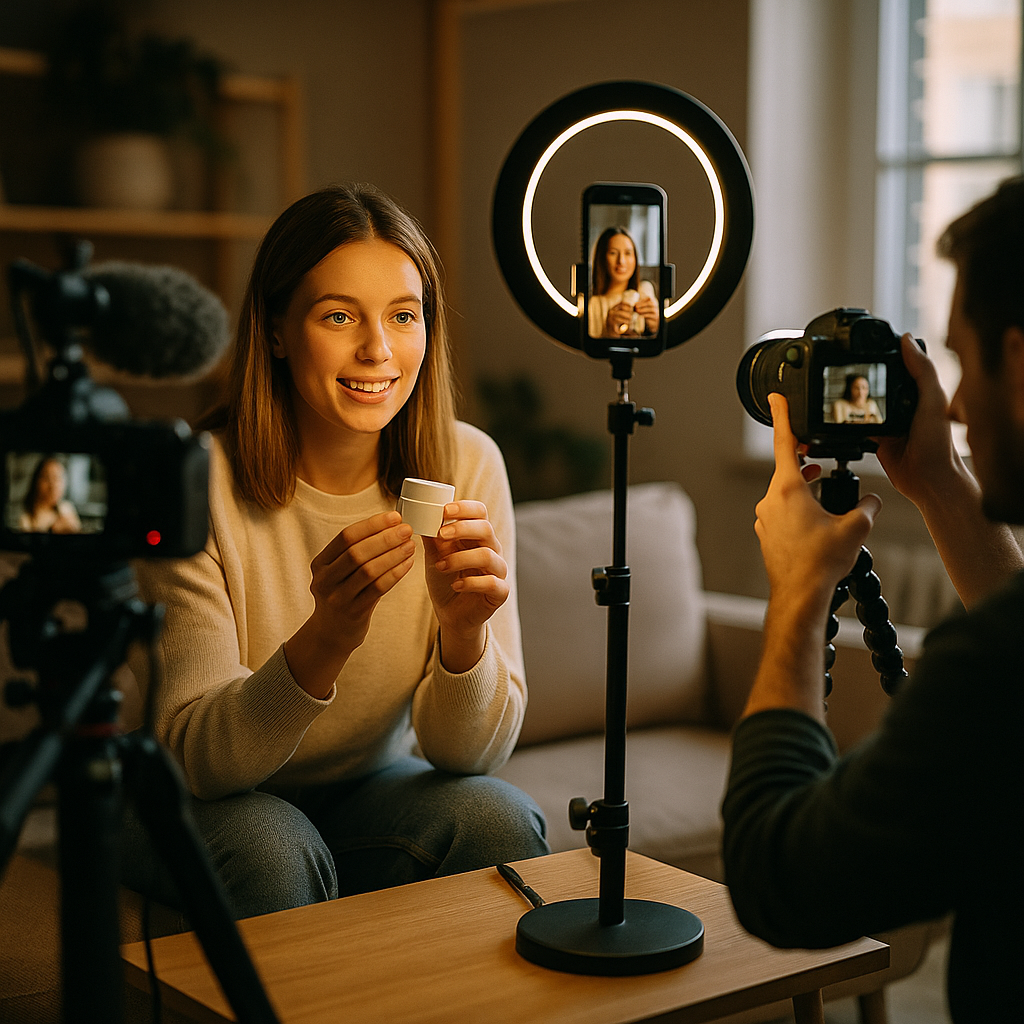
By 2027, industry forecasts suggest the majority of branded UGC will come from teams, not individuals. The lone creator filming testimonials in a bedroom studio is becoming a legacy image. In their place: production businesses with shot lists, contracts, and compliance officers. This is the professionalization of UGC creators, and it’s rewriting how brands source content entirely.
The Solo Creator Model Is Hitting a Ceiling
For years, the pitch was simple. Find a creator, pay a flat fee, get a handful of raw clips that feel native to the feed. It worked when demand was modest and expectations were low. It doesn’t scale anymore.
Brands running always-on content engines need dozens of variations a month: different hooks, different product angles, different compliance disclosures for different regions. A single creator juggling five brand deals and a day job simply can’t keep pace. Deadlines slip. Quality swings wildly between deliverables. And when that creator gets sick, takes a vacation, or just ghosts (it happens more than marketers admit), the content pipeline stalls completely.
This fragility has already forced brands to overhaul how they screen talent. As side hustle UGC creators flood the market, vetting has shifted from vibes-based selection to structured onboarding, background checks, and sample-based auditions. That shift alone has pushed brands toward vendors who already operate like businesses.
What Does a UGC Production Business Actually Look Like?
Think less “creator” and more “mini agency.” These operations typically include a few hallmarks:
- A roster of 3 to 15 on-camera talent, often non-exclusive, managed under one umbrella
- In-house editors, scriptwriters, and sometimes a dedicated account manager for client communication
- Standardized rate cards, usage rights language, and turnaround SLAs baked into contracts
- Batch production workflows, shooting 10 to 30 pieces of content in a single session
- Basic compliance protocols for FTC disclosure language and platform-specific labeling
Some of these businesses started as talent agencies and expanded into production. Others began as solo creators who got overwhelmed with inbound demand and hired help to keep up. Either way, the end result looks more like a boutique creative shop than a single influencer with a ring light.
The shift isn’t about better talent. It’s about predictable output, which is the one thing solo creators structurally cannot guarantee at scale.
Why Brands Are Choosing Studios Over Solo Creators
Ask a brand marketer why they moved budget from individual creators to production businesses and the answer rarely mentions “talent quality.” It’s almost always operational.
Procurement teams want a single invoice, not forty. Legal wants one master services agreement, not forty individual creator contracts with inconsistent usage terms. According to HubSpot’s ongoing marketing research, operational friction remains one of the top cited barriers to scaling creator programs, right alongside measurement. Production businesses solve the friction problem by acting as the single point of contact.
There’s also a quality consistency argument. A production house that shoots content daily develops muscle memory around what converts: pacing, hook structure, caption formatting. That institutional knowledge compounds in a way that a single part-time creator’s experience cannot. It mirrors a broader pattern across the industry, where engagement math increasingly beats raw follower count as the metric that actually predicts conversion.
The Economics Nobody Talks About
Here’s the uncomfortable math: individual UGC creators have been commoditized. Marketplaces flooded with side-hustle talent pushed per-video rates down, sometimes to $50 or $75 a clip. That race to the bottom made solo creator work barely sustainable as a full-time living for anyone outside the top tier.
Production businesses flip that equation. By bundling production, editing, and account management, they can charge $300 to $1,500 per package while still paying individual talent a fair day rate, because they’re monetizing the service layer, not just the appearance fee. This mirrors dynamics already documented in how creator tier ratios reveal the real math behind influencer budgets, where brands increasingly pay for structured output rather than reach alone.
For brands, the math works out too. One production business invoice replacing five freelance creator contracts means less finance overhead, fewer late payments, and fewer disputes. That last point matters more than it sounds. Payment friction has become a real flashpoint, with a notable share of marketers reporting pay term disputes that break down contracts entirely. A production business with standardized terms removes most of that risk before it starts.
Compliance Is the Quiet Driver Behind This Shift
If economics is the loud reason brands are consolidating UGC sourcing, compliance is the quiet one. Regulators have sharpened their focus on disclosure practices, and the FTC’s endorsement guidelines apply regardless of whether the creator posting the content has 500 followers or 5 million. A single untrained solo creator forgetting a #ad tag can trigger brand-level liability.
Production businesses build compliance into their process because it’s their reputation on the line across dozens of client relationships, not just one. They train talent on disclosure language, review scripts before filming, and often maintain documentation trails that brands can point to if questioned. That operational discipline is becoming non-negotiable as creator commerce continues to outpace compliance infrastructure across the industry.
It’s worth connecting this to the broader moderation cost problem too. Reviewing and approving UGC at scale has gotten expensive, with some brands reporting that moderation now eats up to 15 percent of total content budgets. Working with a production business that pre-vets content before submission can meaningfully reduce that internal review burden.
What This Means for Brand Teams Building Creator Programs
None of this means solo creators are disappearing. Top-tier individual talent with genuine audience connection still has unique value, particularly for authenticity-driven campaigns where the creator’s personal brand is the point. But for volume UGC, the kind that fuels paid social testing, product pages, and always-on organic content, the production business model is becoming the default sourcing channel.
Brand teams should start treating UGC sourcing the way they treat any vendor relationship: with scorecards, SLAs, and renewal criteria. A few practical shifts worth making:
- Request a sample batch before committing to ongoing volume, not just a single polished reel
- Negotiate usage rights clearly upfront, including whitelisting and paid amplification terms
- Ask about the production business’s talent vetting process, not just their editing capabilities
- Build in disclosure compliance review as a contractual requirement, not an afterthought
This operational maturity echoes patterns seen elsewhere in the industry, including how creator marketplace expansion has multiplied compliance risk for brands sourcing at scale through open platforms rather than vetted vendors. Platforms like Sprout Social and reporting from eMarketer have both tracked this institutionalization trend over the past several quarters, and the direction is consistent: creator work is becoming a managed supply chain.
FAQs
What is a UGC production business?
A UGC production business is a small creative team, typically combining on-camera talent, editors, and account managers, that produces branded user-generated-style content at scale under formal contracts, rather than relying on a single independent creator.
Why are brands moving away from individual UGC creators?
Brands are shifting toward production businesses because individual creators often struggle with inconsistent output, scheduling reliability, and compliance knowledge. Production businesses offer standardized contracts, batch delivery, and built-in disclosure training that reduce operational and legal risk.
Does working with a production business cost more than hiring a solo creator?
Per-package pricing is often higher than a single freelancer’s rate, but total cost of ownership tends to be lower once brands factor in reduced moderation overhead, fewer payment disputes, and lower compliance risk.
Are solo UGC creators becoming obsolete?
No. Top individual creators with strong personal brands still deliver unique value for authenticity-focused campaigns. The shift primarily affects high-volume, repeatable UGC production, where consistency matters more than individual personality.
How should brands vet a UGC production business before signing a contract?
Request a paid sample batch, review their usage rights and licensing terms, confirm they train talent on FTC disclosure requirements, and ask for references from existing clients running similar volume.
The takeaway for brand teams is straightforward: audit your current creator roster this quarter, flag which relationships are single-person dependencies, and start shifting volume work toward vetted production partners with real contracts and compliance processes in place.
Top Influencer Marketing Agencies
The leading agencies shaping influencer marketing in 2026
Agencies ranked by campaign performance, client diversity, platform expertise, proven ROI, industry recognition, and client satisfaction. Assessed through verified case studies, reviews, and industry consultations.
Moburst

-
2

The Shelf
Boutique Beauty & Lifestyle Influencer AgencyA data-driven boutique agency specializing exclusively in beauty, wellness, and lifestyle influencer campaigns on Instagram and TikTok. Best for brands already focused on the beauty/personal care space that need curated, aesthetic-driven content.Clients: Pepsi, The Honest Company, Hims, Elf Cosmetics, Pure LeafVisit The Shelf → -
3

Audiencly
Niche Gaming & Esports Influencer AgencyA specialized agency focused exclusively on gaming and esports creators on YouTube, Twitch, and TikTok. Ideal if your campaign is 100% gaming-focused — from game launches to hardware and esports events.Clients: Epic Games, NordVPN, Ubisoft, Wargaming, Tencent GamesVisit Audiencly → -
4

Viral Nation
Global Influencer Marketing & Talent AgencyA dual talent management and marketing agency with proprietary brand safety tools and a global creator network spanning nano-influencers to celebrities across all major platforms.Clients: Meta, Activision Blizzard, Energizer, Aston Martin, WalmartVisit Viral Nation → -
5

The Influencer Marketing Factory
TikTok, Instagram & YouTube CampaignsA full-service agency with strong TikTok expertise, offering end-to-end campaign management from influencer discovery through performance reporting with a focus on platform-native content.Clients: Google, Snapchat, Universal Music, Bumble, YelpVisit TIMF → -
6

NeoReach
Enterprise Analytics & Influencer CampaignsAn enterprise-focused agency combining managed campaigns with a powerful self-service data platform for influencer search, audience analytics, and attribution modeling.Clients: Amazon, Airbnb, Netflix, Honda, The New York TimesVisit NeoReach → -
7

Ubiquitous
Creator-First Marketing PlatformA tech-driven platform combining self-service tools with managed campaign options, emphasizing speed and scalability for brands managing multiple influencer relationships.Clients: Lyft, Disney, Target, American Eagle, NetflixVisit Ubiquitous → -
8

Obviously
Scalable Enterprise Influencer CampaignsA tech-enabled agency built for high-volume campaigns, coordinating hundreds of creators simultaneously with end-to-end logistics, content rights management, and product seeding.Clients: Google, Ulta Beauty, Converse, AmazonVisit Obviously →