


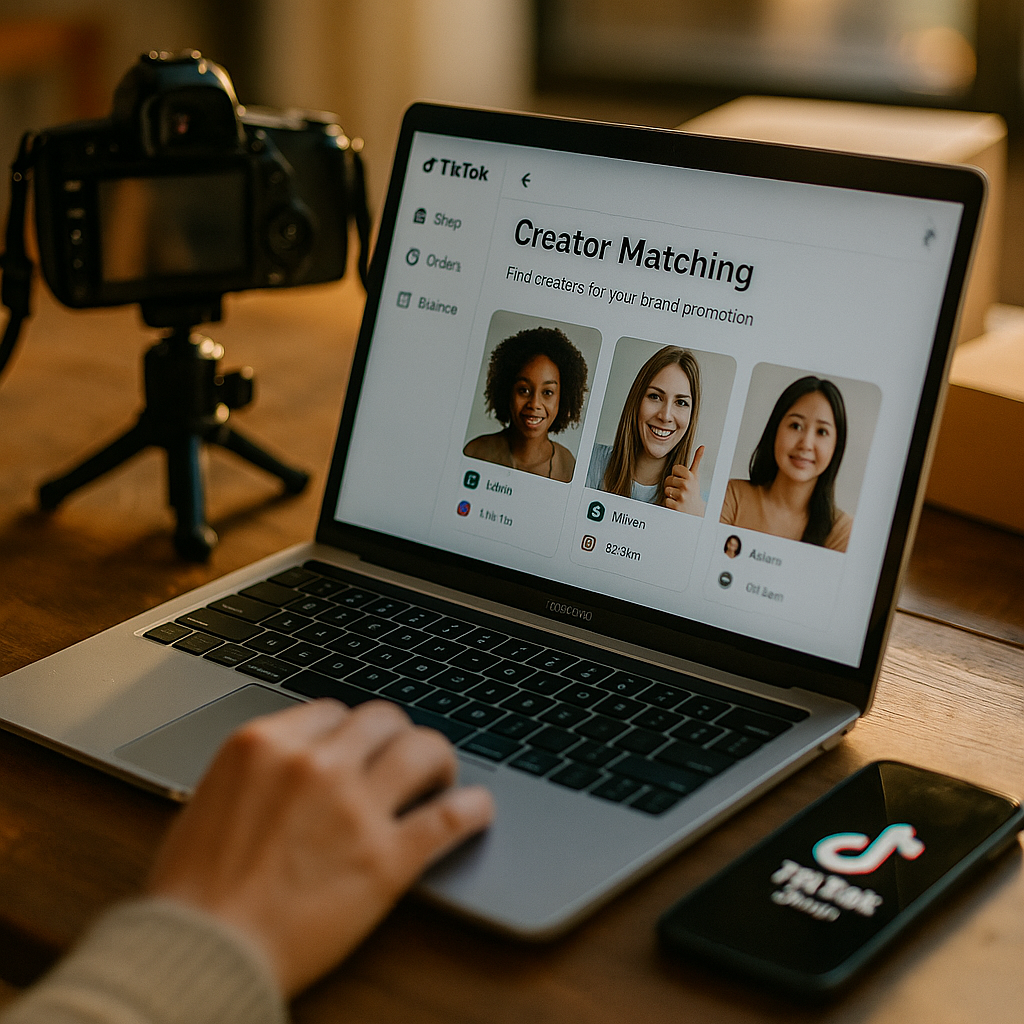
TikTok Shop’s AI matching engine now connects brands to creators in under 48 hours, a process that used to take agencies three to six weeks of manual outreach. That speed is either your biggest growth lever or your fastest route to a brand safety mess. Onboarding onto TikTok Shop’s AI creator-matching networks isn’t optional anymore for brands serious about social commerce. The question is whether you’re doing it with a strategy or just hoping the algorithm figures it out for you.
What TikTok Shop’s AI Creator-Matching Network Actually Does
TikTok Shop’s matching system (often accessed through the Affiliate Partnerships tab in Seller Center) uses performance data, audience overlap, and content category signals to pair your product catalog with creators likely to convert. It’s not a directory. It’s a live recommendation engine that ranks creators based on your historical GMV, return rates, and engagement quality, then auto-suggests collaborations or lets creators request your products directly.
Think of it as a matchmaking layer sitting on top of TikTok’s affiliate marketplace. Instead of you cold-DMing 200 creators and hoping ten respond, the system surfaces creators whose past performance with similar SKUs makes them statistically likely to move product. For brands used to manual creator vetting through spreadsheets, this is a fundamentally different operating model.
Brands that onboard correctly treat the AI matching network as a funnel to manage, not a vending machine to wait on. The system rewards active optimization, not passive listing.
Why the Rush? The Numbers Behind the Urgency
Social commerce is no longer a side channel. eMarketer has tracked live and affiliate shopping as one of the fastest-growing retail subcategories in the US, and TikTok Shop sits at the center of that shift. Statista data on creator economy spend shows brands reallocating budget away from static influencer posts toward performance-based affiliate models, precisely the structure TikTok’s matching network is built to optimize.
Here’s the practical reality: creators onboarded through the AI network typically get surfaced to brands within days, not weeks. Brands that delay onboarding aren’t just missing creators, they’re missing the algorithm’s early trust signals. TikTok’s system favors accounts with consistent activity history. A brand that joins late and goes quiet for a month looks riskier to the algorithm than one that’s been steadily active, even at smaller volume.
The Compounding Effect of Early Activity
Early, consistent engagement with the matching system builds a performance profile that compounds. Brands that ship sample units to matched creators in week one, track conversion, and feed that data back into their catalog settings often see the system surface higher-tier creators by week three or four. Brands that wait and “test later” start from zero, competing against catalogs with months of performance history already baked in.
Step One: Get Your Seller Center House in Order
Before you touch the matching network, your Seller Center account needs to be clean. That means accurate product categorization, competitive commission rates, and return policies that won’t tank your creator relationships before they start. If your return and refund flow is clunky, creators notice fast, and so does the algorithm through downstream conversion data. Brands struggling with cart abandonment tied to return friction should look at how returns integration affects conversion signals the matching system reads.
Next, set your commission structure deliberately. The AI network weighs commission competitiveness against product category benchmarks. Underpricing your affiliate commission relative to category norms means fewer creators get matched to you, full stop. This is where understanding creator pay models matters before you ever open the matching dashboard. Set commissions too low and you’re invisible. Set them without margin discipline and you’re bleeding on every sale.
Step Two: Feed the Algorithm With Signal, Not Guesswork
The matching system learns from what you do inside it. Brands that treat onboarding as a one-time setup and walk away get mediocre matches. Brands that actively engage, approving sample requests, responding to creator inquiries within hours, flagging high performers for ongoing partnership, train the system to prioritize them.
- Approve sample requests from mid-tier creators quickly; slow response times reduce your visibility in future match cycles.
- Use the showcase and product linking features consistently so performance data attaches to specific SKUs, not just your overall store.
- Track which creator tiers actually convert for your category. Nano and micro creators often outperform macro names on trust-driven categories like beauty and home goods.
If you’re still deciding how deep to go on smaller creators, the economics are worth studying through a nano creator seeding lens before you scale spend. Nano seeding at volume often produces better signal data for the AI matching engine than a handful of expensive macro deals, because the system has more conversion data points to learn from.
Scaling Without Losing Control: The Operational Playbook
Speed is the whole point of AI matching, but speed without guardrails is how brands end up with a creator roster full of mismatched voices, inconsistent messaging, and compliance headaches. Here’s what disciplined scaling looks like in practice.
Build Tiered Approval Rules
Set auto-approval thresholds for low-risk categories (follower count minimums, past GMV performance, content category alignment) and manual review for anything touching regulated claims, health, finance, or anything with FTC disclosure implications. The FTC’s endorsement guidelines still apply regardless of how the creator was sourced, and “the algorithm matched us” is not a defense regulators accept. Build disclosure compliance checks into your onboarding workflow from day one, not as an afterthought once a creator posts something problematic.
Staff for the Volume You’re About to Get
Brands consistently underestimate how much creator volume the matching network generates once it starts working. A team that handled fifteen manual outreach relationships a month suddenly has sixty inbound requests weekly. If your livestream and content review staffing hasn’t scaled alongside your matching activity, you’ll bottleneck exactly where speed mattered most. This is the same operational lesson covered in depth around livestream staffing, and it applies just as directly to affiliate creator volume management.
Don’t Ignore Network Models
Some brands skip direct matching entirely and route through third-party creator network partners like MyyShop to handle sourcing and vetting at scale. That’s a legitimate path, particularly for brands without internal bandwidth, but it changes your margin structure and your control over creator quality. Understanding the creator network model trade-offs before committing budget will save you from a messy mid-campaign pivot.
The brands winning on TikTok Shop right now aren’t the ones with the biggest budgets. They’re the ones who treat the AI matching network as a system to actively manage, feeding it clean data, fast responses, and disciplined approval rules every single week.
Where This Connects to Your Broader Commerce Strategy
AI matching doesn’t operate in isolation. The creators it surfaces feed your showcase tab ranking, your livestream gifting economics, and your overall GMV trajectory. Treat onboarding as the first domino in a longer chain, not a standalone task you check off and forget. Brands that connect matching performance data to their broader scheduling and gifting strategy, rather than managing each in a silo, consistently report stronger retention from creators who come through the AI system versus manual outreach.
It’s also worth benchmarking your creator operations against general influencer marketing best practices from sources like HubSpot and Sprout Social, which track broader creator economy trends beyond TikTok specifically. The platform-specific tactics matter, but the underlying principles of trust, consistency, and transparent compensation don’t change.
Common Mistakes That Stall Onboarding
A few patterns show up again and again with brands that struggle to get traction in the matching system.
- Setting commissions once and never revisiting them. Category benchmarks shift; your rates should too.
- Treating every matched creator the same. A nano creator with a 40,000-follower niche audience often outperforms a 500,000-follower generalist on conversion.
- Ignoring the content review queue. Slow approvals on creator-submitted content delay payouts and quietly damage your matching score over time.
- Skipping disclosure training. Creators matched through AI systems still need the same FTC-compliant disclosure guidance as any manually sourced partner.
Frequently Asked Questions
How long does it take to see results after onboarding onto TikTok Shop’s AI creator-matching network?
Most brands see initial creator matches within 48 to 72 hours of a properly configured Seller Center account. Meaningful GMV impact typically takes three to four weeks, as the system needs performance data to refine its matching quality.
Do I still need to manually vet creators if the AI is matching them for me?
Yes. The AI matches based on performance and category signals, not brand voice fit or compliance risk. Manual review remains essential for any creator touching sensitive claims or higher-tier partnerships.
What commission rate should I set to attract quality creator matches?
Rates vary significantly by category, but underpricing relative to competitors in your product category is the single biggest reason brands get poor match volume. Benchmark against similar SKUs before setting your rate.
Can small brands compete with larger catalogs in the matching system?
Yes. The system weighs conversion performance and consistency more heavily than total catalog size, which gives smaller brands with focused, well-optimized product lines a genuine path to strong matches.
Is using a third-party creator network better than direct AI matching?
It depends on internal bandwidth. Third-party networks handle vetting and sourcing at scale but reduce direct control and typically add a margin layer. Brands with strong internal teams often get better unit economics managing matching directly.
Next step: Audit your Seller Center setup this week, tighten your commission structure, and set a 30-day review to measure match quality before scaling spend further.
Top Influencer Marketing Agencies
The leading agencies shaping influencer marketing in 2026
Agencies ranked by campaign performance, client diversity, platform expertise, proven ROI, industry recognition, and client satisfaction. Assessed through verified case studies, reviews, and industry consultations.
Moburst

-
2

The Shelf
Boutique Beauty & Lifestyle Influencer AgencyA data-driven boutique agency specializing exclusively in beauty, wellness, and lifestyle influencer campaigns on Instagram and TikTok. Best for brands already focused on the beauty/personal care space that need curated, aesthetic-driven content.Clients: Pepsi, The Honest Company, Hims, Elf Cosmetics, Pure LeafVisit The Shelf → -
3

Audiencly
Niche Gaming & Esports Influencer AgencyA specialized agency focused exclusively on gaming and esports creators on YouTube, Twitch, and TikTok. Ideal if your campaign is 100% gaming-focused — from game launches to hardware and esports events.Clients: Epic Games, NordVPN, Ubisoft, Wargaming, Tencent GamesVisit Audiencly → -
4

Viral Nation
Global Influencer Marketing & Talent AgencyA dual talent management and marketing agency with proprietary brand safety tools and a global creator network spanning nano-influencers to celebrities across all major platforms.Clients: Meta, Activision Blizzard, Energizer, Aston Martin, WalmartVisit Viral Nation → -
5

The Influencer Marketing Factory
TikTok, Instagram & YouTube CampaignsA full-service agency with strong TikTok expertise, offering end-to-end campaign management from influencer discovery through performance reporting with a focus on platform-native content.Clients: Google, Snapchat, Universal Music, Bumble, YelpVisit TIMF → -
6

NeoReach
Enterprise Analytics & Influencer CampaignsAn enterprise-focused agency combining managed campaigns with a powerful self-service data platform for influencer search, audience analytics, and attribution modeling.Clients: Amazon, Airbnb, Netflix, Honda, The New York TimesVisit NeoReach → -
7

Ubiquitous
Creator-First Marketing PlatformA tech-driven platform combining self-service tools with managed campaign options, emphasizing speed and scalability for brands managing multiple influencer relationships.Clients: Lyft, Disney, Target, American Eagle, NetflixVisit Ubiquitous → -
8

Obviously
Scalable Enterprise Influencer CampaignsA tech-enabled agency built for high-volume campaigns, coordinating hundreds of creators simultaneously with end-to-end logistics, content rights management, and product seeding.Clients: Google, Ulta Beauty, Converse, AmazonVisit Obviously →