


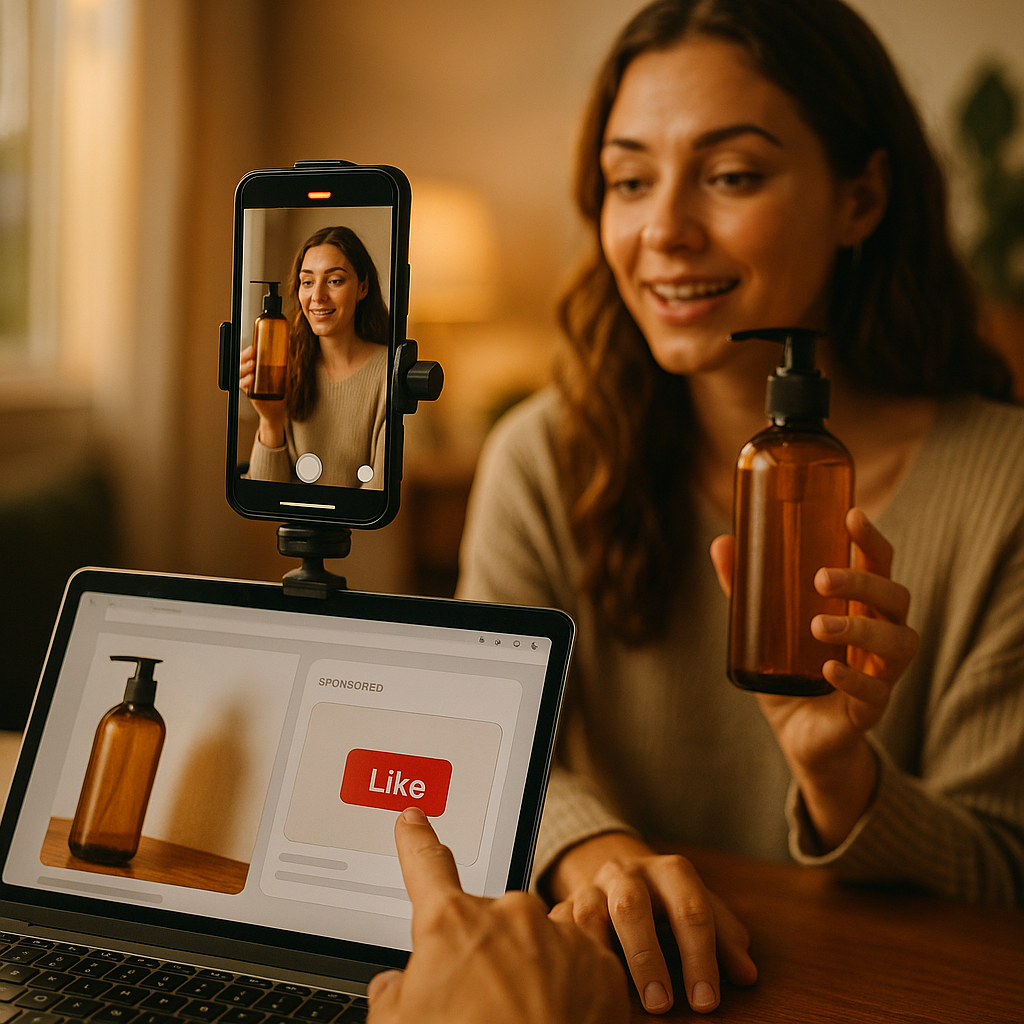
Branded ad creative is getting ignored at scale. Meta’s own benchmarking has repeatedly shown that ads featuring creators as the “voice” outperform polished brand creative, and agencies running paid social at volume report CTR lifts north of 30 percent when they swap studio footage for creator-shot content. If your paid social program still leans on in-house production for top-of-funnel ads, you’re probably paying more per click than you need to.
The Gap Is Bigger Than Most Media Plans Account For
Here’s the uncomfortable part for brand teams that spent years building out content studios: the format that performs best on cost per click isn’t the one with the biggest budget behind it. It’s the one that looks least like an ad.
Multiple agency benchmarks circulating in the performance marketing community show creator-led ad variants beating brand-produced equivalents on CTR by 20 to 40 percent in A/B tests, with CPC dropping proportionally as auction algorithms reward higher engagement. eMarketer’s coverage of creator content performance echoes the pattern: audiences scroll past anything that reads as corporate messaging, but they stop for something that looks like it came from a peer.
The ad auction doesn’t care who made the content. It cares whether people engage with it, and audiences engage differently with a face they recognize from their feed than with a brand’s own camera crew.
That’s the mechanism worth understanding before you reallocate a single dollar of budget.
Why Does Polished Creative Underperform?
Three reasons, and none of them are about production quality.
- Pattern interruption fails. Users have trained themselves to skip anything that visually signals “ad.” Clean studio lighting, brand color palettes, and voiceover scripts are exactly the signals people have learned to tune out.
- Trust transfer doesn’t happen. A brand telling you its product works is expected. A creator telling you the same thing carries borrowed credibility, even in a sponsored post. That credibility gap shows up directly in click behavior.
- Specificity beats polish. Creator content tends to show a specific use case, a specific problem, a specific moment. Brand creative tends to generalize for broad appeal, which often means saying less that’s actually useful to the viewer.
Our earlier coverage of how niche creator accounts outpace branded feeds on trust gets at the same root cause. Audiences aren’t rejecting brands outright. They’re rejecting the format that signals “this was made to sell to you” rather than “this was made by someone like you.”
CPC Follows Engagement, and Engagement Follows Authenticity
Paid social platforms don’t auction impressions in a vacuum. Meta’s ad delivery system and TikTok’s bidding engine both weight predicted engagement heavily in determining cost per result. An ad that earns more comments, shares, and watch time gets delivered more cheaply because the platform is optimizing for user retention, not just advertiser spend.
That means CTR and CPC aren’t two separate problems. They’re the same problem viewed from different ends of the funnel. Higher CTR signals relevance to the algorithm, which lowers the cost to reach the next thousand people. Brands running whitelisted creator content through Meta Partnership Ads or TikTok Spark Ads are essentially buying that relevance signal upfront, rather than hoping their own creative earns it organically.
This is also why micro and mid-tier creators often outperform mega influencers on a cost-per-click basis, even when their reach is a fraction of the size. Smaller audiences tend to be more engaged, and our analysis of how micro influencers beat macro accounts on engagement rate shows the same dynamic playing out across platforms. The algorithm rewards the engagement rate, not the follower count.
Budget Reallocation Is Already Happening
Media buyers aren’t waiting for a formal mandate to shift spend. Agencies report pulling production dollars out of brand studio content and routing them into creator briefs, usage rights, and whitelisting fees instead. That shift shows up in how creator deals get structured now: usage rights and paid amplification clauses are becoming standard line items rather than afterthoughts.
Our reporting on how creator seeding costs are shifting into media budgets covers the finance side of this transition, and it’s worth a read if your finance team is still categorizing creator spend as a content line item rather than a media line item. It isn’t anymore. It’s performance media with a creative layer attached.
If you’re trying to figure out how much of your budget should actually move, the math isn’t one-size-fits-all. Our breakdown of creator tier ratios and the real math behind budgets walks through how brands are splitting spend across macro, mid-tier, and micro creators to balance reach against the CPC efficiency smaller creators tend to deliver.
Objection: “Our Brand Safety and Quality Standards Won’t Allow This”
Fair concern, and it’s the most common pushback from brand marketing teams. The answer isn’t to abandon creative standards. It’s to shift where those standards get applied.
Rather than scripting every frame, high-performing programs now brief creators on message points and let them shoot in their own style, then run a lightweight approval pass for compliance and brand safety before spend goes live. This is also where disclosure compliance matters more than ever. The FTC’s endorsement guidelines apply whether the content was shot in a studio or a bedroom, and paid amplification of creator content doesn’t exempt brands from disclosure obligations. Our coverage of how creator commerce has outpaced compliance is a useful gut check before you scale whitelisting spend without a review process in place.
Quality control also doesn’t have to mean sacrificing output volume. A growing number of brands now work with production partners who specialize in creator-style content at scale, essentially manufacturing the “native” look without relying on a single creator’s availability. We covered this shift in how UGC production studios are replacing solo creators at scale, which is worth reading if volume, not authenticity, is your actual bottleneck.
Objection: “CTR Doesn’t Prove Brand Impact”
This one’s valid too, and it deserves a straight answer rather than a dismissal. CTR and CPC are efficiency metrics. They tell you how cheaply you’re buying attention, not whether that attention converts to pipeline, revenue, or brand lift down the line.
That’s precisely why forward-looking teams are pairing creator-led CTR gains with downstream measurement, rather than treating click rate as the finish line. Our piece on how emotional ROI gives brands a lens beyond CTR is a good companion read if your team is building out a fuller measurement stack. Efficient clicks are the entry point. What happens after the click is still your job to prove.
How to Actually Test This Without Blowing Up Your Funnel
- Run a direct A/B split: identical offer, identical landing page, brand-produced creative against creator-shot creative, same budget, same audience targeting.
- Measure CTR and CPC over a minimum two-week window to let the algorithm’s learning phase stabilize.
- Track down-funnel conversion separately. Don’t assume a CTR win automatically means a conversion win, even though it usually correlates.
- Negotiate usage rights and whitelisting access upfront in your creator contract, not as a renegotiation after you see the results.
- Scale the winning format into a second wave of creators before committing a full-quarter budget to one voice.
Benchmarking tools from HubSpot and social analytics platforms like Sprout Social can help standardize how you compare creative formats across campaigns, which matters once you’re running this test repeatedly rather than as a one-off experiment.
The Takeaway for Media Planners
Stop treating creator content as a brand awareness nicety and start treating it as a performance media lever. Shift a meaningful slice of your paid social production budget into creator briefs and whitelisting fees, run the A/B test above, and let the CPC data settle the internal debate about whether “authentic” beats “polished.” It almost always does.
Frequently Asked Questions
Why do influencer-led ads get a lower cost per click than brand-produced ads?
Ad platforms reward higher engagement with lower delivery costs. Creator-led content typically earns more clicks, comments, and watch time than studio-produced creative because it looks native to the feed rather than like an advertisement, which signals relevance to the algorithm and reduces the cost to reach each additional user.
Does whitelisting creator content require different disclosure rules than organic posts?
Disclosure obligations under FTC endorsement guidelines apply regardless of whether content runs organically or as paid media. Brands running whitelisted or Spark Ads content still need clear, conspicuous disclosure of the material connection between the creator and the brand.
Should brands stop producing their own ad creative entirely?
No. Brand-produced creative still has a role for retargeting, product education, and bottom-funnel conversion where polish and clarity matter more than native feel. The shift is about reallocating top-of-funnel prospecting budget toward creator-led formats where CTR and CPC gains are most pronounced.
How long should an A/B test run before trusting the CTR and CPC results?
Most media buyers recommend a minimum of two weeks to allow the platform’s delivery algorithm to exit its learning phase and stabilize bidding, which prevents early volatility from skewing the comparison between creative formats.
Do micro influencers really outperform larger creators on cost per click?
Often, yes. Micro and mid-tier creators tend to have higher engagement rates relative to their audience size, which translates into stronger CTR and lower CPC in paid delivery, even though their raw reach is smaller than a macro influencer’s.
Top Influencer Marketing Agencies
The leading agencies shaping influencer marketing in 2026
Agencies ranked by campaign performance, client diversity, platform expertise, proven ROI, industry recognition, and client satisfaction. Assessed through verified case studies, reviews, and industry consultations.
Moburst

-
2

The Shelf
Boutique Beauty & Lifestyle Influencer AgencyA data-driven boutique agency specializing exclusively in beauty, wellness, and lifestyle influencer campaigns on Instagram and TikTok. Best for brands already focused on the beauty/personal care space that need curated, aesthetic-driven content.Clients: Pepsi, The Honest Company, Hims, Elf Cosmetics, Pure LeafVisit The Shelf → -
3

Audiencly
Niche Gaming & Esports Influencer AgencyA specialized agency focused exclusively on gaming and esports creators on YouTube, Twitch, and TikTok. Ideal if your campaign is 100% gaming-focused — from game launches to hardware and esports events.Clients: Epic Games, NordVPN, Ubisoft, Wargaming, Tencent GamesVisit Audiencly → -
4

Viral Nation
Global Influencer Marketing & Talent AgencyA dual talent management and marketing agency with proprietary brand safety tools and a global creator network spanning nano-influencers to celebrities across all major platforms.Clients: Meta, Activision Blizzard, Energizer, Aston Martin, WalmartVisit Viral Nation → -
5

The Influencer Marketing Factory
TikTok, Instagram & YouTube CampaignsA full-service agency with strong TikTok expertise, offering end-to-end campaign management from influencer discovery through performance reporting with a focus on platform-native content.Clients: Google, Snapchat, Universal Music, Bumble, YelpVisit TIMF → -
6

NeoReach
Enterprise Analytics & Influencer CampaignsAn enterprise-focused agency combining managed campaigns with a powerful self-service data platform for influencer search, audience analytics, and attribution modeling.Clients: Amazon, Airbnb, Netflix, Honda, The New York TimesVisit NeoReach → -
7

Ubiquitous
Creator-First Marketing PlatformA tech-driven platform combining self-service tools with managed campaign options, emphasizing speed and scalability for brands managing multiple influencer relationships.Clients: Lyft, Disney, Target, American Eagle, NetflixVisit Ubiquitous → -
8

Obviously
Scalable Enterprise Influencer CampaignsA tech-enabled agency built for high-volume campaigns, coordinating hundreds of creators simultaneously with end-to-end logistics, content rights management, and product seeding.Clients: Google, Ulta Beauty, Converse, AmazonVisit Obviously →