


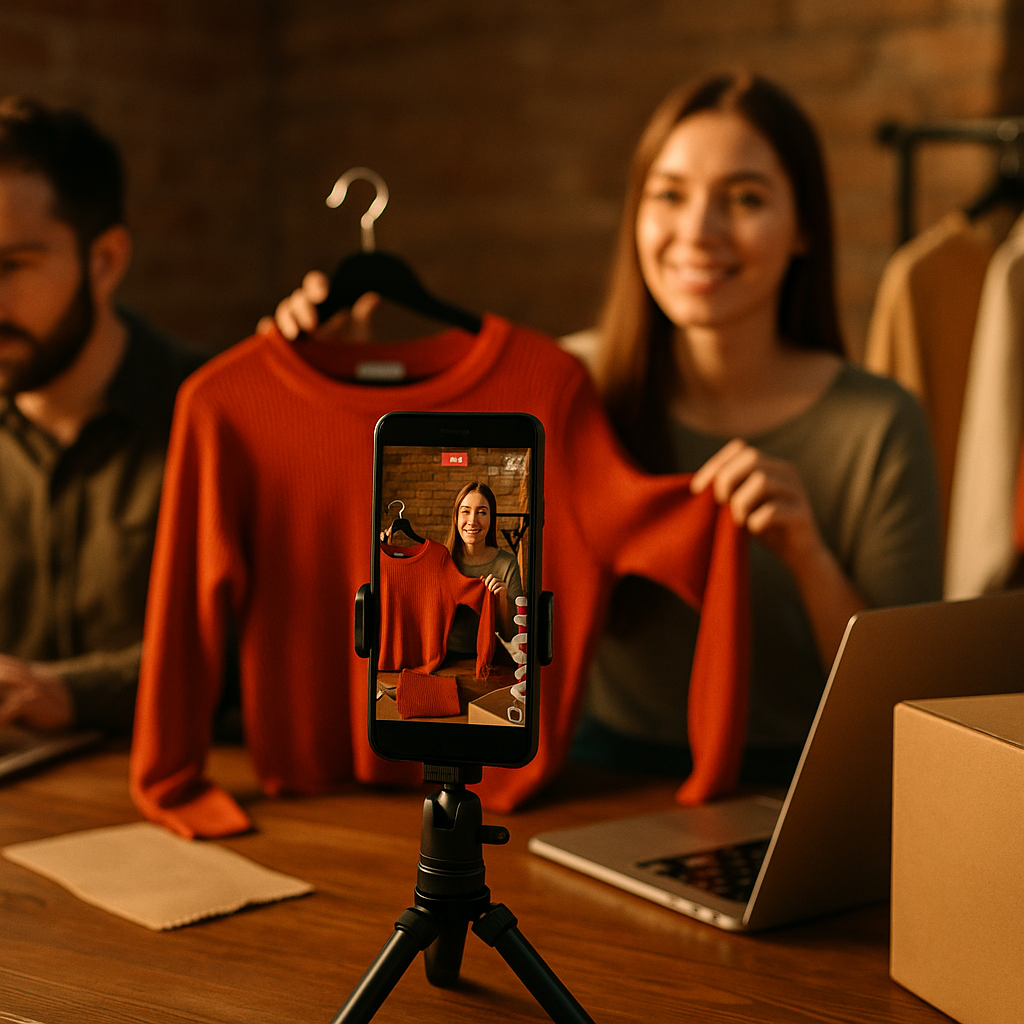
Live commerce just crossed a threshold that should make every brand marketer sit up: 52 percent of content plans now include a dedicated livestream shopping component, according to recent platform data. That’s not a pilot program anymore. That’s a budget line. The question isn’t whether to build live commerce capability, it’s whether you’re building it fast enough before competitors lock in the best hosts, the best production partners, and the best platform placements.
This piece breaks down what “building live commerce” actually means operationally, not just strategically. Because there’s a wide gap between saying “we’re doing live shopping” and actually having the people, tech, and compliance structure to make it profitable.
Why the Number Jumped So Fast
A year ago, live commerce was still treated as a TikTok Shop curiosity or a China-market case study brands cited at conferences without actually funding. That’s changed. TikTok Shop, Amazon Live, and Instagram’s shopping tools have all matured their live checkout flows, and the friction that used to kill conversion mid-stream (slow redirects, clunky cart handoffs) has mostly been engineered away.
The bigger driver, though, is that brands finally have proof it works. We covered this inflection point when live commerce crossed 50 percent of platform consideration earlier this year. The jump to 52 percent of actual content plans confirms it wasn’t a fluke. It’s a trend line, and it’s tracking alongside the broader shift we flagged when social commerce hit trillion dollar pace and forced a creator budget reset across categories.
Live commerce isn’t a new content format bolted onto an existing strategy. It’s a new operating model that touches production, inventory, customer service, and legal all at once.
What “Building Now” Actually Requires
Here’s where most brands get it wrong. They treat live commerce like another content deliverable: brief the creator, pick a date, hit go. That approach works for a static post. It falls apart on a 45-minute live stream where inventory, pricing, and claims all have to hold up in real time.
Four infrastructure pieces separate brands that scale live commerce profitably from brands that burn budget on a few viral moments and quietly stop:
- Real-time inventory sync. If a host sells out a SKU mid-stream and the cart still lets people check out, you’ve created a refund problem and a trust problem simultaneously. Your commerce stack needs to talk to your livestream platform in seconds, not overnight batch updates.
- Trained hosts, not just popular ones. Follower count doesn’t predict live sales performance. Comfort improvising, handling objections on camera, and pacing a show for 30 to 60 minutes does. This is closer to QVC training than influencer briefing.
- Compliance scripts built in advance. Claims made live can’t be edited after the fact. Brands need pre-approved language for pricing, health or efficacy claims, and disclosure timing before the stream starts, not during it.
- Post-stream repurposing workflow. The best-performing clips from a live session often outperform the original broadcast when cut into short-form content. If you’re not capturing and repurposing, you’re leaving reach on the table.
Notice none of these are creative problems. They’re operational ones. That’s the shift brand teams need to internalize: live commerce success is won in the ops layer, not the creative brief.
The Talent Question: Who Actually Hosts These Streams?
Brands keep defaulting to their existing roster of creator partners for live commerce, and that’s often a mistake. The skill set for a great static UGC creator or a great short-form video personality doesn’t automatically transfer to live selling. Live hosting rewards a different kind of performer: someone who can read chat in real time, handle a question about shipping while simultaneously pitching the next product, and keep energy up without a script to lean on.
This matters because the engagement gap between micro and celebrity talent plays out differently in live formats than in static posts. A mid-tier creator with strong community trust and comfort on camera often outsells a bigger name who’s clearly uncomfortable fielding live questions. Brands that are smart about this are running informal live auditions, essentially short test streams, before committing to a full campaign. It’s a low-cost way to avoid a disastrous low-conversion broadcast with a creator who looked perfect on paper.
There’s also a seeding and sourcing dimension. As more budget shifts toward live formats, the way brands recruit and seed live-capable talent is starting to resemble the shift documented in creator seeding costs moving into media budgets. Live commerce hosting fees are increasingly treated as media spend with performance accountability, not flat influencer fees paid regardless of outcome.
Measurement: GMV Is the Only Metric That Matters Here
If your live commerce reporting still leads with views or peak concurrent viewers, you’re measuring the wrong thing. Live commerce lives or dies on gross merchandise value, and brands that have figured this out are rebuilding their entire scorecard around it. We’ve tracked this shift broadly in how GMV overtakes reach as the primary creator KPI, and live commerce is the format where that shift is most obvious and most urgent.
Practical measurement checklist for a live commerce program:
- Track GMV per minute of stream, not just total GMV. It tells you which segments of the show actually drove purchases.
- Measure cart abandonment specifically within the live checkout flow, separate from your normal site abandonment rate.
- Compare cost per acquisition for live-sourced customers against your standard paid and organic acquisition costs.
- Track repeat purchase rate from live commerce customers at 30 and 90 days. Early data across categories suggests live shoppers can show higher repeat rates than standard checkout customers, but this varies heavily by category and needs your own first-party confirmation.
Finance teams are already asking harder questions about influencer spend broadly. The scrutiny we outlined in platform ROI claims crumbling under CFO review will hit live commerce budgets even faster, because the dollar figures involved (production costs, host fees, platform placement fees) tend to be larger per campaign than standard content deals. Walk into budget conversations with GMV data already in hand, not a promise to get it eventually.
Compliance Can’t Be an Afterthought
Live formats create disclosure problems that static posts don’t. A sponsored post has a caption with a permanent #ad tag. A live stream has a host who might forget to mention the partnership thirty minutes into an unscripted riff, or who makes a comparative claim about a competitor product that legal never reviewed.
This is the exact gap we flagged in creator commerce outpacing compliance: brands are moving faster on monetization than they are on the guardrails that keep that monetization legally sound. The FTC’s disclosure guidance applies fully to live content, and regulators have shown no patience for the argument that “it was live, we couldn’t control it.” If anything, that’s the standard you’re expected to have planned for in advance.
Practical fixes: require hosts to state the partnership at the top of the stream and again at natural breaks, not just once. Build a live moderation plan for comments that make unapproved claims on your behalf. And brief hosts explicitly on what they cannot say, not just what they should say. The UK’s ICO guidance on data handling during live shopping checkouts is also worth a look if you’re running streams that collect customer data in real time for lead capture or loyalty signup.
Where This Fits Inside a Broader Content Plan
Live commerce shouldn’t live in isolation from the rest of your creator content strategy. The strongest programs treat it as the monetization layer sitting on top of a broader trust-building content strategy, similar to the dynamic described in niche-first creator accounts outpacing branded feeds on trust. The short-form content and static posts build the audience relationship. The live stream converts it.
Budget allocation should reflect that sequencing. A common mistake is pouring disproportionate spend into live production while starving the always-on content that actually builds the audience who shows up to watch. According to eMarketer data on social commerce spend patterns, brands with the strongest live commerce ROI tend to run live as roughly 20 to 30 percent of total creator content budget, not the majority. Treat it as the capstone of your content calendar, not the whole calendar.
Tool selection matters here too. Platforms like Sprout Social and HubSpot have been expanding their social commerce reporting integrations, which makes it easier to pull live stream performance into the same dashboard as your other creator KPIs instead of managing it in a separate spreadsheet that nobody else on the team ever opens.
The Next Six Months
Expect live commerce to keep climbing past the current 52 percent figure, particularly as more categories beyond beauty and fashion find their footing. B2B is even starting to experiment with live product demos as a lead gen format, an extension of the shift documented in B2B influencer marketing graduating from pilot to demand engine.
Brands that wait for a “best practices playbook” to fully mature before acting will find themselves negotiating for host talent and platform placements against competitors who already locked in the good slots. The infrastructure described above, inventory sync, trained hosts, compliance scripting, GMV-first measurement, isn’t optional overhead. It’s the entry fee.
Next step: audit your current creator roster for live-hosting readiness this quarter, run two test streams with GMV tracking in place, and use those results to build the business case before you commit to a full live commerce line item in next year’s budget.
FAQs
What percentage of brand content plans now include live commerce?
Recent data puts live commerce in 52 percent of content plans, up from just over half the year prior, reflecting faster adoption of livestream shopping tools across TikTok Shop, Amazon Live, and Instagram.
What’s the biggest operational mistake brands make when launching live commerce?
Treating it like a standard content deliverable rather than a real-time commerce operation. Without inventory sync, trained hosts, and pre-approved compliance language, brands risk overselling stock, making unverified claims, and losing customer trust.
How should brands measure live commerce success?
Gross merchandise value (GMV) per minute of stream, live checkout cart abandonment, cost per acquisition compared to other channels, and repeat purchase rate at 30 and 90 days are the core metrics, not views or peak viewers.
Do existing influencer partners make good live commerce hosts?
Not automatically. Live hosting requires comfort with real-time audience interaction and objection handling that doesn’t always transfer from static content creation. Running short test streams before committing to a full campaign helps brands vet fit.
What compliance risks are specific to live commerce?
Unscripted claims, missed or delayed disclosures, and comparative statements about competitors made in the moment are the main risks. FTC disclosure rules apply fully to live content, so brands need pre-approved scripts and moderation plans in place before streaming.
FAQs
Top Influencer Marketing Agencies
The leading agencies shaping influencer marketing in 2026
Agencies ranked by campaign performance, client diversity, platform expertise, proven ROI, industry recognition, and client satisfaction. Assessed through verified case studies, reviews, and industry consultations.
Moburst

-
2

The Shelf
Boutique Beauty & Lifestyle Influencer AgencyA data-driven boutique agency specializing exclusively in beauty, wellness, and lifestyle influencer campaigns on Instagram and TikTok. Best for brands already focused on the beauty/personal care space that need curated, aesthetic-driven content.Clients: Pepsi, The Honest Company, Hims, Elf Cosmetics, Pure LeafVisit The Shelf → -
3

Audiencly
Niche Gaming & Esports Influencer AgencyA specialized agency focused exclusively on gaming and esports creators on YouTube, Twitch, and TikTok. Ideal if your campaign is 100% gaming-focused — from game launches to hardware and esports events.Clients: Epic Games, NordVPN, Ubisoft, Wargaming, Tencent GamesVisit Audiencly → -
4

Viral Nation
Global Influencer Marketing & Talent AgencyA dual talent management and marketing agency with proprietary brand safety tools and a global creator network spanning nano-influencers to celebrities across all major platforms.Clients: Meta, Activision Blizzard, Energizer, Aston Martin, WalmartVisit Viral Nation → -
5

The Influencer Marketing Factory
TikTok, Instagram & YouTube CampaignsA full-service agency with strong TikTok expertise, offering end-to-end campaign management from influencer discovery through performance reporting with a focus on platform-native content.Clients: Google, Snapchat, Universal Music, Bumble, YelpVisit TIMF → -
6

NeoReach
Enterprise Analytics & Influencer CampaignsAn enterprise-focused agency combining managed campaigns with a powerful self-service data platform for influencer search, audience analytics, and attribution modeling.Clients: Amazon, Airbnb, Netflix, Honda, The New York TimesVisit NeoReach → -
7

Ubiquitous
Creator-First Marketing PlatformA tech-driven platform combining self-service tools with managed campaign options, emphasizing speed and scalability for brands managing multiple influencer relationships.Clients: Lyft, Disney, Target, American Eagle, NetflixVisit Ubiquitous → -
8

Obviously
Scalable Enterprise Influencer CampaignsA tech-enabled agency built for high-volume campaigns, coordinating hundreds of creators simultaneously with end-to-end logistics, content rights management, and product seeding.Clients: Google, Ulta Beauty, Converse, AmazonVisit Obviously →