


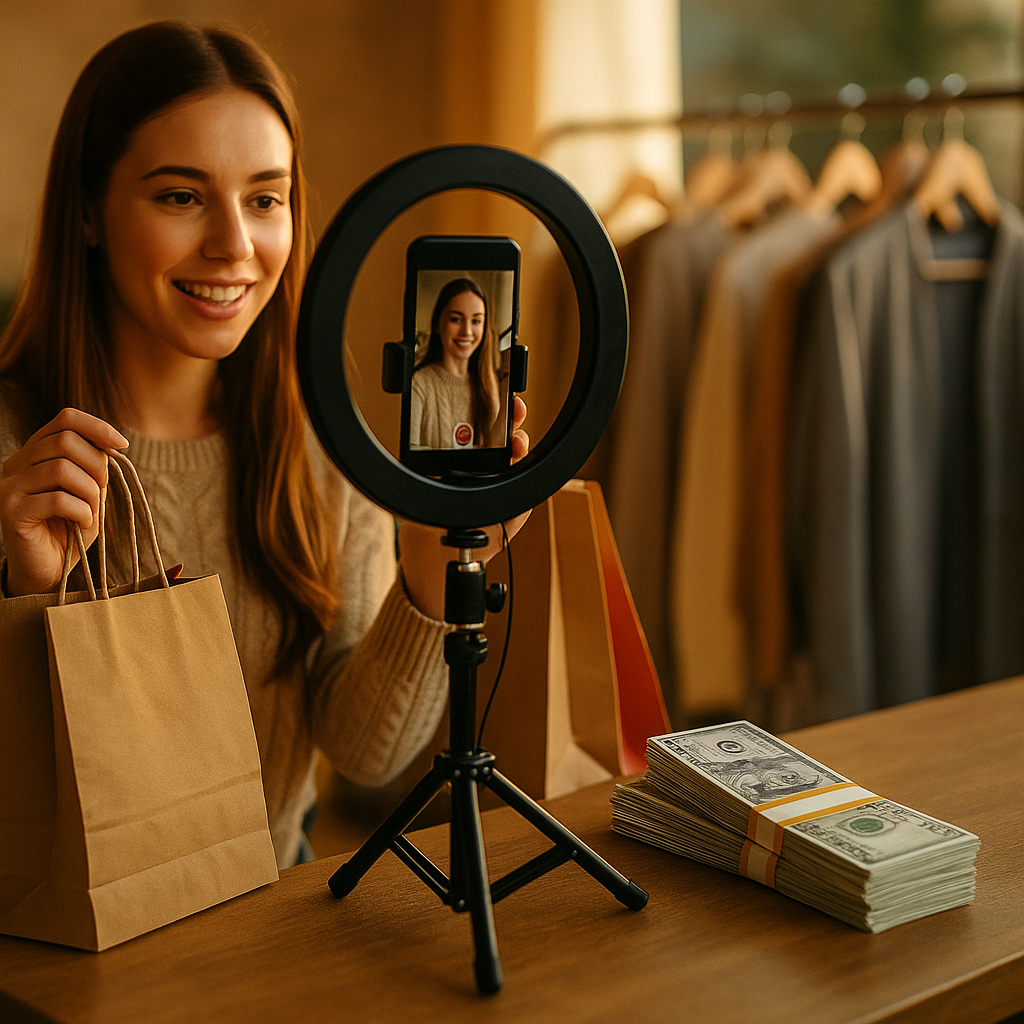
One trillion dollars. That’s where analysts peg global social commerce by 2028, up from roughly half that today. If you manage a creator budget and that number doesn’t make you recheck your Q1 allocations, you’re not paying attention. Social commerce isn’t a channel anymore, it’s becoming the storefront, and creators are the clerks, the window display, and the checkout clerk all at once.
The shift isn’t theoretical. It’s already rerouting dollars out of display and into creator-led transactional content, and the brands that treat this as a budgeting exercise rather than a content exercise are the ones pulling ahead.
Why a Trillion Dollars Changes the Math, Not Just the Headline
Round numbers make for good headlines, but the trillion dollar figure matters because of what it implies about behavior, not spend. eMarketer’s social commerce projections suggest the category is compounding faster than overall ecommerce, which means the share of retail transactions happening inside a feed, a livestream, or a creator’s shop tab is growing every quarter. That’s a structural shift in where purchase decisions get made, not a seasonal bump.
For brands, this means the old split (brand awareness budget here, performance budget there, influencer budget as a rounding error) stops working. Creator spend increasingly needs to be underwritten the same way you’d underwrite a paid media channel: with conversion expectations, attribution requirements, and a clear view of cost per acquisition. We’ve already seen this logic show up in how CFOs reroute display dollars toward creator programs that can actually prove a sale happened.
If social commerce hits a trillion dollars by 2028, creator spend stops being a content line item and becomes a revenue channel with its own forecast, its own CAC, and its own board-level scrutiny.
Live Commerce Is the Growth Engine, and It’s Already Here
You can’t talk about social commerce’s trajectory without talking about live shopping. TikTok Shop, Instagram Live Shopping, and a growing bench of platform-native checkout tools have made livestream selling a default expectation rather than a novelty. Data showing live commerce crossing the 50 percent mark in certain verticals tells you this isn’t a niche play anymore, it’s table stakes for categories like beauty, apparel, and home goods.
That shift carries real budget implications. Live commerce requires creators who can sell in real time, which is a different skill than producing a polished 30 second reel. It also demands compliance infrastructure, because live, unscripted claims about product efficacy carry more FTC risk than a pre-approved caption. Brands that have scaled live commerce fastest, as detailed in coverage of live streaming’s rapid growth and the risk controls scrambling to catch up, are the ones investing in compliance review alongside the content budget, not after it.
What This Means for Your Creator Roster
A trillion dollar social commerce market doesn’t need more creators. It needs the right creators with the right capabilities. Expect three shifts in how rosters get built:
- Conversion specialists get a premium. Creators with a proven track record of driving shop-tab sales will command higher rates than those optimizing purely for reach.
- Live selling becomes a distinct skill line. Brands will start paying separately for livestream hosting versus standard content production, because the two require different talent.
- Smaller, more frequent rosters replace big annual campaigns. This mirrors the trend toward halved creator rosters that bet on creative diversity rather than spreading budget thin across dozens of one-off posts.
This isn’t a call to slash headcount on your creator list. It’s a call to be ruthless about what each creator relationship is actually optimized for.
Budget Reallocation: Where the Dollars Actually Move
Here’s the uncomfortable part for anyone who built their 2026 plan around last year’s channel mix. If social commerce absorbs a growing share of retail, the money has to come from somewhere, and it’s not coming from thin air. It’s coming out of traditional paid social, some out of email and CRM-driven promo budgets, and a meaningful chunk out of the awareness-stage influencer spend that brands have historically treated as untouchable.
The creator economy overall has already crossed 44 billion dollars in the US alone, and social commerce is the fastest-growing slice of that pie. Brands that have mapped this out, including those studied in forecasts tracking where creator budgets shift next, are consistently moving dollars toward mid-funnel and bottom-funnel creator content: shoppable posts, affiliate links, live shopping events, and TikTok Shop partnerships that carry a direct revenue attribution tag.
Practically, this means your budget conversations need a new line item: commerce-enabled creator content, tracked separately from brand awareness influencer spend. If your media plan still lumps all influencer activity into one undifferentiated bucket, you’re going to struggle to defend spend increases to finance teams who want to see which dollars are driving sales versus which are driving sentiment.
The Tier Math Is Shifting Too
Social commerce doesn’t favor mega influencers the way awareness campaigns once did. Shoppable content performs better with creators who have tight, trusting audiences, which is why micro influencers consistently beat macro accounts on engagement rate. Trust converts. Reach alone doesn’t.
This is forcing brands to rethink the ratios baked into their creator tier strategy. Work breaking down how tier ratios shape real budget math shows that a heavier mix of micro and nano creators, paired with a handful of macro names for top-funnel reach, tends to outperform a top-heavy roster when the goal is actual transactions rather than impressions.
And nano creators specifically have become a buyer’s market. With supply outpacing brand demand in that tier, there’s real pricing leverage available to brands willing to negotiate rather than accept rate cards at face value.
Compliance and Attribution Can’t Be an Afterthought
Here’s where a lot of brands will get burned. As social commerce scales, so does regulatory scrutiny. The FTC’s endorsement guidelines already require clear disclosure for paid partnerships, and that obligation doesn’t disappear when the “post” is a livestream with a shoppable overlay or an AI-generated product demo. If anything, enforcement risk goes up, because live and dynamic content is harder to pre-approve and audit after the fact.
Platform expansion compounds this. More creator marketplaces, more self-serve tools, more creators operating across multiple platforms simultaneously, all of it multiplies the surface area for compliance failures. That’s the exact problem explored in coverage of how marketplace expansion multiplies compliance risk for brands. If your legal and brand safety teams aren’t in the room when you’re negotiating shoppable content deals, you’re building risk into every transaction your creator program closes.
Attribution is the other half of this. A trillion dollar social commerce market only matters to your budget if you can prove which creators are driving it. Too many brands still can’t connect creator activity to actual revenue, a gap documented in research showing 94 percent of marketers seeing gains from creator spend while 79 percent can’t prove it. Platform-native shop tabs and affiliate tracking solve part of this problem, but only if brands actually instrument their campaigns to capture it, rather than relying on vanity metrics dressed up as performance data.
What Smart Brands Are Doing Right Now
The brands getting ahead of the trillion dollar trajectory aren’t waiting for 2028 to arrive. They’re restructuring how they brief, pay, and measure creators today.
- Separate commerce content from awareness content in the budget. Different KPIs, different approval workflows, different creator briefs.
- Negotiate performance-based components into creator contracts. A base rate plus a commission on tracked sales aligns incentives better than flat fees alone, and it protects against the pay disputes documented in reports on a quarter of marketers disputing pay terms.
- Invest in diligence and audit infrastructure. Tools that turn creator agreements into reviewable records, similar to the approach covered in diligence rooms turning creator deals into audit trails, make it far easier to survive a compliance review or an FTC inquiry.
- Treat platform selection as a budget decision, not a creative one. TikTok Shop, Instagram, and emerging live commerce platforms each carry different fee structures, audience behaviors, and attribution capabilities. TikTok’s advertising resources and Meta’s business tools are a reasonable starting point for comparing native commerce features before committing spend.
None of this requires a bigger budget, necessarily. It requires a more disciplined one, built around the assumption that creators are now a revenue channel with its own forecast, not a brand awareness nice-to-have.
The Takeaway
Set aside a distinct creator commerce budget line for the next fiscal year, require revenue attribution on every shoppable campaign before you renew a creator contract, and get your compliance team into the briefing process now, before a livestream mishap forces the conversation. The brands that treat this as infrastructure work today will be the ones actually capturing a share of that trillion dollar market by 2028, not just reading about it.
FAQs
What is driving social commerce toward a trillion dollars by 2028?
Growth is driven by expanding live shopping adoption, platform-native checkout tools like TikTok Shop and Instagram Shopping, and a broader shift of retail purchase decisions into social feeds rather than standalone ecommerce sites.
How should brands restructure creator budgets for social commerce?
Brands should separate commerce-focused creator spend from brand awareness influencer spend, build performance-based pay structures tied to tracked sales, and require attribution data before renewing creator partnerships.
Do micro influencers perform better than macro influencers for social commerce?
Generally yes for conversion-focused goals. Micro and nano creators tend to drive stronger engagement and trust, which translates into higher conversion rates on shoppable content, even though macro creators still deliver broader reach.
What compliance risks come with social commerce growth?
Live and dynamic shoppable content is harder to pre-approve, increasing the risk of FTC disclosure violations. Expanding creator marketplaces also multiply the number of partnerships brands must monitor for compliance.
How can brands measure ROI on social commerce creator campaigns?
Brands need platform-native attribution tools, affiliate tracking links, and clear sales tagging built into creator briefs from the start. Without this instrumentation, it’s difficult to separate actual revenue impact from vanity engagement metrics.
Visible FAQ Section (duplicate for schema parity)
Frequently Asked Questions
What is driving social commerce toward a trillion dollars by 2028?
Growth is driven by expanding live shopping adoption, platform-native checkout tools like TikTok Shop and Instagram Shopping, and a broader shift of retail purchase decisions into social feeds rather than standalone ecommerce sites.
How should brands restructure creator budgets for social commerce?
Brands should separate commerce-focused creator spend from brand awareness influencer spend, build performance-based pay structures tied to tracked sales, and require attribution data before renewing creator partnerships.
Do micro influencers perform better than macro influencers for social commerce?
Generally yes for conversion-focused goals. Micro and nano creators tend to drive stronger engagement and trust, which translates into higher conversion rates on shoppable content, even though macro creators still deliver broader reach.
What compliance risks come with social commerce growth?
Live and dynamic shoppable content is harder to pre-approve, increasing the risk of FTC disclosure violations. Expanding creator marketplaces also multiply the number of partnerships brands must monitor for compliance.
How can brands measure ROI on social commerce creator campaigns?
Brands need platform-native attribution tools, affiliate tracking links, and clear sales tagging built into creator briefs from the start. Without this instrumentation, it’s difficult to separate actual revenue impact from vanity engagement metrics.
Top Influencer Marketing Agencies
The leading agencies shaping influencer marketing in 2026
Agencies ranked by campaign performance, client diversity, platform expertise, proven ROI, industry recognition, and client satisfaction. Assessed through verified case studies, reviews, and industry consultations.
Moburst

-
2

The Shelf
Boutique Beauty & Lifestyle Influencer AgencyA data-driven boutique agency specializing exclusively in beauty, wellness, and lifestyle influencer campaigns on Instagram and TikTok. Best for brands already focused on the beauty/personal care space that need curated, aesthetic-driven content.Clients: Pepsi, The Honest Company, Hims, Elf Cosmetics, Pure LeafVisit The Shelf → -
3

Audiencly
Niche Gaming & Esports Influencer AgencyA specialized agency focused exclusively on gaming and esports creators on YouTube, Twitch, and TikTok. Ideal if your campaign is 100% gaming-focused — from game launches to hardware and esports events.Clients: Epic Games, NordVPN, Ubisoft, Wargaming, Tencent GamesVisit Audiencly → -
4

Viral Nation
Global Influencer Marketing & Talent AgencyA dual talent management and marketing agency with proprietary brand safety tools and a global creator network spanning nano-influencers to celebrities across all major platforms.Clients: Meta, Activision Blizzard, Energizer, Aston Martin, WalmartVisit Viral Nation → -
5

The Influencer Marketing Factory
TikTok, Instagram & YouTube CampaignsA full-service agency with strong TikTok expertise, offering end-to-end campaign management from influencer discovery through performance reporting with a focus on platform-native content.Clients: Google, Snapchat, Universal Music, Bumble, YelpVisit TIMF → -
6

NeoReach
Enterprise Analytics & Influencer CampaignsAn enterprise-focused agency combining managed campaigns with a powerful self-service data platform for influencer search, audience analytics, and attribution modeling.Clients: Amazon, Airbnb, Netflix, Honda, The New York TimesVisit NeoReach → -
7

Ubiquitous
Creator-First Marketing PlatformA tech-driven platform combining self-service tools with managed campaign options, emphasizing speed and scalability for brands managing multiple influencer relationships.Clients: Lyft, Disney, Target, American Eagle, NetflixVisit Ubiquitous → -
8

Obviously
Scalable Enterprise Influencer CampaignsA tech-enabled agency built for high-volume campaigns, coordinating hundreds of creators simultaneously with end-to-end logistics, content rights management, and product seeding.Clients: Google, Ulta Beauty, Converse, AmazonVisit Obviously →