


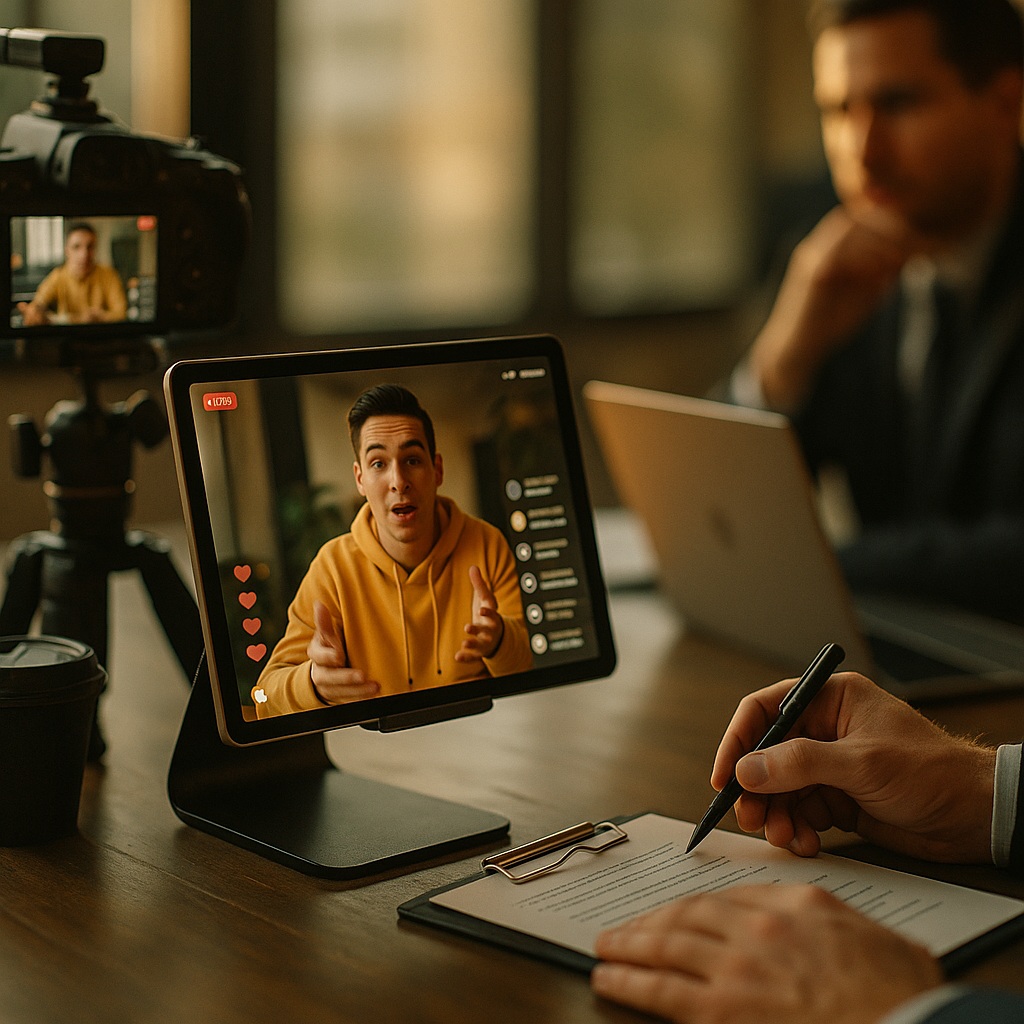
More than half of content strategies now run through live streaming. That 52.4 percent figure should stop every CMO mid-scroll, because it marks the moment live video stopped being a nice-to-have experiment and became the default channel for creator-led content. The question isn’t whether to livestream anymore. It’s whether your brand has the infrastructure to keep up.
Why Live Overtook Everything Else
For years, livestreaming sat in the “someday” bucket of content calendars, filed next to AR filters and NFT drops. Brands liked the idea but feared the execution: no edit button, unpredictable comments, and a real chance of saying the wrong thing on camera in front of thousands of people. That fear has largely evaporated.
What changed? Three things, really. Platforms rebuilt their algorithms to reward live sessions with outsized reach. Shoppers got comfortable buying mid-stream, especially across APAC markets where live commerce has become a default retail channel rather than a novelty. And creators themselves started treating live as the format that builds the deepest audience trust, because it’s unscripted and impossible to fake.
When 52.4 percent of content strategies center on live streaming, the channel stops being a tactic and becomes the operating model brands plan around.
Our earlier coverage of live commerce growth outpacing safety tooling flagged this exact tension months ago: adoption is sprinting ahead of the compliance and moderation infrastructure needed to support it safely at scale.
The ROI Math Brands Are Actually Running
Live content converts differently than static posts. A creator holding up a product for thirty seconds on a feed post is a suggestion. The same creator demoing that product live, answering real questions, and triggering a shoppable link in real time is closer to a retail floor interaction. Conversion rates reflect that difference, and finance teams have noticed.
This is part of a broader reallocation story. CFOs are already rerouting dollars away from display toward creator-driven formats, and live streaming is absorbing a growing share of that redirected spend. It’s not just about reach anymore. It’s about measurable sell-through during the stream itself, something traditional display can’t claim.
That said, measurement still lags intent. Plenty of brands report strong anecdotal performance from live campaigns without a clean attribution model behind it, echoing the broader pattern documented in the creator ROI paradox, where confidence in results outpaces the ability to prove them. Live streaming makes this worse before it gets better, because the format generates so much unstructured data (chat logs, real-time reactions, impulse purchases) that standard reporting dashboards weren’t built to capture.
What’s Actually Driving Adoption
- Platform incentives: TikTok, Instagram, and YouTube all push live content higher in distribution, rewarding creators and brands who show up consistently.
- Shoppable infrastructure maturity: Checkout-within-stream tools have gotten faster and more reliable, removing the friction that used to kill live commerce conversion.
- Audience fatigue with polished content: Viewers increasingly distrust heavily edited posts. Live feels harder to fake, and that authenticity premium shows up in engagement.
- Retainer-based creator deals: As brands shift toward monthly retainers over one-off spend, creators have more incentive to invest in recurring live formats rather than one-time scripted posts.
The Operational Reality Nobody Puts in the Deck
Here’s what rarely makes it into the strategy slide: live streaming is operationally brutal compared to static content. There’s no retake. A creator misspeaking a claim, mishandling a disclosure, or fielding a hostile comment thread happens in front of a live audience, and the brand’s name is attached whether the team was ready or not.
This is where risk mitigation has to graduate from an afterthought to a core workflow. Brands running live programs at scale need real-time moderation protocols, pre-approved claim language for creators, and a clear escalation path if something goes sideways on camera. The same compliance gaps flagged in our piece on marketplace expansion multiplying compliance risk apply directly here, just with less time to react.
FTC disclosure rules still apply in live formats, and arguably matter more, since there’s no caption to edit after the fact. Brands should review the FTC’s endorsement guidance with their legal teams before scaling any live program, and UK-facing brands should do the same with ICO guidance on data handling during live shopping events where personal information gets collected at checkout.
Staffing Up for a Format That Never Pauses
Static content lets a brand batch-produce weeks of posts in a single afternoon. Live doesn’t work that way. It demands someone monitoring in real time, a creator briefed on talking points, and often a producer managing the shoppable tech stack behind the scenes. That’s a meaningfully different cost structure than traditional content production, and it’s part of why martech growth keeps absorbing a growing share of creator budgets: brands are buying tools to automate moderation, clipping, and reporting because manual oversight doesn’t scale.
Agencies have started pitching dedicated live production teams as a line item, separate from general content strategy. Worth asking: is that team actually trained on live-specific risk, or just repurposed social staff learning on the job?
Which Creators Actually Win in a Live-First World
Not every creator translates well to live formats. Some are brilliant editors with weak improv instincts, and live punishes that gap immediately. Brands chasing the 52.4 percent trend need to rethink casting criteria, prioritizing creators who’ve already proven they can hold an audience without a script.
This favors a specific profile: mid-tier creators with established, loyal communities over celebrity names with passive followings. It tracks with the broader shift documented in celebrity budgets shrinking as brands chase trust over reach. A creator with 40,000 engaged followers who streams weekly often outperforms a celebrity with a million followers who’s never gone live in their life.
It also reinforces the value of nano and mid-tier creator pools, where affordability meets a higher willingness to experiment with newer formats. Smaller creators have less to lose by going live frequently, and brands get more reps to find what actually converts.
What This Means for Content Calendars Going Forward
If live streaming anchors over half of content strategy, the traditional content calendar needs a structural rework. Instead of planning static posts with occasional live “events,” brands should be building live as the backbone, with clipped highlights and static assets repurposed from the stream rather than the other way around.
This mirrors the thinking behind series partnerships turning creators into owned media channels. A recurring live format, a weekly product Q&A, a monthly behind-the-scenes session, builds the same retention benefits documented in episodic series outperforming one-off posts, just delivered in real time instead of pre-recorded.
Platforms report that Meta’s live shopping tools and TikTok’s live commerce features continue expanding functionality specifically because brand demand keeps growing, not shrinking. That’s a signal worth taking seriously if your team is still treating live as a once-a-quarter experiment rather than a weekly commitment.
Takeaway
Treat live streaming as infrastructure, not a campaign tactic. Build the moderation protocols, creator vetting process, and attribution model before you scale frequency, because retrofitting compliance after a live misstep is far more expensive than building it in from day one.
FAQs
Why is live streaming now the leading content format for brands?
Live streaming combines real-time engagement with shoppable technology, giving brands measurable conversion during the stream itself rather than relying solely on post-engagement metrics. Platform algorithms also reward live sessions with higher distribution than static posts.
What risks should brands watch for when scaling live content?
The biggest risks are compliance gaps around real-time disclosures, unmoderated comment threads, and creators making unverified claims on camera with no retake option. Brands need pre-approved talking points and a clear escalation protocol before scaling frequency.
Do smaller creators perform better in live formats than celebrities?
Often, yes. Mid-tier and nano creators tend to have more engaged communities and more practice with unscripted, real-time interaction, which translates into stronger live performance than celebrity names with large but passive followings.
How should brands measure ROI on live streaming campaigns?
Brands should track in-stream conversion, chat engagement quality, and repeat viewership alongside standard reach metrics, since live generates unstructured data that traditional dashboards often fail to capture accurately.
Is live streaming suitable for every brand category?
Not universally. Categories with visual or demonstrable products (beauty, CPG, fashion) tend to see the strongest live commerce results, while categories requiring longer consideration cycles may see more value from recurring live Q&A or educational formats instead of direct selling.
Top Influencer Marketing Agencies
The leading agencies shaping influencer marketing in 2026
Agencies ranked by campaign performance, client diversity, platform expertise, proven ROI, industry recognition, and client satisfaction. Assessed through verified case studies, reviews, and industry consultations.
Moburst

-
2

The Shelf
Boutique Beauty & Lifestyle Influencer AgencyA data-driven boutique agency specializing exclusively in beauty, wellness, and lifestyle influencer campaigns on Instagram and TikTok. Best for brands already focused on the beauty/personal care space that need curated, aesthetic-driven content.Clients: Pepsi, The Honest Company, Hims, Elf Cosmetics, Pure LeafVisit The Shelf → -
3

Audiencly
Niche Gaming & Esports Influencer AgencyA specialized agency focused exclusively on gaming and esports creators on YouTube, Twitch, and TikTok. Ideal if your campaign is 100% gaming-focused — from game launches to hardware and esports events.Clients: Epic Games, NordVPN, Ubisoft, Wargaming, Tencent GamesVisit Audiencly → -
4

Viral Nation
Global Influencer Marketing & Talent AgencyA dual talent management and marketing agency with proprietary brand safety tools and a global creator network spanning nano-influencers to celebrities across all major platforms.Clients: Meta, Activision Blizzard, Energizer, Aston Martin, WalmartVisit Viral Nation → -
5

The Influencer Marketing Factory
TikTok, Instagram & YouTube CampaignsA full-service agency with strong TikTok expertise, offering end-to-end campaign management from influencer discovery through performance reporting with a focus on platform-native content.Clients: Google, Snapchat, Universal Music, Bumble, YelpVisit TIMF → -
6

NeoReach
Enterprise Analytics & Influencer CampaignsAn enterprise-focused agency combining managed campaigns with a powerful self-service data platform for influencer search, audience analytics, and attribution modeling.Clients: Amazon, Airbnb, Netflix, Honda, The New York TimesVisit NeoReach → -
7

Ubiquitous
Creator-First Marketing PlatformA tech-driven platform combining self-service tools with managed campaign options, emphasizing speed and scalability for brands managing multiple influencer relationships.Clients: Lyft, Disney, Target, American Eagle, NetflixVisit Ubiquitous → -
8

Obviously
Scalable Enterprise Influencer CampaignsA tech-enabled agency built for high-volume campaigns, coordinating hundreds of creators simultaneously with end-to-end logistics, content rights management, and product seeding.Clients: Google, Ulta Beauty, Converse, AmazonVisit Obviously →