


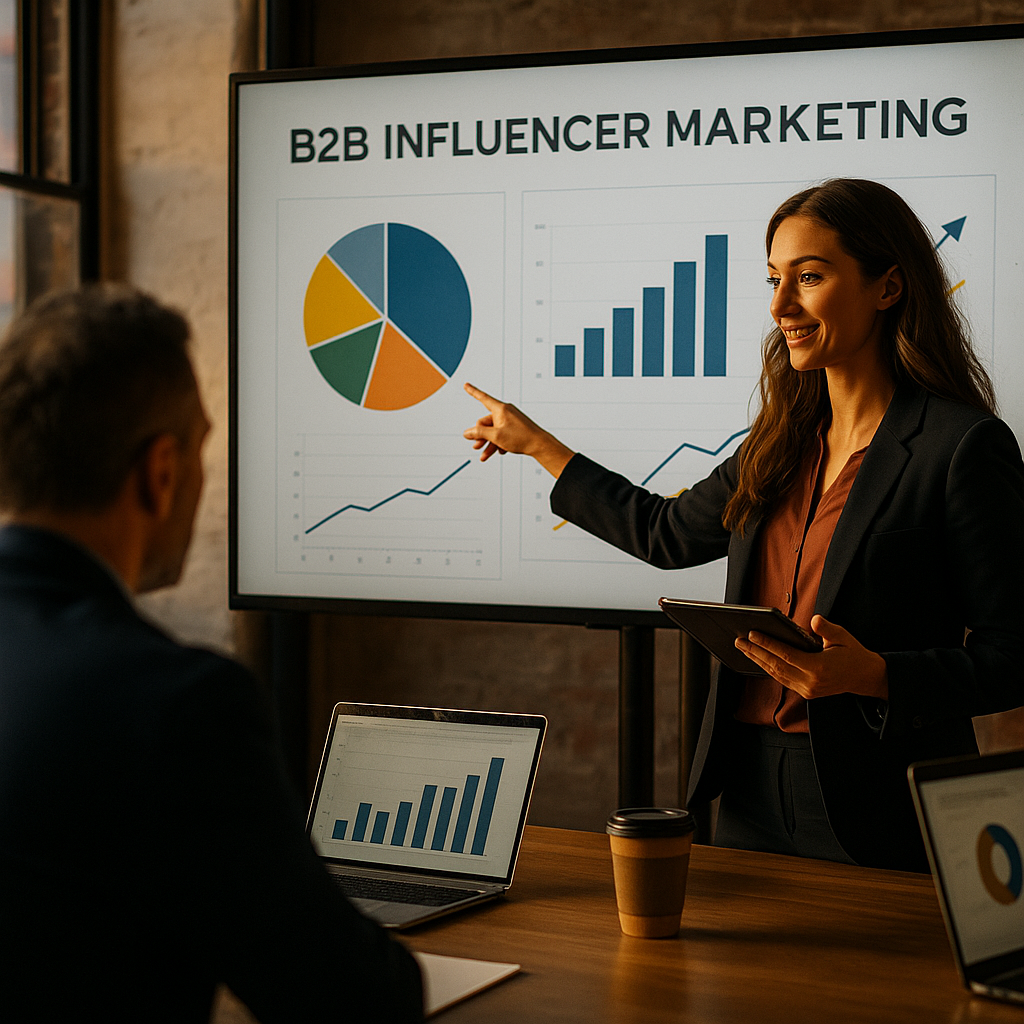
Seventy five percent of B2B marketers now run some form of influencer program, yet fewer than a third call it a “core” channel. That gap is closing fast. B2B influencer marketing is shedding its pilot budget status and getting measured against the same demand generation KPIs as paid search and ABM. For CMOs, that shift changes everything about how the channel gets funded, staffed, and defended in budget reviews.
The Pilot Era Is Over
For years, B2B influencer work lived in a strange purgatory. It got a few thousand dollars from the “experimental” line, a handful of LinkedIn creators were paid to post about a product launch, and nobody really tracked what happened after the campaign wrapped. That was fine when the channel was unproven. It is not fine anymore.
Finance teams don’t fund experiments indefinitely. Once a channel shows repeatable pipeline influence, it either graduates into the core demand mix or it gets cut. B2B influencer marketing has clearly graduated. Brands like Adobe, HubSpot, and SAP have moved creator partnerships out of brand marketing and into demand generation org charts, reporting to the same leaders who own paid media and lifecycle marketing.
That reorganization matters more than the dollar figures. When a channel reports into demand gen, it inherits demand gen accountability: pipeline contribution, cost per opportunity, influenced revenue. Influencer work used to be graded on impressions and sentiment. Now it’s graded on whether it moves a deal forward.
Why B2B Buyers Trust Creators More Than Sales Decks
Here’s the uncomfortable truth for sales leaders: buyers trust a practitioner’s unscripted take more than a vendor’s polished pitch. B2B purchase committees are doing more self-directed research than ever, and they’re doing it on LinkedIn, in Slack communities, and through niche newsletters written by people who actually use the tools being sold.
That is the operating logic behind the shift. A credible voice in a buyer’s feed does something a demand gen email can’t: it lowers the perceived risk of a purchase decision before a rep ever gets on a call. This mirrors what’s happening in earned media more broadly, where AI search tools increasingly cite earned media over paid placements when answering buyer queries. Trust signals, not ad spend, are becoming the currency that moves people through the funnel.
A LinkedIn post from a trusted practitioner now carries more buying influence at the top of the funnel than most outbound sequences, and finance teams are starting to fund it accordingly.
B2B creators also solve a content velocity problem that in-house teams can’t match alone. A single analyst creator publishing three times a week generates more net-new perspective than most enterprise content calendars produce in a quarter. Brands aren’t just buying reach anymore. They’re buying a content supply chain.
What the Budget Shift Actually Looks Like
The numbers back up the reorg. Benchmarks tracked across the broader creator economy show budget reallocation accelerating, with creator spend climbing toward 44 billion dollars industry-wide and B2B categories capturing a growing share of that growth. Display and traditional digital line items are getting trimmed to fund it, a pattern already visible in consumer marketing where CFOs are rerouting display dollars toward creators.
B2B buyers are following the same path, just slower and with tighter compliance guardrails. Enterprise software companies, fintech platforms, and cybersecurity vendors are the categories moving fastest, largely because their buying cycles are long enough that sustained creator presence compounds trust over multiple touchpoints.
What’s notably different in B2B: the spend concentrates on fewer, higher authority voices rather than large rosters of micro-creators. That tracks with what consumer brands have already learned about tier ratios and the real math behind creator budgets, where a smaller group of credible, consistent partners often outperforms a sprawling roster on both cost and quality of engagement.
Demand Engine, Not Awareness Tactic
Calling something a “demand engine” isn’t marketing speak. It implies a specific operating structure: defined inputs, predictable outputs, and a feedback loop that improves performance over time. Three things separate a demand engine from a pilot program.
- Attribution infrastructure. Programs need UTM discipline, influenced pipeline tracking, and multi-touch models that credit creator content alongside paid and organic channels, not in isolation from them.
- Always-on cadence. One-off campaigns don’t build trust. Recurring partnerships with a defined posting cadence do, and they let marketing teams forecast output the way they forecast any other channel.
- Sales enablement integration. The best B2B programs feed creator content directly into sales sequences and deal rooms, turning a LinkedIn post into a follow-up asset a rep can send mid-pipeline.
Conference agendas have already caught up to this expectation. Industry events are ditching reach metrics in favor of demand attribution proof, a clear signal that practitioners are being asked to defend spend with pipeline data, not vanity metrics. If your program can’t answer “how much pipeline did this influence,” it’s still a pilot, no matter how big the budget.
Compliance Catches Up to the Spend
Bigger budgets attract bigger scrutiny, and B2B marketing leaders who’ve only ever run small creator tests are about to get a crash course in compliance risk. FTC disclosure rules apply to B2B sponsored content exactly as they do to consumer posts, and regulators have shown no hesitation enforcing them. Review the FTC’s endorsement guidelines before scaling any paid creator relationship, because ignorance isn’t a defense in an investigation.
Contract terms are another exposure point that B2B teams often underestimate. Consumer influencer programs have already seen what happens when agreements are loose: a quarter of marketers report pay term disputes that break down mid-campaign. B2B deals, which often involve longer retainers and equity-adjacent arrangements with analyst-creators, carry similar exposure if contracts don’t spell out usage rights, exclusivity, and disclosure obligations upfront.
As more vendors build formal creator marketplaces to source B2B talent, the compliance surface area expands further. The same dynamics flagged in marketplace expansion research on compliance risk apply here: more intermediaries, more creators, more jurisdictions, and more chances for a disclosure gap to become a legal problem. Structured diligence processes, the kind now standard at deal hubs like IMCX, are becoming table stakes rather than a nice-to-have.
Building the Operating Model That Actually Scales
So what does a mature B2B influencer operation actually require? It’s less about finding the right creators and more about building the right machine around them.
- Centralize ownership. Put the program under demand gen or revenue marketing, not brand, so it inherits pipeline accountability from day one.
- Standardize contracts. Use templated agreements covering disclosure, usage rights, and payment terms to avoid the dispute patterns plaguing looser consumer deals.
- Instrument everything. Every creator asset needs a trackable link and a tagged entry in the CRM, full stop. If marketing ops can’t see it, finance won’t fund it next quarter.
- Diversify the roster. Avoid over-indexing on one or two voices. Consumer brands already learned this lesson, with research showing halved rosters built around creative diversity outperforming bloated creator lists.
- Audit AI exposure. As agentic marketing tools take on more creator sourcing and content drafting, teams need governance in place. Growth in agentic marketing tools is already outpacing brand risk controls, a gap B2B teams can’t afford to inherit blind.
None of this is exotic. It’s the same operating discipline applied to every other channel that’s graduated from test budget to core spend. The difference is that B2B marketing teams are often building this infrastructure from scratch, since most martech stacks were built for paid and email, not creator relationships. Platforms like HubSpot and social analytics tools from Sprout Social are adding creator tracking features, but the integration work still falls on marketing ops.
LinkedIn remains the dominant distribution layer for this entire shift, and its own marketing solutions resources are increasingly built around creator and thought leadership content rather than pure brand advertising, a tacit acknowledgment that the platform’s own algorithm now rewards individual voice over corporate posting.
What CMOs Should Budget For Next
If B2B influencer marketing is now a demand engine, it needs a demand engine’s budget structure: a baseline always-on spend, a testing allocation for new creator formats, and a measurement framework reviewed quarterly alongside every other channel. Treating it as a line item that gets approved once a year and forgotten is how programs stall at pilot scale forever.
The CMOs winning this transition aren’t necessarily spending the most. They’re the ones who moved fastest from “let’s try influencers” to “here’s our influencer pipeline model,” with contracts, attribution, and compliance built in from the start.
Frequently Asked Questions
FAQs
What counts as B2B influencer marketing?
It typically involves paid or structured partnerships with industry practitioners, analysts, or niche creators who publish content that reaches a company’s target buying committee, most often on LinkedIn, YouTube, or through newsletters and podcasts.
How is B2B influencer marketing different from consumer influencer marketing?
B2B programs tend to concentrate spend on fewer, higher authority voices, run on longer sales cycles, and get measured against pipeline and opportunity metrics rather than purely engagement or sales conversion metrics.
What KPIs should B2B marketers track for influencer programs?
Influenced pipeline, cost per opportunity sourced, content engagement from target accounts, and sales team usage of creator content in deal cycles are the core metrics mature programs track, alongside standard reach and engagement data.
Do FTC disclosure rules apply to B2B sponsored content?
Yes. Any material connection between a brand and a creator, including B2B paid partnerships, must be disclosed under FTC endorsement guidelines, regardless of whether the audience is consumers or business buyers.
How much should a company budget for B2B influencer marketing?
There’s no universal benchmark, but mature programs typically allocate a recurring, always-on budget similar to other demand generation channels rather than a one-time campaign spend, with additional testing budget reserved for new formats and creators.
Next step: Audit your current influencer spend against pipeline data this quarter. If you can’t trace a single creator partnership to an opportunity in your CRM, you’re still running a pilot, not a demand engine, and that’s the gap to close before the next budget cycle.
Top Influencer Marketing Agencies
The leading agencies shaping influencer marketing in 2026
Agencies ranked by campaign performance, client diversity, platform expertise, proven ROI, industry recognition, and client satisfaction. Assessed through verified case studies, reviews, and industry consultations.
Moburst

-
2

The Shelf
Boutique Beauty & Lifestyle Influencer AgencyA data-driven boutique agency specializing exclusively in beauty, wellness, and lifestyle influencer campaigns on Instagram and TikTok. Best for brands already focused on the beauty/personal care space that need curated, aesthetic-driven content.Clients: Pepsi, The Honest Company, Hims, Elf Cosmetics, Pure LeafVisit The Shelf → -
3

Audiencly
Niche Gaming & Esports Influencer AgencyA specialized agency focused exclusively on gaming and esports creators on YouTube, Twitch, and TikTok. Ideal if your campaign is 100% gaming-focused — from game launches to hardware and esports events.Clients: Epic Games, NordVPN, Ubisoft, Wargaming, Tencent GamesVisit Audiencly → -
4

Viral Nation
Global Influencer Marketing & Talent AgencyA dual talent management and marketing agency with proprietary brand safety tools and a global creator network spanning nano-influencers to celebrities across all major platforms.Clients: Meta, Activision Blizzard, Energizer, Aston Martin, WalmartVisit Viral Nation → -
5

The Influencer Marketing Factory
TikTok, Instagram & YouTube CampaignsA full-service agency with strong TikTok expertise, offering end-to-end campaign management from influencer discovery through performance reporting with a focus on platform-native content.Clients: Google, Snapchat, Universal Music, Bumble, YelpVisit TIMF → -
6

NeoReach
Enterprise Analytics & Influencer CampaignsAn enterprise-focused agency combining managed campaigns with a powerful self-service data platform for influencer search, audience analytics, and attribution modeling.Clients: Amazon, Airbnb, Netflix, Honda, The New York TimesVisit NeoReach → -
7

Ubiquitous
Creator-First Marketing PlatformA tech-driven platform combining self-service tools with managed campaign options, emphasizing speed and scalability for brands managing multiple influencer relationships.Clients: Lyft, Disney, Target, American Eagle, NetflixVisit Ubiquitous → -
8

Obviously
Scalable Enterprise Influencer CampaignsA tech-enabled agency built for high-volume campaigns, coordinating hundreds of creators simultaneously with end-to-end logistics, content rights management, and product seeding.Clients: Google, Ulta Beauty, Converse, AmazonVisit Obviously →