


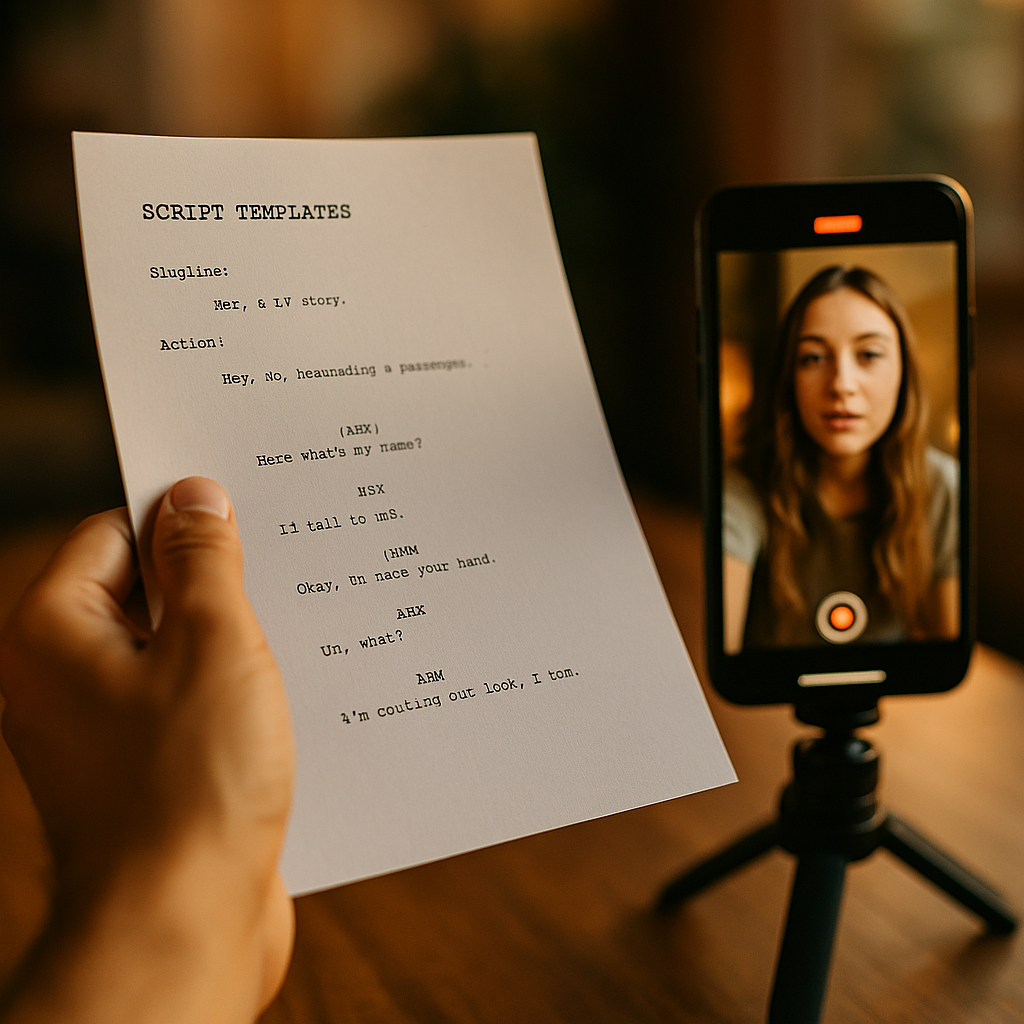
Three seconds. That’s roughly how long a scroller gives a paid social ad before deciding to skip it or stay. POV script templates exist because of that brutal math: when a viewer sees the world through their own eyes instead of watching a brand talk at them, the scroll thumb hesitates just long enough to click. Meta’s own creative benchmarking has repeatedly shown that first-person, handheld-style ads outperform polished brand spots on click through rate, especially in feed and Reels placements.
This isn’t a theory piece. It’s a working playbook for writing POV hooks that actually move performance metrics, not just vanity engagement.
Why First-Person Framing Beats Third-Person Pitches
Most ad scripts are written in third person by default. “She tries the serum.” “He unboxes the product.” That framing puts the viewer in the audience seat, watching someone else have an experience. POV scripting flips the camera (literally and narratively) so the viewer becomes the protagonist. “You open the box.” “You’re standing in the mirror wondering if this actually works.” The shift sounds small on paper. In practice, it changes how the brain processes the ad.
Cognitive research on narrative transportation suggests people process first-person and second-person framing with less skepticism because it mimics lived experience rather than observed marketing. That’s the entire reason UGC-style ads outperform studio productions on cost per click: the format reads as a moment happening to you, not a pitch aimed at you.
A hook that says “I almost didn’t buy this” recruits curiosity in a way “Our bestselling product” never will, because one sounds like a confession and the other sounds like a slogan.
The Anatomy of a POV Hook That Earns the Click
Every high-performing POV script follows a loose structure, even when it feels improvised. Strip away the polish and you’ll find four components doing the work:
- The relatable trigger: a specific, mundane moment the viewer recognizes instantly (getting ready, scrolling at 1am, standing in a fitting room).
- The internal thought: spoken or captioned as if the viewer is narrating their own hesitation, doubt, or curiosity.
- The turn: the product or idea enters as a discovery, not an advertisement.
- The unresolved tension: the hook ends mid-thought, forcing the viewer to keep watching to resolve it.
Here’s a basic template brands can adapt across verticals:
“POV: you’ve tried [number] [product category] and none of them [pain point]… until your friend sent you this.”
Swap in specifics and the formula holds for skincare, SaaS, fintech apps, even B2B tools. The genericness is the point. It gives creators and performance teams a repeatable scaffold instead of starting from a blank page every brief cycle.
Five POV Hook Templates Worth Testing This Quarter
- The confession opener: “I wasn’t going to post about this, but…”
- The scroll-stop callout: “POV: you just found out [surprising fact] and need to tell everyone.”
- The relatable frustration: “POV: you’re so tired of [problem] that you finally cave and try [solution].”
- The discovery reveal: “POV: your [friend/coworker/sibling] won’t stop talking about this, so you finally look it up.”
- The before-you-buy warning: “POV: you almost bought the wrong one. Here’s what changed your mind.”
Each template works because it mimics a thought a real person would actually have, not a line a copywriter would write for a billboard. That authenticity gap is exactly what separates a 0.4% CTR from a 1.8% CTR in most paid social accounts right now.
Writing the Script, Not Just the Hook
A strong POV hook that collapses into a generic product pitch by second five wastes the setup. The entire script needs to stay in first-person logic, or the viewer feels the bait-and-switch and bounces. That means avoiding brand-speak mid-script: no “our formula,” no “shop now” delivered like a jingle. Keep the internal monologue running through the CTA itself. “I’m ordering two before these sell out” reads as a real decision. “Shop the link below” reads as an ad.
This is also where brands get the format wrong most often. They nail the POV opener because an agency or creator wrote it, then hand the back half of the script to a brand team that reverts to corporate tone by the midpoint. Consistency of voice matters more than hook cleverness. If you’re briefing creators on this format, pair your POV hook library with caption-led scripting guidance since most feed placements autoplay muted and the on-screen text needs to carry the same first-person weight as the voiceover.
Where POV Scripts Fit in the Broader Creative Testing Stack
POV hooks aren’t a replacement for a full creative strategy. They’re one lever in a testing stack that should also include comparison formats, myth-busting angles, and founder-led trust plays. Brands running high-volume paid social programs typically rotate POV openers against other hook styles like direct-address reviews or myth-busting corrections to see which framing resonates with a given audience segment. POV tends to win on cold audiences where the viewer has no prior brand context; direct review formats often win on retargeting where the viewer already knows the product exists.
If you’re sourcing POV-style footage from creators rather than writing it internally, the brief matters as much as the script template. Loose, conversational direction produces better POV performance than tightly scripted line reads, because stilted delivery breaks the illusion of spontaneous thought. Teams building creator pipelines for this exact purpose should look at how low-cost UGC briefs get structured for Spark Ads and Advantage+ placements, since the brief-to-performance pipeline is nearly identical for POV-specific content.
Advertisers running Advantage+ campaigns with UGC-style POV creative have reported CTR lifts in the double digits compared to produced brand assets, according to Meta’s internal creative guidance for performance advertisers.
Common Mistakes That Flatten CTR
A few patterns show up constantly in underperforming POV ads:
- Over-scripting the delivery. If it sounds memorized, the “point of view” illusion collapses immediately.
- Starting the hook too slow. “POV” openers still need a scroll-stopping visual or statement in the first second, not just the label itself.
- Ignoring platform norms. A POV hook built for TikTok’s pacing often falls flat on LinkedIn or YouTube Shorts, where viewer expectations differ. Check platform-specific creative specs via TikTok Ads and Meta Business before assuming one script format ports everywhere.
- Skipping the compliance pass. First-person claims (“this cleared my skin in a week”) still fall under FTC endorsement guidance. Review disclosure requirements through the FTC’s endorsement guidelines before scaling any testimonial-style POV script.
That last point gets overlooked constantly by teams moving fast on creative volume. A POV hook that implies a personal result without the standard disclosure language is a liability dressed up as a performance win. Build the disclosure into the script itself, early, rather than bolting it on as a caption afterthought.
Measuring What Actually Matters
CTR is the headline metric for this format, but it’s a leading indicator, not the finish line. Teams should track hook retention rate (the percentage of viewers who make it past the first three seconds) alongside CTR, because a POV script can win the click and still lose on downstream conversion if the product delivery doesn’t match the setup’s promise. Tools like Sprout Social and standard ad platform analytics can surface this breakdown, but the real diagnostic work happens in creative debriefs, comparing which specific phrases in the hook correlated with retention spikes.
Run a simple test matrix: three POV hook variants against one control (a traditional product-forward opener), rotated across the same audience segment for at least a week. Benchmark data from eMarketer on short-form video engagement can help set realistic expectations for what counts as a meaningful lift versus statistical noise. Don’t declare a winner on day two. Creative fatigue and small sample sizes produce false positives constantly.
For brands building longer-term creator relationships around this format, pairing POV scripting with ongoing trust-building formats like founder duet videos keeps the testing pipeline fresh without over-relying on a single hook style. Audiences notice repetition faster than brand teams do.
FAQs
Frequently Asked Questions
What makes a POV script different from a regular UGC script?
A POV script places the viewer as the main character using second-person or first-person internal monologue (“you walk in,” “I almost skipped this”), while a standard UGC script narrates the creator’s own experience in third-person observation of the product. The POV format is built specifically to increase click through rate by making the ad feel like a personal moment rather than a review.
Do POV hooks work outside of TikTok and Instagram Reels?
They work best on short-form, vertical, sound-on platforms, but the underlying psychology (relatable trigger, internal thought, unresolved tension) applies to YouTube Shorts and even some LinkedIn video ads with adjusted tone. Pacing and formality need to shift per platform; a POV hook that works on TikTok will often feel too casual for a B2B LinkedIn audience without rewriting.
How long should a POV hook be before introducing the product?
Most high-performing scripts introduce the product or the “turn” within the first three to five seconds, right after the relatable trigger lands. Waiting longer risks losing viewers before the payoff arrives, since most paid social placements lose a significant share of viewers in the opening seconds.
Are POV ad scripts compliant with FTC disclosure rules?
POV scripts that imply a personal result or experience still require standard endorsement disclosure under FTC guidelines, even if the delivery sounds informal or unscripted. Brands should build disclosure language into the script itself rather than relying solely on platform disclosure tags.
Can POV scripts be written for B2B or professional services brands?
Yes, though the trigger needs to match a professional pain point rather than a consumer moment, such as “POV: it’s Monday and your dashboard still doesn’t match finance’s numbers.” The internal monologue structure translates well to B2B as long as the tone matches the platform and audience seniority.
Start with one hook template, test it against your current best-performing ad for two weeks, and let the retention and CTR data decide whether POV scripting earns a permanent slot in your creative rotation.
Top Influencer Marketing Agencies
The leading agencies shaping influencer marketing in 2026
Agencies ranked by campaign performance, client diversity, platform expertise, proven ROI, industry recognition, and client satisfaction. Assessed through verified case studies, reviews, and industry consultations.
Moburst

-
2

The Shelf
Boutique Beauty & Lifestyle Influencer AgencyA data-driven boutique agency specializing exclusively in beauty, wellness, and lifestyle influencer campaigns on Instagram and TikTok. Best for brands already focused on the beauty/personal care space that need curated, aesthetic-driven content.Clients: Pepsi, The Honest Company, Hims, Elf Cosmetics, Pure LeafVisit The Shelf → -
3

Audiencly
Niche Gaming & Esports Influencer AgencyA specialized agency focused exclusively on gaming and esports creators on YouTube, Twitch, and TikTok. Ideal if your campaign is 100% gaming-focused — from game launches to hardware and esports events.Clients: Epic Games, NordVPN, Ubisoft, Wargaming, Tencent GamesVisit Audiencly → -
4

Viral Nation
Global Influencer Marketing & Talent AgencyA dual talent management and marketing agency with proprietary brand safety tools and a global creator network spanning nano-influencers to celebrities across all major platforms.Clients: Meta, Activision Blizzard, Energizer, Aston Martin, WalmartVisit Viral Nation → -
5

The Influencer Marketing Factory
TikTok, Instagram & YouTube CampaignsA full-service agency with strong TikTok expertise, offering end-to-end campaign management from influencer discovery through performance reporting with a focus on platform-native content.Clients: Google, Snapchat, Universal Music, Bumble, YelpVisit TIMF → -
6

NeoReach
Enterprise Analytics & Influencer CampaignsAn enterprise-focused agency combining managed campaigns with a powerful self-service data platform for influencer search, audience analytics, and attribution modeling.Clients: Amazon, Airbnb, Netflix, Honda, The New York TimesVisit NeoReach → -
7

Ubiquitous
Creator-First Marketing PlatformA tech-driven platform combining self-service tools with managed campaign options, emphasizing speed and scalability for brands managing multiple influencer relationships.Clients: Lyft, Disney, Target, American Eagle, NetflixVisit Ubiquitous → -
8

Obviously
Scalable Enterprise Influencer CampaignsA tech-enabled agency built for high-volume campaigns, coordinating hundreds of creators simultaneously with end-to-end logistics, content rights management, and product seeding.Clients: Google, Ulta Beauty, Converse, AmazonVisit Obviously →