


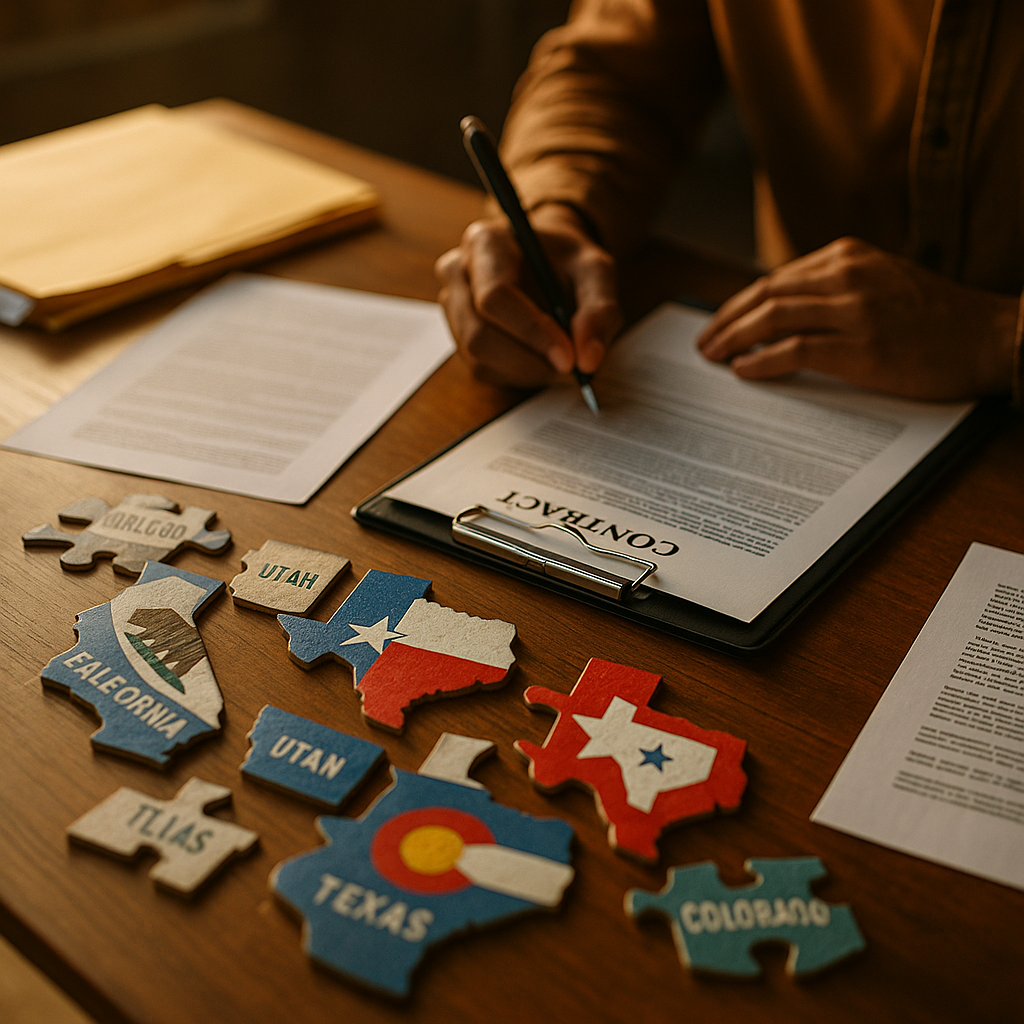
Twenty states now have comprehensive consumer privacy laws on the books, and exactly zero of them define “personal information” the same way California does. If your creator data processing agreements still say “CCPA compliant” and call it a day, you’re operating on a legal foundation that’s already obsolete in Colorado, Connecticut, Virginia, and a dozen other states where your influencer program almost certainly touches consumer data. The US state privacy law patchwork isn’t coming. It’s here, and most brand and agency contracts haven’t caught up.
Why a Single DPA Template No Longer Works
For years, brands leaned on one data processing agreement (DPA) template, bolted a CCPA rider onto it, and called their creator program compliant. That approach made sense when California was the only state with teeth. It doesn’t anymore.
Virginia’s Consumer Data Protection Act, Colorado’s Privacy Act, Connecticut’s Data Privacy Act, and newer entrants like Texas, Oregon, and Montana each define “sale” of data, “sensitive data,” and “processor obligations” with meaningful differences. Some require opt-in consent for sensitive categories. Others allow opt-out. Some exempt employee or B2B data; others don’t. A creator agreement that collects email addresses for gifting, tracks affiliate link conversions, or runs retargeting pixels through a creator’s landing page is processing personal data under most of these laws, full stop.
That matters because influencer programs are quietly data-heavy operations. Seeding lists, UGC rights platforms, affiliate dashboards, and CRM syncs between brands and creator agencies all move consumer data across systems that your legal team may never have reviewed through a state-by-state lens.
A creator program that collects shipping addresses, emails, or purchase data from even one state resident triggers obligations under that state’s law, regardless of where your brand is headquartered.
What’s Actually Different Beyond CCPA
CCPA (and its successor, the CPRA) gets the headlines, but it’s arguably the most brand-friendly of the bunch in some respects, and the most burdensome in others. Here’s where the real divergence shows up for creator programs:
- Consent thresholds for sensitive data. Colorado and Connecticut require opt-in consent before processing sensitive categories (health, precise geolocation, biometric data). If a wellness or beauty brand asks creators to collect skin type or health survey data from followers for product matching, that’s sensitive data in most frameworks, and consent mechanics differ by state.
- Processor vs. controller distinctions. Several laws require a written contract specifying whether the brand or the creator (or the agency) is the “controller” and who’s the “processor.” Most legacy creator contracts never assign these roles at all.
- Data subject rights response windows. Some states give consumers 45 days to get a response to deletion or access requests; others vary. If a consumer who entered a creator’s giveaway submits a deletion request, who’s responsible for executing it, the brand or the creator? Most contracts are silent.
- Private right of action exposure. Most state laws route enforcement through attorneys general, but a few (and plaintiffs’ bar creativity around wiretapping and pixel-tracking statutes) have opened the door to private lawsuits tied to tracking technology embedded in creator content.
None of this is theoretical. According to industry tracking on US privacy legislation, the number of states with active comprehensive privacy laws has roughly tripled since CCPA’s original 2020 enforcement date, and several more have bills in committee right now. The patchwork isn’t stabilizing. It’s expanding.
The Creator Data Flows Most Brands Forget to Map
When legal teams audit “creator data,” they usually think about disclosure compliance and contract terms. They don’t always think about the data pipes running underneath the relationship. Walk through a typical campaign and you’ll find several:
- Gifting and seeding platforms that store creator and follower shipping addresses.
- Affiliate and promo code systems that tie consumer purchase data back to a specific creator.
- UGC rights management tools that store consumer-submitted content alongside identifying metadata.
- Shoppable livestream checkouts that capture payment and contact data in real time.
- AI-powered creator vetting and matching platforms that scrape and store audience demographic data during discovery.
Each of these touchpoints is a potential processing activity under state law, and each needs its own clause in your DPA specifying retention periods, sub-processor disclosure, and breach notification timelines. If you’re relying on AI tools for creator discovery or audience vetting, the data handling practices of those vendors become your liability too. That’s a topic we covered in depth around AI creator vetting tools and the exposure they create when vendor contracts don’t specify data handling standards.
Rebuilding the Creator DPA: What to Add
A modern creator data processing agreement needs to do more than reference “applicable privacy laws.” That phrase is a compliance placeholder, not a strategy. Here’s what belongs in the document instead.
A defined data inventory clause. List the specific categories of personal data the creator relationship will touch: names, emails, shipping addresses, payment details, device identifiers, geolocation. Vague language creates ambiguity that regulators and plaintiffs’ attorneys exploit.
Clear controller and processor designation. State explicitly who determines the purpose of processing (usually the brand) and who executes it (often the creator, agency, or platform). This single distinction determines who’s liable when something goes wrong.
Multi-state compliance language, not CCPA-only language. Swap “in compliance with CCPA” for “in compliance with applicable state consumer privacy laws, including but not limited to” and name the states where your audience concentration is highest. Your legal team should update this list quarterly as new laws take effect.
Sub-processor flow-down obligations. If the creator uses a third-party scheduling tool, email platform, or affiliate network, your DPA needs a clause requiring that creator to flow down the same data protection obligations to their vendors.
Breach notification timelines that match your fastest state. Build your internal notification SLA around whichever state requires the quickest turnaround, usually somewhere between 30 and 60 days, so you’re never scrambling to meet a deadline you didn’t know existed.
Data subject request routing. Specify in the contract who handles access, deletion, and opt-out requests when they land with the creator instead of the brand. This single clause prevents weeks of finger-pointing when a consumer exercises their rights.
The brands getting this right aren’t writing one perfect clause. They’re building a living document that gets reviewed every time a new state law takes effect, the same way they’d update a tax nexus policy.
Where This Intersects With Existing Compliance Work
If your team has already built out FTC disclosure workflows or UGC rights tracking, you’re not starting from zero. Privacy compliance overlaps heavily with work most mature influencer programs have already done around content rights and vendor vetting.
The same rigor that goes into UGC rights chain of custody tracking should extend to data provenance: where did this consumer’s information come from, who touched it, and under what consent terms. Similarly, if your agency contracts already address licensing exposure through frameworks like talent agency licensing reviews, adding a data processing addendum is a natural extension rather than a separate legal project.
Brands running finance or healthcare adjacent creator campaigns face an even steeper bar. Sensitive personal data rules in several states overlap with sector-specific disclosure requirements, which is part of why compliance sign off workflows in regulated industries increasingly fold privacy review into the same legal gate as FTC disclosure checks. If your brand operates in BFSI or wellness categories, this isn’t optional diligence, it’s table stakes.
Practical Steps for the Next Quarter
You don’t need a 12-month legal overhaul to get ahead of this. Four moves get most programs to a defensible position:
- Audit every tool in your creator stack (gifting, affiliate, UGC rights, AI matching) and document what consumer data each one touches.
- Identify your top five states by audience concentration and map each law’s consent, sensitive data, and response-window requirements against your current contract language.
- Rewrite your standard creator DPA template with multi-state language, controller/processor designation, and sub-processor flow-down clauses.
- Build a recurring legal review cadence. New state laws are taking effect on a rolling basis, and a static contract becomes outdated within a single fiscal year.
Resources like the FTC’s business guidance portal and state attorney general privacy pages are worth bookmarking for your legal team, since enforcement priorities shift as new laws mature. Platforms like Meta Business and TikTok Ads Manager have also been updating their own data processing terms to reflect the patchwork, which gives brands a useful benchmark for what “current” language actually looks like.
Frequently Asked Questions
Does CCPA compliance automatically cover other state privacy laws?
No. CCPA compliance addresses California-specific requirements only. States like Colorado, Connecticut, and Virginia have different consent standards, sensitive data definitions, and enforcement mechanisms, so a CCPA-only DPA leaves gaps in every other state your creator program touches.
Who is liable when a creator mishandles consumer data collected during a campaign?
Liability depends on how the contract assigns controller and processor roles. If the DPA doesn’t clearly designate responsibility, both the brand and the creator (or agency) can face exposure, which is why explicit role assignment is one of the most important clauses to add.
Do small or mid-tier creator programs need to worry about state privacy law patchwork compliance?
Yes, if the program collects personal data from residents of regulated states, regardless of brand size. Several state laws apply based on data volume thresholds or revenue, not just company size, so mid-tier programs with active affiliate or gifting campaigns can still trigger obligations.
How often should creator data processing agreements be updated?
At minimum, quarterly, given how frequently new state privacy laws take effect or existing ones are amended. Treat the DPA as a living document tied to a recurring legal review cadence rather than a one-time contract signed at program launch.
What’s the biggest data risk hiding in most influencer programs today?
Third-party tools, especially AI-powered creator vetting platforms, affiliate networks, and UGC rights management systems, that process consumer data without clear sub-processor obligations flowing down from the brand’s primary data processing agreement.
Next step: Pull your current creator DPA template this week, run it against the privacy laws in your top five audience states, and flag every clause that still says “CCPA” instead of naming the broader patchwork it now needs to cover.
FAQs
Does CCPA compliance automatically cover other state privacy laws?
No. CCPA compliance addresses California-specific requirements only. States like Colorado, Connecticut, and Virginia have different consent standards, sensitive data definitions, and enforcement mechanisms, so a CCPA-only DPA leaves gaps in every other state your creator program touches.
Who is liable when a creator mishandles consumer data collected during a campaign?
Liability depends on how the contract assigns controller and processor roles. If the DPA doesn’t clearly designate responsibility, both the brand and the creator (or agency) can face exposure, which is why explicit role assignment is one of the most important clauses to add.
Do small or mid-tier creator programs need to worry about state privacy law patchwork compliance?
Yes, if the program collects personal data from residents of regulated states, regardless of brand size. Several state laws apply based on data volume thresholds or revenue, not just company size, so mid-tier programs with active affiliate or gifting campaigns can still trigger obligations.
How often should creator data processing agreements be updated?
At minimum, quarterly, given how frequently new state privacy laws take effect or existing ones are amended. Treat the DPA as a living document tied to a recurring legal review cadence rather than a one-time contract signed at program launch.
What’s the biggest data risk hiding in most influencer programs today?
Third-party tools, especially AI-powered creator vetting platforms, affiliate networks, and UGC rights management systems, that process consumer data without clear sub-processor obligations flowing down from the brand’s primary data processing agreement.
Top Influencer Marketing Agencies
The leading agencies shaping influencer marketing in 2026
Agencies ranked by campaign performance, client diversity, platform expertise, proven ROI, industry recognition, and client satisfaction. Assessed through verified case studies, reviews, and industry consultations.
Moburst

-
2

The Shelf
Boutique Beauty & Lifestyle Influencer AgencyA data-driven boutique agency specializing exclusively in beauty, wellness, and lifestyle influencer campaigns on Instagram and TikTok. Best for brands already focused on the beauty/personal care space that need curated, aesthetic-driven content.Clients: Pepsi, The Honest Company, Hims, Elf Cosmetics, Pure LeafVisit The Shelf → -
3

Audiencly
Niche Gaming & Esports Influencer AgencyA specialized agency focused exclusively on gaming and esports creators on YouTube, Twitch, and TikTok. Ideal if your campaign is 100% gaming-focused — from game launches to hardware and esports events.Clients: Epic Games, NordVPN, Ubisoft, Wargaming, Tencent GamesVisit Audiencly → -
4

Viral Nation
Global Influencer Marketing & Talent AgencyA dual talent management and marketing agency with proprietary brand safety tools and a global creator network spanning nano-influencers to celebrities across all major platforms.Clients: Meta, Activision Blizzard, Energizer, Aston Martin, WalmartVisit Viral Nation → -
5

The Influencer Marketing Factory
TikTok, Instagram & YouTube CampaignsA full-service agency with strong TikTok expertise, offering end-to-end campaign management from influencer discovery through performance reporting with a focus on platform-native content.Clients: Google, Snapchat, Universal Music, Bumble, YelpVisit TIMF → -
6

NeoReach
Enterprise Analytics & Influencer CampaignsAn enterprise-focused agency combining managed campaigns with a powerful self-service data platform for influencer search, audience analytics, and attribution modeling.Clients: Amazon, Airbnb, Netflix, Honda, The New York TimesVisit NeoReach → -
7

Ubiquitous
Creator-First Marketing PlatformA tech-driven platform combining self-service tools with managed campaign options, emphasizing speed and scalability for brands managing multiple influencer relationships.Clients: Lyft, Disney, Target, American Eagle, NetflixVisit Ubiquitous → -
8

Obviously
Scalable Enterprise Influencer CampaignsA tech-enabled agency built for high-volume campaigns, coordinating hundreds of creators simultaneously with end-to-end logistics, content rights management, and product seeding.Clients: Google, Ulta Beauty, Converse, AmazonVisit Obviously →