


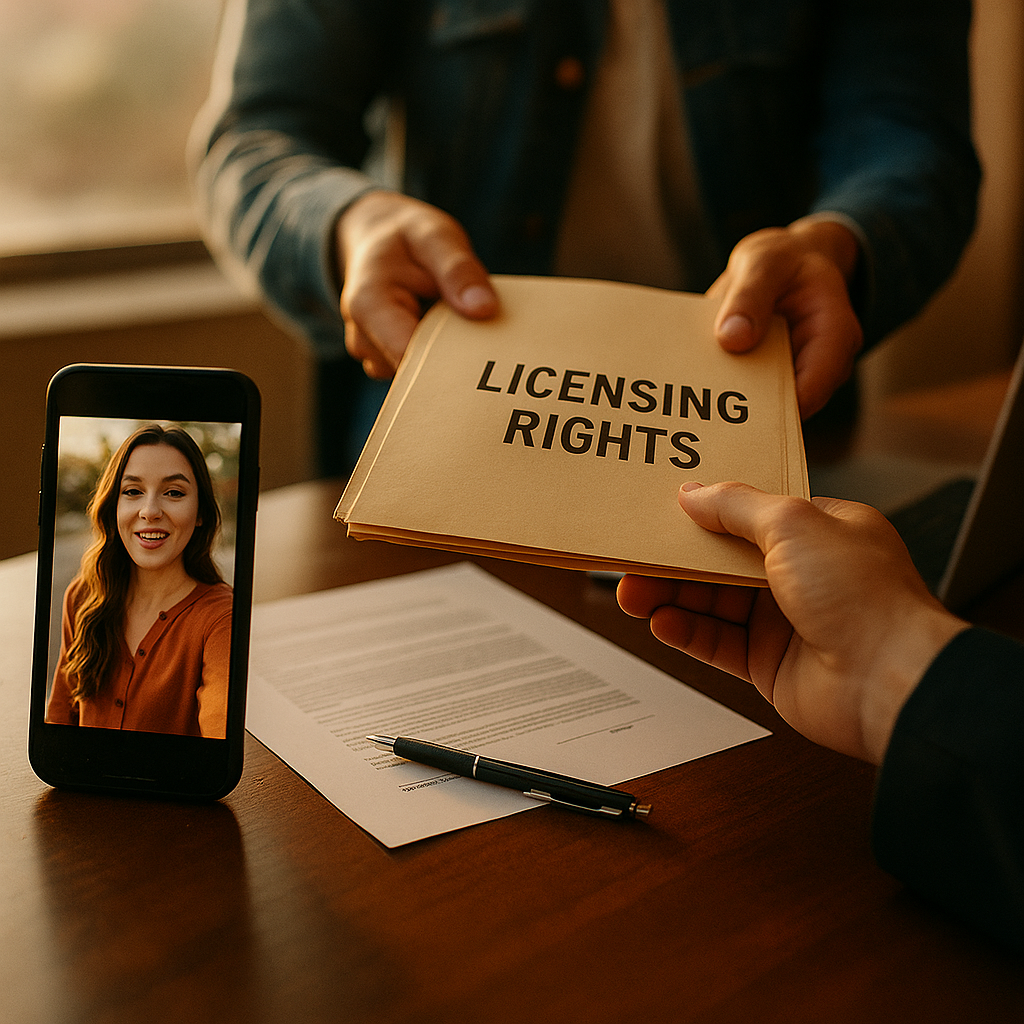
Roughly 73% of marketers now say user-generated content outperforms branded content in paid social, yet most brands cannot produce a clean chain of title for a single piece of UGC running in their ad accounts right now. That is the uncomfortable truth sitting underneath every “UGC workflow platform” pitch deck. The content looks cheap, authentic, and scalable. The licensing behind it is frequently an unverifiable mess, especially once production gets handed off to a marketplace of freelance creators you have never met.
When every frame of content comes from outside your walls, somebody has to prove who owns what, who approved what, and when the rights expire. That somebody is rarely a lawyer. It is a brand manager juggling fourteen creator relationships through a dashboard, hoping the platform’s terms of service quietly handle the hard part.
Why Full Outsourcing Breaks Traditional Rights Tracking
Traditional influencer licensing assumed a direct relationship. Brand signs creator, creator signs usage terms, legal files the PDF, done. UGC workflow platforms blow that model up. Brands now source content through marketplaces like Billo, Insense, The Plug, or Aspire’s UGC arm, where the platform sits between brand and creator as an intermediary, not a party to the actual license.
That intermediary structure creates a gap. The platform’s master terms of service might grant the brand a broad license, but did the individual creator actually agree to those terms in a way that is legally binding and traceable? Did they submit music, props, or background elements they did not own? Did a second creator appear on camera without a release? Platforms rarely verify any of this at the point of upload. They verify that content was delivered and payment was released, which is a production workflow, not a rights workflow.
A delivered asset and a licensed asset are not the same thing. Delivery confirms production happened. Licensing confirms you are legally allowed to run that asset in a paid ad, on international markets, for as long as your media plan requires.
This is the same structural problem we have flagged in AI matching platform terms coverage: when a third party automates the match between brand and creator, liability does not disappear, it just becomes harder to locate.
What “Chain of Custody” Actually Means for Licensed Content
Borrow the term from evidence law for a second. Chain of custody means you can document, step by step, who touched an asset, when, and under what authority. Applied to UGC, that means:
- A timestamped record of the creator’s identity verification at onboarding
- The specific license terms the creator agreed to for that specific piece of content (not a blanket platform ToS)
- Proof of consent from any third party appearing in the content
- Confirmation of rights to any music, footage, or branded elements used
- A record of which usage rights were purchased: organic only, paid social, whitelisting, broadcast, or perpetual
- An expiration date or renewal trigger tied to the license term
Most UGC workflow platforms handle maybe two of these six reliably. The rest gets assumed, and assumptions do not hold up well when a creator’s lawyer sends a cease and desist eighteen months into an evergreen ad campaign. We have covered the financial exposure of letting licenses lapse quietly in usage rights expiration tracking, and the same logic applies here with an added wrinkle: you did not even negotiate the original terms directly.
The Marketplace Middleman Problem
Here is the scenario that keeps legal teams up at night. A brand runs a UGC campaign through a marketplace platform. The platform’s standard agreement grants “commercial usage rights.” Eighteen months later, the brand is still running the same three top-performing ad variants, now spending six figures a month on them. The original creator, unaware the content was still live, discovers it and claims the license was for ninety days of organic use only, pointing to language buried in a secondary consent screen the platform updated after the original upload.
Who is right? Often nobody knows, because nobody archived the exact version of terms the creator agreed to at the moment of submission. Platforms update their terms. Creators’ consent was tied to a specific version. If you cannot produce that specific version with a timestamp, you are negotiating from a position of weakness, not strength.
This is not a hypothetical edge case. It is the predictable result of treating licensing as a platform feature instead of a documented legal process. The same pattern shows up in disputes we have tracked around mid campaign content clawback, where creators pull usage rights after a brand has already built media spend around the asset.
Building a Chain of Custody Into Procurement, Not Legal Review
The fix is not hiring more lawyers to review UGC contracts one at a time. At the volume most brands now produce content (dozens to hundreds of clips monthly across multiple platforms) manual legal review cannot scale. The fix is structural: build chain of custody verification into the procurement workflow itself, before content ever reaches a media buyer’s hands.
Practically, that means:
- Standardize the license grant at the brief stage. Do not let individual creators negotiate terms ad hoc. Specify usage scope, duration, and territory in the brief before production starts, and require explicit acceptance of that specific document, not a generic platform ToS.
- Timestamp and archive every consent artifact. Screenshot or API-log the exact terms version, the exact submission, and the exact creator identity verification at the moment of agreement. Store it somewhere outside the platform’s own database, in case the platform shuts down or changes vendors.
- Flag derivative risk at intake. Does the clip include someone else’s voice, face, music, or branded product? Build a mandatory checklist field for creators to disclose this before the asset is accepted, not after it is running in ads.
- Tie expiration to a system, not a spreadsheet. Usage rights without an automated expiration trigger will get missed. Someone always forgets the spreadsheet.
- Audit the top-spending assets quarterly. Your highest-performing UGC is also your highest-liability UGC, because it is the content most likely to still be running well past its original license window.
This operational discipline mirrors what finance-adjacent compliance teams have had to build for faster approvals, as discussed in compliance sign off workflow design. The principle transfers directly: speed and rights verification are not opposites if the verification is built into the pipeline instead of bolted on afterward.
Platform Selection: What to Actually Vet
Not all UGC workflow platforms are equally exposed here. When evaluating a vendor, ask pointed questions instead of accepting a sales deck’s reassurance:
- Does the platform store a timestamped, versioned copy of the exact terms each creator agreed to?
- Can you export that documentation independently of the platform, in case you switch vendors or the platform is acquired?
- Does the platform verify creator identity beyond an email address, ideally with ID verification or payment KYC?
- Does the license grant specify duration and usage scope per asset, or is it a blanket grant buried in master terms?
- Who is contractually liable if a third party appears in content without consent, the platform or the brand?
That last question matters more than most procurement teams realize. Most platform terms shift liability back to the brand by default. You are the one running the ad, so you are the one the FTC or a plaintiff’s attorney will come after first, regardless of where the content originated. The FTC’s endorsement guidance does not care that a marketplace sourced the creator. It cares that the brand ran the ad.
If the platform’s contract does not name who carries liability for an unverified third-party appearance, assume it is you. Default liability almost always flows uphill to whoever is spending the media budget.
Insurance is part of the answer here too. Brands running high-volume UGC programs through outsourced marketplaces are increasingly adding specific riders for content-origination risk, a topic we broke down in errors and omissions insurance coverage for agencies and in-house teams alike.
What This Means for International Campaigns
Chain of custody gets harder, not easier, once content crosses borders. A license acquired under US-style work-for-hire assumptions may not translate cleanly to jurisdictions with stronger moral rights protections, including much of the EU. If your UGC workflow platform sources creators globally (which most do, since it is cheaper), your rights documentation needs to specify governing law and account for local consent requirements, not just US FTC disclosure norms. The UK ICO and EU data protection frameworks also complicate how you store and process creator identity verification data, which is part of your chain of custody whether you planned for it or not.
Brands running multi-market UGC campaigns at scale have started building standardized template libraries to keep licensing language consistent across markets, an approach detailed in our global disclosure template library coverage. The same logic applies to rights grants: one inconsistent license clause in one market can unravel the documentation trail for an entire global campaign.
Industry data from eMarketer shows UGC and creator-sourced content now account for a growing share of total social ad spend, which means the dollar exposure tied to unverified licenses is rising right alongside the category’s popularity. Statista‘s tracking of influencer marketing spend growth tells the same story from a different angle: more volume, more intermediaries, more surface area for a documentation gap to turn into a legal bill.
The Next Step
Do not wait for a cease and desist to find out your UGC workflow platform’s “commercial license” was never airtight. Pull your top ten performing UGC assets by spend this week, trace each one back to its original consent artifact, and confirm the usage window actually covers how long and how broadly you are running it. If you cannot produce that documentation in under an hour, your chain of custody has a gap, and gaps get expensive exactly when a campaign is working.
Frequently Asked Questions
What is rights chain of custody in a UGC context?
It is the documented, timestamped trail showing who created a piece of content, what specific license terms they agreed to, and what usage rights were granted, maintained independently of the platform that facilitated the transaction.
Are brands liable if a UGC marketplace fails to verify creator consent?
Generally yes. Regulators and plaintiffs typically pursue the party running the ad and spending the media budget, not the intermediary platform, so liability defaults back to the brand unless contract terms explicitly state otherwise.
How long should a brand keep UGC licensing documentation?
At minimum, for the full duration content remains live plus the applicable statute of limitations in the relevant jurisdiction, which can extend several years past a campaign’s end date. Many legal teams recommend indefinite archival given low storage costs.
Can a UGC workflow platform’s terms of service substitute for an individual creator license?
Not reliably. A platform’s master terms establish a general framework, but the specific usage scope, duration, and territory for each asset should be documented separately and tied to that individual creator’s explicit agreement.
What is the biggest licensing risk with fully outsourced UGC production?
Expired or misunderstood usage windows on high-performing ad assets. Brands often keep running top-converting UGC well past the original license term because no system flags the expiration, creating ongoing legal and financial exposure.
Frequently Asked Questions
What is rights chain of custody in a UGC context?
It is the documented, timestamped trail showing who created a piece of content, what specific license terms they agreed to, and what usage rights were granted, maintained independently of the platform that facilitated the transaction.
Are brands liable if a UGC marketplace fails to verify creator consent?
Generally yes. Regulators and plaintiffs typically pursue the party running the ad and spending the media budget, not the intermediary platform, so liability defaults back to the brand unless contract terms explicitly state otherwise.
How long should a brand keep UGC licensing documentation?
At minimum, for the full duration content remains live plus the applicable statute of limitations in the relevant jurisdiction, which can extend several years past a campaign’s end date. Many legal teams recommend indefinite archival given low storage costs.
Can a UGC workflow platform’s terms of service substitute for an individual creator license?
Not reliably. A platform’s master terms establish a general framework, but the specific usage scope, duration, and territory for each asset should be documented separately and tied to that individual creator’s explicit agreement.
What is the biggest licensing risk with fully outsourced UGC production?
Expired or misunderstood usage windows on high-performing ad assets. Brands often keep running top-converting UGC well past the original license term because no system flags the expiration, creating ongoing legal and financial exposure.
Top Influencer Marketing Agencies
The leading agencies shaping influencer marketing in 2026
Agencies ranked by campaign performance, client diversity, platform expertise, proven ROI, industry recognition, and client satisfaction. Assessed through verified case studies, reviews, and industry consultations.
Moburst

-
2

The Shelf
Boutique Beauty & Lifestyle Influencer AgencyA data-driven boutique agency specializing exclusively in beauty, wellness, and lifestyle influencer campaigns on Instagram and TikTok. Best for brands already focused on the beauty/personal care space that need curated, aesthetic-driven content.Clients: Pepsi, The Honest Company, Hims, Elf Cosmetics, Pure LeafVisit The Shelf → -
3

Audiencly
Niche Gaming & Esports Influencer AgencyA specialized agency focused exclusively on gaming and esports creators on YouTube, Twitch, and TikTok. Ideal if your campaign is 100% gaming-focused — from game launches to hardware and esports events.Clients: Epic Games, NordVPN, Ubisoft, Wargaming, Tencent GamesVisit Audiencly → -
4

Viral Nation
Global Influencer Marketing & Talent AgencyA dual talent management and marketing agency with proprietary brand safety tools and a global creator network spanning nano-influencers to celebrities across all major platforms.Clients: Meta, Activision Blizzard, Energizer, Aston Martin, WalmartVisit Viral Nation → -
5

The Influencer Marketing Factory
TikTok, Instagram & YouTube CampaignsA full-service agency with strong TikTok expertise, offering end-to-end campaign management from influencer discovery through performance reporting with a focus on platform-native content.Clients: Google, Snapchat, Universal Music, Bumble, YelpVisit TIMF → -
6

NeoReach
Enterprise Analytics & Influencer CampaignsAn enterprise-focused agency combining managed campaigns with a powerful self-service data platform for influencer search, audience analytics, and attribution modeling.Clients: Amazon, Airbnb, Netflix, Honda, The New York TimesVisit NeoReach → -
7

Ubiquitous
Creator-First Marketing PlatformA tech-driven platform combining self-service tools with managed campaign options, emphasizing speed and scalability for brands managing multiple influencer relationships.Clients: Lyft, Disney, Target, American Eagle, NetflixVisit Ubiquitous → -
8

Obviously
Scalable Enterprise Influencer CampaignsA tech-enabled agency built for high-volume campaigns, coordinating hundreds of creators simultaneously with end-to-end logistics, content rights management, and product seeding.Clients: Google, Ulta Beauty, Converse, AmazonVisit Obviously →