


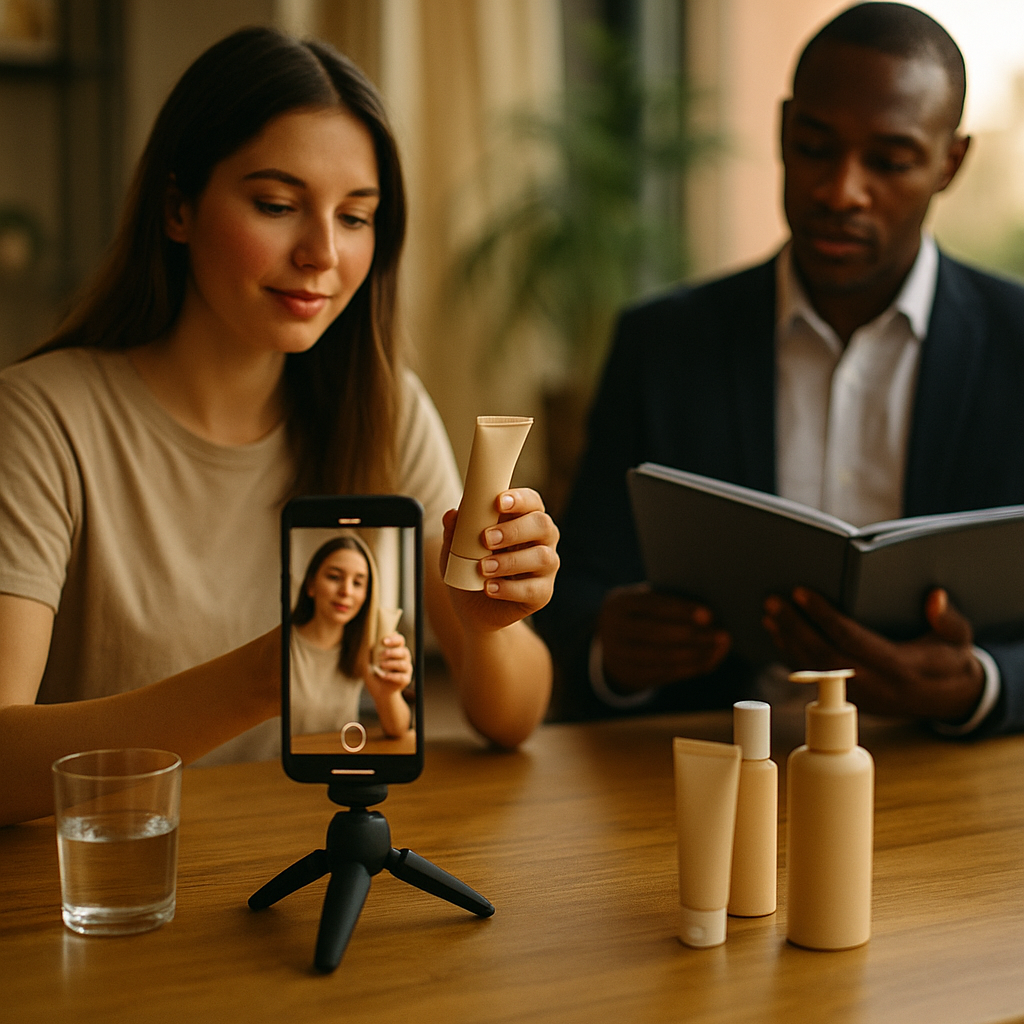
There are creators pulling six figures a year who have never been tagged, never gone viral, and never signed with a talent agency. They just make UGC, on spec, on deadline, for a rotating roster of brands that treat them like vendors, not influencers. That shift, from “I’ll film a video for a free product” to “my day rate is 450 dollars and my contract includes usage terms,” is the clearest sign yet that UGC creation has stopped being a hobby and started being a profession.
The Side Hustle Era Is Over
Go back three or four years and UGC creators were mostly treated as a cheap alternative to real production: a college student with an iPhone and ring light, willing to make a testimonial video for product plus fifty dollars. That category still exists. But it’s shrinking relative to a new tier of creators who operate like freelance contractors in any other skilled field, with portfolios, specialties, retainers, and legal protections.
This isn’t a vibe shift. It’s a market response to demand. Brands pulled back from big-ticket influencer deals and poured budget into volume-based UGC content for paid social, and micro-creator rates became the default line item in performance marketing budgets. More briefs, more deadlines, more revisions. You can’t run that kind of volume on hobbyists who disappear for two weeks because they have finals.
What Changed the Math?
Three things, really. First, paid social algorithms started rewarding creator-style content over polished brand ads, so demand for UGC exploded across TikTok, Meta, and Amazon. Second, brands realized UGC rates vary widely by region and skill level, which forced them to build actual rate cards instead of guessing. Third, and this is the quiet one, the best UGC creators got good enough at hooks, pacing, and on-camera delivery that their work started outperforming agency-produced ads on cost per click.
When a single creator’s ad variant beats a 15,000-dollar agency production on CPC, the brand stops calling that creator a favor and starts calling them a vendor.
That reclassification matters more than it sounds. Vendors get contracts. Vendors get paid on time, or they walk. Vendors negotiate usage rights instead of accepting “exposure.” The professionalization of UGC is really a renegotiation of power between creators and the brands that used to treat them as disposable.
The New Creator Org Chart
Professional UGC creators increasingly don’t work alone. Some have assistants who handle editing and scheduling. Others have joined production studios that pool talent, standardize contracts, and negotiate bulk rates with brands, essentially turning a fragmented freelance market into something closer to a staffing agency model.
This matters for brand teams because it changes who you’re actually negotiating with. A brief that used to go to one creator now might route through a studio producer who assigns it to whichever creator on roster fits the niche, turnaround time, and budget. That’s more operationally efficient for brands running high volume content calendars, but it also means less direct creative relationship with any single creator. Worth weighing against the control you give up.
- Specialization by vertical: skincare UGC creators rarely cross over into fintech or SaaS, because the hooks, pacing, and trust signals differ.
- Specialization by format: some creators only shoot unboxings, others only do “day in the life” integrations, others focus purely on review-style hooks for paid ads.
- Specialization by platform: TikTok-native pacing doesn’t always translate to Amazon video or YouTube Shorts, and professionals know the difference.
Contracts, Rate Cards, and the Rise of Creator Agents
Ask a professional UGC creator for their rate card today and you’ll likely get a tiered document: base rate per video, add-ons for usage rights, paid ad whitelisting fees, revision caps, and rush fees for 48-hour turnarounds. That level of structure was rare even eighteen months ago. Now it’s close to standard among creators doing this full time, and the regional rate gaps that used to catch brands off guard are getting documented and planned around rather than discovered mid-campaign.
Some creators have gone further and hired agents or joined boutique management rosters, mirroring the talent agency structure that’s long existed for actors and musicians. It’s a small but growing segment, and it signals something important: when a market develops dedicated representation, it’s no longer a casual gig economy. It’s an industry with enough recurring revenue to justify a middleman taking a cut.
For brand and procurement teams, this means UGC sourcing needs the same rigor as any other vendor category. That includes clear usage terms (whitelisting, organic-only, perpetual license), defined revision policies, and payment terms that don’t leave a freelancer waiting ninety days for a 300-dollar invoice. Treat it like procurement because, increasingly, it is.
Skills That Separate Professionals from Hobbyists
What actually makes someone a “professional” UGC creator rather than a one-off participant? It’s not follower count, since most UGC creators have small or no public audience by design. It’s a specific skill stack that brands have learned to screen for:
- Hook writing: the ability to script a three-second opener that stops the scroll, tested across dozens of variations.
- Platform literacy: knowing that a TikTok-native video needs different pacing and captions than the same concept repurposed for Meta feed placements.
- Brand voice matching: delivering authentic-feeling content that still hits the compliance and messaging guardrails a brand’s legal and marketing teams require.
- Disclosure fluency: understanding when and how to flag paid partnerships correctly, a non-negotiable given FTC endorsement guidelines and increasing enforcement attention.
- Reliability at scale: turning around ten variations on a tight deadline without quality collapsing, because performance marketing teams need volume for creative testing.
That last point deserves emphasis. Performance teams don’t need one perfect video anymore. They need twenty mediocre-to-good variations to feed into testing, because creative fatigue sets in fast and refresh cycles keep shrinking. A creator who can reliably hit that cadence becomes more valuable to a media buying team than one who occasionally produces a viral hit.
What This Means for Brands
If UGC creation is now a skilled trade, brands need to budget, source, and manage it like one. That means a few operational shifts worth making now, not next fiscal year.
Build a real rate card benchmark instead of negotiating blind every time. Rates differ enormously by region, niche, and format, and industry data on creator economy spend keeps confirming that budgets are growing even as individual video costs stay unpredictable without a framework. Pair that with measurement that actually reflects what UGC drives. Rebuilt scorecards that track CPC, conversion rate, and creative fatigue curves tell you far more than view counts ever did.
Also worth revisiting: your legal and compliance workflow. Professional creators expect contracts with usage terms spelled out, and brands that still operate on verbal agreements or vague “we’ll use it on our socials” deals are increasingly the ones losing access to the best talent. Platforms like Meta’s branded content tools and TikTok’s creator marketplace have formalized disclosure and whitelisting mechanics for exactly this reason, and brands that ignore them are operating with more legal exposure than they realize.
Finally, don’t underestimate how fast this space is consolidating. Production studios, creator agencies, and marketplace platforms are absorbing independent talent, and social platform trend reports consistently show brands shifting budget toward structured, repeatable creator partnerships rather than one-off gigs. The brands that build real relationships and fair terms now will have first access as the best creators get scarcer and more selective about who they work with.
Frequently Asked Questions
What is a professional UGC creator?
A professional UGC creator is someone who produces user-generated-style content for brands as a primary income source, operating with formal rate cards, contracts, usage terms, and specialized skills rather than treating it as a casual side project.
How much do professional UGC creators charge?
Rates vary significantly by region, niche, and content type, but professional creators typically charge per video with additional fees for usage rights, paid ad whitelisting, and rush turnarounds, rather than a single flat fee.
Why are brands relying more on UGC creators instead of agencies?
UGC content often outperforms traditional agency-produced ads on cost per click and engagement because it feels native to the platform, and it can be produced at the volume performance marketing teams need for creative testing.
Do UGC creators need to disclose paid partnerships?
Yes. Paid UGC content that brands repost or run as ads typically falls under endorsement disclosure requirements, and brands should confirm disclosure practices align with FTC guidelines to avoid compliance risk.
How should brands manage UGC creator relationships at scale?
Brands running high-volume UGC programs should treat creators like vendors: standardized contracts, clear usage terms, defined revision limits, and performance-based measurement rather than vanity metrics.
The practical move for brand teams right now: audit your UGC vendor list like you would any contractor roster, formalize rate cards and usage terms, and stop treating your best creators as replaceable gig labor before a competitor locks them into a retainer.
Top Influencer Marketing Agencies
The leading agencies shaping influencer marketing in 2026
Agencies ranked by campaign performance, client diversity, platform expertise, proven ROI, industry recognition, and client satisfaction. Assessed through verified case studies, reviews, and industry consultations.
Moburst

-
2

The Shelf
Boutique Beauty & Lifestyle Influencer AgencyA data-driven boutique agency specializing exclusively in beauty, wellness, and lifestyle influencer campaigns on Instagram and TikTok. Best for brands already focused on the beauty/personal care space that need curated, aesthetic-driven content.Clients: Pepsi, The Honest Company, Hims, Elf Cosmetics, Pure LeafVisit The Shelf → -
3

Audiencly
Niche Gaming & Esports Influencer AgencyA specialized agency focused exclusively on gaming and esports creators on YouTube, Twitch, and TikTok. Ideal if your campaign is 100% gaming-focused — from game launches to hardware and esports events.Clients: Epic Games, NordVPN, Ubisoft, Wargaming, Tencent GamesVisit Audiencly → -
4

Viral Nation
Global Influencer Marketing & Talent AgencyA dual talent management and marketing agency with proprietary brand safety tools and a global creator network spanning nano-influencers to celebrities across all major platforms.Clients: Meta, Activision Blizzard, Energizer, Aston Martin, WalmartVisit Viral Nation → -
5

The Influencer Marketing Factory
TikTok, Instagram & YouTube CampaignsA full-service agency with strong TikTok expertise, offering end-to-end campaign management from influencer discovery through performance reporting with a focus on platform-native content.Clients: Google, Snapchat, Universal Music, Bumble, YelpVisit TIMF → -
6

NeoReach
Enterprise Analytics & Influencer CampaignsAn enterprise-focused agency combining managed campaigns with a powerful self-service data platform for influencer search, audience analytics, and attribution modeling.Clients: Amazon, Airbnb, Netflix, Honda, The New York TimesVisit NeoReach → -
7

Ubiquitous
Creator-First Marketing PlatformA tech-driven platform combining self-service tools with managed campaign options, emphasizing speed and scalability for brands managing multiple influencer relationships.Clients: Lyft, Disney, Target, American Eagle, NetflixVisit Ubiquitous → -
8

Obviously
Scalable Enterprise Influencer CampaignsA tech-enabled agency built for high-volume campaigns, coordinating hundreds of creators simultaneously with end-to-end logistics, content rights management, and product seeding.Clients: Google, Ulta Beauty, Converse, AmazonVisit Obviously →