


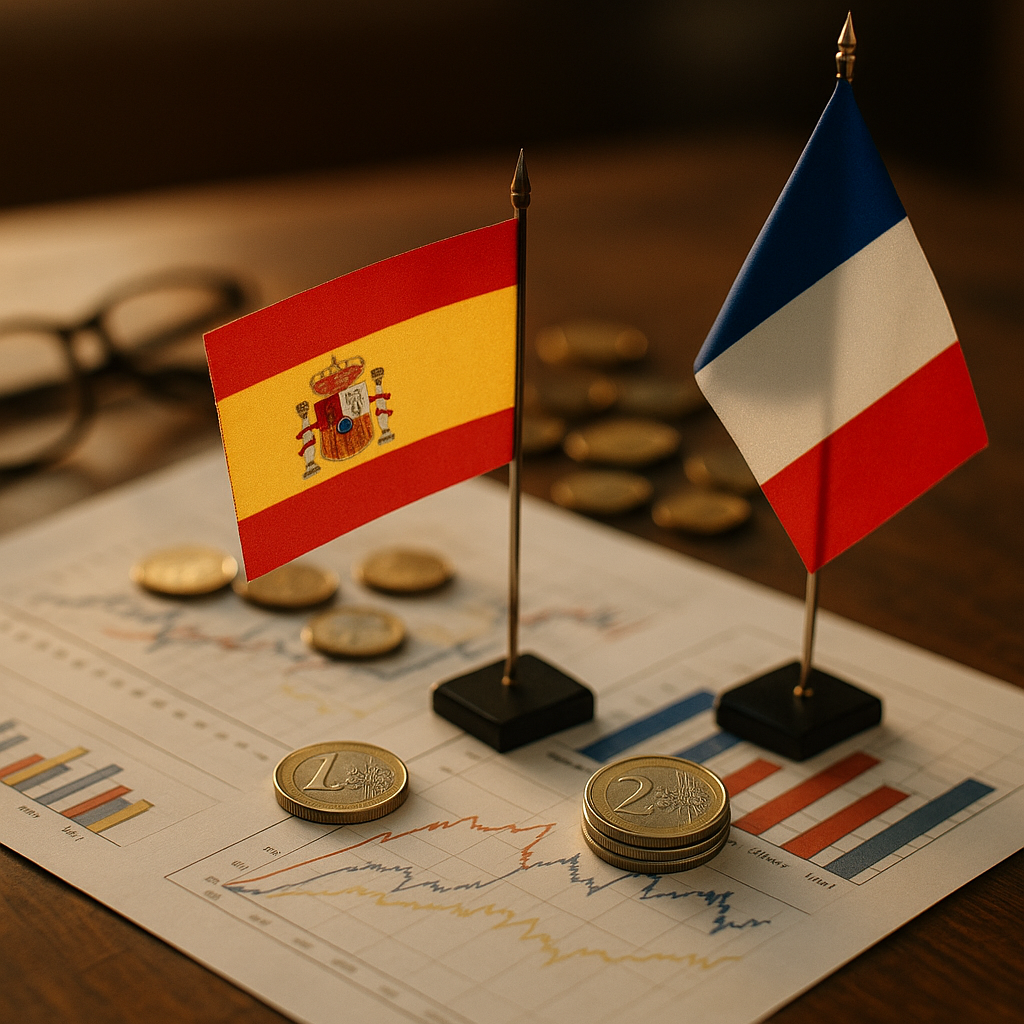
A 30-second UGC clip that costs a brand 180 euros in Madrid can run north of 600 euros for a comparable creator in Paris. Same format, same platform, same deliverable. So why does Europe’s creator cost divide between Spain and France run this deep, and what happens to your regional budget model when you treat the two markets as interchangeable?
Marketers running pan-European influencer programs keep hitting the same wall: rate cards that work in one country blow the budget in another, or worse, undervalue talent to the point of churn. The gap isn’t random. It’s structural, and understanding why changes how you should be allocating spend across the region.
The Numbers Behind the Divide
Industry rate benchmarks circulating among European talent agencies put the average cost of a single Instagram Reel from a mid-tier creator (50,000 to 150,000 followers) at roughly 250 to 450 euros in Spain. The same tier in France routinely commands 700 to 1,200 euros, and that’s before usage rights or whitelisting fees get added to the contract. Raw UGC licenses, content shot specifically for brand paid media rather than organic posting, show an even sharper split: Spanish UGC creators often price a basic package at 120 to 250 euros, while French UGC specialists start closer to 350 and climb fast once commercial usage terms extend beyond 90 days.
A French creator with the same follower count, engagement rate, and content quality as a Spanish counterpart can cost two to three times more, purely based on market location.
That’s not a small rounding error in a media plan. For a brand running a 20-market European UGC refresh, the difference between pricing everything at French rates versus a blended Spain/France average can swing six figures across a full year of content production.
Why France Commands a Premium
France has one of the most formalized influencer regulatory environments in Europe. The country’s ARPP (Autorité de Régulation Professionnelle de la Publicité) and its 2023 influencer law created explicit disclosure requirements, contract obligations, and liability exposure for both creators and brands. That regulatory weight pushes agencies and creators to price in compliance overhead, legal review, and reputational risk that simply doesn’t exist the same way in less formalized markets.
There’s also a cultural pricing dynamic at play. French creators and their agents tend to negotiate from a position that treats content as intellectual property with ongoing value, not a one-off transaction. Usage rights, exclusivity windows, and whitelisting access are negotiated line items, not afterthoughts. Agencies in France are also more consolidated, meaning fewer creators negotiate directly with brands, and agency margins get baked into quoted rates.
Add to that France’s historically strong traditional advertising and celebrity endorsement culture. Creators there benchmark their rates against TV and print talent fees, not just social media peers, which keeps the overall price ceiling higher across the influencer tier spectrum.
Spain’s Volume Play
Spain operates on a different logic entirely. The creator market there is younger, less consolidated, and dominated by independent creators negotiating directly with brands or through lightweight marketplaces rather than full-service agencies. That means lower overhead, fewer intermediary fees, and a willingness to compete on volume rather than exclusivity.
Spain also has a notably high ratio of micro and nano creators relative to its population, which keeps supply high and per-unit pricing compressed. Brands running UGC production at scale have increasingly found Spanish creator pools attractive precisely because the economics support higher content volume without the per-asset cost of French equivalents. For brands building always-on paid social creative libraries, that volume advantage matters more than headline follower counts.
There’s a tradeoff, though. Lower rates often mean less formalized contracts, thinner legal protections, and more variability in content quality and turnaround reliability. Brands chasing Spain’s lower unit cost without tightening their vetting process tend to discover the savings evaporate once they factor in revision cycles and quality control. That’s the same dynamic explored in creator vetting challenges tied to the broader flood of part-time UGC talent entering the market.
Is This a Pricing Problem or a Market Structure Problem?
It’s tempting to call the France premium “overpriced” and the Spain rate “a bargain.” Neither framing holds up. What you’re actually looking at is two different market structures producing two different equilibrium prices, and both are rational within their own context.
France’s higher fees reflect real compliance costs and a more mature talent representation ecosystem. Spain’s lower rates reflect a fragmented, high-supply market where creators compete on accessibility rather than exclusivity. Neither is a mispricing brands should expect to arbitrage away. Treating the divide as a bug to be fixed, rather than a feature of each market, is how procurement teams end up with underpriced French contracts that fall apart at legal review, or Spanish deals that look cheap until deliverables slip.
The more useful question is operational: how do you build a European rate card that accounts for this without either overpaying in low-cost markets or underbudgeting in high-cost ones? According to benchmarking data from Statista, average influencer marketing spend per campaign varies by double digits across EU member states, which tracks closely with the Spain/France gap described here. eMarketer forecasts also show creator economy spend growing fastest in markets with lower entry costs and higher creator density, a trend that favors continued volume growth in Spain even as France’s premium holds.
What Brands Operating Across Both Markets Should Do
If you’re running a multi-market European influencer program, a single blended rate card is almost always the wrong tool. Here’s what tends to work better in practice:
- Build country-specific rate bands rather than EU-wide averages. A tiered model using creator tier ratios by market gives finance teams a defensible structure instead of ad hoc negotiation.
- Price compliance separately from content. France’s regulatory overhead is a legitimate line item, not a negotiating weakness. Budget for legal review and disclosure management explicitly rather than folding it into creative fees.
- Use Spain’s volume advantage deliberately. If your campaign needs a high quantity of UGC variants for testing, Spain’s creator density supports that without the per-asset cost of France. Reserve French talent for high-visibility, brand-safety-critical placements where regulatory maturity and representation quality matter more.
- Write contracts that survive disputes. Payment term disagreements are rising across the industry, not just in these two markets. The patterns detailed in pay terms dispute data apply equally to Madrid and Paris deals, so standardize contract language before scaling either market.
- Track ROI by market, not by campaign average. A blended CPM or CPA across both countries hides which market is actually driving returns. Benchmarking frameworks like those used in engagement-based conversion analysis help isolate performance by geography rather than lumping it together.
There’s a broader lesson here too. Europe isn’t a single creator market with minor regional accents, it’s a collection of distinct economies with their own regulatory pressure, talent supply, and pricing logic. The France/Spain divide is just the most visible example. Similar gaps exist between Germany’s agency-heavy structure and Italy’s more fragmented creator base, and brands scaling content programs across the continent need rate strategies built for that reality, not against it. For broader context on how creator economics are shifting at scale, see the data in creator economy budget projections, which frame national pricing gaps within the larger spending trajectory. Tools like HubSpot and Sprout Social increasingly offer regional benchmarking features that can help teams build these market-specific models without starting from scratch.
Visible FAQs
Why are French influencer fees so much higher than Spain’s UGC rates?
France has stricter influencer marketing regulation, a more consolidated talent agency structure, and a cultural norm of pricing content as licensed intellectual property. Spain’s market is more fragmented with higher creator supply, which keeps per-asset pricing lower.
Should brands pay Spanish creators French-level rates to avoid inconsistency?
Not necessarily. Matching rates across markets ignores real cost drivers like compliance overhead and agency structure. A better approach is building separate rate bands per market rather than forcing one standardized fee.
Is Spain’s lower cost UGC lower quality?
Not inherently, but lower average rates often come with less formalized contracts and more variability in reliability. Brands need stronger vetting processes when scaling volume in lower-cost markets.
How much more expensive is a French influencer campaign compared to a Spanish one?
Industry rate benchmarks suggest French creators can cost two to three times more than comparable Spanish creators for similar follower tiers and content formats, particularly once usage rights and whitelisting fees are included.
Does this cost gap exist in other European markets too?
Yes. Similar divergences show up between Germany’s agency-driven pricing and Italy’s or Portugal’s more fragmented creator markets. The France/Spain gap is simply the most documented example within the EU.
The takeaway for anyone building a European creator budget: stop averaging Spain and France together, price each market on its own structural logic, and reserve the premium French spend for placements where regulatory maturity actually earns its keep.
Top Influencer Marketing Agencies
The leading agencies shaping influencer marketing in 2026
Agencies ranked by campaign performance, client diversity, platform expertise, proven ROI, industry recognition, and client satisfaction. Assessed through verified case studies, reviews, and industry consultations.
Moburst

-
2

The Shelf
Boutique Beauty & Lifestyle Influencer AgencyA data-driven boutique agency specializing exclusively in beauty, wellness, and lifestyle influencer campaigns on Instagram and TikTok. Best for brands already focused on the beauty/personal care space that need curated, aesthetic-driven content.Clients: Pepsi, The Honest Company, Hims, Elf Cosmetics, Pure LeafVisit The Shelf → -
3

Audiencly
Niche Gaming & Esports Influencer AgencyA specialized agency focused exclusively on gaming and esports creators on YouTube, Twitch, and TikTok. Ideal if your campaign is 100% gaming-focused — from game launches to hardware and esports events.Clients: Epic Games, NordVPN, Ubisoft, Wargaming, Tencent GamesVisit Audiencly → -
4

Viral Nation
Global Influencer Marketing & Talent AgencyA dual talent management and marketing agency with proprietary brand safety tools and a global creator network spanning nano-influencers to celebrities across all major platforms.Clients: Meta, Activision Blizzard, Energizer, Aston Martin, WalmartVisit Viral Nation → -
5

The Influencer Marketing Factory
TikTok, Instagram & YouTube CampaignsA full-service agency with strong TikTok expertise, offering end-to-end campaign management from influencer discovery through performance reporting with a focus on platform-native content.Clients: Google, Snapchat, Universal Music, Bumble, YelpVisit TIMF → -
6

NeoReach
Enterprise Analytics & Influencer CampaignsAn enterprise-focused agency combining managed campaigns with a powerful self-service data platform for influencer search, audience analytics, and attribution modeling.Clients: Amazon, Airbnb, Netflix, Honda, The New York TimesVisit NeoReach → -
7

Ubiquitous
Creator-First Marketing PlatformA tech-driven platform combining self-service tools with managed campaign options, emphasizing speed and scalability for brands managing multiple influencer relationships.Clients: Lyft, Disney, Target, American Eagle, NetflixVisit Ubiquitous → -
8

Obviously
Scalable Enterprise Influencer CampaignsA tech-enabled agency built for high-volume campaigns, coordinating hundreds of creators simultaneously with end-to-end logistics, content rights management, and product seeding.Clients: Google, Ulta Beauty, Converse, AmazonVisit Obviously →