


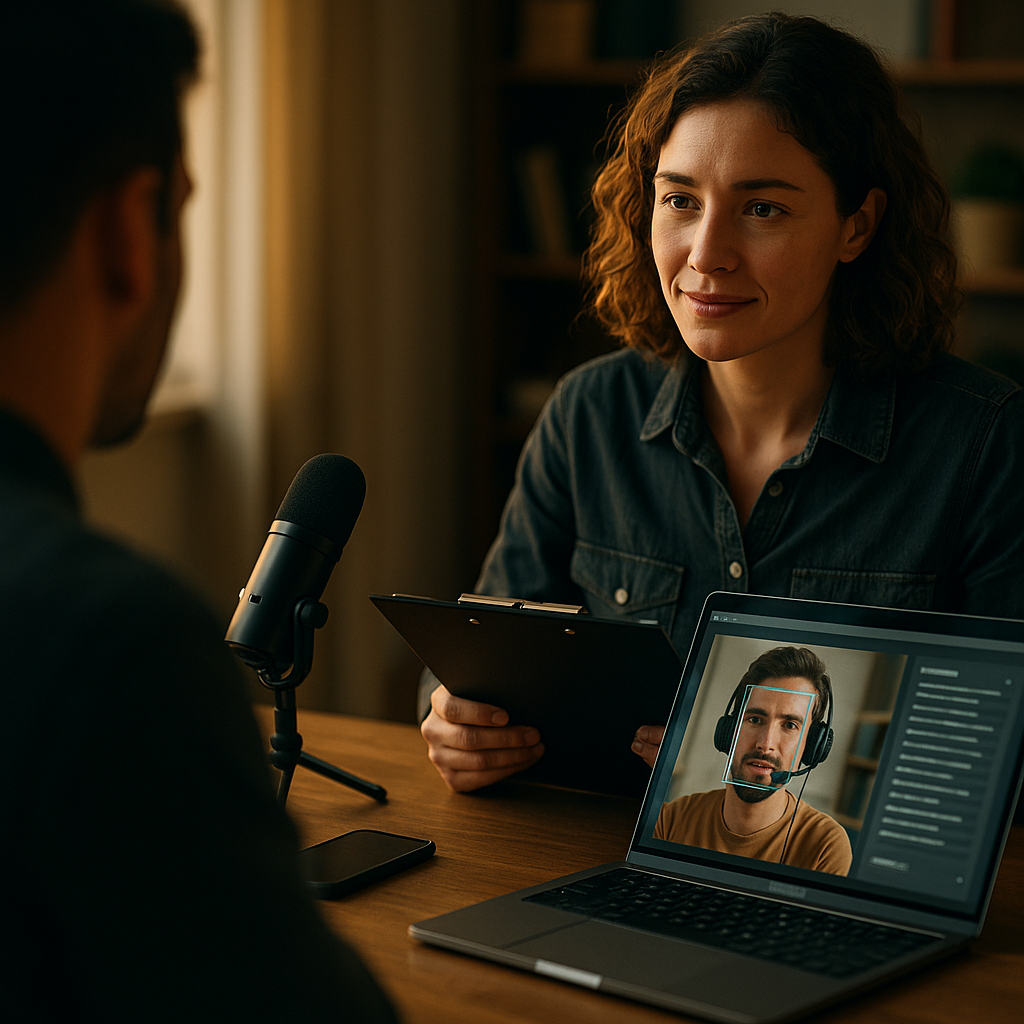
Brands running 200 creator campaigns a quarter used to burn roughly 600 hours a month on manual vetting calls. That math doesn’t survive contact with a flat headcount budget. AI creator interview automation is now stepping into that gap, running structured screening conversations with creators before a human ever gets on a call. The question isn’t whether this shift is happening. It’s whether your team is ready for what it changes.
The Manual Vetting Bottleneck Nobody Budgets For
Ask any influencer marketing manager what eats their week, and “vetting calls” usually ranks above content review. Every new creator relationship traditionally requires a live conversation: confirming audience demographics, checking past brand conflicts, probing for red flags on engagement authenticity, and gauging whether the creator actually understands the campaign brief.
That process doesn’t scale. A boutique agency juggling 40 active creators can absorb it. A brand running always-on programs across 500 to 1,000 creators cannot. Something has to give, and historically what gave was rigor. Teams skipped calls, relied on spreadsheet checklists, or let junior staff rubber-stamp creators just to hit launch deadlines.
That shortcut is exactly how brands end up with bot-inflated follower counts or creators who’ve quietly partnered with a direct competitor the week before. Manual vetting wasn’t broken because it was ineffective. It was broken because it couldn’t keep pace with volume.
What AI Interview Automation Actually Does
The current generation of tools doesn’t just send a survey. Platforms now conduct conversational, voice or chat based interviews with creators, asking adaptive follow up questions based on prior answers. A creator who mentions a recent sponsorship conflict gets probed further automatically. One who gives vague answers about audience location gets a clarifying prompt before the system flags the response for human review.
Under the hood, this is the same agentic shift reshaping other parts of the workflow. Rights clearance, activation, and reporting have already started merging into single automated pipelines, as detailed in our look at how agentic AI merges rights and reporting. Vetting is simply the next stage to get pulled into that pipeline.
Most tools combine three layers: a scripted conversational agent, a scoring model trained on brand safety criteria, and an escalation rule that routes borderline cases to a human reviewer. The creator talks to an AI. The brand gets a structured transcript, a risk score, and a recommendation. Nobody waits on a calendar invite.
Teams piloting AI vetting report cutting average screening time per creator from 35 minutes to under 6, while flagging roughly the same percentage of high-risk profiles as manual review.
Where It Saves Real Money (And Where It Doesn’t)
The ROI case is straightforward on paper. Fewer analyst hours per creator means lower cost per activated partnership. That matters most for brands running high-volume, lower-spend micro and nano creator programs, where the economics of a 30-minute manual call never worked in the first place.
- Screening throughput: Automated interviews run in parallel, so a team can process hundreds of creators in the time it used to take to clear a dozen.
- Consistency: Every creator gets asked the same core questions, removing the variance that comes from different staffers running calls differently.
- Documentation: Transcripts create an audit trail that’s genuinely useful if a partnership later draws regulatory or legal scrutiny.
- Cost per vet: Several agencies report vetting costs dropping by more than half once automation handles the first pass.
But the savings aren’t universal. For six and seven figure ambassador deals, the stakes are too high to skip a human conversation entirely. Nobody wants to find out post-signature that an AI missed sarcasm in a creator’s answer about past controversy. Automation is a filter, not a final verdict, and treating it as the latter is where brands get burned.
This mirrors a broader pattern across the industry: AI handles volume well, but judgment calls on nuance still need a person in the loop, a dynamic we’ve covered in how AI agents handle volume while humans win on judgment.
What the Data Says About Creator Risk
Brand safety incidents involving creators haven’t gone away, they’ve just shifted shape. Fake engagement, undisclosed paid relationships, and AI-generated content masquerading as authentic opinion are now the dominant risk categories, according to industry tracking from Sprout Social and benchmark reporting from eMarketer. Manual vetting calls were never great at catching these issues anyway, since a creator can simply lie on a call just as easily as in a form.
What automation adds isn’t better lie detection. It’s better cross-referencing. AI vetting tools increasingly pull in third-party data, past brand deal history, engagement authenticity scores, and platform-reported violations, and weigh that against what the creator says in the interview. Discrepancies between stated history and verifiable data get flagged instantly, something a time-pressed account manager on a Friday afternoon call is far less likely to catch.
That data layer only works if the underlying creator records are clean to begin with. Garbage inputs still produce garbage risk scores, which is why the quality of your creator database matters as much as the vetting tool itself, a point explored in our piece on how clean creator data decides if AI co-pilots actually help.
Compliance Still Needs a Human Signature
Here’s where brand and agency legal teams should pay close attention. Automated vetting speeds up screening, but it doesn’t remove disclosure and endorsement obligations. The FTC’s endorsement guidance still applies regardless of whether a creator was vetted by a human or a bot, and regulators in the UK have taken a similarly firm line through the ICO’s guidance on data handling in influencer partnerships.
That means AI vetting transcripts need to be retained, reviewable, and defensible, not just a convenience layer that gets deleted after onboarding. If a creator relationship later draws scrutiny, “the AI cleared them” isn’t a defense that holds up. Brands still need a named compliance owner who can explain the scoring logic and override decisions when something looks off.
This is also where disclosure monitoring and vetting start to overlap. A creator who passes the interview stage but later fails to disclose a paid partnership properly represents a different kind of risk than one who lied during screening. Both need tracking, and few tools currently handle both well in one system.
Building a Hybrid Vetting Stack
The brands getting this right aren’t replacing human reviewers. They’re restructuring where humans spend their time. Automation handles the first pass on every creator: baseline questions, data cross-referencing, and a risk score. Humans step in only for borderline scores, high-budget deals, or categories with elevated regulatory exposure (finance, health, alcohol).
- Tier your vetting by deal size. Nano and micro creators get full automation. Macro and celebrity tiers keep a human call as a mandatory gate.
- Set escalation thresholds explicitly. Define what risk score triggers a human review before launch, not after a problem surfaces.
- Audit the AI’s scoring logic quarterly. Models drift. What counted as low risk a year ago might not hold up against newer bot-detection benchmarks.
- Keep transcripts centralized. Legal and compliance teams need one source of truth, not scattered call notes and chat logs.
This hybrid structure also frees up senior strategists to spend time on something automation genuinely can’t replace: reading brand fit, creative chemistry, and whether a creator’s tone actually matches the campaign. That’s the layer where AI literacy inside the team matters more than which tool you bought, a theme we’ve unpacked in why AI literacy drives creator marketing ROI more than the tool stack itself.
Is This Actually Faster Deal Flow Too?
There’s a second-order effect worth flagging. Faster vetting doesn’t just reduce cost, it compresses the entire deal cycle. Once a creator clears automated screening, contracting and negotiation can start almost immediately rather than waiting on a scheduling backlog. That compression lines up with what’s happening on the deal-making side too, where AI copilots are already cutting negotiation cycles from weeks to hours, as covered in our analysis of how AI sales co-pilots cut creator deal cycles. Put vetting automation and deal automation together, and the entire onboarding funnel for a creator partnership shrinks dramatically, from first contact to signed agreement in days instead of a month.
For reference on how fast creator program spend is scaling industry-wide, Statista’s marketing data shows continued double-digit growth in influencer marketing budgets, and tools from HubSpot’s marketing resources increasingly treat creator vetting as a CRM-adjacent workflow rather than a standalone task. The infrastructure is catching up to the volume brands are already pushing through.
Frequently Asked Questions
FAQs
What is AI creator interview automation?
It’s software that conducts structured, conversational screening interviews with influencers before a brand or agency onboards them, using scripted questions, adaptive follow-ups, and automated risk scoring instead of a live human call.
Does AI vetting replace the need for a human review?
No. Most effective programs use AI for the first-pass screening on high-volume, lower-spend creators, then route borderline scores or high-budget deals to a human reviewer for final judgment.
How much time does AI vetting actually save?
Teams piloting these tools report average screening time dropping from around 35 minutes per creator to under 6 minutes, with similar accuracy on flagging high-risk profiles compared to manual calls.
Is AI-automated vetting compliant with FTC and disclosure rules?
Automation speeds up screening but doesn’t remove legal obligations. Brands still need retained transcripts, a named compliance owner, and documented override logic to stay defensible under FTC and similar regulatory guidance.
Which creators still need a manual vetting call?
Macro and celebrity-tier creators, plus partnerships in regulated categories like finance, health, or alcohol, generally still warrant a human conversation regardless of what the automated score returns.
What data do AI vetting tools use to score creator risk?
Most systems combine interview transcript analysis with third-party signals: engagement authenticity scores, past brand conflict history, and platform-reported policy violations, cross-referenced against what the creator states during screening.
Next step: audit your current vetting workflow against deal size and risk category, then pilot automation only on the tiers where a missed call costs you throughput, not trust.
Top Influencer Marketing Agencies
The leading agencies shaping influencer marketing in 2026
Agencies ranked by campaign performance, client diversity, platform expertise, proven ROI, industry recognition, and client satisfaction. Assessed through verified case studies, reviews, and industry consultations.
Moburst

-
2

The Shelf
Boutique Beauty & Lifestyle Influencer AgencyA data-driven boutique agency specializing exclusively in beauty, wellness, and lifestyle influencer campaigns on Instagram and TikTok. Best for brands already focused on the beauty/personal care space that need curated, aesthetic-driven content.Clients: Pepsi, The Honest Company, Hims, Elf Cosmetics, Pure LeafVisit The Shelf → -
3

Audiencly
Niche Gaming & Esports Influencer AgencyA specialized agency focused exclusively on gaming and esports creators on YouTube, Twitch, and TikTok. Ideal if your campaign is 100% gaming-focused — from game launches to hardware and esports events.Clients: Epic Games, NordVPN, Ubisoft, Wargaming, Tencent GamesVisit Audiencly → -
4

Viral Nation
Global Influencer Marketing & Talent AgencyA dual talent management and marketing agency with proprietary brand safety tools and a global creator network spanning nano-influencers to celebrities across all major platforms.Clients: Meta, Activision Blizzard, Energizer, Aston Martin, WalmartVisit Viral Nation → -
5

The Influencer Marketing Factory
TikTok, Instagram & YouTube CampaignsA full-service agency with strong TikTok expertise, offering end-to-end campaign management from influencer discovery through performance reporting with a focus on platform-native content.Clients: Google, Snapchat, Universal Music, Bumble, YelpVisit TIMF → -
6

NeoReach
Enterprise Analytics & Influencer CampaignsAn enterprise-focused agency combining managed campaigns with a powerful self-service data platform for influencer search, audience analytics, and attribution modeling.Clients: Amazon, Airbnb, Netflix, Honda, The New York TimesVisit NeoReach → -
7

Ubiquitous
Creator-First Marketing PlatformA tech-driven platform combining self-service tools with managed campaign options, emphasizing speed and scalability for brands managing multiple influencer relationships.Clients: Lyft, Disney, Target, American Eagle, NetflixVisit Ubiquitous → -
8

Obviously
Scalable Enterprise Influencer CampaignsA tech-enabled agency built for high-volume campaigns, coordinating hundreds of creators simultaneously with end-to-end logistics, content rights management, and product seeding.Clients: Google, Ulta Beauty, Converse, AmazonVisit Obviously →