


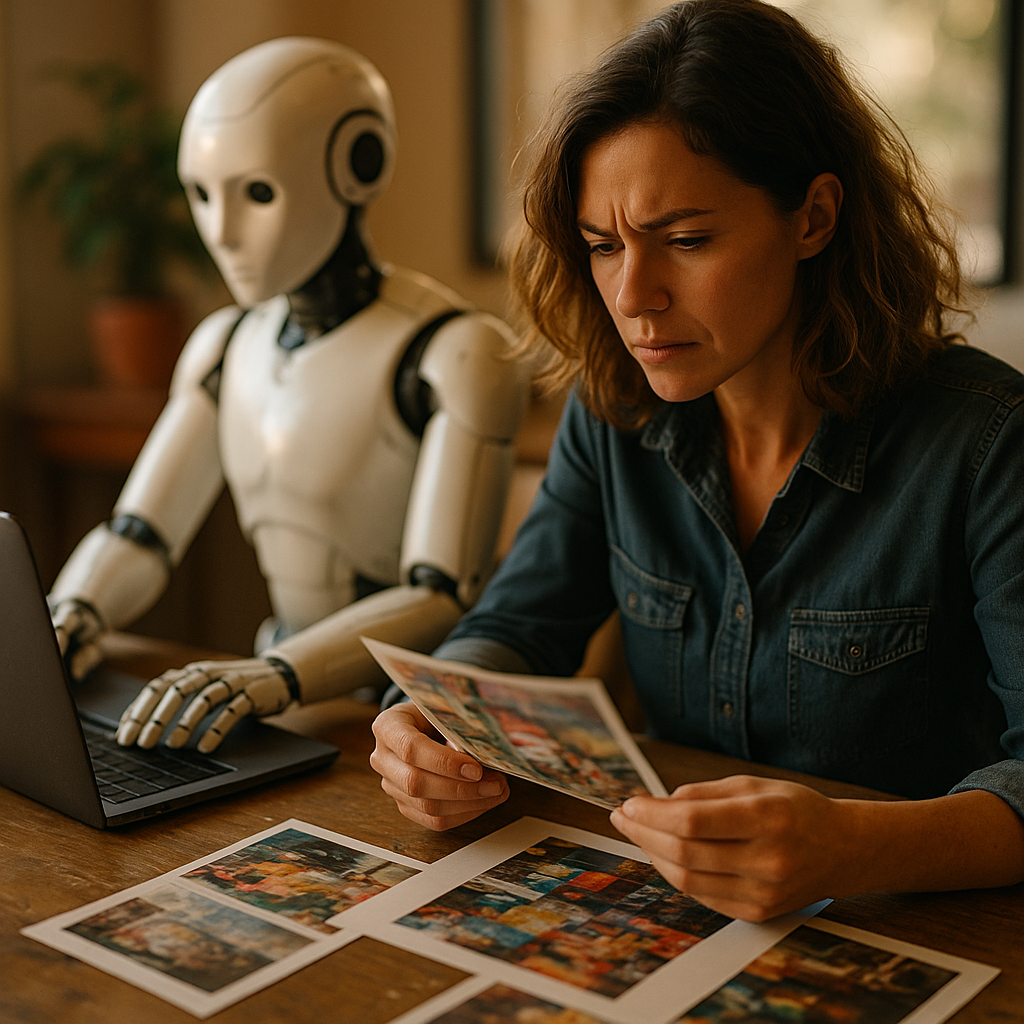
Campaigns built entirely by AI agents are now converting at rates brands openly compare against human-led production, and in some cases losing. A recent industry comparison found that human-made creator ads outperformed AI recreations by 14 percent. So can AI agents replace human creative direction in influencer campaigns, or are brands mistaking automation for strategy?
The Performance Gap Brands Don’t Like to Talk About
Every agency pitch deck this year has a slide about AI agents handling briefing, scripting, and even casting decisions. Fewer decks show what happens to conversion rates when that work goes live. The honest answer: results are mixed, and the mix depends almost entirely on how much creative judgment got outsourced versus retained.
AI agents excel at pattern replication. Feed them a thousand top-performing hooks and they will produce a competent thousand-and-first. What they struggle with is knowing when to break the pattern, which is often exactly the move that makes a campaign memorable rather than forgettable.
Human-made creator ads still beat AI recreations by 14 percent on engagement, a gap wide enough to erase most of the cost savings AI production promised in the first place.
What AI Agents Actually Do Well in Campaign Production
Let’s give credit where it’s due. AI agents have quietly become excellent at the operational layer of influencer marketing, the parts that used to eat up account manager hours without moving the brand needle.
- Creator sourcing and shortlisting: agents can scan thousands of profiles against brand-fit criteria faster than any human researcher.
- Deal negotiation workflows: platforms are using agents to compress outreach and contracting timelines, as detailed in a recent piece on AI sales co pilots cutting deal cycles to hours.
- Script scoring against discoverability signals: tools now grade drafts for how likely they are to get cited in AI search answers, a capability covered in custom GPT scoring for creator scripts.
- Fatigue detection in final cuts: agents can flag when AI-assisted content starts looking repetitive before it ever reaches a feed, as explored in final cut review workflows.
None of that is creative direction. It’s production support, and brands that treat it as a replacement for strategic oversight are the ones showing up in the underperformance data.
Where Human Creative Direction Still Wins
Creative direction is, at its core, a series of judgment calls made under ambiguity: which creator’s tone fits the brand voice, when a joke lands versus when it reads as tone-deaf, how much risk a campaign concept can absorb before it tips into controversy. AI agents don’t make judgment calls. They make probability-weighted guesses based on training data, which is a different thing wearing the same outfit.
Consider cultural timing. A human creative director who has spent a decade in the influencer space develops an instinct for when a trend is about to crest versus when it’s already dying. That instinct comes from pattern recognition built on lived context, not just scraped data. AI agents trained on last quarter’s top-performing content will always be slightly behind the curve, because by definition they’re optimizing for what already worked.
There’s also the trust dimension. Audiences are getting sharper at spotting synthetic polish, and AI avatars are facing a real trust test against human creators in head-to-head performance comparisons. Creative direction that leans too heavily on AI-generated concepts risks producing content that’s technically correct and emotionally flat, the kind viewers scroll past without a second thought.
Is This Replacement, or Just Role Reassignment?
The framing of “AI versus human” misses what’s actually happening inside most agencies right now. It’s not a replacement. It’s a redistribution of labor that pushes humans upward into higher-judgment work and pushes agents into high-volume execution.
This mirrors what’s happening to org charts more broadly. A recent analysis found that agentic AI is forcing influencer teams to redesign their org charts entirely, collapsing junior production roles while expanding senior strategist and quality-control roles. That’s not a sign AI is winning. It’s a sign the skill floor for human roles is rising.
Brands that get this right staff creative direction with people who can supervise agents rather than compete with them. Brands that get it wrong hand agents the whole brief and wonder why engagement dropped a quarter later.
The ROI Math Brands Keep Getting Wrong
Here’s the uncomfortable part for finance teams chasing headcount savings. Replacing human creative direction with AI agents often looks cheaper on a per-campaign basis and more expensive on a per-conversion basis. If a human-directed campaign converts 14 percent better, as the earlier data showed, the brand needs to run that many more AI-directed campaigns just to hit the same revenue target. That’s not efficiency. That’s volume compensating for quality.
There’s also a compliance dimension finance teams rarely price in. Fully AI-directed content carries higher disclosure and authenticity risk, and detection stacks are now flagging synthetic creator content before it becomes an FTC problem. A campaign that saves money in production but triggers a regulatory review or a platform penalty isn’t actually cheaper. It’s deferred cost with interest.
Data quality compounds all of this. Agents are only as sharp as the creator and performance data feeding them, and clean creator data decides whether AI co pilots actually help or just automate mediocrity faster. Garbage in, confidently-produced garbage out.
Building a Hybrid Model That Actually Protects ROI
The brands pulling ahead aren’t choosing sides. They’re building layered workflows where AI agents handle volume and humans hold the veto power on anything that touches brand voice, audience trust, or legal exposure.
A practical structure looks something like this:
- Agents generate creator shortlists, briefs, and first-draft scripts at scale.
- Human creative directors review concepts for tone, cultural fit, and risk before anything goes to a creator.
- Agents score final cuts for discoverability and fatigue signals.
- Humans sign off on anything that could be read as sensitive, political, or brand-risky.
- Performance data flows back into both the agent’s training loop and the human team’s strategic planning, not just one or the other.
This isn’t a theoretical model. It’s close to what agencies describe in discussions around AI literacy driving creator marketing ROI more reliably than simply buying more tools. The differentiator was never the tool stack. It’s whether the humans operating it know when to override it.
Industry benchmarking from eMarketer and Statista continues to show influencer spend climbing even as production costs per asset fall, which only works if the quality bar holds. Platforms themselves seem to agree: both Meta’s advertiser guidance and TikTok’s creative best practices still emphasize human storytelling signals as a ranking factor, not just technical optimization.
What Happens If Brands Ignore the Gap
Brands that fully delegate creative direction to agents tend to discover the problem late, usually after three or four campaign cycles of quietly declining engagement that nobody flagged because the dashboards still looked busy. Volume metrics can mask quality erosion for longer than most teams expect.
The fix isn’t abandoning AI agents. It’s refusing to let them operate without a human checkpoint on anything that represents the brand publicly. That checkpoint is cheap insurance against the kind of reputational and regulatory risk that no amount of production savings offsets.
Next step: audit your last five AI-assisted campaigns against a human-directed benchmark, specifically on engagement and conversion, not just cost per asset. If the gap mirrors the 14 percent swing seen industry-wide, it’s time to rebuild your workflow around human sign-off, not human replacement.
FAQs
Can AI agents fully replace human creative directors in influencer campaigns?
Not reliably yet. AI agents handle sourcing, scripting drafts, and performance scoring well, but human-made ads still outperform AI recreations by around 14 percent on engagement, largely because humans make better judgment calls on tone and cultural timing.
What tasks should brands delegate to AI agents in creative production?
Creator shortlisting, first-draft scripting, discoverability scoring, and fatigue detection on finished cuts are strong fits for AI agents. Final tone, brand voice, and risk decisions should stay with human reviewers.
Does using AI agents in creative direction increase compliance risk?
It can, particularly around disclosure and synthetic content detection. Brands should pair any AI-directed content with a human compliance review before publishing to avoid regulatory or platform penalties.
Is a hybrid AI and human creative model more cost-effective than full automation?
Usually, yes. Full automation looks cheaper per campaign but often costs more per conversion, since lower engagement rates mean brands need more volume to hit the same revenue target.
How should brands measure whether AI creative direction is working?
Compare engagement and conversion rates against a human-directed benchmark, not just production cost or output volume. A persistent performance gap signals the AI agent is operating without enough human oversight.
Top Influencer Marketing Agencies
The leading agencies shaping influencer marketing in 2026
Agencies ranked by campaign performance, client diversity, platform expertise, proven ROI, industry recognition, and client satisfaction. Assessed through verified case studies, reviews, and industry consultations.
Moburst

-
2

The Shelf
Boutique Beauty & Lifestyle Influencer AgencyA data-driven boutique agency specializing exclusively in beauty, wellness, and lifestyle influencer campaigns on Instagram and TikTok. Best for brands already focused on the beauty/personal care space that need curated, aesthetic-driven content.Clients: Pepsi, The Honest Company, Hims, Elf Cosmetics, Pure LeafVisit The Shelf → -
3

Audiencly
Niche Gaming & Esports Influencer AgencyA specialized agency focused exclusively on gaming and esports creators on YouTube, Twitch, and TikTok. Ideal if your campaign is 100% gaming-focused — from game launches to hardware and esports events.Clients: Epic Games, NordVPN, Ubisoft, Wargaming, Tencent GamesVisit Audiencly → -
4

Viral Nation
Global Influencer Marketing & Talent AgencyA dual talent management and marketing agency with proprietary brand safety tools and a global creator network spanning nano-influencers to celebrities across all major platforms.Clients: Meta, Activision Blizzard, Energizer, Aston Martin, WalmartVisit Viral Nation → -
5

The Influencer Marketing Factory
TikTok, Instagram & YouTube CampaignsA full-service agency with strong TikTok expertise, offering end-to-end campaign management from influencer discovery through performance reporting with a focus on platform-native content.Clients: Google, Snapchat, Universal Music, Bumble, YelpVisit TIMF → -
6

NeoReach
Enterprise Analytics & Influencer CampaignsAn enterprise-focused agency combining managed campaigns with a powerful self-service data platform for influencer search, audience analytics, and attribution modeling.Clients: Amazon, Airbnb, Netflix, Honda, The New York TimesVisit NeoReach → -
7

Ubiquitous
Creator-First Marketing PlatformA tech-driven platform combining self-service tools with managed campaign options, emphasizing speed and scalability for brands managing multiple influencer relationships.Clients: Lyft, Disney, Target, American Eagle, NetflixVisit Ubiquitous → -
8

Obviously
Scalable Enterprise Influencer CampaignsA tech-enabled agency built for high-volume campaigns, coordinating hundreds of creators simultaneously with end-to-end logistics, content rights management, and product seeding.Clients: Google, Ulta Beauty, Converse, AmazonVisit Obviously →