


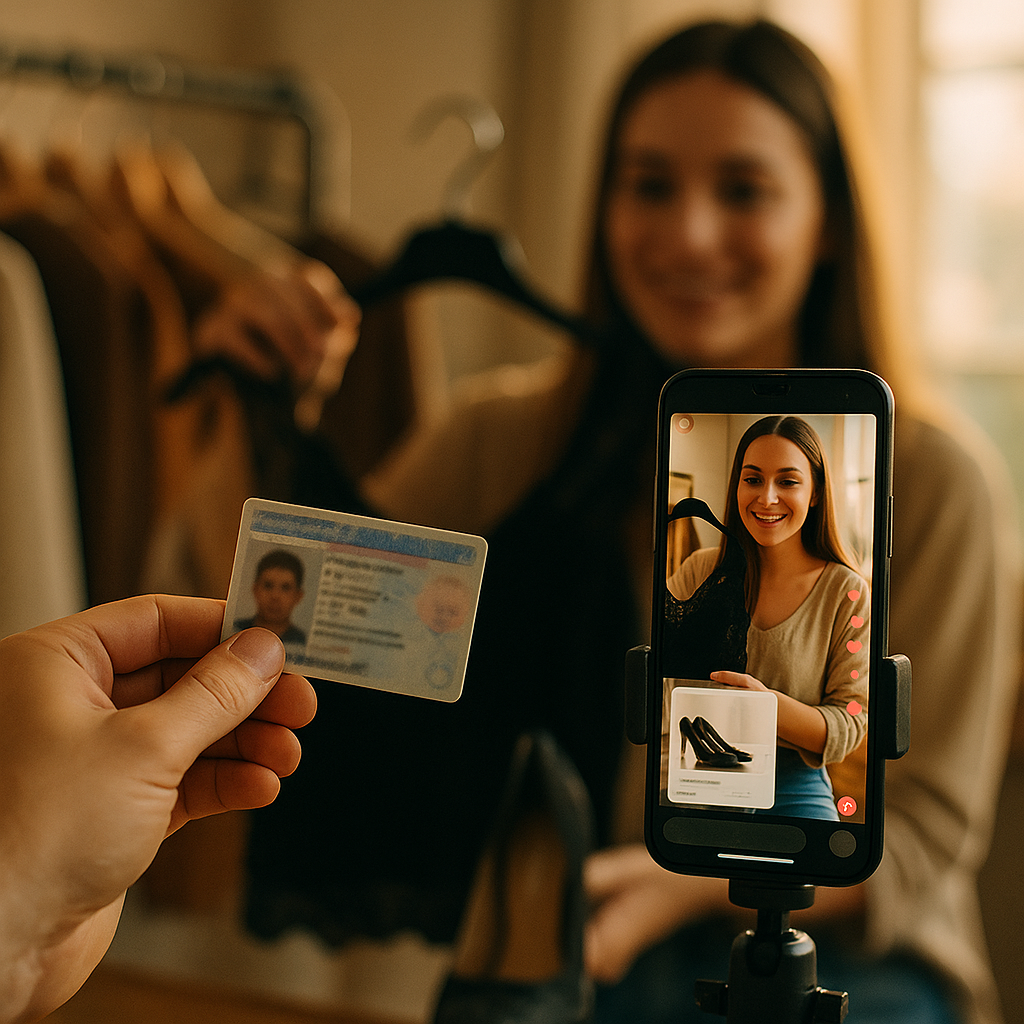
Nineteen states now have laws on the books requiring some form of age verification or parental consent for minors accessing social platforms, and at least a dozen more have bills moving through legislatures this year. For brands running influencer livestream shopping campaigns, that patchwork isn’t background noise anymore. It’s a direct operational problem: the same TikTok Shop event or Amazon Live segment can be legal in Ohio and non-compliant in Louisiana, sometimes by the time the stream ends.
What’s Actually in These Laws
Most state age verification statutes were written with social media addiction and content moderation in mind, not commerce. Utah’s Social Media Regulation Act, Texas’s SCOPE Act, and Louisiana’s age verification statute all require platforms to verify user age before granting full account access, and several mandate parental consent for anyone under 18 engaging in certain transactions or data sharing. Arkansas and California have passed similar frameworks, though both have faced court challenges from tech industry groups over First Amendment concerns.
Here’s the catch for marketers: livestream shopping sits at the intersection of content, commerce, and data collection. A minor watching a Whatnot auction or a TikTok Shop live event isn’t just consuming content, they’re potentially entering checkout flows, sharing payment information, and triggering data capture that falls under both state privacy statutes and these newer age verification rules. That’s a very different compliance surface than a standard sponsored post.
Livestream shopping collapses content, data collection, and point-of-sale transaction into a single real-time event, which means a single stream can trigger three separate regulatory regimes simultaneously.
Why Livestream Shopping Is the Flashpoint
Static influencer content is relatively easy to audit. You review the post, check the disclosure, move on. Livestream shopping doesn’t work that way. It’s unscripted, happens in real time, and often involves on-the-fly discount codes, flash giveaways, and comment-driven upsells that no legal team previewed beforehand.
Add age verification requirements into that mix and the risk multiplies. If a platform hasn’t verified viewer age before allowing checkout access, and a minor in a regulated state completes a purchase during a brand-sponsored stream, who’s liable? The platform, the brand, or the creator’s agency? Right now, the answer varies by state and by platform terms of service, which is exactly the kind of ambiguity that makes general counsel nervous.
According to eMarketer’s livestream commerce forecasts, U.S. social commerce sales are climbing fast, and younger demographics make up a disproportionate share of livestream shopping engagement. That’s great for reach. It’s also precisely the audience segment these state laws are designed to protect, which means brands can’t treat livestream shopping campaigns as low-risk, set-and-forget content.
The Geotargeting Problem Nobody Budgeted For
Traditional influencer campaigns run nationally without much thought to state lines. Age verification laws break that assumption. A brand running a TikTok Shop livestream now has to consider whether its audience includes viewers in states with stricter verification requirements, and whether the platform’s own age-gating mechanisms satisfy those state-specific thresholds.
Most platforms have responded with blunt instruments: self-declared birthdates, occasional ID verification prompts, or blanket restrictions on checkout features for accounts flagged as minor-owned. None of that is foolproof, and none of it was designed with brand liability in mind. Brands are essentially inheriting platform-level compliance gaps every time they book a livestream shopping segment.
The Compliance Gaps Brands Are Missing
Most marketing teams are still treating age verification as a platform problem, not a brand problem. That’s a mistake. A few specific gaps show up repeatedly in campaign audits:
- Creator briefs rarely mention age verification at all. Standard livestream talent agreements cover disclosure language and FTC compliance but say nothing about what happens if underage viewers trigger a checkout flow.
- Data capture during livestreams often exceeds what state privacy laws allow for minors. Comment data, watch time, and engagement signals get fed into retargeting pipelines without any age-based filtering.
- Legal sign-off processes weren’t built for real-time commerce. A pre-approved script doesn’t protect you when a creator improvises a discount code mid-stream to an audience that includes unverified minors.
- Multi-state campaigns assume uniform compliance. A single livestream event is often treated as one legal entity, when in reality it’s subject to as many regulatory frameworks as there are states tuning in.
This is the same structural issue brands have run into with the broader state privacy law patchwork, just applied to a new commerce format. The underlying lesson is identical: state-by-state compliance can’t be an afterthought bolted onto a national campaign plan.
Building an Age Gate That Doesn’t Kill Conversion
The instinct for a lot of risk-averse brand teams is to slap a hard age gate in front of every livestream shopping event. That’s understandable, but it’s also a conversion killer. Age gates add friction, and friction is the enemy of impulse-driven livestream purchases.
A better approach layers verification without disrupting the shopping experience for verified adult viewers:
- Work with platforms that support tiered access, where checkout features are only unlocked for accounts that have passed age verification, rather than gating the entire stream.
- Build contractual requirements into creator agreements specifying that discount codes, flash sales, and giveaways cannot bypass the platform’s verification layer, even if it slows down engagement.
- Route livestream campaigns through compliance review the same way you’d handle a compliance sign off workflow for regulated financial content, with a fast-turnaround legal check before the stream goes live, not after.
- Audit the platform’s age verification method itself. Self-attested birthdates are weak evidence of compliance if a regulator comes asking.
It’s worth noting that platforms themselves are under pressure here too. TikTok, Amazon, and Meta have all adjusted their livestream shopping tools in response to regulatory scrutiny, and brands should expect verification requirements to tighten further rather than loosen. The FTC has also signaled increased interest in how real-time commerce formats handle consumer protection, which includes minors specifically.
Contract Language and Creator Vetting Matter More Than Ever
If your influencer contracts still treat livestream shopping as a subset of standard sponsored content, it’s time to rewrite them. Age verification exposure needs its own clause, specifying which party is responsible for confirming platform compliance, how discount codes and flash promotions should be handled, and what happens if a creator’s audience skews younger than the campaign’s target demographic.
This connects directly to the vetting process too. Brands already use AI creator vetting tools to screen for brand safety and audience authenticity. Those same tools should now flag audience age composition as a standard data point before a livestream partnership gets approved, not as an afterthought during a post-campaign audit.
The same discipline applies to disclosure requirements more broadly. Brands that have already built rigorous processes around the TikTok Shop disclosure mandate have a head start here, since the legal infrastructure for real-time commerce compliance overlaps heavily with age verification requirements. If your legal team already has a checklist for disclosure timing and FTC exposure, extending it to cover age verification is a smaller lift than building from scratch.
Treating age verification as a one-time platform setting instead of an ongoing campaign variable is the single biggest compliance mistake brands make in livestream shopping.
What Happens If You Ignore This?
State attorneys general have already shown they’re willing to investigate platforms over age verification failures, and that enforcement energy is starting to extend to advertisers who knowingly or negligently target underage audiences through sponsored livestream content. The financial exposure isn’t theoretical. Fines under some state statutes run into the tens of thousands of dollars per violation, and class action exposure around data collected from minors during livestream checkout flows is a growing area of plaintiff’s attorney interest.
There’s also a reputational dimension that’s easy to underestimate. A brand getting named in a news story about underage viewers purchasing products during a livestream event isn’t a PR problem you spin your way out of quickly. It’s the kind of story that gets picked up by consumer advocacy groups and amplified well beyond the original incident.
Data from Statista shows livestream shopping adoption climbing steadily among teen and pre-teen audiences in the U.S., which means this exposure isn’t shrinking. It’s compounding.
FAQs
Do state age verification laws apply to brands, or only to platforms?
Most statutes are written to regulate platforms directly, but brands inherit compliance risk when their sponsored content or livestream shopping events operate on non-compliant features. Contracts and campaign design should account for this shared exposure rather than assuming the platform absorbs all liability.
Which states currently have the strictest age verification requirements affecting livestream commerce?
Utah, Texas, Louisiana, and Arkansas have some of the most detailed statutes, though several face ongoing legal challenges. Brands running multi-state campaigns should treat these states as a baseline for compliance planning rather than waiting to see which laws survive court review.
How does age verification interact with FTC disclosure rules during a livestream?
They’re separate but overlapping obligations. FTC rules govern whether sponsorship is disclosed clearly, while state age verification laws govern whether underage viewers should have access to checkout features at all. A compliant livestream needs to satisfy both simultaneously.
Can brands rely on a platform’s built-in age verification tools?
Not entirely. Most platform verification methods rely on self-reported birthdates, which regulators increasingly view as insufficient. Brands running high-value livestream shopping campaigns should document additional due diligence rather than assuming platform defaults are enough.
What should go into a creator contract to address this risk?
Contracts should specify who is responsible for confirming platform-level age verification, restrict improvised discount codes or giveaways that could bypass verification, and define liability if an underage audience segment is later identified in campaign data.
Next Step
Pull your next three livestream shopping campaigns and check whether the creator contract even mentions age verification. If it doesn’t, that’s your first fix, not your last.
FAQs
Do state age verification laws apply to brands, or only to platforms?
Most statutes are written to regulate platforms directly, but brands inherit compliance risk when their sponsored content or livestream shopping events operate on non-compliant features. Contracts and campaign design should account for this shared exposure rather than assuming the platform absorbs all liability.
Which states currently have the strictest age verification requirements affecting livestream commerce?
Utah, Texas, Louisiana, and Arkansas have some of the most detailed statutes, though several face ongoing legal challenges. Brands running multi-state campaigns should treat these states as a baseline for compliance planning rather than waiting to see which laws survive court review.
How does age verification interact with FTC disclosure rules during a livestream?
They’re separate but overlapping obligations. FTC rules govern whether sponsorship is disclosed clearly, while state age verification laws govern whether underage viewers should have access to checkout features at all. A compliant livestream needs to satisfy both simultaneously.
Can brands rely on a platform’s built-in age verification tools?
Not entirely. Most platform verification methods rely on self-reported birthdates, which regulators increasingly view as insufficient. Brands running high-value livestream shopping campaigns should document additional due diligence rather than assuming platform defaults are enough.
What should go into a creator contract to address this risk?
Contracts should specify who is responsible for confirming platform-level age verification, restrict improvised discount codes or giveaways that could bypass verification, and define liability if an underage audience segment is later identified in campaign data.
Top Influencer Marketing Agencies
The leading agencies shaping influencer marketing in 2026
Agencies ranked by campaign performance, client diversity, platform expertise, proven ROI, industry recognition, and client satisfaction. Assessed through verified case studies, reviews, and industry consultations.
Moburst

-
2

The Shelf
Boutique Beauty & Lifestyle Influencer AgencyA data-driven boutique agency specializing exclusively in beauty, wellness, and lifestyle influencer campaigns on Instagram and TikTok. Best for brands already focused on the beauty/personal care space that need curated, aesthetic-driven content.Clients: Pepsi, The Honest Company, Hims, Elf Cosmetics, Pure LeafVisit The Shelf → -
3

Audiencly
Niche Gaming & Esports Influencer AgencyA specialized agency focused exclusively on gaming and esports creators on YouTube, Twitch, and TikTok. Ideal if your campaign is 100% gaming-focused — from game launches to hardware and esports events.Clients: Epic Games, NordVPN, Ubisoft, Wargaming, Tencent GamesVisit Audiencly → -
4

Viral Nation
Global Influencer Marketing & Talent AgencyA dual talent management and marketing agency with proprietary brand safety tools and a global creator network spanning nano-influencers to celebrities across all major platforms.Clients: Meta, Activision Blizzard, Energizer, Aston Martin, WalmartVisit Viral Nation → -
5

The Influencer Marketing Factory
TikTok, Instagram & YouTube CampaignsA full-service agency with strong TikTok expertise, offering end-to-end campaign management from influencer discovery through performance reporting with a focus on platform-native content.Clients: Google, Snapchat, Universal Music, Bumble, YelpVisit TIMF → -
6

NeoReach
Enterprise Analytics & Influencer CampaignsAn enterprise-focused agency combining managed campaigns with a powerful self-service data platform for influencer search, audience analytics, and attribution modeling.Clients: Amazon, Airbnb, Netflix, Honda, The New York TimesVisit NeoReach → -
7

Ubiquitous
Creator-First Marketing PlatformA tech-driven platform combining self-service tools with managed campaign options, emphasizing speed and scalability for brands managing multiple influencer relationships.Clients: Lyft, Disney, Target, American Eagle, NetflixVisit Ubiquitous → -
8

Obviously
Scalable Enterprise Influencer CampaignsA tech-enabled agency built for high-volume campaigns, coordinating hundreds of creators simultaneously with end-to-end logistics, content rights management, and product seeding.Clients: Google, Ulta Beauty, Converse, AmazonVisit Obviously →