


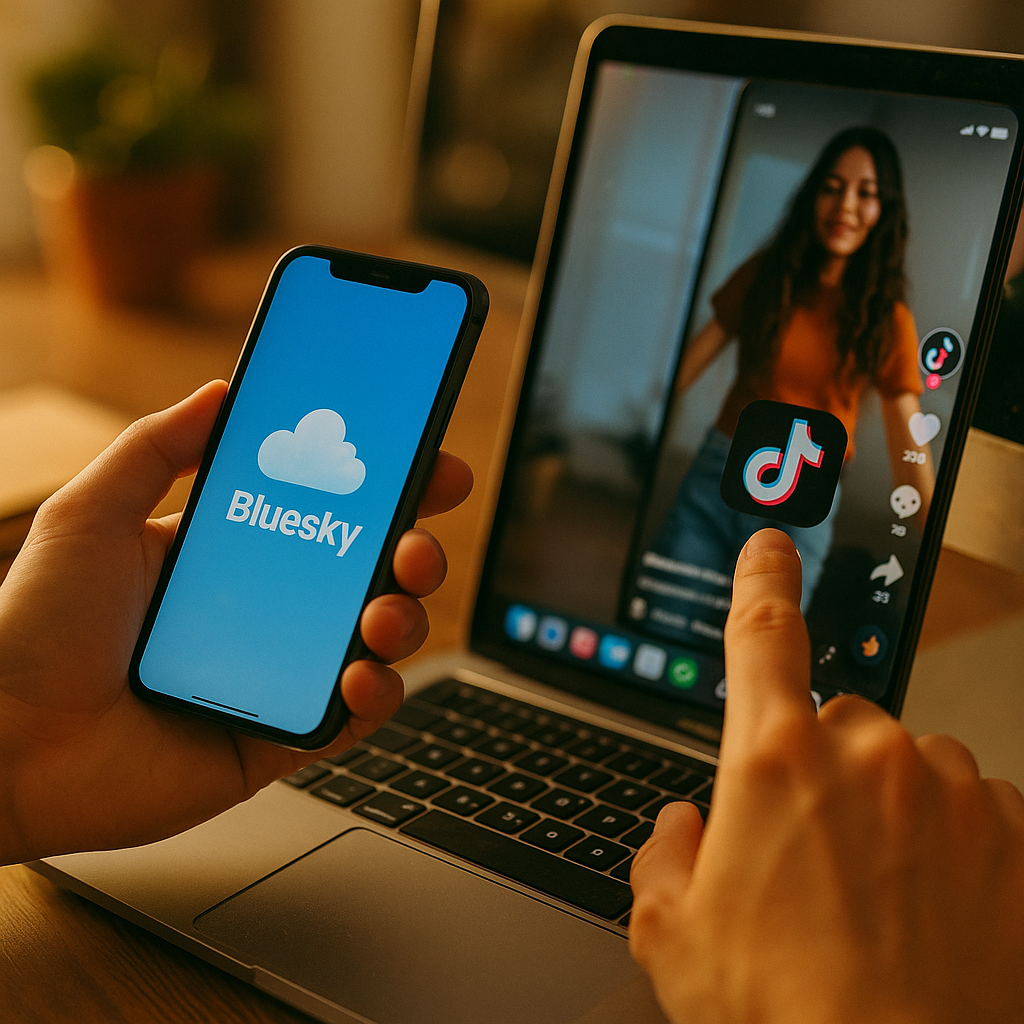
One ban hearing, one algorithm update, one geopolitical headline. That’s all it takes to wipe out a seven-figure TikTok program overnight. So when a decentralized network with a butterfly logo starts pulling in verified newsrooms, tech journalists, and a growing slice of culturally engaged younger users, smart marketers stop snickering and start testing. Bluesky for brands isn’t a mainstream media buy yet. But it is a hedge, and hedges are cheap insurance against platform risk you can’t control.
Why Bluesky Is Suddenly on the Media Plan
Platform concentration risk has become a board-level conversation, not just a marketing one. Brands that built entire influencer programs around TikTok Shop and Spark Ads watched legislative uncertainty turn a core channel into a contingency plan almost overnight. If you’ve already built out spark ads authorization workflows, you know how much operational infrastructure sits behind a single platform bet. Losing that overnight isn’t a hypothetical anymore.
Bluesky won’t replace TikTok’s reach. Nobody serious is claiming that. But diversification isn’t about finding a one-to-one substitute. It’s about reducing the variance of your total creator portfolio so one regulatory shock or algorithm change doesn’t tank quarterly performance.
Platform diversification isn’t a growth strategy, it’s a risk management strategy. The brands treating Bluesky as an insurance premium rather than a growth channel are the ones budgeting for it correctly.
Who’s Actually There? The Audience Reality Check
Bluesky’s user base skews toward media professionals, policy wonks, tech workers, writers, and a specific flavor of culturally online Gen X and millennial users who left X over moderation or algorithm fatigue. That’s not nothing. It’s a dense, high-intent, high-literacy audience that overlaps heavily with B2B buyers, journalists, and category experts.
It is not, however, a mass-reach consumer platform in the TikTok or Instagram sense. Daily active user counts remain far smaller than the legacy giants, and engagement patterns look more like early Twitter than modern short-form video feeds. eMarketer’s platform tracking consistently shows niche networks like Bluesky occupying a small but growing sliver of total social time spent, concentrated among specific demographic and professional clusters rather than broad population reach.
Translation for media planners: this is a precision channel, not a volume channel. If your brief calls for scale, look elsewhere. If it calls for credibility with a specific, influential audience, Bluesky earns a line item.
What Creator Marketing Actually Looks Like Here Right Now
There’s no mature creator marketplace on Bluesky yet. No native branded content disclosure tools, no built-in affiliate commerce layer, no algorithmic boost for sponsored posts the way TikTok or Instagram now offer. What exists is organic reach built on text, custom feeds, and a surprisingly active quote-post culture.
Early brand activity falls into three buckets:
- Thought leadership seeding. Brands and executives post commentary, data, and hot takes that mirror what’s working on LinkedIn thought leadership content, but with a looser, more conversational tone suited to Bluesky’s text-first culture.
- Journalist and analyst relationship building. Because so much of the media and policy world migrated here, PR and comms teams are using Bluesky as a relationship channel rather than a paid media channel.
- Custom feed sponsorship experiments. A handful of brands are working with creators who run popular custom feeds (curated topic streams that function like mini-communities) to get visibility among highly engaged niche audiences.
None of this looks like a TikTok Shop livestream. It looks more like community-native marketing in its earliest, scrappiest form, closer to what Discord or Substack sponsorships looked like a few years back.
The Creator Vetting Problem Nobody’s Solved Yet
Here’s the uncomfortable part. Bluesky doesn’t have mature creator discovery tooling. There’s no equivalent of TikTok’s Creator Search Insights or a built-in brand safety layer. If you’ve leaned on the kind of structured discovery outlined in our creator search insights brief structure, expect to do a lot more manual legwork here: scrolling follower graphs, checking custom feed subscriber counts, and reading six months of posting history by hand.
That manual overhead is a real cost. Budget for it. A junior strategist spending three hours vetting ten Bluesky accounts is still cheaper than a brand safety incident, but it’s not free, and it won’t scale the way automated vetting does on mature platforms.
Building the Pilot: Budget, Scope, and Measurement
Treat Bluesky the way you’d treat any early-stage channel test: small, time-boxed, and measured against a narrow hypothesis rather than a broad KPI set.
- Cap the pilot budget at single-digit percentage of monthly creator spend. This is a hedge, not a bet. Five to eight percent of monthly influencer budget is a reasonable ceiling for a first quarter test.
- Pick one objective, not three. Awareness among a specific professional niche, media relationship building, or thought leadership amplification each require different creator profiles and content formats. Don’t ask one pilot to do all three.
- Work with creators who already have engaged custom feeds. Reach on Bluesky is less about follower count and more about feed placement and quote-post velocity. A creator with 12,000 followers and a popular niche feed can outperform one with 80,000 followers and no feed presence.
- Measure engagement quality, not volume. Reply depth, quote-post sentiment, and click-through to owned properties matter more here than raw impression counts. Sprout Social’s social listening tools can help you track sentiment and share of voice even on smaller platforms where native analytics remain thin.
Set a 90-day review window. If the pilot can’t show directional signal on its single objective by then, pause it. Diversification hedges should be cheap to run and cheap to kill.
Compliance Still Applies, Even on a Niche Platform
It’s tempting to treat a smaller platform as lower stakes for disclosure and compliance. That’s a mistake. FTC endorsement guidelines don’t carve out exceptions for emerging networks, and regulators have shown zero patience for “we didn’t think the platform mattered” as a defense. The FTC’s endorsement guidance applies regardless of platform size or maturity.
Build disclosure into creator briefs from day one, the same way you would for a mature channel. If your team already has a compliance and reporting framework built for Threads collabs, port that structure over almost directly. Bluesky’s lack of native disclosure tagging actually makes manual compliance checks more important, not less.
A platform being small doesn’t make it low risk. It often makes compliance harder, because there’s less native tooling doing the enforcement work for you.
Where This Fits in a Diversified Creator Strategy
Bluesky shouldn’t replace any part of your core program. It should sit alongside other emerging-channel hedges, the way brands have tested Kick streaming partnerships or Discord server partnerships as counterweights to platform concentration risk. The common thread across all of these: small budgets, clear hypotheses, and a willingness to walk away if the signal isn’t there.
What makes Bluesky distinct is its audience composition. If your brand sells to or influences media, policy, tech, or academic audiences, the overlap here is unusually strong for a platform this size. A HubSpot analysis of emerging channel ROI would likely tell you what most media planners already sense: reach is low, but audience quality on niche platforms can offset that for the right vertical.
The brands winning early aren’t the ones chasing viral moments. They’re the ones quietly building relationships with the right 200 accounts, long before the platform matures enough for everyone else to show up.
Next Step
Run a capped, 90-day Bluesky pilot focused on one niche audience objective, measure it against engagement quality rather than reach, and decide by quarter’s end whether it earns a permanent line in your diversification budget.
Frequently Asked Questions
Is Bluesky worth the investment for brands right now?
For most consumer brands chasing mass reach, not yet. For brands targeting media, tech, policy, or academic audiences, a small pilot budget is reasonable given the platform’s audience density in those niches.
How does Bluesky creator marketing differ from TikTok or Instagram?
There’s no native branded content disclosure tool, no algorithmic sponsored content boost, and no mature creator marketplace. Discovery and vetting are largely manual, and reach depends heavily on custom feed placement rather than raw follower counts.
What budget should a first Bluesky test have?
Cap it at five to eight percent of monthly influencer spend and treat it as a 90-day test against one narrow objective, not a broad brand awareness campaign.
Do FTC disclosure rules apply to Bluesky creator posts?
Yes. FTC endorsement guidelines apply regardless of platform size or maturity, and the lack of native disclosure tooling on Bluesky makes manual compliance checks more important, not less.
How do you measure success on a platform with limited native analytics?
Focus on engagement quality signals like reply depth, quote-post sentiment, and click-through to owned properties rather than impression volume, and supplement with third-party social listening tools where possible.
Top Influencer Marketing Agencies
The leading agencies shaping influencer marketing in 2026
Agencies ranked by campaign performance, client diversity, platform expertise, proven ROI, industry recognition, and client satisfaction. Assessed through verified case studies, reviews, and industry consultations.
Moburst

-
2

The Shelf
Boutique Beauty & Lifestyle Influencer AgencyA data-driven boutique agency specializing exclusively in beauty, wellness, and lifestyle influencer campaigns on Instagram and TikTok. Best for brands already focused on the beauty/personal care space that need curated, aesthetic-driven content.Clients: Pepsi, The Honest Company, Hims, Elf Cosmetics, Pure LeafVisit The Shelf → -
3

Audiencly
Niche Gaming & Esports Influencer AgencyA specialized agency focused exclusively on gaming and esports creators on YouTube, Twitch, and TikTok. Ideal if your campaign is 100% gaming-focused — from game launches to hardware and esports events.Clients: Epic Games, NordVPN, Ubisoft, Wargaming, Tencent GamesVisit Audiencly → -
4

Viral Nation
Global Influencer Marketing & Talent AgencyA dual talent management and marketing agency with proprietary brand safety tools and a global creator network spanning nano-influencers to celebrities across all major platforms.Clients: Meta, Activision Blizzard, Energizer, Aston Martin, WalmartVisit Viral Nation → -
5

The Influencer Marketing Factory
TikTok, Instagram & YouTube CampaignsA full-service agency with strong TikTok expertise, offering end-to-end campaign management from influencer discovery through performance reporting with a focus on platform-native content.Clients: Google, Snapchat, Universal Music, Bumble, YelpVisit TIMF → -
6

NeoReach
Enterprise Analytics & Influencer CampaignsAn enterprise-focused agency combining managed campaigns with a powerful self-service data platform for influencer search, audience analytics, and attribution modeling.Clients: Amazon, Airbnb, Netflix, Honda, The New York TimesVisit NeoReach → -
7

Ubiquitous
Creator-First Marketing PlatformA tech-driven platform combining self-service tools with managed campaign options, emphasizing speed and scalability for brands managing multiple influencer relationships.Clients: Lyft, Disney, Target, American Eagle, NetflixVisit Ubiquitous → -
8

Obviously
Scalable Enterprise Influencer CampaignsA tech-enabled agency built for high-volume campaigns, coordinating hundreds of creators simultaneously with end-to-end logistics, content rights management, and product seeding.Clients: Google, Ulta Beauty, Converse, AmazonVisit Obviously →