


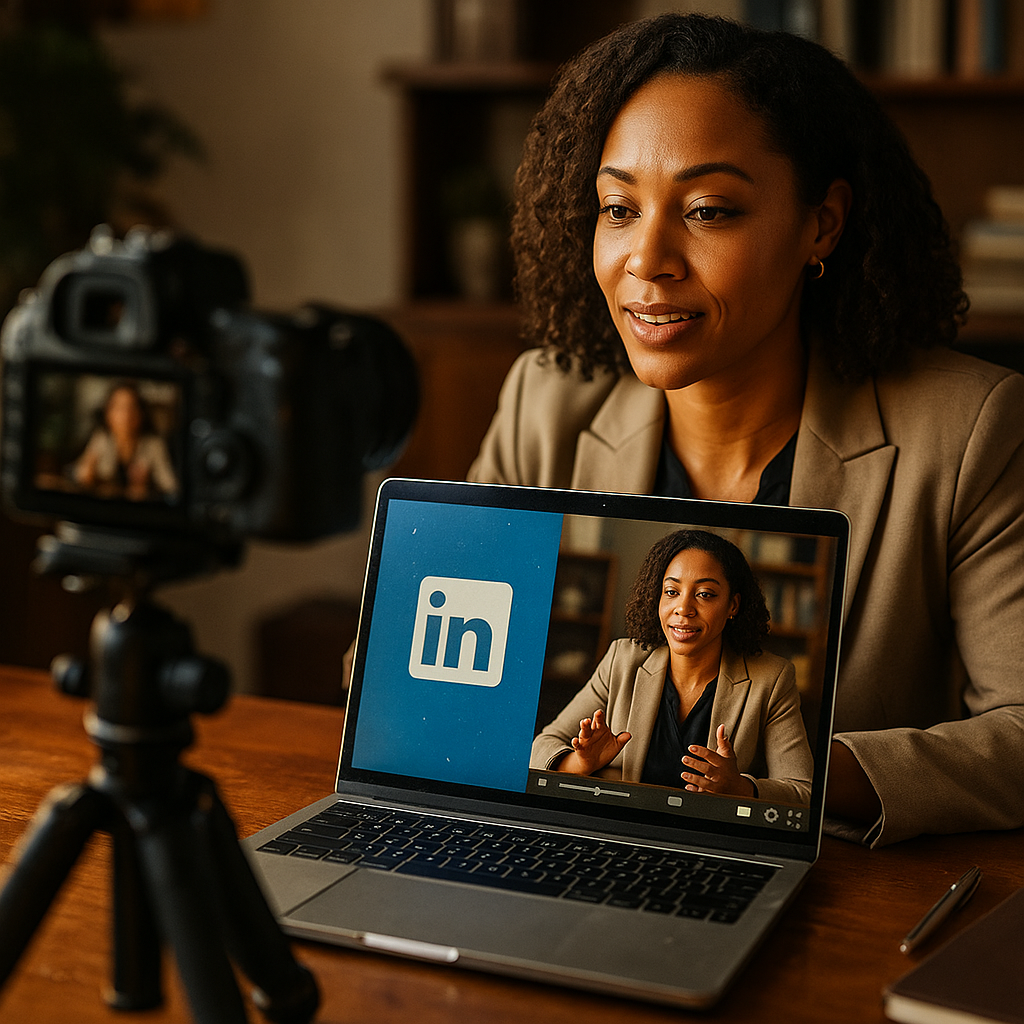
LinkedIn’s algorithm now pushes vertical native video further than any other format on the platform, yet most B2B brands are still posting link-outs and static carousels. That gap is the opportunity. A LinkedIn native video playbook built around short, vertical, talking-head and screen-capture content is quietly becoming the highest-ROI lever in B2B content programs, and the brands treating it like a TikTok afterthought are leaving reach on the table.
Why LinkedIn Suddenly Cares About Vertical Video
LinkedIn spent years as the place where PDFs went to collect polite applause. That changed when the platform started building a dedicated video tab and leaning into a short-form feed experience that looks suspiciously like Reels or Shorts. The company has publicly said video consumption on the platform has climbed sharply year over year, and internal creator reports from LinkedIn itself point to video posts earning meaningfully higher dwell time than text or image posts.
Here’s the part brand teams miss: LinkedIn isn’t trying to become TikTok. It’s trying to keep professionals scrolling longer during work hours, and vertical video does that better than anything else in the format mix. If you’re still uploading horizontal webinar clips or recycled YouTube content, you’re optimizing for a feed that no longer exists.
Native vertical video on LinkedIn is currently getting algorithmic priority similar to what Reels got on Instagram in its early push years, a window that won’t stay this generous forever.
What “Native” Actually Means Here (and Why It Matters for Reach)
Native isn’t a buzzword, it’s a ranking signal. LinkedIn’s algorithm deprioritizes posts that route users off-platform, which is exactly what a YouTube embed or a link to a Vimeo-hosted webinar does. Upload the file directly to LinkedIn, in vertical orientation, and you’re working with the algorithm instead of against it.
- File format: MP4 uploaded directly, not linked, ideally under 30 seconds to 90 seconds for top-of-funnel thought leadership clips.
- Orientation: 9:16 vertical, captioned by default since a large share of LinkedIn video is watched muted in open-plan offices.
- Hook window: First 1.5 seconds need a visual or verbal hook. LinkedIn’s scroll speed on mobile is faster than most brand teams assume.
- Caption overlay: Built-in captions beat relying on LinkedIn’s auto-captioning, which still mangles industry jargon and acronyms.
This mirrors a pattern we’ve documented on other platforms, where native formatting consistently outperforms off-platform links. The same logic drove the recommendations in our YouTube Shorts algorithm guide, and it holds true here: platforms reward content that keeps users inside the walls.
The Thought Leadership Trap: Polished Isn’t the Point
Here’s where a lot of corporate marketing teams stumble. They hand the vertical video mandate to the same production team that made the glossy brand film, and the result looks like a bank commercial. It underperforms every time.
LinkedIn’s vertical feed rewards the creator aesthetic: a founder talking into a phone camera in a hallway, a CMO reacting to a stat on screen, an analyst walking through a chart with a Sharpie. The production value that wins on LinkedIn right now is intentionally lower than what brand teams are used to greenlighting. Audiences have been trained by TikTok and Reels to trust rougher edges as a signal of authenticity, and that training has fully transferred to B2B feeds.
Executives who are camera-shy are the real bottleneck, not budget. A founder who records three 45-second takes on their phone during a commute will outperform a six-figure video shoot nine times out of ten, because the former feels like a person and the latter feels like an ad.
What the Format Mix Should Look Like
- Executive POV clips: leadership reacting to industry news, earnings, or a competitor’s move, filmed selfie-style.
- Screen-capture explainers: walking through a dashboard, a report, or a client-facing deck with voiceover.
- Behind-the-scenes fragments: a team debrief, a product build moment, a client call recap (with permission).
- Data reaction clips: a person on camera responding to a chart or Statista stat relevant to their industry.
Building the Creator Layer Inside a B2B Org
The hardest part of a LinkedIn native video program isn’t the format, it’s finding the people willing to be on camera consistently. Most B2B brands have two or three executives who are comfortable talking to a lens, and that’s not enough volume to sustain a weekly cadence.
The fix is building an internal creator bench: subject matter experts, account managers, product leads, even customer success reps who have a point of view and a willingness to record. Treat it like an ambassador program, not a mandate. Some of the mechanics overlap with what we outlined in our ambassador communities playbook: clear content pillars, light editorial guardrails, and recognition for the people who show up consistently rather than a one-time stipend.
External creators matter too. Partnering with recognized B2B voices on LinkedIn, the kind who already have engaged niche followings in SaaS, finance, or manufacturing, gives a brand reach it can’t manufacture internally. If you’re already running creator partnerships on other channels, the vetting and briefing discipline from our brief structure guide translates well to LinkedIn, even though the platform mechanics differ.
Turning Organic Clips Into Paid and Owned Assets
A native video that performs organically is a signal, not a one-off win. The next move is repurposing it. LinkedIn’s ad platform lets brands run Thought Leadership Ads and boosted organic posts, which means a vertical clip that earned strong watch time organically can be pushed into a paid campaign without re-shooting anything.
This is also where the format connects to other owned channels. A strong vertical clip can be re-cut into a carousel for static feeds, similar to the repurposing logic in our carousel ads from creator posts guide, giving you two distinct ad units from a single production effort. It’s an efficient way to stretch a modest content budget across formats instead of commissioning separate assets for each one.
Brands running influencer or creator programs across multiple platforms should also think about wear out. A thought leadership clip that performs for six weeks will eventually plateau, and the same refresh logic we cover in our ad wear out guide applies here: rotate hooks, swap the on-camera talent, and retire a format before engagement visibly drops.
Measurement: What Actually Counts as ROI Here
Vanity metrics are tempting on LinkedIn because the platform surfaces impressions prominently. Ignore them. The metrics that matter for B2B thought leadership video are watch time past three seconds, comment quality (not just volume), and profile visits generated from the video post. LinkedIn’s native analytics dashboard, available at business.linkedin.com, breaks these out at the post level if you’re posting from a Company Page or using Creator Mode on a personal profile.
For brands trying to tie this back to pipeline, the honest answer is that attribution is messy. Thought leadership video rarely drives a last-click conversion. What it does is shorten sales cycles, because prospects arrive at a discovery call having already watched three or four clips from the team. Track this with a simple self-reported attribution question in your sales qualification process rather than forcing it through a UTM link that video doesn’t naturally support.
Benchmarking data from sources like eMarketer and Sprout Social consistently shows B2B video engagement rates outperforming static posts by a wide margin, which gives finance teams the directional data they need to justify headcount or a modest production budget for this motion.
A Realistic Starting Cadence
- Weeks one to two: identify three internal voices willing to go on camera, record a backlog of five to seven clips each.
- Weeks three to six: post two to three vertical clips per week, track watch time and comment quality, drop anything underperforming after two posts.
- Month two onward: introduce one external creator partnership, boost top-performing organic clips with a modest paid budget.
Common Mistakes That Kill Performance Early
Most failed LinkedIn video programs die from the same handful of errors. Posting horizontal video cropped awkwardly into a vertical frame. Treating every clip like a product ad instead of a point of view. Going silent after three weeks because leadership expected an immediate pipeline lift. And perhaps the most common: outsourcing the voice entirely to an agency, which strips the authenticity that made the format work in the first place.
Compliance teams should also build light guardrails before scaling this, particularly around what employees can say on camera regarding competitors, pricing, or unreleased product features. A one-page internal guide beats a 20-page policy nobody reads.
FAQs
Frequently Asked Questions
What length performs best for LinkedIn native vertical video?
Clips between 30 and 90 seconds tend to get the strongest combination of reach and watch time for thought leadership content. Anything longer should be reserved for proven formats with an established audience, like a recurring executive series.
Does LinkedIn actually prioritize native video over linked video?
Yes. Posts that keep viewers on-platform consistently outperform posts linking to YouTube or Vimeo, because LinkedIn’s ranking system deprioritizes off-platform clicks in favor of session time.
Do we need professional production for this to work?
No, and in many cases lower production value performs better because it reads as authentic rather than scripted. A phone camera, good lighting, and a clear point of view outperform a polished studio shoot for this specific format.
How do we measure ROI on LinkedIn thought leadership video?
Track watch time past three seconds, comment quality, and profile visits rather than impressions alone. Pair this with self-reported attribution from your sales team to capture pipeline influence that doesn’t show up in last-click data.
Should we use employees or external creators for this format?
Both. Internal subject matter experts build authentic brand voice at low cost, while external B2B creators with established niche audiences extend reach beyond your existing follower base.
Start small: pick three internal voices, commit to two vertical clips a week for six weeks, and judge the program on watch time and comment quality before touching a paid budget.
Top Influencer Marketing Agencies
The leading agencies shaping influencer marketing in 2026
Agencies ranked by campaign performance, client diversity, platform expertise, proven ROI, industry recognition, and client satisfaction. Assessed through verified case studies, reviews, and industry consultations.
Moburst

-
2

The Shelf
Boutique Beauty & Lifestyle Influencer AgencyA data-driven boutique agency specializing exclusively in beauty, wellness, and lifestyle influencer campaigns on Instagram and TikTok. Best for brands already focused on the beauty/personal care space that need curated, aesthetic-driven content.Clients: Pepsi, The Honest Company, Hims, Elf Cosmetics, Pure LeafVisit The Shelf → -
3

Audiencly
Niche Gaming & Esports Influencer AgencyA specialized agency focused exclusively on gaming and esports creators on YouTube, Twitch, and TikTok. Ideal if your campaign is 100% gaming-focused — from game launches to hardware and esports events.Clients: Epic Games, NordVPN, Ubisoft, Wargaming, Tencent GamesVisit Audiencly → -
4

Viral Nation
Global Influencer Marketing & Talent AgencyA dual talent management and marketing agency with proprietary brand safety tools and a global creator network spanning nano-influencers to celebrities across all major platforms.Clients: Meta, Activision Blizzard, Energizer, Aston Martin, WalmartVisit Viral Nation → -
5

The Influencer Marketing Factory
TikTok, Instagram & YouTube CampaignsA full-service agency with strong TikTok expertise, offering end-to-end campaign management from influencer discovery through performance reporting with a focus on platform-native content.Clients: Google, Snapchat, Universal Music, Bumble, YelpVisit TIMF → -
6

NeoReach
Enterprise Analytics & Influencer CampaignsAn enterprise-focused agency combining managed campaigns with a powerful self-service data platform for influencer search, audience analytics, and attribution modeling.Clients: Amazon, Airbnb, Netflix, Honda, The New York TimesVisit NeoReach → -
7

Ubiquitous
Creator-First Marketing PlatformA tech-driven platform combining self-service tools with managed campaign options, emphasizing speed and scalability for brands managing multiple influencer relationships.Clients: Lyft, Disney, Target, American Eagle, NetflixVisit Ubiquitous → -
8

Obviously
Scalable Enterprise Influencer CampaignsA tech-enabled agency built for high-volume campaigns, coordinating hundreds of creators simultaneously with end-to-end logistics, content rights management, and product seeding.Clients: Google, Ulta Beauty, Converse, AmazonVisit Obviously →