


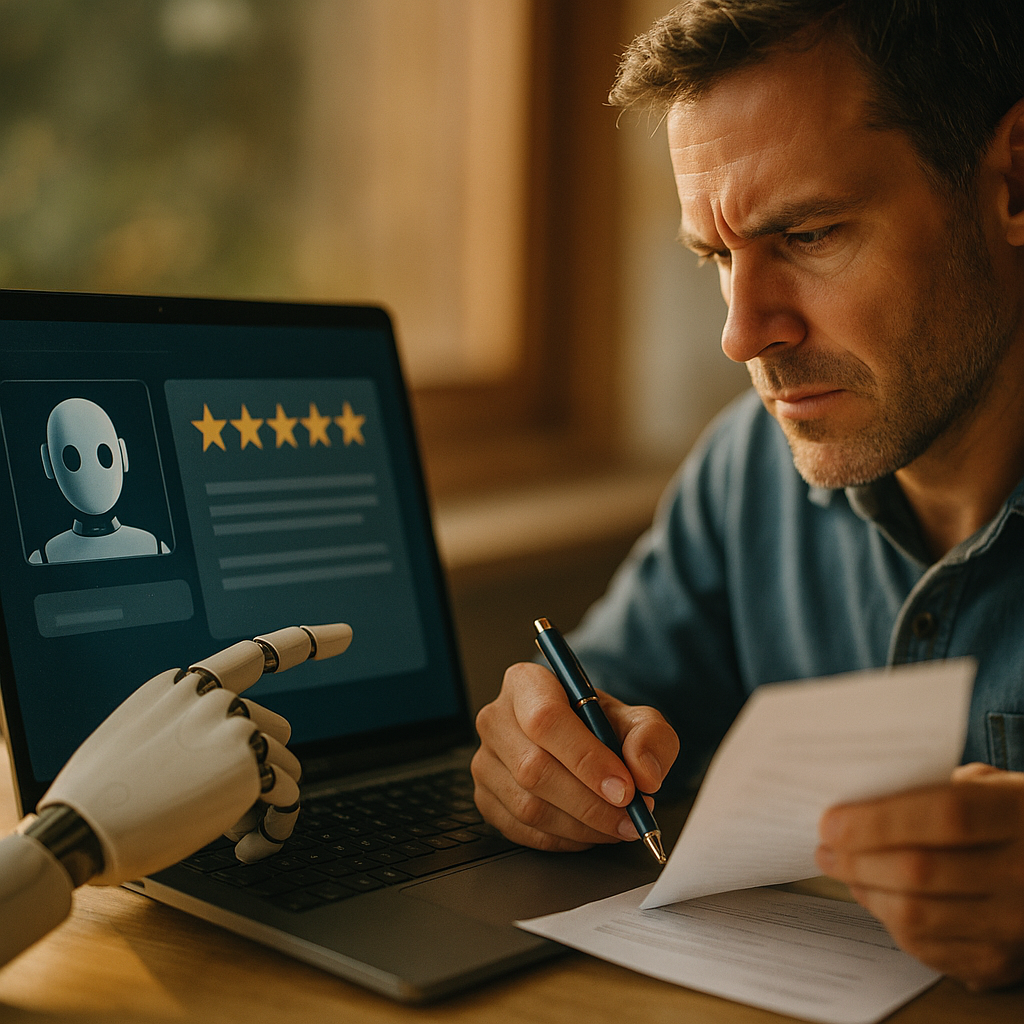
Nearly 40% of consumers now say they trust an AI shopping assistant’s product summary as much as a friend’s recommendation, according to recent eMarketer research on conversational commerce. The problem? Those summaries increasingly lean on creator reviews the bot never verified, from creators who may not exist, be compensated, or even endorse the product anymore. Agentic AI citing creator reviews is quietly becoming the next compliance headache for brand marketers.
What “Agentic AI Citing Creator Reviews” Actually Means
We’re not talking about a chatbot pasting a quote from a blog post. Agentic AI systems, the kind embedded in shopping assistants, retail media platforms, and branded commerce bots, now autonomously crawl, summarize, and cite creator content to answer customer questions in real time. “Does this serum work for sensitive skin?” The bot doesn’t just search. It pulls fragments from TikTok captions, YouTube comments, and affiliate blog posts, stitches them into a confident answer, and attributes it to a named creator.
That’s a massive leap from static review aggregation. It means your brand’s product narrative is being assembled on the fly by a system you didn’t train and can’t fully audit, using creator content you may not have licensed. For a deeper look at how this pattern is reshaping shopping journeys, see how shopping agents rebuild content during peak retail periods.
If a brand can’t trace an AI citation back to a verified, rights-cleared creator statement, that citation is a liability wearing the costume of social proof.
The Verification Gap No One’s Budgeting For
Most brands have review moderation workflows for owned channels. Few have anything resembling a verification layer for what agentic AI pulls from the open web and feeds back to shoppers. That gap matters more than it sounds.
Consider three failure modes that are already showing up in pilot programs:
- Stale endorsements. A creator posted a glowing review eighteen months ago, then quietly stopped using the product or even switched to a competitor. The bot doesn’t know that. It cites the old post as current sentiment.
- Fabricated attribution. Generative summarization models sometimes blend multiple creator voices into one composite “review,” attributing a sentence to a specific handle that never said it verbatim.
- Undisclosed paid relationships surfaced as organic opinion. If the bot cites a sponsored post without flagging the material connection, that’s a disclosure failure the brand inherits, not just the creator.
Each of these is a trust problem dressed up as a technical glitch. And trust, once a shopper catches the bot being wrong, doesn’t come back easily.
Who Owns the Liability When the Bot Is Wrong?
Short answer: the brand, usually. Platforms hosting agentic shopping assistants will point to terms of service. Creators will point to the fact they never consented to being cited in a synthesized product answer. The FTC has made clear that endorsement disclosure rules apply regardless of the medium, and that includes AI-generated summaries that repackage creator opinion as a recommendation.
This is where brand legal and marketing teams need to stop treating AI citation as a technical integration problem and start treating it as a compliance surface. The same logic that governs influencer contracts should extend to how those creators’ words get reused downstream. We’ve covered why contract redlines still need human checkpoints even as agentic tools speed up negotiation, and the same caution applies here: speed without verification just moves risk faster.
Five Things to Verify Before Launch
Before any agentic AI tool goes live citing creator reviews on your product pages, app, or retail media placements, run it through this checklist. Skipping a line item here isn’t a shortcut, it’s a deferred problem.
- Source freshness. Does the system timestamp the creator content it’s citing, and does it deprioritize or flag content older than a defined window (say, six months for fast-moving categories)?
- Rights and licensing status. Has the creator granted usage rights that cover AI summarization and citation, not just the original post placement? Standard influencer contracts written two years ago almost never anticipated this use case.
- Disclosure tagging. Can the bot distinguish between paid partnership content and organic mentions, and does it surface that distinction to the shopper?
- Attribution accuracy. Does the output link back to the exact source post, or does it paraphrase in a way that could misrepresent what the creator actually said?
- Audit trail. If a regulator or a creator’s lawyer asks “show me where this quote came from,” can your team produce that trail in minutes, not days?
None of this is theoretical. Brands running retail media AI engines are already discovering that these tools simply don’t function correctly without clean, structured creator rights data feeding them. Garbage rights data in, garbage (or legally exposed) citations out.
Data Quality Is the Real Bottleneck, Not the Model
It’s tempting to blame the AI vendor when a citation goes sideways. Usually the actual culprit is upstream: fragmented, inconsistent creator data that was never built to support agentic use cases in the first place. An agentic AI readiness audit consistently turns up the same pattern across brands: creator contracts in one system, performance data in another, disclosure status tracked in a spreadsheet nobody updates after the campaign ends.
When that fragmentation exists, no amount of model tuning fixes the citation problem. You can have the most sophisticated large language model in the category and it will still cite a lapsed partnership as current, because nothing in the data pipeline told it otherwise.
This is also where match score transparency starts to matter. If your influencer platform is scoring and ranking creators for the AI to pull from, you need audit trails compliance teams can actually trust, not a black-box score that legal can’t interrogate when something goes wrong.
A verification layer is cheaper than a retraction. Build the checklist before launch, not after the first customer complaint goes viral.
Building a Verification Workflow That Doesn’t Slow You Down
None of this means grinding your AI rollout to a halt for a six-month legal review. It means building verification into the pipeline as a standing function, not a one-time gate.
Practical steps that mid-to-senior marketing teams are already implementing:
- Tag every creator contract with an explicit AI citation clause, covering summarization, synthesis, and third-party agentic use, not just original post reuse.
- Set a review cadence (quarterly works for most categories) to refresh which creator content is “citeable” versus retired.
- Require vendors powering your agentic shopping tools to expose a citation log, not just a final answer.
- Loop compliance and legal into the governance framework before scaling, not after a creator or regulator flags a problem.
Cross-functional coordination matters more here than almost anywhere else in the AI marketing stack. Legal, creator partnerships, and the data team all touch this problem, and if they’re working from separate systems, verification gaps are guaranteed. The brands getting this right have largely borrowed from the cross-functional pod model that’s already fixing similar handoff problems elsewhere in the marketing org.
Platforms like Sprout Social and HubSpot have started publishing guidance on AI content provenance for exactly this reason: enterprise clients are asking how to trace AI-generated claims back to a verifiable human source. That demand signal alone tells you where regulators and platforms are heading next.
What This Means for Budget and Timeline
Verification work has a cost, and pretending otherwise just moves that cost to the post-launch crisis budget. Build a line item for creator rights auditing and citation logging into any agentic AI shopping initiative from the start. It’s a fraction of what a public attribution error, or an FTC inquiry, would cost in both dollars and trust. Marketing leaders tying AI spend to measurable outcomes should look at how a four layer framework connects governance investment directly to revenue protection, not just risk avoidance.
Frequently Asked Questions
FAQs
What does it mean when an AI bot “cites” a creator review?
It means the agentic AI system has pulled a quote, summary, or sentiment from a creator’s post, video, or comment and presented it to a shopper as supporting evidence for a product claim, often attributing it directly to the creator’s name or handle.
Is it legal for an AI shopping assistant to cite a creator’s review without permission?
It depends on licensing terms and jurisdiction, but reusing creator content for AI summarization typically requires rights that go beyond standard social posting agreements. Brands should confirm their creator contracts explicitly cover AI citation and synthesis use cases.
How can brands tell if a creator citation is outdated?
Verification systems should timestamp source content and flag anything beyond a defined freshness window, generally three to six months for fast-moving categories like beauty or tech. Without that check, bots routinely cite lapsed or reversed endorsements as current opinion.
Who is liable if an AI bot misrepresents a creator’s review?
Primary liability typically falls on the brand deploying the AI tool, since the brand controls the shopping experience and benefits commercially from the citation. Disclosure and endorsement rules from bodies like the FTC apply regardless of whether a human or an AI system generated the claim.
What’s the first step in building a verification process?
Start with a data audit: map where creator contracts, rights status, and disclosure records live, and confirm they’re structured in a way an AI system can actually reference before citing content.
Next step: before your next agentic AI rollout touches a single customer-facing citation, run your creator data through the five-point verification checklist above, and don’t launch until legal can produce an audit trail in minutes, not days.
Top Influencer Marketing Agencies
The leading agencies shaping influencer marketing in 2026
Agencies ranked by campaign performance, client diversity, platform expertise, proven ROI, industry recognition, and client satisfaction. Assessed through verified case studies, reviews, and industry consultations.
Moburst

-
2

The Shelf
Boutique Beauty & Lifestyle Influencer AgencyA data-driven boutique agency specializing exclusively in beauty, wellness, and lifestyle influencer campaigns on Instagram and TikTok. Best for brands already focused on the beauty/personal care space that need curated, aesthetic-driven content.Clients: Pepsi, The Honest Company, Hims, Elf Cosmetics, Pure LeafVisit The Shelf → -
3

Audiencly
Niche Gaming & Esports Influencer AgencyA specialized agency focused exclusively on gaming and esports creators on YouTube, Twitch, and TikTok. Ideal if your campaign is 100% gaming-focused — from game launches to hardware and esports events.Clients: Epic Games, NordVPN, Ubisoft, Wargaming, Tencent GamesVisit Audiencly → -
4

Viral Nation
Global Influencer Marketing & Talent AgencyA dual talent management and marketing agency with proprietary brand safety tools and a global creator network spanning nano-influencers to celebrities across all major platforms.Clients: Meta, Activision Blizzard, Energizer, Aston Martin, WalmartVisit Viral Nation → -
5

The Influencer Marketing Factory
TikTok, Instagram & YouTube CampaignsA full-service agency with strong TikTok expertise, offering end-to-end campaign management from influencer discovery through performance reporting with a focus on platform-native content.Clients: Google, Snapchat, Universal Music, Bumble, YelpVisit TIMF → -
6

NeoReach
Enterprise Analytics & Influencer CampaignsAn enterprise-focused agency combining managed campaigns with a powerful self-service data platform for influencer search, audience analytics, and attribution modeling.Clients: Amazon, Airbnb, Netflix, Honda, The New York TimesVisit NeoReach → -
7

Ubiquitous
Creator-First Marketing PlatformA tech-driven platform combining self-service tools with managed campaign options, emphasizing speed and scalability for brands managing multiple influencer relationships.Clients: Lyft, Disney, Target, American Eagle, NetflixVisit Ubiquitous → -
8

Obviously
Scalable Enterprise Influencer CampaignsA tech-enabled agency built for high-volume campaigns, coordinating hundreds of creators simultaneously with end-to-end logistics, content rights management, and product seeding.Clients: Google, Ulta Beauty, Converse, AmazonVisit Obviously →