


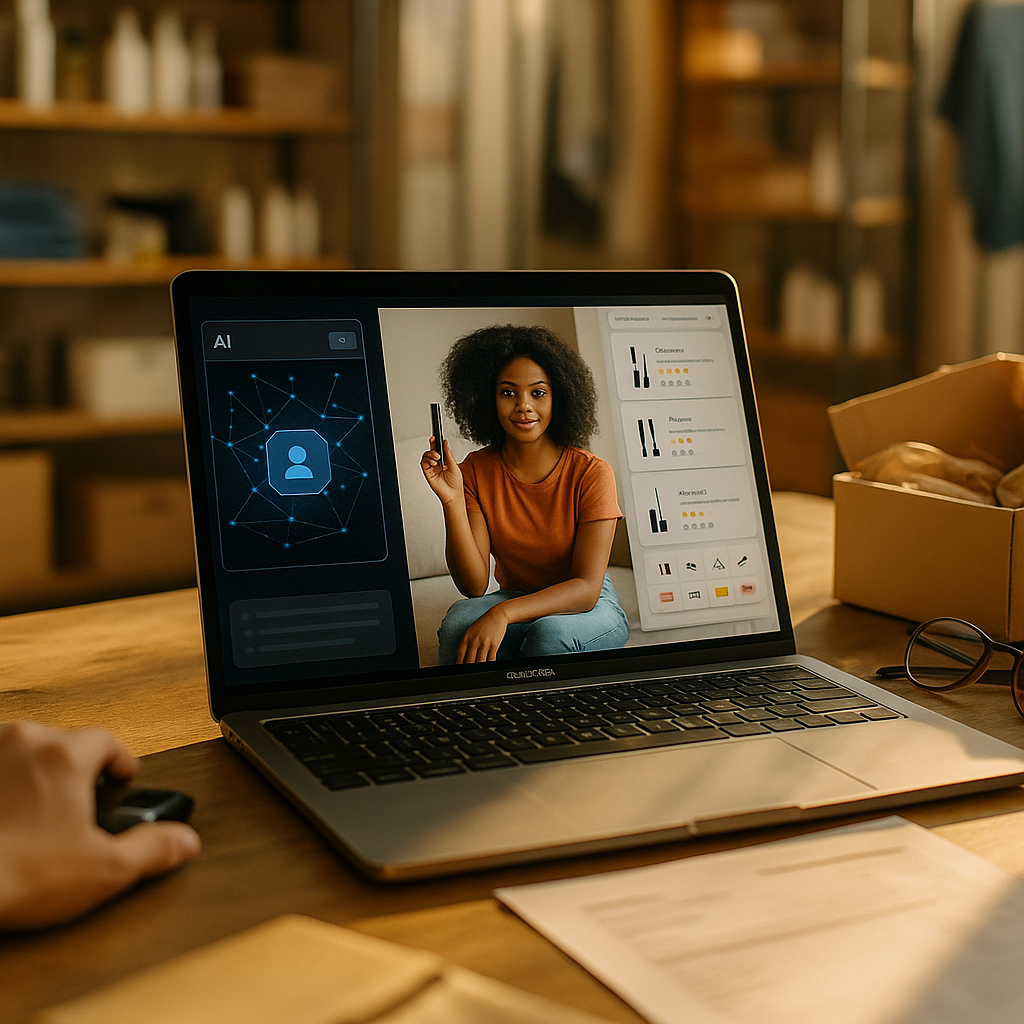
Retail media networks now generate more ad revenue than most cable TV companies, and the next battleground isn’t the search results page. It’s the product page itself. Amazon, Walmart Connect, and Instacart are quietly feeding creator content into onsite personalization engines, swapping stock product shots for UGC-style video and reviews on the fly, based on who’s browsing. If your creator assets aren’t built for that pipeline, you’re leaving a growing slice of retail media spend on the table.
The Convergence Nobody Planned For
Two trends collided faster than most marketing orgs could organize a meeting about it. Retail media matured into a full-stack advertising business, and creator content became the highest-converting asset type on product detail pages. eMarketer has tracked retail media as one of the fastest-growing ad categories for several straight years, and eMarketer’s retail media coverage consistently shows onsite placements outperforming traditional banner inventory on conversion.
Retailers noticed. So now Amazon’s personalization engine can surface a creator’s unboxing clip instead of a manufacturer’s studio photo, depending on shopper signals like browsing history, device, or even time of day. Walmart Connect has built similar machinery around its Walmart Creator program. The product page is no longer static. It’s an inference engine deciding, in milliseconds, which piece of content will move a specific shopper closer to checkout.
The product detail page used to be the end of the funnel. Now it’s a live personalization surface deciding which creator asset converts a specific shopper, in real time.
How the Pipe Actually Works
Strip away the vendor marketing language and the mechanics are fairly simple. A retail media AI engine ingests a pool of eligible creator content, tags it against product attributes and audience segments, then runs continuous A/B style testing to decide which asset wins the impression for a given shopper profile. It’s dynamic creative optimization, just repurposed for owned retail surfaces instead of paid social. If that sounds familiar, it should. We covered the mechanics of this testing logic in our piece on dynamic creative testing, and the same scoring principles now apply inside retailer-owned environments.
The inputs matter enormously. Engines need clean metadata: product SKU tags, creator disclosure status, usage rights windows, format specs, and performance history. Feed it messy or incomplete data and the engine either defaults to generic content or, worse, surfaces an asset whose usage rights expired three months ago. That’s not a hypothetical. It’s a recurring issue brands are running into as creator content pipelines scale faster than the governance layer underneath them.
Why Creator Content Wins the Conversion Fight
Shoppers have gotten good at ignoring polished product photography. They trust a slightly shaky phone video of a real person using the product far more than a studio render on a white background. That’s not an opinion, it’s reflected in conversion lift data across retail media case studies, and it tracks with broader consumer trust research from Sprout Social’s consumer trust studies showing audiences rank creator recommendations above brand-produced content.
Retail media AI engines are simply optimizing toward what already works. Give the algorithm a library of creator clips with strong hook rates and completion scores, and it will favor them over branded assets almost every time. This is where creator content stops being a top-of-funnel awareness play and becomes a bottom-of-funnel conversion lever, sitting on the exact page where the purchase decision gets made.
The catch: engines can only favor content they can actually read and score. A creator video with no structured metadata is invisible to the system, no matter how good it looks to a human. This is the same quality-scoring gap we explored in AI video quality scoring, and it applies just as directly to retail media as it does to paid social.
The Data Problem Nobody Wants to Own
Here’s the uncomfortable part. Most brands’ creator content libraries weren’t built with retail media ingestion in mind. Assets live scattered across influencer platforms, Dropbox folders, and agency drives, tagged inconsistently if at all. Feeding that mess into a retail media AI engine is like handing a chef a pantry with no labels and asking for a Michelin-star dish.
We’ve written before about how fragmented creator data undermines AI systems generally, and the CRM data gaps that break downstream personalization are the same gaps breaking retail media feeds. If your martech stack can’t tell an AI engine which creator content is rights-cleared for a specific SKU and date range, the engine won’t use it, full stop.
- Standardized tagging by SKU, category, and usage window
- Rights metadata embedded at the asset level, not tracked in a separate spreadsheet
- Performance history attached to each clip so engines can prioritize proven winners
- A single source of truth feeding both paid social and retail media channels
Brands that solve this once, at the data layer, get to reuse the same clean asset pool across Amazon, Walmart Connect, Instacart, and their own site. Brands that don’t end up rebuilding tagging workflows for every retailer separately, which is an operational drain nobody budgets for upfront.
Compliance and Rights: The Fine Print That Breaks Programs
Usage rights are where this gets genuinely risky, not just inefficient. A creator contract that grants rights for paid social use doesn’t automatically cover placement inside a retailer’s onsite personalization engine. That’s a different distribution context, and in some reads of platform policy and advertising law, it’s a different usage right entirely.
The FTC has been explicit about disclosure requirements following creator content wherever it travels, and retail media placements don’t get a pass just because they sit on a product page instead of a social feed. Review the FTC’s endorsement guidelines before assuming your existing creator contracts cover retail media redistribution. If your legal team hasn’t explicitly addressed onsite personalization in creator agreements, assume you have a gap.
A usage rights clause written for paid social doesn’t automatically cover a retailer’s AI engine redistributing that same clip across thousands of personalized product pages.
This is also a contract redlining problem at scale. Brands running high volumes of creator partnerships can’t manually audit every agreement for retail media eligibility. That’s exactly the kind of bottleneck we discussed in AI-assisted contract review, where agentic tools can flag rights gaps fast, but someone still has to make the judgment call before content goes live on a retailer’s engine.
What This Means for Budget Allocation
If creator content is now a retail media performance lever, it changes how you should be thinking about spend. Budget that used to split cleanly between “influencer marketing” and “retail media” now needs a shared line item, because the content itself is the connective tissue. A clip produced for a TikTok campaign might generate incremental lift on Amazon months later, if it’s tagged and rights-cleared to travel there.
That shared-value math is hard to model with legacy attribution. It’s worth applying the kind of cross-channel thinking covered in our framework tying AI spend to revenue, adapted specifically for the handoff between creator production and retail media distribution. Brands that track this well start treating creator content production as a reusable asset pool with a long tail of retail media value, not a one-and-done campaign cost.
Practical next step for budget owners: ask your retail media vendor rep, directly, whether their personalization engine currently ingests creator content, and what metadata format it requires. Most will tell you. Few brands have asked yet, which is exactly why there’s still an advantage available to the ones who move first.
FAQs
Frequently Asked Questions
What is a retail media AI engine?
A retail media AI engine is the personalization system retailers like Amazon and Walmart Connect use to decide which content, including creator videos and reviews, appears on a product page for a given shopper, based on signals like browsing behavior and purchase history.
Does creator content actually improve retail media conversion rates?
Early retail media case studies and broader consumer trust research consistently show creator and UGC-style content outperforming traditional product photography on conversion, which is why retail media engines increasingly prioritize it when eligible content is available.
Do existing influencer contracts cover retail media placements?
Not automatically. Many creator agreements only grant usage rights for specific channels like paid social, and brands need to explicitly confirm rights extend to onsite retail media distribution before feeding that content into a retailer’s personalization engine.
What data do brands need to feed creator content into these systems?
At minimum, brands need SKU-level tagging, clear usage rights windows, disclosure compliance status, and performance history attached to each creator asset so the retail media engine can score and prioritize it correctly.
Which retailers currently support creator content in onsite personalization?
Amazon and Walmart Connect have the most developed programs for ingesting creator content into onsite personalization, with Instacart and other retail media networks building similar capabilities as the category matures.
The brands winning this cycle aren’t the ones with the biggest creator budgets, they’re the ones whose content and rights data are clean enough for an AI engine to actually use. Audit your creator asset metadata this quarter, before your retail media rep asks you for it first.
Top Influencer Marketing Agencies
The leading agencies shaping influencer marketing in 2026
Agencies ranked by campaign performance, client diversity, platform expertise, proven ROI, industry recognition, and client satisfaction. Assessed through verified case studies, reviews, and industry consultations.
Moburst

-
2

The Shelf
Boutique Beauty & Lifestyle Influencer AgencyA data-driven boutique agency specializing exclusively in beauty, wellness, and lifestyle influencer campaigns on Instagram and TikTok. Best for brands already focused on the beauty/personal care space that need curated, aesthetic-driven content.Clients: Pepsi, The Honest Company, Hims, Elf Cosmetics, Pure LeafVisit The Shelf → -
3

Audiencly
Niche Gaming & Esports Influencer AgencyA specialized agency focused exclusively on gaming and esports creators on YouTube, Twitch, and TikTok. Ideal if your campaign is 100% gaming-focused — from game launches to hardware and esports events.Clients: Epic Games, NordVPN, Ubisoft, Wargaming, Tencent GamesVisit Audiencly → -
4

Viral Nation
Global Influencer Marketing & Talent AgencyA dual talent management and marketing agency with proprietary brand safety tools and a global creator network spanning nano-influencers to celebrities across all major platforms.Clients: Meta, Activision Blizzard, Energizer, Aston Martin, WalmartVisit Viral Nation → -
5

The Influencer Marketing Factory
TikTok, Instagram & YouTube CampaignsA full-service agency with strong TikTok expertise, offering end-to-end campaign management from influencer discovery through performance reporting with a focus on platform-native content.Clients: Google, Snapchat, Universal Music, Bumble, YelpVisit TIMF → -
6

NeoReach
Enterprise Analytics & Influencer CampaignsAn enterprise-focused agency combining managed campaigns with a powerful self-service data platform for influencer search, audience analytics, and attribution modeling.Clients: Amazon, Airbnb, Netflix, Honda, The New York TimesVisit NeoReach → -
7

Ubiquitous
Creator-First Marketing PlatformA tech-driven platform combining self-service tools with managed campaign options, emphasizing speed and scalability for brands managing multiple influencer relationships.Clients: Lyft, Disney, Target, American Eagle, NetflixVisit Ubiquitous → -
8

Obviously
Scalable Enterprise Influencer CampaignsA tech-enabled agency built for high-volume campaigns, coordinating hundreds of creators simultaneously with end-to-end logistics, content rights management, and product seeding.Clients: Google, Ulta Beauty, Converse, AmazonVisit Obviously →