


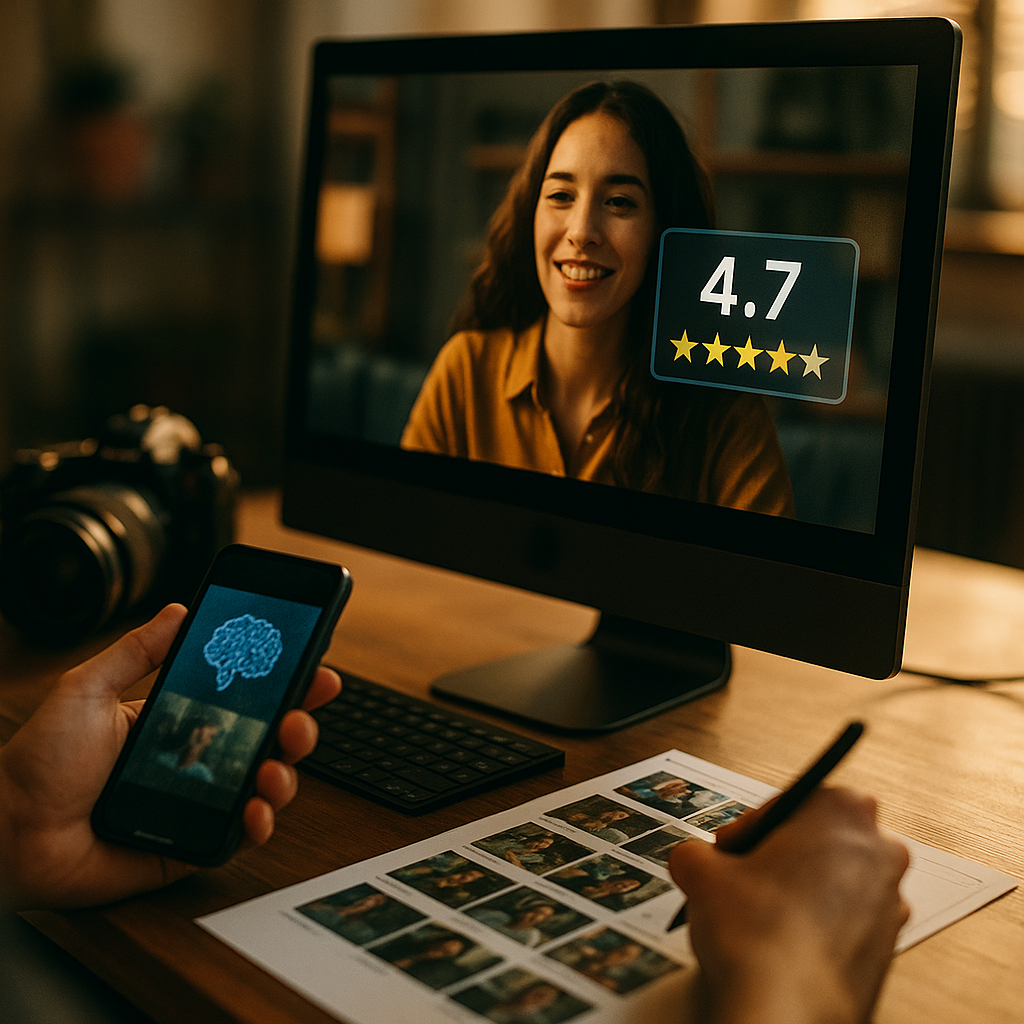
Seventy three percent of marketers say creator content review is their biggest bottleneck to scaling influencer programs, according to recent emarketer survey data. Yet most brands still rely on a coordinator eyeballing a video and guessing whether it “feels right.” That guesswork is expensive. AI video quality scoring is emerging as the fix, turning subjective creative judgment into a repeatable, auditable process that scales past the hundredth piece of content without breaking the team.
The Creator Content Quality Problem Nobody Wants to Own
Every brand marketer has lived this moment: a creator delivers a video that technically hits the brief, but something is off. Maybe the lighting is bad. Maybe the product is barely visible for the first eight seconds, which is exactly when most viewers decide to scroll past. Maybe the pacing kills retention before the call to action even loads. Nobody flagged it because nobody had a consistent standard to flag it against.
This isn’t a creative taste problem. It’s an operations problem dressed up as a creative one. Brands running hundreds of creator partnerships a quarter simply cannot manually review every deliverable with the same rigor a senior brand manager would apply to a hero campaign asset. Something has to give, and historically, quality has been the thing that gives.
The downstream cost is real. Low-quality creator content underperforms on watch time, gets suppressed by platform algorithms, and in the worst cases, damages brand perception at scale. A single viral piece of off-brand content can undo months of careful positioning work.
What AI Video Quality Scoring Actually Measures
AI video quality scoring tools analyze creator submissions against a defined rubric before they ever reach a human reviewer’s queue. Think of it as a pre-screen, not a replacement for editorial judgment. Most platforms in this category evaluate a combination of technical and performance-predictive signals:
- Technical production quality: resolution, audio clarity, lighting consistency, frame stability
- Brand compliance: logo visibility, required disclosures, prohibited claims, color and tone alignment
- Hook strength: whether the first three seconds predict retention based on patterns from similar high-performing content
- Pacing and structure: scene change frequency, narrative arc, CTA placement timing
- Platform fit: whether aspect ratio, caption readability, and sound design match what the destination platform’s algorithm tends to reward
The output is usually a composite score, often with sub-scores for each dimension, so a reviewer can see at a glance whether a video failed on compliance versus production value. That distinction matters operationally. A compliance failure needs a legal or brand safety review. A production failure might just need a reshoot note sent back to the creator.
The real value of AI video scoring isn’t catching the obviously bad content, it’s catching the mediocre content that would have slipped through a rushed manual review and underperformed quietly for weeks.
Why Manual Review Was Never Going to Scale
Do the math on a mid-size creator program. Three hundred creators, four deliverables each per quarter, that’s twelve hundred videos. If a reviewer spends even five minutes per video on a thoughtful pass, that’s one hundred hours of review work every quarter, just for first-pass approval. Add revision cycles and you’re easily doubling that number.
Most brand teams don’t have a hundred spare hours. So they cut corners, often without admitting it. Review becomes a rubber stamp. Quality standards drift lower every quarter because nobody has bandwidth to hold the line. AI scoring doesn’t eliminate human judgment, it concentrates human attention where it actually matters: the borderline cases and the strategic decisions, not the obvious passes and fails.
How This Connects to the Broader Creator Data Problem
Video quality scoring doesn’t live in isolation. It’s part of a larger shift toward treating creator operations as a data discipline rather than a relationship-management afterthought. The same brands struggling with content quality are often the ones whose creator matching data has quality gaps upstream, meaning the wrong creators get briefed in the first place, which makes quality problems downstream almost inevitable.
There’s a pattern here worth naming. Marketing teams have spent the past few years bolting AI onto broken processes and wondering why results are inconsistent. The same issue shows up in creator matching scores built on weak underlying data. A scoring tool, whether it’s matching creators or scoring video quality, is only as trustworthy as the data feeding it and the audit trail documenting its decisions.
That’s why the more mature platforms in this space are building in explainability. If a video gets flagged for low quality, the brand needs to see exactly why, not just accept a black-box number. This mirrors a broader industry push toward audit trails that compliance teams can actually trust, because an unexplainable score is a liability in any industry with regulatory exposure, and influencer marketing increasingly is one.
Compliance Is the Quiet Driver Behind Adoption
Ask a brand’s legal team what keeps them up at night about creator content and the answer rarely leads with “creative quality.” It leads with disclosure compliance. The FTC’s endorsement guidelines require clear and conspicuous disclosure when creators are compensated, and enforcement has picked up noticeably. AI quality scoring tools that bundle in automated disclosure detection, checking for #ad tags, verbal disclosures, or on-screen text within the required timeframe, are solving two problems with one scan: creative standards and legal exposure.
This dual function is a big part of why budget for these tools has been easier to approve than pure creative-review software historically was. It’s not just a nice-to-have for the brand team, it’s risk mitigation that finance and legal both recognize instantly.
Picking a Tool: What Actually Matters
Not all video scoring platforms are built the same, and the category is young enough that buyers should ask pointed questions before committing budget. A few things worth interrogating during evaluation:
- Training data transparency: was the model trained on content similar to your category, or generic creator video? A beauty brand’s hook benchmarks look nothing like a fintech app’s.
- Human-in-the-loop design: can reviewers override scores, and does the system learn from those overrides over time?
- Platform coverage: does it score TikTok, Instagram Reels, and YouTube Shorts with platform-specific benchmarks, or one generic standard applied everywhere?
- Integration with existing workflow: does it plug into your current creator management platform, or does it require a separate login and manual export?
- Score explainability: can you show a creator or a compliance reviewer exactly why a score landed where it did?
That last point deserves emphasis. Brands that have gotten burned by opaque AI scoring in creator matching are rightly skeptical of any new “score” entering their stack. The lesson from data quality audits exposing blindly trusted AI workflows applies directly here: trust the output only as far as you can trace the logic behind it.
What Good Implementation Looks Like
Brands getting real value from AI video scoring tend to follow a similar rollout pattern. They don’t start by auto-rejecting content based on a score threshold, that’s a fast way to alienate good creators over a false negative. Instead, they use scores to triage: high scores get expedited approval, mid-range scores get a focused human review, and low scores get sent back to the creator with specific, scoring-driven feedback instead of vague notes.
That feedback loop is underrated. Creators who get “the lighting flagged low, try filming near a window” instead of “this doesn’t feel right” produce better content on the next attempt. Scoring tools that surface specific, actionable sub-scores function as a coaching mechanism, not just a gatekeeper. Over a few campaign cycles, creators internalize the standard and submission quality rises across the board, which is the actual goal, not just catching bad videos after the fact.
Brands should also resist the urge to treat the composite score as gospel for performance prediction. A high production-quality score doesn’t guarantee a high-performing video, plenty of rough, authentic-feeling UGC outperforms polished content on conversion. The smarter approach pairs quality scoring with downstream performance data, closing the loop so the model’s hook-strength predictions get validated or corrected against actual watch-through and conversion numbers. This is the same discipline brands are applying in unified measurement models combining attribution and incrementality testing, feed the model real outcomes, don’t just trust its assumptions.
Where This Is Heading
Expect video quality scoring to merge with brief generation over the next few product cycles. If a tool can score a finished video against brand standards, the logical next step is scoring a draft or even a creator’s raw footage before final edit, catching issues earlier when fixes are cheap. Some platforms are already moving toward real-time scoring during the creator’s filming process itself, essentially coaching in the moment rather than after submission.
This connects to the wider agentic AI trend reshaping creator operations. Just as agentic AI is merging rights, activation, and reporting workflows, video quality scoring is likely to become one module in a broader autonomous content pipeline rather than a standalone point solution. Brands evaluating tools today should ask vendors about roadmap direction, not just current feature sets, because the category is consolidating fast.
FAQs
Frequently Asked Questions
What is AI video quality scoring?
AI video quality scoring is the use of machine learning models to evaluate creator video content against defined standards, including technical production quality, brand compliance, hook strength, and platform fit, producing a measurable score before human review.
Does AI video scoring replace human reviewers?
No. The strongest implementations use AI scoring to triage content, routing clear passes and fails automatically while directing borderline cases to human reviewers, which concentrates human judgment where it matters most.
Can AI video scoring tools check for FTC disclosure compliance?
Many platforms now include automated disclosure detection that checks for required hashtags, verbal disclosures, or on-screen text within the timeframe outlined in FTC endorsement guidelines, reducing legal exposure alongside creative review.
How accurate are AI predictions of video performance?
Accuracy varies by vendor and depends heavily on training data quality for your specific category and platform. Brands should validate hook-strength and engagement predictions against actual campaign performance rather than trusting scores blindly.
What should brands look for when choosing a video scoring tool?
Prioritize score explainability, human override capability, platform-specific benchmarks, integration with existing creator workflows, and transparency about the training data behind the model.
If content review is still eating your team’s week, start by scoring your last quarter of approved creator videos retroactively. The gap between what you approved and what an objective rubric would have flagged is your real quality problem, and it’s the fastest business case you’ll ever build for this category.
Top Influencer Marketing Agencies
The leading agencies shaping influencer marketing in 2026
Agencies ranked by campaign performance, client diversity, platform expertise, proven ROI, industry recognition, and client satisfaction. Assessed through verified case studies, reviews, and industry consultations.
Moburst

-
2

The Shelf
Boutique Beauty & Lifestyle Influencer AgencyA data-driven boutique agency specializing exclusively in beauty, wellness, and lifestyle influencer campaigns on Instagram and TikTok. Best for brands already focused on the beauty/personal care space that need curated, aesthetic-driven content.Clients: Pepsi, The Honest Company, Hims, Elf Cosmetics, Pure LeafVisit The Shelf → -
3

Audiencly
Niche Gaming & Esports Influencer AgencyA specialized agency focused exclusively on gaming and esports creators on YouTube, Twitch, and TikTok. Ideal if your campaign is 100% gaming-focused — from game launches to hardware and esports events.Clients: Epic Games, NordVPN, Ubisoft, Wargaming, Tencent GamesVisit Audiencly → -
4

Viral Nation
Global Influencer Marketing & Talent AgencyA dual talent management and marketing agency with proprietary brand safety tools and a global creator network spanning nano-influencers to celebrities across all major platforms.Clients: Meta, Activision Blizzard, Energizer, Aston Martin, WalmartVisit Viral Nation → -
5

The Influencer Marketing Factory
TikTok, Instagram & YouTube CampaignsA full-service agency with strong TikTok expertise, offering end-to-end campaign management from influencer discovery through performance reporting with a focus on platform-native content.Clients: Google, Snapchat, Universal Music, Bumble, YelpVisit TIMF → -
6

NeoReach
Enterprise Analytics & Influencer CampaignsAn enterprise-focused agency combining managed campaigns with a powerful self-service data platform for influencer search, audience analytics, and attribution modeling.Clients: Amazon, Airbnb, Netflix, Honda, The New York TimesVisit NeoReach → -
7

Ubiquitous
Creator-First Marketing PlatformA tech-driven platform combining self-service tools with managed campaign options, emphasizing speed and scalability for brands managing multiple influencer relationships.Clients: Lyft, Disney, Target, American Eagle, NetflixVisit Ubiquitous → -
8

Obviously
Scalable Enterprise Influencer CampaignsA tech-enabled agency built for high-volume campaigns, coordinating hundreds of creators simultaneously with end-to-end logistics, content rights management, and product seeding.Clients: Google, Ulta Beauty, Converse, AmazonVisit Obviously →