


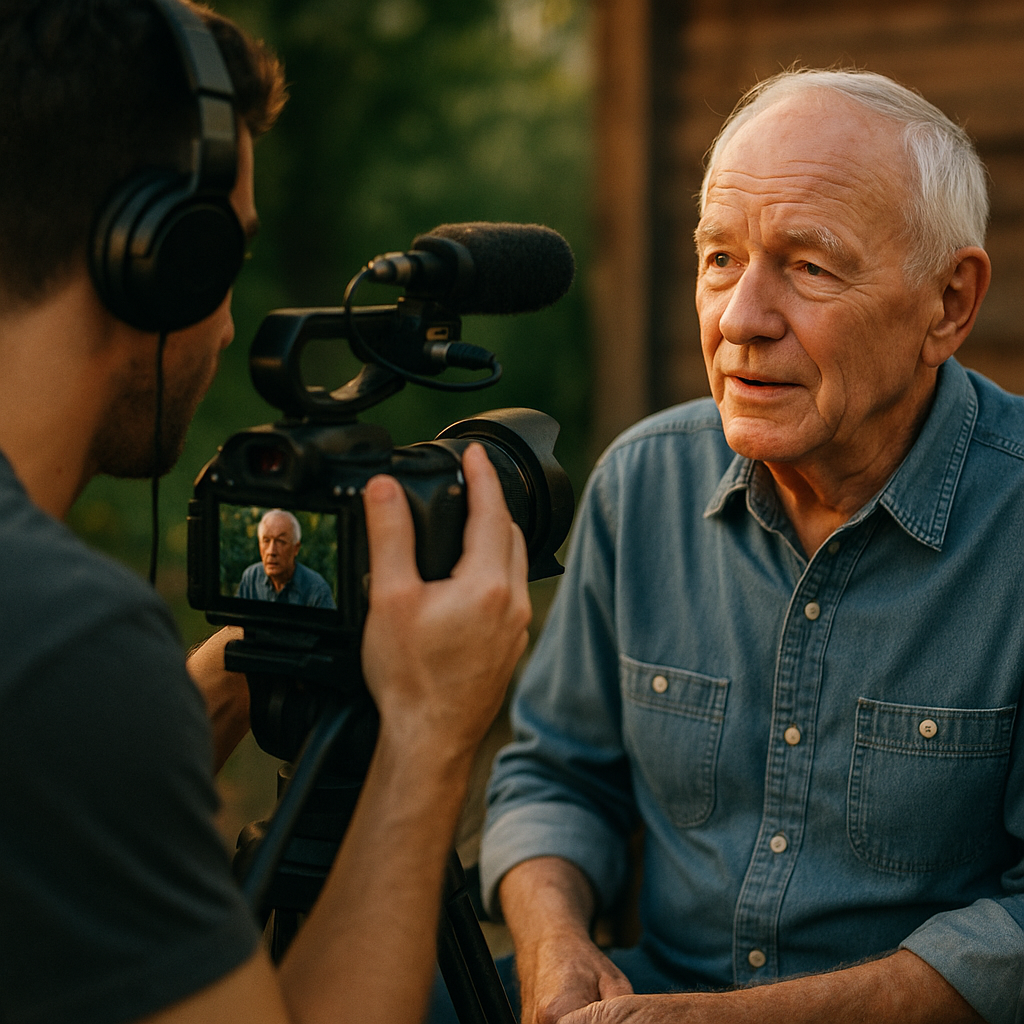
Only 12% of consumers say they trust traditional brand advertising, yet documentary style content routinely pulls completion rates triple that of standard pre roll. Why? Because a mini documentary brand film doesn’t ask for belief, it offers evidence. The format borrows journalism’s credibility and hands it to marketing, but only if the script respects the genre instead of faking it.
Why the Documentary Format Breaks Through Ad Fatigue
Viewers have built an immune system against polished brand messaging. They can smell a script from a mile away, which is ironic given that every mini documentary is, in fact, scripted. The difference is structural, not stylistic. A documentary script hides its hand behind observation, pacing, and a narrative arc borrowed from nonfiction filmmaking rather than the 30 second spot.
That’s the paradox brand teams need to internalize: the most convincing “unscripted” content is often the most carefully engineered. You’re not removing structure, you’re removing the visible seams.
A documentary style brand film works because it withholds the sell until the audience has already decided to care about the people on screen.
What Separates a Brand Documentary From a Glorified Testimonial
Plenty of brands slap “documentary” on a three minute customer interview and call it a day. That’s not a documentary, it’s a testimonial reel with better lighting. True mini documentary format requires three things a testimonial skips entirely:
- A question the film is trying to answer, not a product it’s trying to sell.
- Multiple perspectives, including tension or friction, not a single happy customer reading talking points.
- Observed moments, scenes where the camera catches behavior rather than solicits statements.
Think of brands like Patagonia or Red Bull. Their long form films rarely open with the product. They open with a problem, a person, or a place. The brand earns its appearance later, almost as a footnote to the story it just told.
Scripting the Illusion of Unscripted Access
Here’s the part most briefs get wrong: a documentary script isn’t dialogue, it’s architecture. You’re not writing lines, you’re writing conditions. The brief should specify scene types, not sentences. “Capture the founder explaining a failed prototype while actually holding it” produces better footage than “Founder says: we learned from our mistakes.”
This is the same discipline behind founder UGC scaffolds, where you build loose containers for authentic moments instead of locking talent into a teleprompter. Documentary format just extends that scaffold across 8 to 20 minutes instead of 60 seconds.
The Four Act Structure That Keeps Viewers Past Minute Three
Most mini documentaries fail at the three minute mark because they front load credibility instead of earning it. A structure that holds attention looks closer to this:
- Cold open (0:00 to 0:45): A moment of tension, conflict, or curiosity with zero brand mention.
- Context (0:45 to 3:00): Who these people are and why their problem matters to the viewer.
- Turn (3:00 to 7:00): The brand enters, but as part of the solution the subjects found, not the hero pulling them out of trouble.
- Resolution (7:00 to end): Proof of outcome, shown rather than stated, with the brand logo appearing almost incidentally.
This mirrors the arc used in decision led long form storytelling, where the conversion moment is buried inside narrative payoff rather than bolted on as a CTA slide. Retention data from platforms like YouTube consistently rewards this delay. Audiences stick around when they sense a story is unfolding, not when they’re being pitched.
Interview Scripting Without Sounding Rehearsed
Subjects who sound coached kill trust instantly. The fix isn’t improvisation, it’s question design. Instead of asking “What do you love about this product?” ask “Walk me through the morning you almost gave up.” The second question produces a story. The first produces a slogan.
Good documentary interview scripts include three question types in rotation:
- Memory questions that pull specific scenes (“Describe the exact moment you noticed a difference.”)
- Stakes questions that reveal what was at risk (“What would have happened if this hadn’t worked?”)
- Reflection questions that invite nuance (“What would you tell someone who’s skeptical?”)
That last question type matters more than brands realize. Letting a subject voice skepticism, even briefly, does more for credibility than ten glowing quotes. It signals the film wasn’t curated to erase doubt, which is exactly the signal modern audiences are scanning for. This is the same instinct behind versus format scripts, where showing a fair fight builds more trust than a one sided win.
Pacing Decisions: How Long Is Too Long?
There’s no universal runtime, but there is a diminishing returns curve. Data from Sprout Social and various platform benchmarks suggests engagement on branded long form content drops sharply after the 10 minute mark unless the narrative tension is actively escalating. Translation: an 18 minute documentary only works if minute 14 feels more urgent than minute 4.
Practical rule for brand teams: script for the shortest runtime that still earns the emotional turn. A 6 minute film with a real arc outperforms a 15 minute film padded with B roll. If you’re not sure where to cut, treat it like clip ready long form shoots: every scene should be able to survive on its own if removed, which usually means it deserved to be removed.
Disclosure and Compliance in Nonfiction Format
Documentary style creates a specific compliance risk: the format’s entire appeal rests on seeming unsponsored, which puts it in direct tension with disclosure requirements. The FTC’s endorsement guidelines apply regardless of runtime or genre. A 12 minute brand funded documentary needs disclosure just as clearly as a 30 second ad, and burying “sponsored by” in end credits after eight minutes of unlabeled content won’t satisfy regulators.
The documentary format’s biggest strength, its appearance of independence, is also its biggest compliance liability if disclosure isn’t scripted in from the opening frame.
Build disclosure into the script itself rather than treating it as a legal afterthought. A simple on screen statement in the first 15 seconds (“This film was produced in partnership with [Brand]”) preserves narrative flow while satisfying transparency requirements. Teams navigating this balance regularly reference the same principles used for disclosure that holds up under platform and regulatory review.
Distribution: Don’t Waste a 12 Minute Asset on One Platform
A mini documentary is expensive to produce relative to short form content, which means its ROI depends on downstream reuse. Script with extraction in mind from day one. Mark three or four moments in the outline, usually the turn and the most emotional interview beat, as standalone clip candidates before you ever shoot.
This isn’t just efficient, it’s how the format earns its budget. A single documentary shoot can feed a multi creator stitch chain, a handful of testimonial cutdowns, and a full length YouTube or owned channel upload. Platforms like Meta Business and TikTok Ads Manager both favor native vertical cuts, so budget for a second edit pass that reframes horizontal interview footage rather than assuming one export fits every placement.
According to eMarketer, long form branded video continues to show stronger brand lift metrics than short form when measured against purchase intent, even though short form wins on raw reach. That’s the trade off: documentary format builds deeper trust with fewer viewers, which is exactly why it pairs well with retargeting and mid funnel campaigns rather than cold prospecting.
Casting the Right Subjects (Not Just the Right Creators)
Influencer casting for documentary format is different from casting a standard sponsored post. You’re not looking for the creator with the biggest following, you’re looking for the subject with the most honest story. Sometimes that’s a founder. Sometimes it’s a frontline employee or a long time customer who’s never made content before.
Smaller, less polished voices often outperform professional talent here, which is the same logic driving nano creator briefs. Audiences have gotten good at spotting professional delivery, and in documentary format, professional delivery reads as suspicious rather than credible.
A mini documentary brand film isn’t a bigger ad, it’s a different trust mechanism entirely. Script the structure and the disclosure first, let the dialogue stay loose, and plan your clip extraction before you shoot a single frame.
Frequently Asked Questions
How long should a mini documentary brand film be?
Most effective versions run between 6 and 12 minutes. Length should be dictated by when the narrative arc resolves, not by a fixed target, since padding beyond that point sharply reduces completion rates.
Does a brand documentary need FTC disclosure?
Yes. Any content produced in partnership with or funded by a brand requires clear disclosure under FTC guidelines, regardless of runtime or how unscripted the content appears.
What’s the difference between a testimonial video and a mini documentary?
A testimonial solicits a positive statement about a product. A documentary follows a story with tension, multiple perspectives, and observed behavior, with the brand appearing as part of the resolution rather than the focus.
Can mini documentaries be repurposed into short form content?
Yes, and they should be. Scripting extraction points during pre production, typically the emotional turn and key interview beats, lets one shoot fuel multiple short form cutdowns across platforms.
Who should be cast as the subject in a brand documentary?
Founders, employees, or long time customers often work better than professional influencers, because audiences associate polished delivery with scripted content, which undermines the format’s core credibility advantage.
Top Influencer Marketing Agencies
The leading agencies shaping influencer marketing in 2026
Agencies ranked by campaign performance, client diversity, platform expertise, proven ROI, industry recognition, and client satisfaction. Assessed through verified case studies, reviews, and industry consultations.
Moburst

-
2

The Shelf
Boutique Beauty & Lifestyle Influencer AgencyA data-driven boutique agency specializing exclusively in beauty, wellness, and lifestyle influencer campaigns on Instagram and TikTok. Best for brands already focused on the beauty/personal care space that need curated, aesthetic-driven content.Clients: Pepsi, The Honest Company, Hims, Elf Cosmetics, Pure LeafVisit The Shelf → -
3

Audiencly
Niche Gaming & Esports Influencer AgencyA specialized agency focused exclusively on gaming and esports creators on YouTube, Twitch, and TikTok. Ideal if your campaign is 100% gaming-focused — from game launches to hardware and esports events.Clients: Epic Games, NordVPN, Ubisoft, Wargaming, Tencent GamesVisit Audiencly → -
4

Viral Nation
Global Influencer Marketing & Talent AgencyA dual talent management and marketing agency with proprietary brand safety tools and a global creator network spanning nano-influencers to celebrities across all major platforms.Clients: Meta, Activision Blizzard, Energizer, Aston Martin, WalmartVisit Viral Nation → -
5

The Influencer Marketing Factory
TikTok, Instagram & YouTube CampaignsA full-service agency with strong TikTok expertise, offering end-to-end campaign management from influencer discovery through performance reporting with a focus on platform-native content.Clients: Google, Snapchat, Universal Music, Bumble, YelpVisit TIMF → -
6

NeoReach
Enterprise Analytics & Influencer CampaignsAn enterprise-focused agency combining managed campaigns with a powerful self-service data platform for influencer search, audience analytics, and attribution modeling.Clients: Amazon, Airbnb, Netflix, Honda, The New York TimesVisit NeoReach → -
7

Ubiquitous
Creator-First Marketing PlatformA tech-driven platform combining self-service tools with managed campaign options, emphasizing speed and scalability for brands managing multiple influencer relationships.Clients: Lyft, Disney, Target, American Eagle, NetflixVisit Ubiquitous → -
8

Obviously
Scalable Enterprise Influencer CampaignsA tech-enabled agency built for high-volume campaigns, coordinating hundreds of creators simultaneously with end-to-end logistics, content rights management, and product seeding.Clients: Google, Ulta Beauty, Converse, AmazonVisit Obviously →