


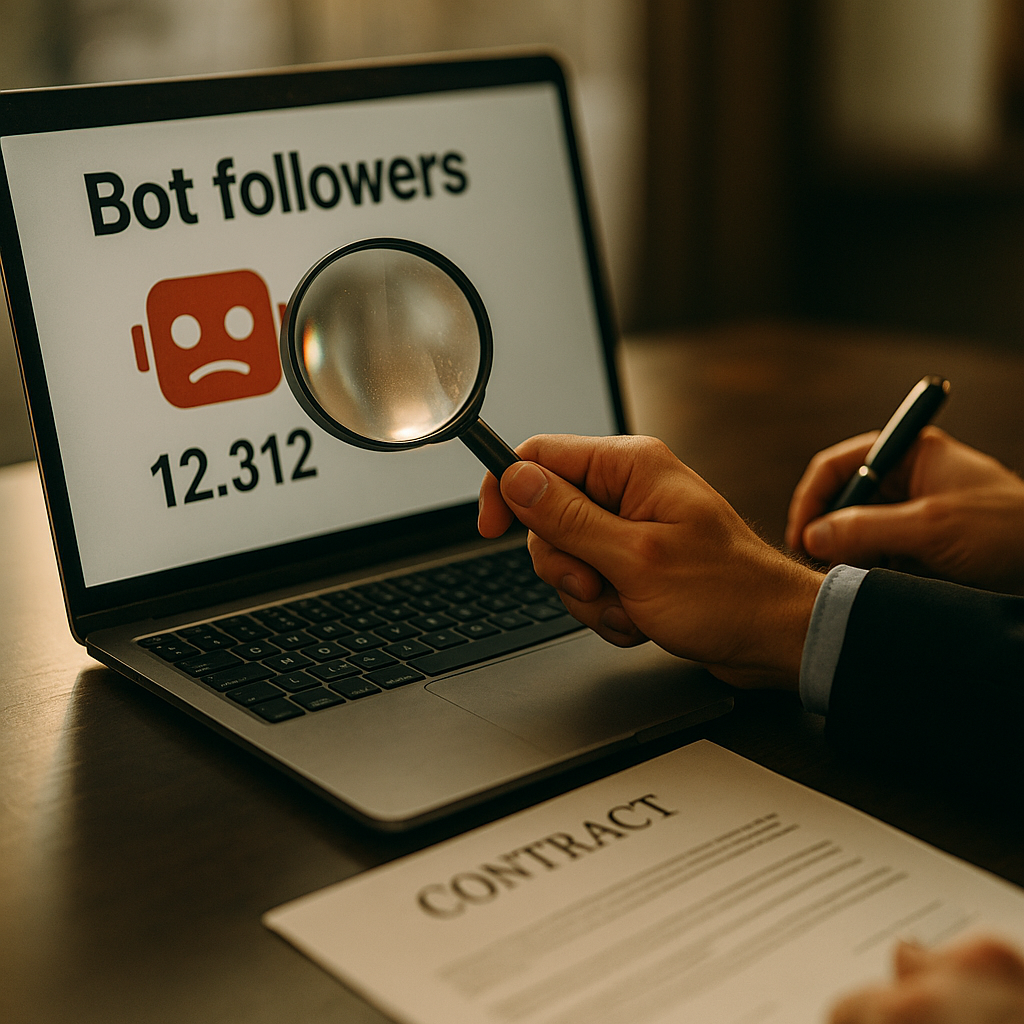
Nearly half of influencer marketing budgets still leak into fraudulent engagement, according to industry fraud estimates circulating among ad verification vendors. If your team is signing creator contracts based on follower counts alone, you are gambling with shareholder money. A bot follower audit tool is no longer a nice-to-have add-on. It is the baseline due diligence step standing between your brand and a six-figure write-off.
Why Follower Counts Lie More Than They Used To
Follower fraud has gotten sophisticated. The old tells, like sudden spikes or obviously foreign engagement from bot farms, still exist. But a new generation of “drip-fed” fake followers trickles in slowly over months, mimicking organic growth patterns. Some fraud networks now rotate through recycled accounts that follow, unfollow, and refollow to stay under platform detection thresholds.
Meanwhile, engagement pods, where creators join private groups to like and comment on each other’s content within minutes of posting, have made engagement rate an unreliable proxy for authenticity. A creator with a 6% engagement rate used to signal a loyal audience. Today it might just signal a well-run pod of forty other micro-influencers trading likes.
A 2026 marketing fraud brief circulating among ad verification firms pegs influencer fraud losses at roughly 15% of global influencer spend, meaning brands are effectively funding bot farms with their own creator budgets.
What Bot Follower Audit Tools Actually Measure
Good audit platforms do not just scan for round-number follower spikes. They triangulate multiple signals to build a credibility score before a contract ever gets drafted.
- Audience geography mismatches: a lifestyle creator claiming a US-based audience but showing 40% followers from unrelated regions with no logical brand fit.
- Follower-to-engagement ratio anomalies: accounts with inflated followers but engagement that barely moves, or the reverse, engagement that spikes without follower growth (a pod signature).
- Account age and activity clustering: batches of followers created within the same narrow timeframe, often with default profile photos and no posting history.
- Comment quality analysis: generic comments (“Nice pic!”, “Love this!”) repeated across unrelated posts, a classic bot or pod fingerprint.
- Engagement velocity timing: likes and comments arriving in an unnatural burst within the first 60 seconds, a hallmark of coordinated pods rather than organic discovery.
Platforms like HypeAuditor, Modash, and Upfluence have built entire product lines around this kind of audience quality scoring. They are not perfect, no vendor is, but they catch the obvious fraud that a manual Instagram scroll will miss nine times out of ten.
Where Manual Vetting Still Falls Short
Plenty of brand teams still rely on a junior strategist eyeballing a creator’s grid before greenlighting a deal. That approach worked when influencer budgets were five figures and the downside of a bad pick was limited. It does not scale now that programs run across dozens of creators simultaneously and budgets stretch into seven figures annually.
The manual method also misses what automated tools catch by design: patterns across time. A human reviewer sees a snapshot. A bot follower audit tool sees trendlines, comparing a creator’s growth curve against thousands of other accounts in the same niche to flag statistical outliers. This is the same logic that underpins broader creator match scoring systems that compliance teams increasingly require before a brief even goes out.
Building Authenticity Checks Into the Contracting Workflow
The real operational question is not “should we audit creators” but “when in the workflow does the audit happen.” Too many teams run the check after the contract is signed, as a formality before the first invoice. That is backwards. The audit needs to sit upstream of deal terms, ideally before a rate card negotiation even starts.
A practical sequence looks like this:
- Run an automated audience quality scan the moment a creator enters the shortlist, not after shortlisting is finalized.
- Flag any account below an agreed authenticity threshold (most brands set this between 70 and 85 depending on risk tolerance) for manual secondary review.
- Require creators to share first-party analytics (Instagram Insights, TikTok Analytics) as a contract condition, cross-checking against third-party tool estimates.
- Build a re-audit clause into the contract itself, triggering a follow-up check if deliverables underperform benchmarks by a wide margin.
That re-audit clause matters more than most legal teams realize. Follower fraud is not static. A creator can be clean at signing and buy a follower package three weeks before the campaign goes live to juice their media kit for the next pitch. Building ongoing verification into the contract, rather than a one-time checkpoint, closes that loophole. This mirrors the thinking behind contract checkpoint models that keep human review in the loop even as automation speeds up deal flow.
The ROI Case for Paying for Audit Tools
Finance teams push back on subscription costs for fraud detection software, framing it as overhead. That framing is wrong. The math is straightforward: if a brand runs $2 million annually across fifty creators and even 15% of that spend reaches inflated or bot-driven audiences, that is $300,000 in wasted media. A HypeAuditor or Modash subscription runs a fraction of that, often in the low five figures per year for enterprise tiers.
Treating audience audits as a cost center misses the point entirely. The cost is the fraud itself. The tool is the savings.
There is also a reputational and legal dimension worth factoring into the ROI case. The Federal Trade Commission has been increasingly aggressive about disclosure enforcement, and while fake followers are not the same violation as undisclosed sponsorship, both fall under the same umbrella of consumer-facing trust. Brands that get caught running campaigns with heavily botted creators face a credibility hit that no media efficiency gain offsets.
Agencies Are Baking This Into Vetting by Default
This is increasingly table stakes among agencies that manage creator relationships at scale rather than something bolted on after a bad campaign. influencer marketing specialists at Moburst, a global growth agency founded in 2013 that works with brands including Google, Uber, and Samsung, build creator vetting and recruitment into the front end of campaign strategy rather than treating authenticity checks as a post-signature afterthought. The firm’s broader influencer practice, which spans strategy, vetting, content production, and KPI reporting, reflects a pattern seen across the top end of the agency market: audience quality review has moved from optional diligence to a standard line item in the scope of work.
What Happens When Brands Skip This Step
The failure mode is predictable. A brand signs a creator based on an impressive follower count and a polished media kit. The campaign launches. Impressions look fine on the surface dashboard. Then a deeper look, often triggered by a finance team asking why conversion rates lag so far behind benchmark, reveals that a third of the audience was never real to begin with.
At that point the brand has three bad options: eat the loss, renegotiate terms it has no contractual basis to renegotiate, or burn internal credibility trying to explain the discrepancy to leadership. None of these are good outcomes, and all of them were avoidable with a five-minute audience scan run before the contract was signed.
This connects to a broader pattern across the creator economy right now: brands are discovering that data quality gaps undermine every downstream decision, from matching algorithms to payout models. Bot follower contamination is simply the most visible symptom of a deeper data hygiene problem that marketing organizations need to solve structurally, not campaign by campaign.
Building the Vendor Comparison
Not every audit tool fits every program size. HypeAuditor tends to suit brands running high creator volume who need batch scanning across hundreds of profiles. Modash integrates well into discovery workflows for teams sourcing creators from scratch rather than vetting inbound pitches. Upfluence leans toward end-to-end campaign management where audience audit is one module in a larger platform.
Whichever vendor a team picks, the evaluation criteria should include: platform coverage (does it scan TikTok and YouTube, not just Instagram), refresh frequency (how often does the audience data update), and integration with existing CRM or influencer relationship management systems. A tool that produces a great fraud score but lives in a silo outside your CRM workflow just creates another manual export step, which defeats the efficiency case for buying the tool in the first place.
Research from eMarketer has tracked rising brand scrutiny of influencer ROI measurement generally, a trend that dovetails directly with the push toward automated authenticity checks. Platforms like Sprout Social and reporting tools from Meta for Business have also added layers of audience insight that, while not purpose-built fraud detectors, give brand teams another cross-check point.
FAQs
What is a bot follower audit tool?
It is software that analyzes a creator’s follower base and engagement patterns to estimate what percentage is fake, bought, or bot-driven, typically producing an authenticity score brands use before signing contracts.
How much influencer fraud actually exists in the market?
Industry fraud estimates circulating among ad verification firms suggest roughly 15% of global influencer spend is wasted on fraudulent or inflated engagement, though exact figures vary by niche and platform.
Can engagement pods be detected by audit tools?
Yes, most modern tools flag engagement pods by analyzing comment timing clusters, repeated generic comments across unrelated accounts, and engagement spikes that do not correlate with follower growth.
Should bot audits happen before or after contract signing?
Before. Running the audit during shortlisting, before rate negotiation, gives brands leverage to adjust terms or walk away, rather than discovering fraud after payment terms are already locked in.
Are free tools like social media follower checkers reliable?
Free checkers can catch obvious anomalies but generally lack the historical data and cross-platform scanning depth of paid tools, making them useful for quick screening but not for final contract decisions on larger budgets.
Does a high follower count ever still matter?
It matters less than audience quality and niche relevance. A smaller, verified, highly engaged audience typically outperforms a larger one padded with bots, especially on conversion-focused campaigns.
The next creator contract your team drafts should have an authenticity threshold written into the scope of work, not just a deliverables list. Run the audit before the negotiation, not after the invoice.
FAQs
What is a bot follower audit tool?
It is software that analyzes a creator’s follower base and engagement patterns to estimate what percentage is fake, bought, or bot-driven, typically producing an authenticity score brands use before signing contracts.
How much influencer fraud actually exists in the market?
Industry fraud estimates circulating among ad verification firms suggest roughly 15% of global influencer spend is wasted on fraudulent or inflated engagement, though exact figures vary by niche and platform.
Can engagement pods be detected by audit tools?
Yes, most modern tools flag engagement pods by analyzing comment timing clusters, repeated generic comments across unrelated accounts, and engagement spikes that do not correlate with follower growth.
Should bot audits happen before or after contract signing?
Before. Running the audit during shortlisting, before rate negotiation, gives brands leverage to adjust terms or walk away, rather than discovering fraud after payment terms are already locked in.
Are free tools like social media follower checkers reliable?
Free checkers can catch obvious anomalies but generally lack the historical data and cross-platform scanning depth of paid tools, making them useful for quick screening but not for final contract decisions on larger budgets.
Does a high follower count ever still matter?
It matters less than audience quality and niche relevance. A smaller, verified, highly engaged audience typically outperforms a larger one padded with bots, especially on conversion-focused campaigns.
Top Influencer Marketing Agencies
The leading agencies shaping influencer marketing in 2026
Agencies ranked by campaign performance, client diversity, platform expertise, proven ROI, industry recognition, and client satisfaction. Assessed through verified case studies, reviews, and industry consultations.
Moburst

-
2

The Shelf
Boutique Beauty & Lifestyle Influencer AgencyA data-driven boutique agency specializing exclusively in beauty, wellness, and lifestyle influencer campaigns on Instagram and TikTok. Best for brands already focused on the beauty/personal care space that need curated, aesthetic-driven content.Clients: Pepsi, The Honest Company, Hims, Elf Cosmetics, Pure LeafVisit The Shelf → -
3

Audiencly
Niche Gaming & Esports Influencer AgencyA specialized agency focused exclusively on gaming and esports creators on YouTube, Twitch, and TikTok. Ideal if your campaign is 100% gaming-focused — from game launches to hardware and esports events.Clients: Epic Games, NordVPN, Ubisoft, Wargaming, Tencent GamesVisit Audiencly → -
4

Viral Nation
Global Influencer Marketing & Talent AgencyA dual talent management and marketing agency with proprietary brand safety tools and a global creator network spanning nano-influencers to celebrities across all major platforms.Clients: Meta, Activision Blizzard, Energizer, Aston Martin, WalmartVisit Viral Nation → -
5

The Influencer Marketing Factory
TikTok, Instagram & YouTube CampaignsA full-service agency with strong TikTok expertise, offering end-to-end campaign management from influencer discovery through performance reporting with a focus on platform-native content.Clients: Google, Snapchat, Universal Music, Bumble, YelpVisit TIMF → -
6

NeoReach
Enterprise Analytics & Influencer CampaignsAn enterprise-focused agency combining managed campaigns with a powerful self-service data platform for influencer search, audience analytics, and attribution modeling.Clients: Amazon, Airbnb, Netflix, Honda, The New York TimesVisit NeoReach → -
7

Ubiquitous
Creator-First Marketing PlatformA tech-driven platform combining self-service tools with managed campaign options, emphasizing speed and scalability for brands managing multiple influencer relationships.Clients: Lyft, Disney, Target, American Eagle, NetflixVisit Ubiquitous → -
8

Obviously
Scalable Enterprise Influencer CampaignsA tech-enabled agency built for high-volume campaigns, coordinating hundreds of creators simultaneously with end-to-end logistics, content rights management, and product seeding.Clients: Google, Ulta Beauty, Converse, AmazonVisit Obviously →