


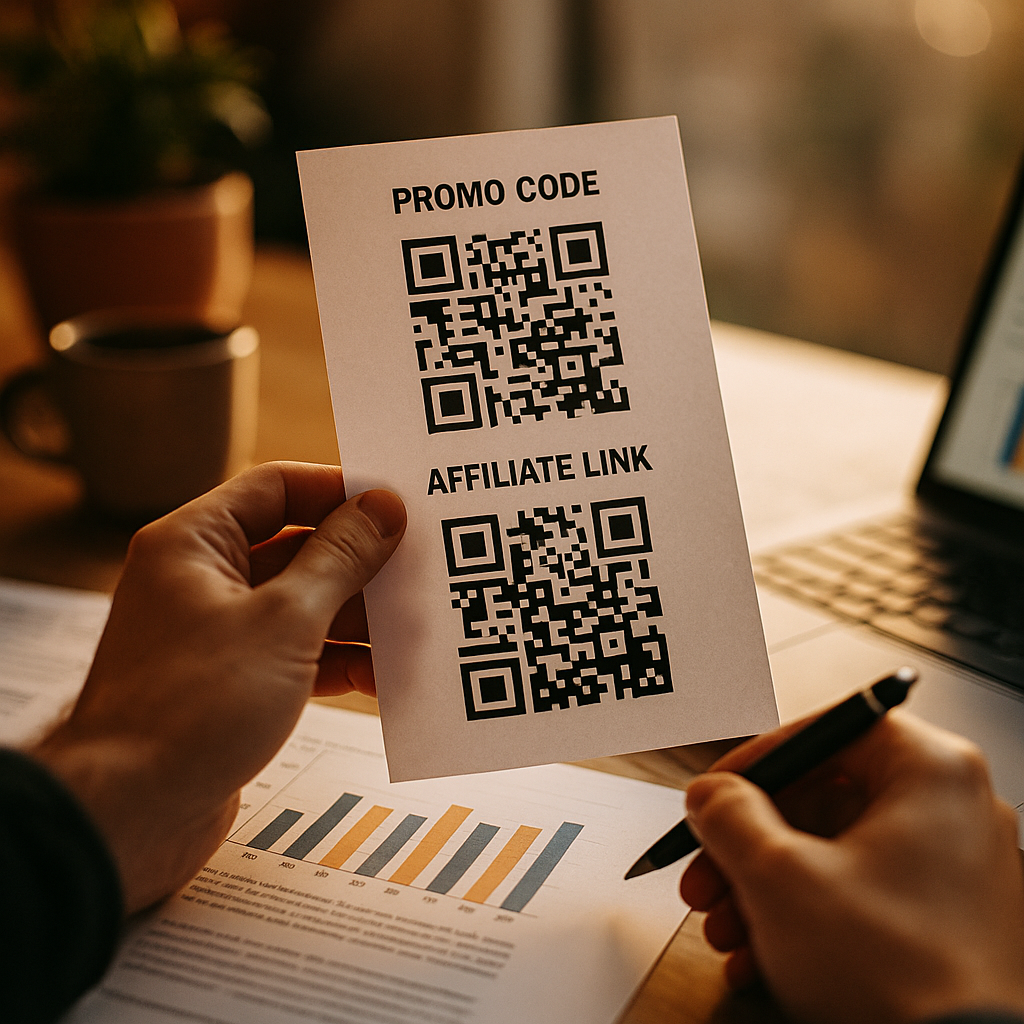
Here’s an uncomfortable number: brands using a single attribution method for creator campaigns are likely misjudging true ROI by 20 to 40 percent, depending on the platform mix. Promo codes vs affiliate links vs native shop tags isn’t a philosophical debate. It’s a measurement problem with real budget consequences, and most teams are solving it with whichever tool their platform rep handed them first.
Let’s fix that.
Why This Comparison Actually Matters
Every creator measurement method answers a slightly different question. Promo codes answer “did someone use this specific incentive?” Affiliate links answer “did someone click through from this creator?” Native shop tags answer “did someone discover and buy this product inside the platform experience?” These are not interchangeable questions, yet brands routinely treat the resulting numbers as if they were.
The stakes are higher than a reporting spreadsheet. Whichever method you choose shapes which creators get rebooked, which categories get budget, and how you defend influencer spend to finance. Get the measurement wrong and you end up optimizing for the wrong behavior entirely.
A creator who drove six figures in untracked native sales can look like a flop next to a mid-tier affiliate who happened to post a code during a sale window. The measurement method, not the actual performance, decides who wins.
Promo Codes: Simple, But Leaky
Promo codes are the oldest trick in the creator playbook. A unique code per creator, tracked at checkout, attributed cleanly to a name. Finance loves them because they tie directly to discount ledgers and revenue reports.
The problem is leakage. Shoppers forget codes, share them in coupon forums, or simply skip the field because they’re in a hurry. Research from retail analytics firms has repeatedly shown that code redemption rates sit well below actual campaign-driven conversions, sometimes by half. That means every promo-code-only report is systematically undercounting performance, and the undercounting isn’t uniform. Audiences on mobile checkout flows abandon code fields more than desktop shoppers, which skews results against creators whose followers buy on the go.
Codes also create an incentive problem. Creators learn fast that discount codes drive short-term spikes, so campaigns drift toward constant promotional pressure instead of brand storytelling. That’s fine for a flash sale. It’s corrosive for a brand trying to build long-term equity through creator partnerships.
Where Codes Still Win
- Offline-to-online bridges (QR codes on packaging, in-person events)
- Email and podcast reads where there’s no clickable link
- Finance teams that need a clean, auditable revenue tie-out
Affiliate Links: Better Granularity, Worse Visibility
Affiliate links solve the forgotten-code problem by riding on cookies or click IDs instead of human memory. A shopper clicks, the link drops a tracking parameter, and the sale gets attributed within a defined window, typically 7 to 30 days depending on the network.
That sounds cleaner, and in many ways it is. But affiliate tracking has its own blind spots. Safari and Firefox have aggressively restricted third-party cookies for years, and iOS privacy settings routinely strip tracking parameters before a click even registers. Multi-touch journeys make it worse: a shopper who sees a creator’s content, closes the app, Googles the product later, and buys on desktop will almost never get attributed back to that creator, even though the creator clearly drove the decision.
This is the same last-click fragility that plagues broader digital attribution, and it’s why teams investigating server side conversion APIs are trying to patch the gap at the infrastructure level rather than the link level.
Affiliate networks like ShareASale, Impact, and CJ Affiliate do offer decent dashboards, and reporting has improved. But “decent” still means you’re working with partial data dressed up as complete data, which is arguably more dangerous than obviously incomplete data because it invites false confidence.
Native Shop Tags: The Platform Knows More Than You Do
TikTok Shop, Instagram Shopping tags, and YouTube’s shopping integrations represent a different model entirely. Instead of routing shoppers off-platform through a link, the purchase happens inside the app, and the platform owns the full data trail: impression, view duration, tap, add to cart, purchase.
This is, frankly, the most accurate attribution available right now for in-app conversions. There’s no cookie to block, no code to forget, no cross-device gap. The platform saw the whole journey because the whole journey happened on the platform.
The catch is obvious once you say it out loud: you only get visibility into what happens on that platform. If a TikTok Shop viewer later buys on your Shopify site instead of in-app, that sale vanishes from the native dashboard. You’re trading completeness for walled-garden accuracy, and the walled garden doesn’t share its wall with your other channels.
Native shop tags give you the truest picture of a single platform’s funnel and almost no picture of anything outside it. Treat the numbers as a floor, not a ceiling.
Benchmarking the Three Side by Side
Here’s how the three methods actually stack up across the dimensions brands care about most:
- Attribution accuracy: Native shop tags (highest, but platform-limited), affiliate links (medium, cookie-dependent), promo codes (lowest due to redemption drop-off)
- Cross-device tracking: Affiliate links with persistent IDs edge out the other two; native tags and codes both struggle here
- Setup complexity: Promo codes are easiest to deploy, affiliate links require network integration, native tags require platform-specific shop setup and catalog sync
- Creator experience: Codes are the most creator-friendly to mention verbally; native tags are nearly invisible to the creator once set up
- Finance reconciliation: Codes win for clean revenue tie-out; affiliate and native both require exporting platform data into finance systems
Teams building out a full influencer martech stack are increasingly running all three simultaneously and reconciling the overlap manually, which is tedious but more honest than picking one and calling it complete.
What a Blended Model Looks Like in Practice
Most sophisticated programs we’ve seen don’t pick a winner. They layer methods by channel intent. A creator posting a TikTok Shop video gets the native tag because that’s where the purchase will happen. A podcast host reading an ad gets a promo code because there’s no clickable surface. A YouTube long-form reviewer gets an affiliate link because the viewer is likely to research before buying on desktop.
This isn’t more complicated for the sake of complexity. It’s matching the measurement tool to the actual shopper behavior on that channel, instead of forcing one method onto every format.
What About Incrementality?
None of the three methods above actually prove incrementality, meaning they don’t tell you whether the sale would have happened anyway. A shopper who already intended to buy might still use a promo code out of habit, click an affiliate link because it was convenient, or tap a native tag because it was right there. That’s attribution, not causation.
Brands serious about separating genuine lift from coincidental overlap are turning to holdout tests and data clean rooms that can compare exposed versus unexposed audiences without exposing raw PII. It’s a heavier lift, but it answers the question the other three methods structurally cannot.
If you’re also evaluating deeper attribution tooling, it’s worth comparing platforms head to head, the way we broke down attribution depth across agent tools, since the right backend can reconcile code, link, and tag data into one view instead of three disconnected spreadsheets.
Compliance Isn’t Optional Either
Whichever method you choose, disclosure obligations don’t change. The FTC’s endorsement guidance applies equally to a creator reading a promo code aloud, dropping an affiliate link in a caption, or tagging a product natively in a shoppable video. Brands that assume native shop tags somehow bypass disclosure rules because “the platform handles it” are wrong, and that assumption has already burned a few mid-size DTC brands in enforcement actions. Build disclosure checks into whichever measurement workflow you run, not as an afterthought bolted on later.
For nano and micro creator programs specifically, this compliance layer gets messier because volume makes manual review impractical. Teams managing that scale are now pairing measurement data with the kind of CRM payout integrations that flag disclosure gaps automatically before payment clears.
So Which One Should You Actually Use?
If you need a single answer: use native shop tags for in-app commerce platforms where the purchase happens natively, affiliate links for long-consideration purchases researched across devices, and promo codes for audio-first or offline touchpoints. Don’t pick one method and force it onto every creator relationship. The mismatch between method and shopper behavior is where most of your “missing” ROI is actually hiding.
Industry benchmarks from sources like eMarketer continue to show rising investment in creator commerce, and brands that can’t measure accurately across formats will struggle to defend that growing spend internally.
Visible FAQ
Frequently Asked Questions
Which creator measurement method gives the most accurate attribution?
Native shop tags tend to be the most accurate for purchases that happen inside that specific platform, since the platform tracks the entire journey without relying on cookies or shopper memory. However, that accuracy only covers in-app behavior and misses any sale that happens on a separate site or device.
Why do promo code redemption rates undercount real sales?
Shoppers frequently forget codes, skip the entry field, or buy through a different device than where they first saw the content. This creates a systematic gap between actual creator-driven sales and the sales that get officially recorded against a specific code.
Do affiliate links still work with cookie restrictions on Safari and iOS?
Affiliate links still function, but browser privacy settings and app tracking restrictions reduce their reliability, especially across devices. Many brands now treat affiliate data as directionally useful rather than fully complete.
Can brands use more than one measurement method in the same campaign?
Yes, and most sophisticated programs do exactly that. Matching the measurement method to the specific channel and shopper behavior, rather than using one method for every creator, produces a far more complete and honest view of performance.
Does using native shop tags change FTC disclosure requirements?
No. Disclosure obligations apply regardless of which measurement method is used. Creators and brands still need clear, conspicuous disclosure whether the purchase is tracked through a code, a link, or an in-app tag.
Stop defending a single attribution number to finance. Build a short matrix mapping each creator channel to its best-fit measurement method, run all three in parallel for one quarter, and let the reconciliation gap tell you where your real ROI has been hiding all along.
Top Influencer Marketing Agencies
The leading agencies shaping influencer marketing in 2026
Agencies ranked by campaign performance, client diversity, platform expertise, proven ROI, industry recognition, and client satisfaction. Assessed through verified case studies, reviews, and industry consultations.
Moburst

-
2

The Shelf
Boutique Beauty & Lifestyle Influencer AgencyA data-driven boutique agency specializing exclusively in beauty, wellness, and lifestyle influencer campaigns on Instagram and TikTok. Best for brands already focused on the beauty/personal care space that need curated, aesthetic-driven content.Clients: Pepsi, The Honest Company, Hims, Elf Cosmetics, Pure LeafVisit The Shelf → -
3

Audiencly
Niche Gaming & Esports Influencer AgencyA specialized agency focused exclusively on gaming and esports creators on YouTube, Twitch, and TikTok. Ideal if your campaign is 100% gaming-focused — from game launches to hardware and esports events.Clients: Epic Games, NordVPN, Ubisoft, Wargaming, Tencent GamesVisit Audiencly → -
4

Viral Nation
Global Influencer Marketing & Talent AgencyA dual talent management and marketing agency with proprietary brand safety tools and a global creator network spanning nano-influencers to celebrities across all major platforms.Clients: Meta, Activision Blizzard, Energizer, Aston Martin, WalmartVisit Viral Nation → -
5

The Influencer Marketing Factory
TikTok, Instagram & YouTube CampaignsA full-service agency with strong TikTok expertise, offering end-to-end campaign management from influencer discovery through performance reporting with a focus on platform-native content.Clients: Google, Snapchat, Universal Music, Bumble, YelpVisit TIMF → -
6

NeoReach
Enterprise Analytics & Influencer CampaignsAn enterprise-focused agency combining managed campaigns with a powerful self-service data platform for influencer search, audience analytics, and attribution modeling.Clients: Amazon, Airbnb, Netflix, Honda, The New York TimesVisit NeoReach → -
7

Ubiquitous
Creator-First Marketing PlatformA tech-driven platform combining self-service tools with managed campaign options, emphasizing speed and scalability for brands managing multiple influencer relationships.Clients: Lyft, Disney, Target, American Eagle, NetflixVisit Ubiquitous → -
8

Obviously
Scalable Enterprise Influencer CampaignsA tech-enabled agency built for high-volume campaigns, coordinating hundreds of creators simultaneously with end-to-end logistics, content rights management, and product seeding.Clients: Google, Ulta Beauty, Converse, AmazonVisit Obviously →