


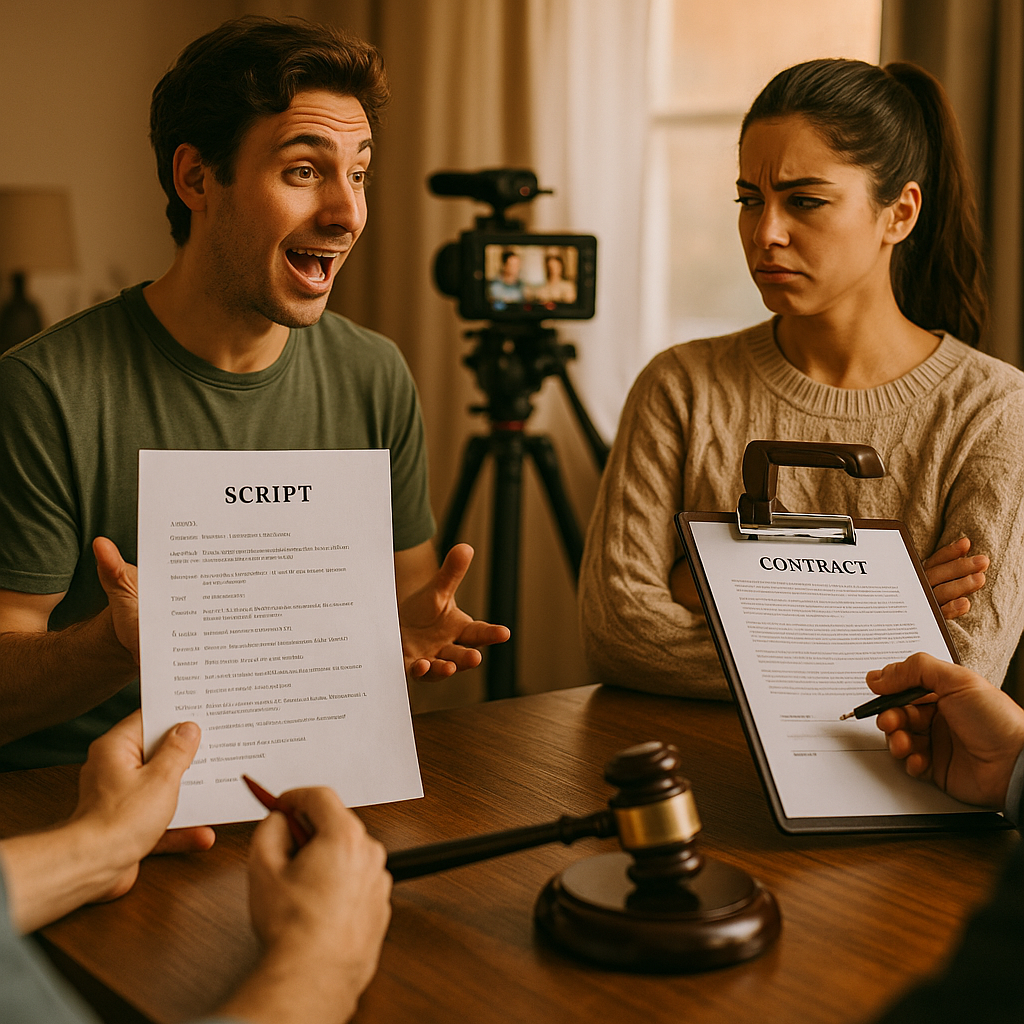
Nearly 70% of consumers say they can’t always tell when a video is paid, according to recent FTC enforcement guidance discussions, and expectation vs reality skits are some of the worst offenders. The format thrives on exaggeration: the glossy “expectation” clip, the messy “reality” clip, the punchline in the contrast. That contrast is exactly what makes legal teams nervous. Can you still get the laugh and keep the #ad tag doing real work? Yes, but only if you script the disclosure in from the first draft, not bolt it on after the edit is locked.
Why Expectation vs Reality Skits Keep Triggering Compliance Flags
The joke structure itself is the problem. You set up an unrealistic expectation (the influencer photo, the Pinterest board, the ad promise) and then cut to a deflating reality. It’s a reliable laugh because everyone has lived it. But when a brand sponsors that skit, the “expectation” half often looks suspiciously like an actual product claim, dramatized for comedy, sure, but still a claim. Regulators don’t grade on a curve for tone.
Legal and compliance teams read these skits the same way they’d read a straight testimonial: what is being claimed, is it true, and is the sponsorship obvious enough that a reasonable viewer catches it in the first three seconds? A skit that buries “Paid partnership” in a corner overlay during a chaotic two-second cutaway fails that test even if the brand name never gets mentioned by name in dialogue.
The comedy isn’t the risk. The ambiguity about what’s a joke and what’s a claim is the risk, and that ambiguity is entirely scriptable away.
This is the same tension we unpacked in dupe comparison scripting, where side by side formats create similar claim risk. Expectation vs reality just adds a layer of performative exaggeration on top.
The Anatomy of a Skit That Clears Legal Without Losing the Joke
Strong expectation vs reality scripts separate three things that weaker scripts smash together: the claim, the exaggeration, and the disclosure. Treat them as three separate script elements you write on purpose, not three things that happen to coexist in the final cut.
- The claim layer: what you’re actually saying the product does. Write this line first, in plain language, before you add any jokes to it. If the plain version isn’t true or provable, no amount of comedy rewrites it into something safe.
- The exaggeration layer: the performance choices (lighting, music swell, dramatic slow motion) that signal “this is a bit.” Viewers are good at reading tone cues when you give them enough of them.
- The disclosure layer: verbal and on-screen, placed where the eye is actually looking during the funniest beat, not tucked in the dead air before it.
A practical test: strip the comedy out of your script and read just the claim lines out loud. If that stripped-down version would make your legal reviewer wince, the joke isn’t protecting you, it’s just distracting from the problem.
The “Reality” Half Needs a Disclaimer Too
Brands assume the reality half is automatically safe because it’s self-deprecating. It isn’t. If the reality clip implies “this always happens” or “every customer experiences this,” you’ve made an unsubstantiated negative claim about user experience, and if you’re a competitor doing this about another brand’s product, that’s a defamation and FTC problem layered on top. Keep the reality clip anchored to “my experience” language, not universal statements.
Where Brands Get Burned
Three recurring mistakes show up in almost every compliance post-mortem on this format.
The disclosure appears only in the caption. Platforms like TikTok and Instagram offer built-in paid partnership labels for a reason, use them, because caption-only disclosure gets missed by anyone scrolling with sound off or watching via a reshare that strips the caption entirely. Review Meta’s branded content guidelines and TikTok’s advertising policies before locking any skit format into your content calendar, since both have tightened enforcement around native label usage.
The exaggeration swallows the disclaimer timing. If your funniest beat lands at second four and your spoken disclosure doesn’t land until second eleven, you’ve built a script where the thing most likely to be clipped and reshared (the joke) travels without the thing required to make it compliant (the disclosure). Clips get cut. Plan for that.
Nobody wrote down what’s a “bit” versus what’s a benefit. This is a brief problem, not just a script problem. If your creator brief doesn’t explicitly separate “things you can say for comedic effect” from “things you must only say if they’re substantiated,” the creator will blend them, because that’s literally the creative job you hired them to do.
Build the Disclosure Into the Punchline, Not the Caption
The best expectation vs reality skits treat disclosure as a creative constraint, the same way a sketch writer treats a time limit or a prop budget. Constraints make better comedy, not worse comedy. Some working patterns from teams doing this well:
- Disclosure as the transition device. Say “paid partnership, let’s see if it holds up” as the literal line that cuts from expectation to reality. It’s funnier than a flat verbal disclaimer and it does the legal job simultaneously.
- Disclosure as a recurring visual gag. A stamp, a sound effect, a character who appears on screen holding a #ad sign every time the brand is mentioned. Repetition across a series builds audience familiarity, which strengthens your argument that disclosure was “clear and conspicuous” under FTC guidance.
- Native platform labels, every time, no exceptions. This one isn’t creative, it’s operational. Make it a checklist item in your approval workflow, not a creative choice left to the editor.
This mirrors the approach we recommended for versus format scripting, where the comparison structure itself becomes the disclosure vehicle instead of fighting against it.
A Scripting Framework That Survives Both the Writers Room and Legal
Here’s a five-beat structure that’s held up across multiple brand reviews we’ve tracked:
- Beat one: hook with the expectation. Make the setup recognizable fast, within the first two seconds. This is pure attention capture, no claim language needed.
- Beat two: embed verbal disclosure inside the setup dialogue. “Everyone said this [product] would change my life, paid partnership by the way, let’s find out.”
- Beat three: the cut to reality. This is where performance exaggeration lives. Keep spoken claims to personal experience framing only.
- Beat four: the honest takeaway line. One sentence of plain, substantiated truth about what the product actually does. This is your legal anchor line, write it before anything else.
- Beat five: on-screen label persists through the CTA. Don’t let the paid partnership tag disappear before the call to action appears.
Run every skit script through this five-beat check before production, not after the rough cut. Catching a claim problem in pre-production costs you a rewrite. Catching it after filming costs you a reshoot, and catching it after publishing costs you a platform strike or worse. For reaction-driven formats specifically, our reaction content beat sheet breakdown covers similar pre-production review gates.
Platform Rules Aren’t Identical
Instagram, TikTok, and YouTube each have slightly different thresholds for what counts as “clear and conspicuous” disclosure, and treating one platform’s compliance approach as universal is a common and avoidable error. Check platform-specific policy pages directly rather than relying on last year’s screenshots floating around your Slack channel. Compliance teams at agencies managing multi-platform campaigns should also keep an eye on evolving guidance referenced by Sprout Social’s platform policy tracking and the FTC’s endorsement guide updates, since both get revised more often than brand playbooks do.
Mockumentary and street-style formats face overlapping issues. If your expectation vs reality skit uses a vox pop structure to gather “real” reactions before cutting to the sponsored reveal, review how we handled disclosure sequencing in vox pop interview scripting, since the same “when does the audience learn this is paid” question applies.
What Legal Actually Wants to See in the Script Draft
Submit scripts to compliance review with three things clearly marked: the plain-language claim list, the timestamp where verbal and visual disclosure occurs, and a note on which lines are flagged as comedic exaggeration versus factual statement. Legal reviewers move faster when they’re not hunting for this information themselves, and faster reviews mean your content calendar doesn’t bottleneck waiting on sign-off. Teams running high-volume creator programs, similar to the workflows described in our mini drama ad scripting piece, build this annotation step directly into their brief templates so it’s never an afterthought.
One more operational note: keep a version history of approved scripts versus what actually got filmed. Creators improvise, that’s part of what makes these skits funny, but improvisation that drifts away from the approved claim language is exactly what shows up in an FTC complaint file eighteen months later. A quick post-production compliance check against the shot script, even a five-minute one, catches most of this before publish.
Disclosure placed where the joke lands outperforms disclosure placed where it’s legally convenient, because audiences actually see it.
Expectation vs reality skits aren’t going anywhere. The format works because it’s honest about the gap between marketing and lived experience, which is ironic given how much legal scrutiny it attracts. Script the honesty on purpose, and the comedy takes care of itself.
Build your next skit brief around the five-beat framework above, annotate the claim and disclosure timestamps before it reaches legal, and you’ll cut review cycles without flattening a single joke.
FAQs
What makes expectation vs reality skits risky from a compliance standpoint?
The format relies on exaggerated contrast, and the “expectation” half often reads as a dramatized product claim. Regulators evaluate the underlying claim regardless of comedic framing, so an exaggerated promise still needs to be substantiated or clearly flagged as a bit.
Where should the disclosure go in an expectation vs reality skit?
Verbal disclosure should sit inside the opening dialogue, ideally within the first few seconds, and the on-screen paid partnership label should persist through the funniest beat and the call to action, not just appear briefly at the start.
Can the “reality” half of the skit make negative claims about the product?
Only if framed as personal experience, not universal fact. Statements implying every user has the same negative result can create unsubstantiated claim issues even though they seem self-deprecating rather than promotional.
Do native platform disclosure tools matter more than caption disclaimers?
Yes. Built-in paid partnership labels on TikTok and Instagram travel with the content even through reshares and clips, while caption disclosures often get stripped out, making native labels the safer primary disclosure method.
How early should legal review a comedy skit script?
Before filming, not after the rough cut. Reviewing a script draft with claim lines, disclosure timestamps, and comedic exaggeration flagged lets legal catch problems when a rewrite is cheap, rather than after a reshoot or publish is already underway.
Top Influencer Marketing Agencies
The leading agencies shaping influencer marketing in 2026
Agencies ranked by campaign performance, client diversity, platform expertise, proven ROI, industry recognition, and client satisfaction. Assessed through verified case studies, reviews, and industry consultations.
Moburst

-
2

The Shelf
Boutique Beauty & Lifestyle Influencer AgencyA data-driven boutique agency specializing exclusively in beauty, wellness, and lifestyle influencer campaigns on Instagram and TikTok. Best for brands already focused on the beauty/personal care space that need curated, aesthetic-driven content.Clients: Pepsi, The Honest Company, Hims, Elf Cosmetics, Pure LeafVisit The Shelf → -
3

Audiencly
Niche Gaming & Esports Influencer AgencyA specialized agency focused exclusively on gaming and esports creators on YouTube, Twitch, and TikTok. Ideal if your campaign is 100% gaming-focused — from game launches to hardware and esports events.Clients: Epic Games, NordVPN, Ubisoft, Wargaming, Tencent GamesVisit Audiencly → -
4

Viral Nation
Global Influencer Marketing & Talent AgencyA dual talent management and marketing agency with proprietary brand safety tools and a global creator network spanning nano-influencers to celebrities across all major platforms.Clients: Meta, Activision Blizzard, Energizer, Aston Martin, WalmartVisit Viral Nation → -
5

The Influencer Marketing Factory
TikTok, Instagram & YouTube CampaignsA full-service agency with strong TikTok expertise, offering end-to-end campaign management from influencer discovery through performance reporting with a focus on platform-native content.Clients: Google, Snapchat, Universal Music, Bumble, YelpVisit TIMF → -
6

NeoReach
Enterprise Analytics & Influencer CampaignsAn enterprise-focused agency combining managed campaigns with a powerful self-service data platform for influencer search, audience analytics, and attribution modeling.Clients: Amazon, Airbnb, Netflix, Honda, The New York TimesVisit NeoReach → -
7

Ubiquitous
Creator-First Marketing PlatformA tech-driven platform combining self-service tools with managed campaign options, emphasizing speed and scalability for brands managing multiple influencer relationships.Clients: Lyft, Disney, Target, American Eagle, NetflixVisit Ubiquitous → -
8

Obviously
Scalable Enterprise Influencer CampaignsA tech-enabled agency built for high-volume campaigns, coordinating hundreds of creators simultaneously with end-to-end logistics, content rights management, and product seeding.Clients: Google, Ulta Beauty, Converse, AmazonVisit Obviously →