


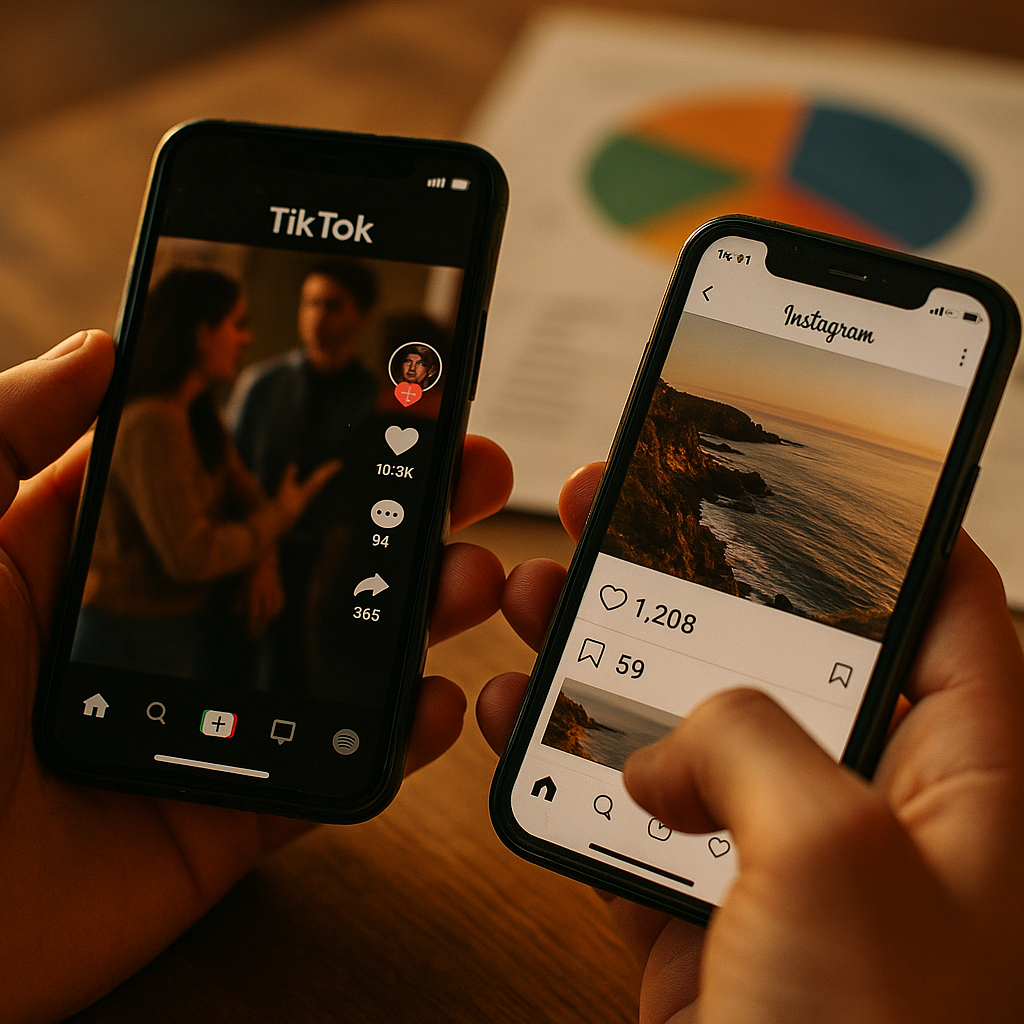
A 53 percent engagement gap between platforms should change how you allocate budget. Yet most media mix models still treat TikTok and Instagram as interchangeable line items. TikTok’s average engagement rate now sits at 7.14 percent versus Instagram’s 4.67 percent, and that spread is too large to ignore when you are defending creator spend to a CFO who wants proof, not vibes.
This isn’t a “TikTok wins, Instagram loses” argument. It’s a question of what each platform is actually good for, and whether your current budget split reflects that or just reflects habit.
The Numbers, Unpacked
Engagement rate (likes, comments, shares, saves divided by followers or views) is a blunt instrument, but it’s the one most brands actually track. TikTok’s 7.14 percent average comes largely from its algorithm-first, follower-agnostic distribution. The For You Page doesn’t care how many followers an account has; it cares whether the first three seconds hold attention. That structural difference rewards raw content quality over audience size, which is why creators with modest followings regularly outperform six-figure accounts on watch time and interaction.
Instagram’s 4.67 percent reflects a more mature, more crowded feed where organic reach has been in decline for years. Reels helped, but Instagram still leans on existing follower relationships and a feed algorithm that balances Stories, Reels, carousels, and static posts. More format diversity, more competing signals, lower average engagement. That’s not a failure, it’s a tradeoff.
A 2.47 percentage point gap in engagement rate is not a rounding error. Applied across a six or seven figure influencer budget, it represents a meaningful difference in the cost of attention per dollar spent.
Why Media Mix Models Can’t Just Chase Engagement
Here’s the trap: if you optimize purely for engagement rate, you overcorrect into TikTok and underfund the channels that actually drive your funnel’s middle and bottom. Engagement rate tells you about attention capture. It says nothing about audience demographics, purchase intent, or how a platform performs for your specific category.
A skincare brand selling a premium routine to women in their 30s and 40s may find Instagram’s slightly lower engagement rate still converts at a higher rate per dollar, because the audience composition matches the buyer profile more precisely. A gaming peripherals brand chasing 16 to 24 year olds gets the opposite result. Engagement rate is an input to the model, not the model itself.
This is the same measurement discipline we’ve flagged before: brands are getting better at measuring creators like paid media, which means engagement rate has to sit alongside CPA, view-through rate, and audience overlap data, not replace them.
What TikTok’s Rate Actually Buys You
- Top-of-funnel velocity. Higher engagement correlates with faster algorithmic push, meaning a single strong asset can outperform a paid boost at a fraction of the cost.
- Younger audience skew. If your buyer is under 35, TikTok’s engagement advantage compounds with its demographic strength.
- Format-native creative. TikTok rewards unpolished, fast-cut content, which is cheaper to produce and easier to test at volume. This connects directly to the shift we covered in creator clips beating polished brand ads.
What Instagram’s Rate Still Delivers
- Purchase-adjacent behavior. Saves, shopping tags, and link-in-bio clicks on Instagram often tie more directly to conversion than TikTok’s comment-heavy engagement.
- Brand safety and longevity. Content has a longer shelf life in feeds and search, useful for evergreen product lines.
- Professional and B2B crossover. For brands selling to a slightly older or more affluent audience, Instagram’s user base still indexes higher on spending power.
Reframing the Budget Conversation
If your media mix is still a static 60/40 or 70/30 split decided once a year, the engagement gap is a good excuse to rebuild it as a dynamic allocation model instead. Treat TikTok’s higher engagement rate as a discount on attention cost, and Instagram’s lower rate as a premium you pay for audience precision and content durability.
Practically, that means testing budget in smaller increments across both platforms, tracking engagement rate alongside CPA rather than follower count, and reallocating monthly instead of quarterly. The brands getting this right are the ones running always-on creator engines rather than one-off campaign spikes, because continuous testing surfaces platform performance shifts faster than a seasonal review ever will.
There’s also a budget psychology issue worth naming. Procurement teams and finance stakeholders like clean numbers, and “7.14 percent beats 4.67 percent” is a clean number. Resist the temptation to let that single stat drive a wholesale shift. The same discipline that’s pushing brands to reclassify nano fees as paid distribution should apply here: treat engagement rate as one signal in a broader measurement stack, not the final word.
Where This Breaks Down: Audience Overlap and Signal Loss
One complication that rarely makes it into the engagement rate conversation: audience overlap. A meaningful chunk of your TikTok audience is also on Instagram, and vice versa. High engagement on one platform doesn’t necessarily mean incremental reach, it might mean you’re engaging the same person twice. This is part of the broader targeting problem outlined in signal loss making targeting harder than buying reach, and it’s a real risk if your attribution model treats each platform’s engagement as fully additive.
Walled garden reporting makes this worse. Both platforms report engagement using their own methodology, on their own dashboards, with limited third-party verification. That’s a known issue, one we’ve covered in depth around how walled garden video hides ad spend gaps. Before you shift six figures of budget based on a published average engagement rate, pull your own first-party numbers from your actual campaigns. Industry averages are directional, not diagnostic.
A Practical Allocation Framework
Instead of asking “which platform has higher engagement,” ask three sharper questions:
- What’s the job this platform needs to do? Awareness, consideration, or conversion. TikTok’s engagement advantage matters most at the awareness stage.
- What does engagement actually convert to here? A TikTok comment is often a reaction. An Instagram save is often an intent signal. Weight accordingly.
- What’s your content production capacity? TikTok’s engagement rate rewards volume and speed. If your team can’t produce at that cadence, the higher rate won’t translate into results, it’ll just expose a production gap.
This framework matters more now that influencer budgets have ballooned without matching measurement maturity. As we noted when influencer budgets grew 171 percent while measurement did not, the risk isn’t picking the wrong platform. It’s picking a platform based on one metric and then being unable to explain the result to leadership six months later.
FAQs: TikTok vs Instagram Engagement for Media Planning
Common questions marketing teams ask when revisiting platform allocation after seeing the engagement gap data.
Frequently Asked Questions
Does a higher engagement rate mean TikTok delivers better ROI than Instagram?
Not automatically. Engagement rate measures interaction relative to reach, not revenue. A platform with lower engagement but higher purchase intent among its audience can still deliver stronger ROI. Always cross-reference engagement data with conversion and CPA metrics before shifting budget.
Should brands abandon Instagram given TikTok’s stronger average engagement rate?
No. Instagram still offers stronger shopping integration, longer content lifespan, and often a more purchase-ready audience for certain categories. The engagement gap is a signal to rebalance testing and spend, not a reason to exit the platform entirely.
How often should brands reassess their TikTok and Instagram budget split?
Monthly reviews are more useful than quarterly ones, especially given how quickly algorithm changes and audience behavior shift on both platforms. Brands running continuous creator programs are better positioned to catch these shifts early.
Is engagement rate a reliable metric on its own for media mix decisions?
No single metric should drive allocation decisions. Engagement rate should sit alongside CPA, view-through rate, audience overlap data, and first-party conversion tracking for an accurate picture of platform performance.
Why does TikTok consistently show higher engagement rates than Instagram across studies?
TikTok’s algorithm distributes content based on predicted watch time rather than follower relationships, which surfaces high-performing content regardless of account size. Instagram’s feed still weights existing follower connections more heavily, which tends to produce lower average engagement across a broader content mix.
For deeper context on how platform economics are reshaping budget decisions, resources from eMarketer and Statista track engagement and ad spend trends across both platforms, while TikTok’s advertising resources and Meta’s business platform publish their own benchmarking guidance worth checking against your internal data.
Next step: Pull your last two quarters of first-party engagement and conversion data by platform, weight it against your funnel stage goals, and reallocate 10 to 15 percent of next quarter’s test budget toward whichever platform underperforms your current split relative to its engagement rate. That’s a defensible, data-backed move, not a reaction to a single stat.
Frequently Asked Questions
Does a higher engagement rate mean TikTok delivers better ROI than Instagram?
Not automatically. Engagement rate measures interaction relative to reach, not revenue. A platform with lower engagement but higher purchase intent among its audience can still deliver stronger ROI. Always cross-reference engagement data with conversion and CPA metrics before shifting budget.
Should brands abandon Instagram given TikTok’s stronger average engagement rate?
No. Instagram still offers stronger shopping integration, longer content lifespan, and often a more purchase-ready audience for certain categories. The engagement gap is a signal to rebalance testing and spend, not a reason to exit the platform entirely.
How often should brands reassess their TikTok and Instagram budget split?
Monthly reviews are more useful than quarterly ones, especially given how quickly algorithm changes and audience behavior shift on both platforms. Brands running continuous creator programs are better positioned to catch these shifts early.
Is engagement rate a reliable metric on its own for media mix decisions?
No single metric should drive allocation decisions. Engagement rate should sit alongside CPA, view-through rate, audience overlap data, and first-party conversion tracking for an accurate picture of platform performance.
Why does TikTok consistently show higher engagement rates than Instagram across studies?
TikTok’s algorithm distributes content based on predicted watch time rather than follower relationships, which surfaces high-performing content regardless of account size. Instagram’s feed still weights existing follower connections more heavily, which tends to produce lower average engagement across a broader content mix.
Top Influencer Marketing Agencies
The leading agencies shaping influencer marketing in 2026
Agencies ranked by campaign performance, client diversity, platform expertise, proven ROI, industry recognition, and client satisfaction. Assessed through verified case studies, reviews, and industry consultations.
Moburst

-
2

The Shelf
Boutique Beauty & Lifestyle Influencer AgencyA data-driven boutique agency specializing exclusively in beauty, wellness, and lifestyle influencer campaigns on Instagram and TikTok. Best for brands already focused on the beauty/personal care space that need curated, aesthetic-driven content.Clients: Pepsi, The Honest Company, Hims, Elf Cosmetics, Pure LeafVisit The Shelf → -
3

Audiencly
Niche Gaming & Esports Influencer AgencyA specialized agency focused exclusively on gaming and esports creators on YouTube, Twitch, and TikTok. Ideal if your campaign is 100% gaming-focused — from game launches to hardware and esports events.Clients: Epic Games, NordVPN, Ubisoft, Wargaming, Tencent GamesVisit Audiencly → -
4

Viral Nation
Global Influencer Marketing & Talent AgencyA dual talent management and marketing agency with proprietary brand safety tools and a global creator network spanning nano-influencers to celebrities across all major platforms.Clients: Meta, Activision Blizzard, Energizer, Aston Martin, WalmartVisit Viral Nation → -
5

The Influencer Marketing Factory
TikTok, Instagram & YouTube CampaignsA full-service agency with strong TikTok expertise, offering end-to-end campaign management from influencer discovery through performance reporting with a focus on platform-native content.Clients: Google, Snapchat, Universal Music, Bumble, YelpVisit TIMF → -
6

NeoReach
Enterprise Analytics & Influencer CampaignsAn enterprise-focused agency combining managed campaigns with a powerful self-service data platform for influencer search, audience analytics, and attribution modeling.Clients: Amazon, Airbnb, Netflix, Honda, The New York TimesVisit NeoReach → -
7

Ubiquitous
Creator-First Marketing PlatformA tech-driven platform combining self-service tools with managed campaign options, emphasizing speed and scalability for brands managing multiple influencer relationships.Clients: Lyft, Disney, Target, American Eagle, NetflixVisit Ubiquitous → -
8

Obviously
Scalable Enterprise Influencer CampaignsA tech-enabled agency built for high-volume campaigns, coordinating hundreds of creators simultaneously with end-to-end logistics, content rights management, and product seeding.Clients: Google, Ulta Beauty, Converse, AmazonVisit Obviously →