


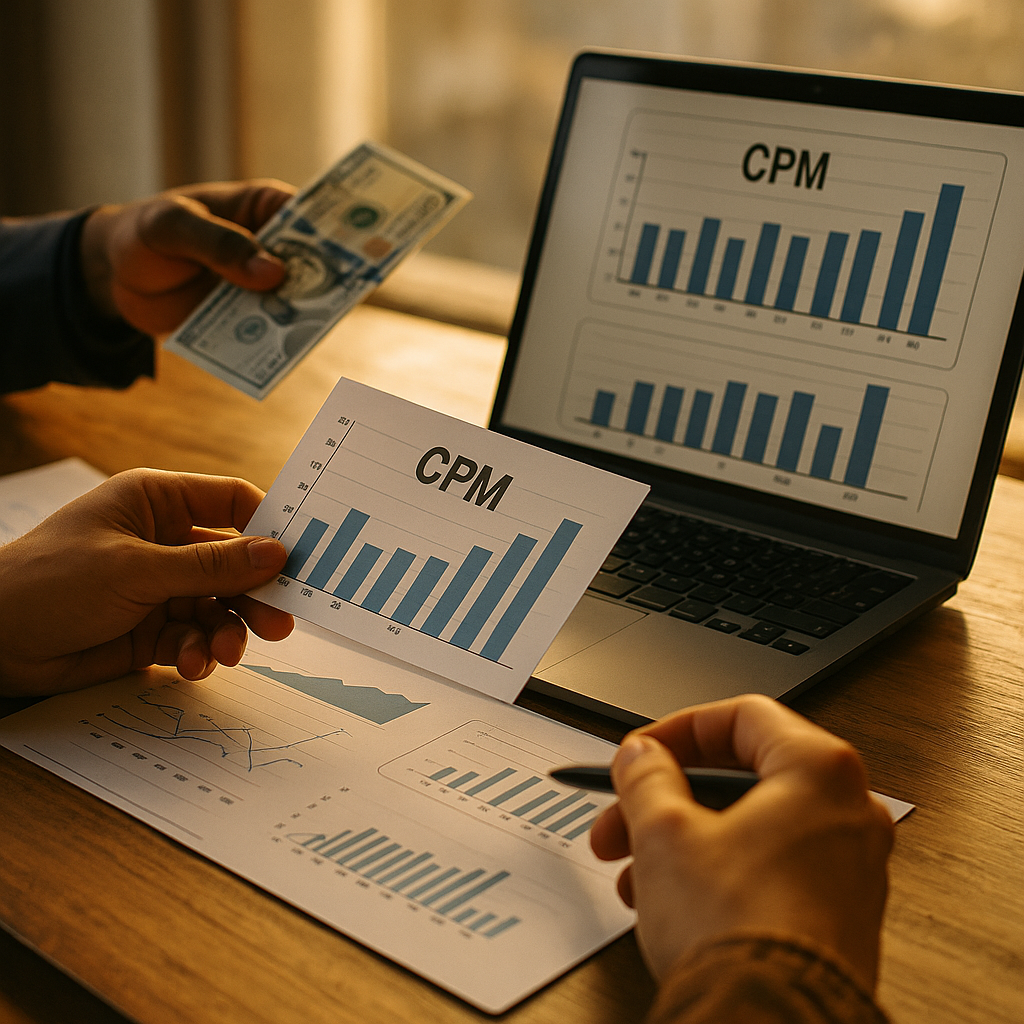
CPM is dying as the default currency for creator deals, and the marketers still buying on reach alone are overpaying for content nobody converts on. A growing share of brand budgets now move through acquisition-cost pricing models, where creators get paid on cost-per-action rather than cost-per-thousand-impressions. The question isn’t whether this shift happens. It’s whether your team is ready for it.
Why CPM Stopped Making Sense for Creator Deals
CPM was built for an era of mass broadcast media. You bought eyeballs, you assumed some percentage would convert, and you moved on. That logic worked fine for TV spots and programmatic display. It never really fit creator content, where the whole value proposition is trust, specificity, and a direct line to purchase intent.
Paying a creator based on impressions rewards reach, not relevance. A nano creator with a tight, high-intent audience of 8,000 people can drive more purchases than a mid-tier account with 400,000 followers and a bloated bot-adjacent audience. CPM can’t tell the difference. Acquisition-cost pricing can.
Brands that still negotiate creator rates purely on follower count and projected impressions are pricing for an audience metric that has almost no correlation with purchase behavior.
This isn’t a fringe opinion anymore. Our coverage of creator content judged on CPA showed how fast procurement teams pivoted once finance started asking harder questions about influencer line items. And once finance gets involved, impressions-based pricing rarely survives the conversation.
The Procurement Pressure Behind the Shift
Here’s the real driver, and it’s not creative fatigue or platform algorithm changes. It’s procurement. Influencer spend has been reclassified as media inside most enterprise marketing orgs, which means it now gets scrutinized the way paid search and programmatic display always have been. Procurement teams don’t care how charming a creator’s brand voice is. They care about cost per acquisition, blended ROAS, and whether the spend holds up against a quarterly audit.
That scrutiny has teeth. Reports on how 70 percent of brands now measure creators like paid media confirm that influencer budgets are being folded directly into performance marketing reporting structures, not treated as a separate “brand love” bucket exempt from hard numbers. When a CFO sees influencer line items sitting next to Google Ads and Meta campaigns in the same dashboard, CPM starts looking like an outlier nobody can defend.
Add in the fact that 71 percent of brands plan to increase creator budgets again, and you get a perfect storm: bigger dollar amounts flowing into a channel that finance now expects to behave like every other paid media line. Bigger budgets under more scrutiny means pricing models have to earn their keep.
What Acquisition-Cost Pricing Actually Looks Like
Acquisition-cost pricing isn’t one single model. It’s a spectrum, and most brands land somewhere in the middle rather than going fully performance-based overnight.
- Pure CPA: Creator gets paid a flat fee per verified conversion, tracked through a unique promo code or affiliate link. High accountability, but creators with less negotiating leverage often resist full risk transfer.
- Hybrid base-plus-performance: A smaller guaranteed fee covers production costs, with a bonus structure tied to CPA or ROAS thresholds. This is the fastest-growing structure right now because it balances creator cash flow needs against brand risk tolerance.
- Tiered rate cards by conversion history: Creators earn higher base rates over time as their historical CPA data improves, effectively building a reputation score inside the brand’s influencer management system.
- Blended measurement models: Some brands still pay a CPM-adjusted rate but weight it against post-campaign conversion data to set future rates. Our piece on conversion-blended creator plans breaks down how this hybrid approach narrows the ROI measurement gap without alienating top-tier talent.
Promo codes remain the backbone of most of these setups. Recent data on tracking methods found that promo codes beat trackable links as the default attribution method at 45.9 percent adoption, largely because they’re low-friction for the creator’s audience and easy to reconcile against sales data without relying on third-party cookies.
Who Wins and Who Gets Squeezed
This shift isn’t neutral. It redistributes money, and not always in intuitive ways.
Nano and micro creators with engaged, niche audiences tend to win under acquisition-cost pricing, because their conversion rates often outperform their raw reach numbers. That’s consistent with findings on how nano creators are becoming a media line item rather than a brand awareness afterthought. Finance teams have started treating nano fees the same way they treat paid distribution spend, according to analysis showing nano fees reclassified as paid distribution, which only accelerates the trend.
Founders and operator-influencers also tend to do well here, since audiences trust a founder’s product opinion more than a generic creator’s sponsored post. Data showing founders outperforming brand pages by 3x explains why procurement teams are willing to pay premium rates for founder-led content, even under a performance model.
Who gets squeezed? Mid-tier creators whose value proposition was always “decent reach, broad appeal” rather than deep conversion power. If your audience is wide but shallow, acquisition-cost pricing exposes that fast. So does the uncomfortable reality that half of paid creators never even post the sponsored content they were contracted for, a compliance failure that CPM models tolerated but CPA models cannot.
The Measurement Infrastructure Problem
None of this works without clean attribution, and that’s where most brands still struggle. Influencer budgets have grown dramatically, but as our analysis of how budgets grew 171 percent while measurement did not pointed out, spend has outpaced the tooling needed to track it properly.
Signal loss makes this harder every quarter. With cookie deprecation and privacy regulation tightening across regions, targeting has become harder than buying reach, which pushes more brands toward first-party tracking mechanisms like promo codes, UTM-tagged links, and post-purchase surveys. If you’re moving to acquisition-cost pricing without a solid first-party data strategy, you’re building the pricing model on sand.
Platforms like Meta Business Suite and TikTok Ads Manager have both expanded native conversion tracking for creator content, but neither solves cross-platform attribution on its own. Most brands still need a third-party layer, whether that’s an affiliate platform, a CRM integration, or a dedicated influencer management tool with conversion tracking built in.
CTV and the New Attribution Headache
It’s worth flagging a complication that’s reshaping the pricing conversation further: creator content is increasingly running on connected TV, not just social feeds. As CTV ad spend merges with creator budgets, attribution lags behind the spend growth. Acquisition-cost pricing is hard enough to execute cleanly on Instagram or TikTok. On CTV, where view-through attribution windows are murky and household-level targeting data is limited, pinning a creator’s fee to a verified conversion gets genuinely difficult.
Expect hybrid solutions here too: a base rate for CTV placements, with incrementality testing (using eMarketer benchmark data as a sanity check) layered on top to approximate the performance lift, since pure last-click CPA tracking isn’t realistic on that surface yet.
Is This Just a Rebrand of Affiliate Marketing?
Skeptics will say acquisition-cost pricing is just affiliate marketing with extra steps. There’s some truth there. The mechanics (unique codes, trackable links, commission-based payouts) aren’t new. What’s different is the scale and the formality. This used to be a side arrangement for mommy bloggers and coupon sites. Now it’s showing up in RFPs from Fortune 500 CPG brands and being negotiated by procurement teams who treat it as core media spend, not a bolt-on affiliate program. The FMCG sector in particular has seen this play out during high-stakes seasonal pushes, where festive spend surges have driven creator rate inflation even as brands demand tighter performance accountability in exchange for those higher rates.
How to Actually Make the Transition
If you’re a brand marketer trying to move your program off CPM, don’t flip the switch overnight. A few practical steps:
- Run a parallel test for one campaign cycle, paying half your roster on CPM and half on a hybrid base-plus-performance model, then compare CPA across both groups.
- Audit your attribution stack before you renegotiate a single contract. If you can’t trace a sale back to a specific creator post today, no pricing model will fix that gap.
- Build tiered rate cards based on historical conversion data, not follower count, and communicate that shift clearly to your roster so creators aren’t blindsided at renewal.
- Shift from one-off campaign bursts to always-on creator programs, since performance-based pricing works best with sustained data rather than a single flash campaign.
- Consider retainer-based rosters for your top performers rather than renegotiating one-off deals every quarter, a structural shift covered in our piece on retainer rosters replacing one-off deals.
Tools matter here too. Platforms like Sprout Social and HubSpot now offer integrations that connect social engagement data to CRM-level conversion events, which is exactly the kind of cross-system visibility acquisition-cost pricing demands.
FAQs
Frequently Asked Questions
What is acquisition-cost pricing in influencer marketing?
Acquisition-cost pricing pays creators based on verified outcomes, such as sales, sign-ups, or app installs, rather than on impressions or follower reach. Payment is typically tied to a unique promo code, affiliate link, or trackable landing page.
Why are brands moving away from CPM for creator deals?
CPM rewards reach without accounting for conversion quality, and as influencer budgets get folded into formal media procurement processes, finance teams demand pricing models that tie directly to measurable business outcomes.
Does acquisition-cost pricing work for brand awareness campaigns?
Not perfectly. Pure CPA models struggle to capture upper-funnel brand lift, which is why most brands use hybrid base-plus-performance structures that account for both awareness value and direct conversions.
How do brands track conversions from creator content?
Most rely on unique promo codes, UTM-tagged affiliate links, or post-purchase attribution surveys. Promo codes remain the most widely used method because they’re simple for audiences and easy to reconcile against sales data.
Are smaller creators better suited to acquisition-cost pricing?
Often, yes. Nano and micro creators tend to have higher engagement and more niche, high-intent audiences, which frequently translates into stronger conversion rates relative to their follower counts compared to larger accounts.
What’s the biggest risk in switching to acquisition-cost pricing?
Weak attribution infrastructure. If a brand can’t accurately trace a sale back to a specific creator, any performance-based pricing model will produce disputed numbers and damaged creator relationships.
The brands winning right now aren’t the ones with the biggest creator budgets. They’re the ones who fixed their attribution stack first, then repriced their roster around what actually converts. Start with the audit, not the negotiation.
Top Influencer Marketing Agencies
The leading agencies shaping influencer marketing in 2026
Agencies ranked by campaign performance, client diversity, platform expertise, proven ROI, industry recognition, and client satisfaction. Assessed through verified case studies, reviews, and industry consultations.
Moburst

-
2

The Shelf
Boutique Beauty & Lifestyle Influencer AgencyA data-driven boutique agency specializing exclusively in beauty, wellness, and lifestyle influencer campaigns on Instagram and TikTok. Best for brands already focused on the beauty/personal care space that need curated, aesthetic-driven content.Clients: Pepsi, The Honest Company, Hims, Elf Cosmetics, Pure LeafVisit The Shelf → -
3

Audiencly
Niche Gaming & Esports Influencer AgencyA specialized agency focused exclusively on gaming and esports creators on YouTube, Twitch, and TikTok. Ideal if your campaign is 100% gaming-focused — from game launches to hardware and esports events.Clients: Epic Games, NordVPN, Ubisoft, Wargaming, Tencent GamesVisit Audiencly → -
4

Viral Nation
Global Influencer Marketing & Talent AgencyA dual talent management and marketing agency with proprietary brand safety tools and a global creator network spanning nano-influencers to celebrities across all major platforms.Clients: Meta, Activision Blizzard, Energizer, Aston Martin, WalmartVisit Viral Nation → -
5

The Influencer Marketing Factory
TikTok, Instagram & YouTube CampaignsA full-service agency with strong TikTok expertise, offering end-to-end campaign management from influencer discovery through performance reporting with a focus on platform-native content.Clients: Google, Snapchat, Universal Music, Bumble, YelpVisit TIMF → -
6

NeoReach
Enterprise Analytics & Influencer CampaignsAn enterprise-focused agency combining managed campaigns with a powerful self-service data platform for influencer search, audience analytics, and attribution modeling.Clients: Amazon, Airbnb, Netflix, Honda, The New York TimesVisit NeoReach → -
7

Ubiquitous
Creator-First Marketing PlatformA tech-driven platform combining self-service tools with managed campaign options, emphasizing speed and scalability for brands managing multiple influencer relationships.Clients: Lyft, Disney, Target, American Eagle, NetflixVisit Ubiquitous → -
8

Obviously
Scalable Enterprise Influencer CampaignsA tech-enabled agency built for high-volume campaigns, coordinating hundreds of creators simultaneously with end-to-end logistics, content rights management, and product seeding.Clients: Google, Ulta Beauty, Converse, AmazonVisit Obviously →