


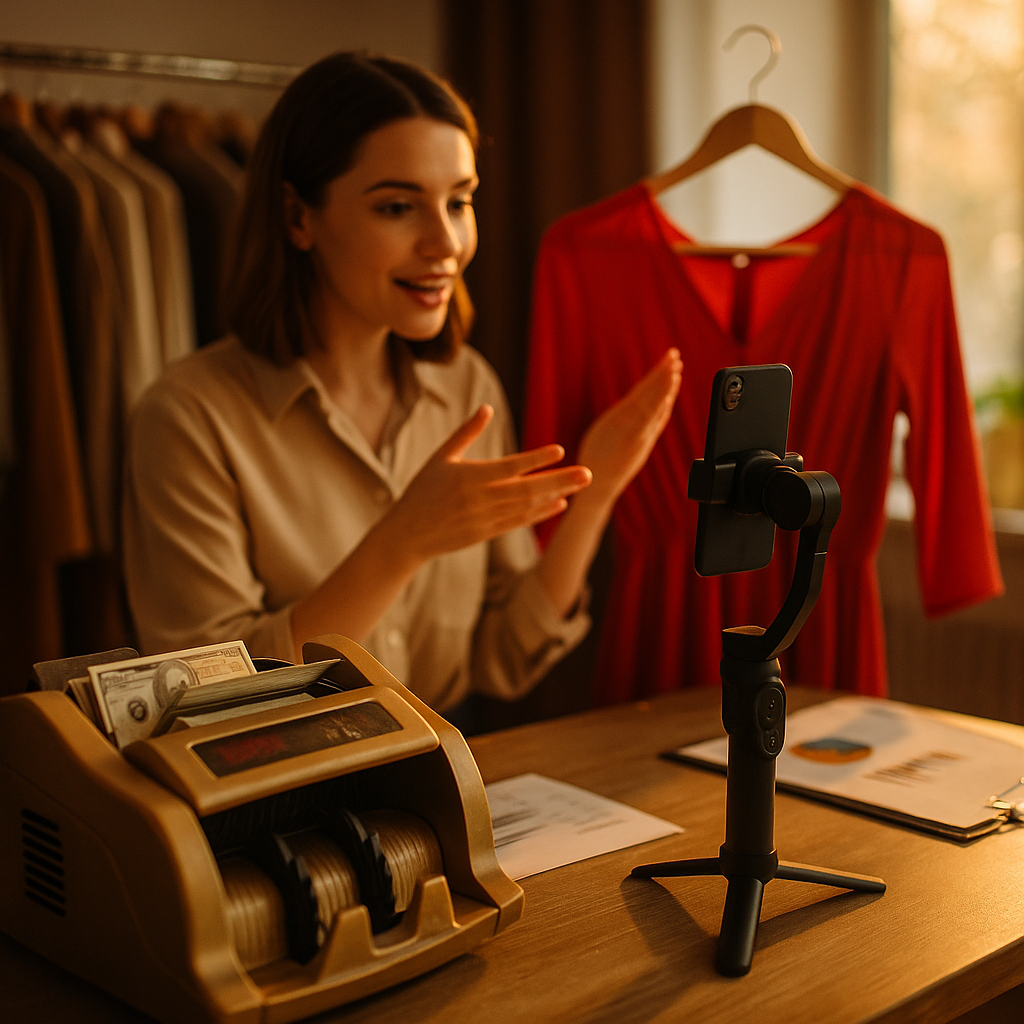
A 90 second Reel might get you a rate card discount. A 45 minute live shopping session? That’s where creators quietly charge three to five times more, and smart brands pay it without blinking. If your media plan still treats live shopping session pricing like a line item under “video content,” you’re underfunding the one format that’s actually moving product.
Why Watch Time Became the New Scarcity
For years, influencer pricing followed a simple logic: more reach, more money. That math is breaking down. Platforms have gotten better at rewarding content that holds attention rather than content that merely gets seen, and brands have gotten better at measuring what actually drives purchase intent. Long form video and live sessions ask something reach-driven formats never did: sustained, uninterrupted attention from a viewer who hasn’t scrolled away yet.
That attention is scarce. A 15 second Story might get a glance. A live shopping session demands 20, 30, even 60 minutes of someone’s evening. Creators know this, and they price accordingly.
Brands running live shopping events report conversion rates several multiples higher than standard social posts, because the format compresses discovery, demonstration, and checkout into a single uninterrupted session.
The Real Cost Drivers Behind Live Session Rates
Ask a creator why their live shopping rate looks steep next to a static post, and you’ll get a list that has nothing to do with vanity metrics. It’s operational.
- Pre-production time. Live shopping isn’t improv. Creators script talking points, test product, rehearse transitions, and coordinate with brand reps on pricing, promo codes, and inventory availability before a single viewer logs on.
- Real-time risk. There’s no editing out a stumble, a glitchy app, or a product that doesn’t work as promised. Live carries reputational exposure that recorded content simply doesn’t.
- Platform and tech overhead. Many creators now run live shopping through dedicated commerce tools, which means managing checkout flows, answering comments in real time, and troubleshooting on the fly, often solo.
- Duration itself. A 45 minute commitment is not comparable to a 30 second clip. Creators are increasingly pricing by time-on-camera, not just deliverable count.
None of this is padding. It’s the labor that makes a live session convert, and it’s exactly why treating it like a standard deliverable in your rate card creates friction at negotiation and underperformance at execution.
Long Form Isn’t Just “More Content,” It’s a Different Skill
Long form YouTube reviews, podcast-style unboxings, and 10 minute tutorials sit in a similar premium tier for a related but distinct reason: narrative construction. A 60 second video needs a hook and a punchline. A 12 minute video needs pacing, structure, and enough substance to survive a viewer’s wandering attention span without losing them. That’s a craft skill, and creators who’ve built an audience on long form have usually spent years refining it. Paying them the same rate as a Reel creator ignores the actual production discipline involved.
If you’re still benchmarking formats against a flat rate card, it’s worth revisiting how format cost multipliers should shape your pricing logic before your next negotiation cycle.
What Brands Are Actually Paying For
Strip away the format labels and live shopping pricing comes down to three things brands are buying: conversion proximity, trust transfer, and data.
Conversion proximity. Live shopping collapses the funnel. A viewer watches a demo, asks a question in chat, gets an answer, and buys, all within minutes. No format compresses the path to purchase that tightly, and that compression has measurable value that brands should be willing to fund.
Trust transfer. Live is unscripted by nature, or at least it appears that way to viewers. That perceived authenticity is exactly why audiences trust live recommendations more than polished ads. You’re not just paying for a time slot, you’re paying for the creator’s accumulated credibility being spent on your product in real time.
Data. Live sessions generate first-party signal brands rarely get elsewhere: real-time questions, objections, drop-off points, and purchase behavior tied directly to specific moments in the stream. That’s qualitative and quantitative insight a static post never produces.
How to Build Live Shopping Into Your Budget Without Blowing It
The mistake most brands make isn’t paying creators fairly for live sessions, it’s treating live shopping as an occasional stunt rather than a budgeted, recurring channel. If live shopping converts at the rate your pilot data suggests, it deserves a permanent line in your creator budget cadence, not a one-off approval each time someone wants to try it.
A few practical moves:
- Benchmark against funnel contribution, not just CPM. Live shopping sessions often sit mid to lower funnel, closer to conversion than brand awareness. Evaluate them against the standards you’d apply to funnel stage benchmarks, not against your awareness content rates.
- Separate production fee from performance incentive. Pay a base rate for the time and prep involved, then layer a commission or bonus structure tied to units sold or revenue generated during the session. This protects the creator’s floor while still rewarding results.
- Pressure-test inventory and ops before locking the date. Nothing tanks a live shopping session like an out-of-stock SKU mid-stream. Coordinate with supply chain the way you would for a paid media launch.
- Build it into blended retainers where it makes sense. For creators you work with repeatedly, live shopping can be folded into a broader retainer structure rather than negotiated fresh every time. See how blended tier retainers handle mixed-format commitments across a creator roster.
Is Live Shopping Worth the Premium for Smaller Brands?
This is the question finance teams ask most, and the honest answer is: it depends on your product and your readiness. Live shopping rewards brands with tangible, demonstrable products (beauty, apparel, home goods, food) where seeing something in motion drives the sale. It’s a weaker fit for abstract services or B2B offerings where a long form explainer video might actually do more work. Before committing budget, run the numbers the way you would for any new acquisition channel, benchmarked against your existing creator CAC versus paid social data.
It’s also worth noting that platforms themselves are investing heavily here. TikTok Shop and Instagram’s commerce tools have both expanded live shopping functionality, which means the infrastructure is maturing faster than most brand playbooks. Check current capabilities directly through TikTok’s advertising resources and Meta’s business platform before assuming your last live shopping setup still reflects what’s available.
Negotiating Rates Without Undervaluing the Format
Creators who specialize in live shopping have started quoting hourly or per-session rates that look nothing like their standard post pricing, and brands that push back using old benchmarks tend to lose access to the best talent. A useful negotiation frame: ask what percentage of the quoted rate covers pre-production versus live time versus post-event reporting. That breakdown often reveals the rate is more defensible than it first appears, and it gives you a basis for trimming scope (shorter pre-production call, simplified reporting) if budget is genuinely tight, rather than just haggling on the headline number.
Industry data from sources like eMarketer continues to show live commerce formats outperforming static content on engagement and time-on-content metrics, which gives procurement teams real external benchmarks to cite internally when justifying premium rates to finance.
If you’re building these costs into a broader creator program, it also helps to revisit how your always-on creator program framework accounts for high-investment formats like live shopping alongside lighter touch deliverables, so premium sessions don’t quietly eat the budget meant for ongoing relationship building.
FAQs
Why does live shopping cost more than standard sponsored posts?
Live shopping sessions require extensive pre-production, real-time risk management, and often an hour or more of uninterrupted creator time, compared to a few minutes of production for a static post or short clip. Creators price for the labor and exposure, not just the final output.
How should brands structure payment for live shopping sessions?
A hybrid structure works best: a flat base fee that covers prep, hosting, and reporting time, plus a performance incentive tied to units sold or revenue generated during the stream. This protects the creator’s floor while aligning incentives with brand results.
What products perform best in live shopping formats?
Tangible, demonstrable products such as beauty, apparel, home goods, and food tend to convert well because viewers benefit from seeing the product in motion. Abstract services or complex B2B offerings often perform better in long form explainer content instead.
How does long form video pricing compare to short form content?
Long form content commands higher rates because it requires narrative structure, pacing, and sustained viewer retention skills that short form clips don’t demand. Creators with proven long form audiences typically charge significantly more than their short form rate card.
Should live shopping be a recurring budget line or a one-off test?
If pilot data shows strong conversion, live shopping should move into a recurring, budgeted channel rather than a one-off approval. Treating it as always-on makes it easier to negotiate consistent creator rates and plan inventory around scheduled sessions.
Stop pricing live shopping and long form content like discounted versions of a short form rate card. Build a format-specific budget line, tie payment structures to the actual time and risk involved, and measure results against funnel contribution rather than reach alone. The brands treating live commerce as a serious, recurring channel are the ones seeing it pay off.
FAQs
Why does live shopping cost more than standard sponsored posts?
Live shopping sessions require extensive pre-production, real-time risk management, and often an hour or more of uninterrupted creator time, compared to a few minutes of production for a static post or short clip. Creators price for the labor and exposure, not just the final output.
How should brands structure payment for live shopping sessions?
A hybrid structure works best: a flat base fee that covers prep, hosting, and reporting time, plus a performance incentive tied to units sold or revenue generated during the stream. This protects the creator’s floor while aligning incentives with brand results.
What products perform best in live shopping formats?
Tangible, demonstrable products such as beauty, apparel, home goods, and food tend to convert well because viewers benefit from seeing the product in motion. Abstract services or complex B2B offerings often perform better in long form explainer content instead.
How does long form video pricing compare to short form content?
Long form content commands higher rates because it requires narrative structure, pacing, and sustained viewer retention skills that short form clips don’t demand. Creators with proven long form audiences typically charge significantly more than their short form rate card.
Should live shopping be a recurring budget line or a one-off test?
If pilot data shows strong conversion, live shopping should move into a recurring, budgeted channel rather than a one-off approval. Treating it as always-on makes it easier to negotiate consistent creator rates and plan inventory around scheduled sessions.
Top Influencer Marketing Agencies
The leading agencies shaping influencer marketing in 2026
Agencies ranked by campaign performance, client diversity, platform expertise, proven ROI, industry recognition, and client satisfaction. Assessed through verified case studies, reviews, and industry consultations.
Moburst

-
2

The Shelf
Boutique Beauty & Lifestyle Influencer AgencyA data-driven boutique agency specializing exclusively in beauty, wellness, and lifestyle influencer campaigns on Instagram and TikTok. Best for brands already focused on the beauty/personal care space that need curated, aesthetic-driven content.Clients: Pepsi, The Honest Company, Hims, Elf Cosmetics, Pure LeafVisit The Shelf → -
3

Audiencly
Niche Gaming & Esports Influencer AgencyA specialized agency focused exclusively on gaming and esports creators on YouTube, Twitch, and TikTok. Ideal if your campaign is 100% gaming-focused — from game launches to hardware and esports events.Clients: Epic Games, NordVPN, Ubisoft, Wargaming, Tencent GamesVisit Audiencly → -
4

Viral Nation
Global Influencer Marketing & Talent AgencyA dual talent management and marketing agency with proprietary brand safety tools and a global creator network spanning nano-influencers to celebrities across all major platforms.Clients: Meta, Activision Blizzard, Energizer, Aston Martin, WalmartVisit Viral Nation → -
5

The Influencer Marketing Factory
TikTok, Instagram & YouTube CampaignsA full-service agency with strong TikTok expertise, offering end-to-end campaign management from influencer discovery through performance reporting with a focus on platform-native content.Clients: Google, Snapchat, Universal Music, Bumble, YelpVisit TIMF → -
6

NeoReach
Enterprise Analytics & Influencer CampaignsAn enterprise-focused agency combining managed campaigns with a powerful self-service data platform for influencer search, audience analytics, and attribution modeling.Clients: Amazon, Airbnb, Netflix, Honda, The New York TimesVisit NeoReach → -
7

Ubiquitous
Creator-First Marketing PlatformA tech-driven platform combining self-service tools with managed campaign options, emphasizing speed and scalability for brands managing multiple influencer relationships.Clients: Lyft, Disney, Target, American Eagle, NetflixVisit Ubiquitous → -
8

Obviously
Scalable Enterprise Influencer CampaignsA tech-enabled agency built for high-volume campaigns, coordinating hundreds of creators simultaneously with end-to-end logistics, content rights management, and product seeding.Clients: Google, Ulta Beauty, Converse, AmazonVisit Obviously →