


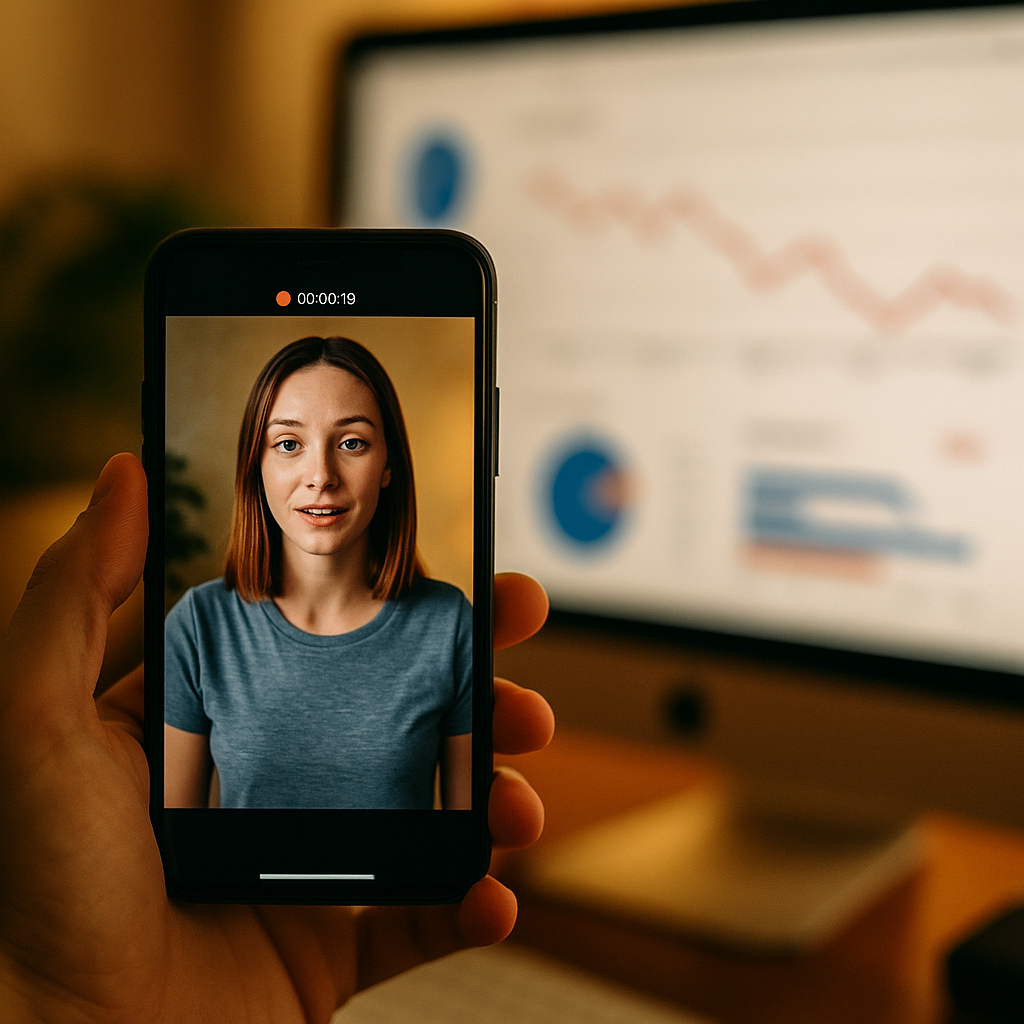
Can an AI actor really replace a $1,500 creator shoot in under two minutes? Arcads says yes, and its pitch has landed squarely in the middle of performance marketing teams scrambling to feed Meta and TikTok’s creative-hungry algorithms. The promise is seductive: pick a synthetic spokesperson, paste in a script, and walk away with a polished UGC-style ad before your coffee goes cold. But “two minutes” is a production claim, not a performance guarantee. Before you route budget toward an AI actor library, it’s worth separating the speed story from the ROI story.
What Arcads Actually Does
Arcads positions itself as a video generation platform built specifically for performance marketers, not filmmakers. You select from a library of AI-generated actors (diverse ages, accents, settings), feed in a script or product angle, and the tool outputs a talking-head style ad that mimics organic creator content. No camera crew, no usage rights negotiation, no waiting on a creator’s filming schedule.
The appeal is obvious for teams running high-volume paid social tests. Instead of briefing five creators and waiting a week for footage, a media buyer can generate fifteen script variations against three different AI actors in an afternoon. That’s the pitch anyway, and it echoes a broader shift we’ve covered in how variant sprints replace slow A/B tests for UGC-style creative.
The Two Minute Claim: Marketing Line or Operational Reality?
Here’s where brand teams need to slow down and actually test the claim rather than absorb it as fact. Two minutes refers to generation time once a script is locked, not the full production cycle. Script writing, hook testing, compliance review, and voiceover QA still eat time on the back end.
The real metric isn’t generation speed. It’s time-to-launch-ready-asset, and that number almost always looks worse than the demo video suggests.
In practice, most teams we’ve spoken with report that a genuinely usable ad, one that passes brand safety review and platform policy checks, takes closer to twenty or thirty minutes per variant once you factor in script iteration and caption review. That’s still dramatically faster than a traditional shoot, but it’s not the headline number vendors lead with.
Where AI Actor Libraries Earn Their Keep
- Top-of-funnel hook testing: Running dozens of opening lines against the same product to find which hook stops the scroll.
- Localization at scale: Swapping actors and scripts for different regional audiences without rebooking talent.
- Early-stage concept validation: Testing messaging angles before committing budget to a real creator shoot.
- Low-stakes retargeting creative: Where brand polish matters less than refresh frequency.
Those use cases map closely to what performance teams are already doing with synthetic UGC elsewhere. Our breakdown of cartoon avatar tools winning hooks but losing conversions found the same pattern: AI-generated talent is strong at the awareness stage and weaker once you need the trust signal of a real human endorsing a product.
Where the Model Breaks Down
AI actors still struggle with three things that matter a lot in paid social: micro-expressions, pacing irregularities that read as authentic, and platform-specific disclosure requirements. Meta and TikTok are both tightening scrutiny on synthetic media, and the FTC’s endorsement guidelines don’t carve out an exception just because the “person” in the ad isn’t real.
If an AI-generated actor delivers a testimonial that implies personal product use, and that’s not disclosed clearly, you’re exposed. This isn’t a theoretical risk. We’ve tracked how AI spokescharacter tools expose affiliate disclosure gaps, and the same compliance questions apply directly to Arcads-style actor libraries used in paid media.
A synthetic actor saying “this changed my skincare routine” is still a testimonial claim. The FTC doesn’t care that the face was generated by a GPU.
There’s also a performance ceiling. Early internal benchmarks shared by agencies running split tests between AI actor ads and real creator UGC show AI variants performing competitively on hook rate and thumb-stop percentage, but underperforming on completion rate and click-through once the video passes the six-second mark. Viewers seem to sense something is off, even if they can’t articulate what.
Building an Evaluation Framework, Not Just a Vibe Check
Most teams adopt tools like Arcads based on a demo reel and a sales call. That’s backwards for a paid media line item that could represent a meaningful chunk of creative production budget by year end. Instead, run a structured evaluation:
- Cost per launch-ready asset. Not cost per generation. Include review and revision cycles.
- Hold-out performance test. Run AI actor variants against a matched set of real creator UGC on identical spend and audience.
- Disclosure audit. Confirm every AI-generated testimonial carries appropriate labeling per platform policy and FTC guidance.
- Fatigue rate. Track how quickly audiences recognize and tune out repeated AI actors across your campaigns.
This mirrors the broader shift toward agentic creative testing that scores UGC before launch spend, where the goal isn’t just generating more variants but generating variants worth actually spending media dollars behind.
It’s also worth benchmarking against your existing creator economics. If an AI actor library costs $300 a month for unlimited generations but produces assets that convert 20% worse than a $400 creator package, the “savings” evaporate fast. We modeled this tradeoff in detail when comparing AI UGC video costs versus creator rates, and the math rarely favors a blanket replacement strategy.
Platform Policy Is Moving Faster Than the Tools
Meta has started requiring disclosure labels for AI-generated or AI-altered content in ads, and Meta’s business tools documentation continues to expand on what qualifies. TikTok has similar requirements through its branded content and ad transparency policies, accessible via TikTok’s advertising platform. Treat these as moving targets, not settled rules. What’s compliant today could require a new disclosure format next quarter.
Agencies running multi-platform campaigns need a central compliance checklist that gets reviewed monthly, not annually. This is the same operational discipline we’ve flagged around compliance risk hiding inside unified customer profiles, just applied to creative generation instead of payout systems.
So, Does It Belong in Your Stack?
Arcads and tools like it earn a place in the testing phase of paid social, not the scaling phase. Use AI actors to kill weak concepts cheaply and fast. Once a concept proves itself, move to real creator talent or a hybrid approach for the assets that will carry real budget. Blending synthetic speed with human-backed scaling production gives you the best of both without betting your entire paid social budget on a technology still working out its performance ceiling.
Research from eMarketer continues to show that authenticity signals remain one of the strongest predictors of ad engagement among younger audiences, a trend that synthetic actors have not yet fully cracked regardless of how fast they’re produced.
Frequently Asked Questions
Is Arcads actually faster than hiring a real creator?
Generation is faster, often minutes rather than days. But total time-to-launch, including script revisions and compliance review, narrows that gap considerably.
Do AI actor ads need FTC disclosure?
Yes. If a synthetic actor delivers a testimonial-style claim, it still falls under FTC endorsement guidance, and platforms increasingly require labeling for AI-generated content.
Do AI actor libraries work better for certain funnel stages?
They tend to perform well for top-of-funnel hook testing and early concept validation, but underperform real creator UGC for completion rate and conversion once trust becomes the deciding factor.
Should agencies replace creator budgets with AI actor tools entirely?
Most performance data suggests a hybrid model works better: use AI actors for rapid testing, then shift winning concepts to real creators or hybrid production for scaled spend.
Next step: run a four-week hold-out test pitting Arcads-generated variants against your existing creator UGC on matched spend, and let completion rate and disclosure compliance, not generation speed, decide whether it earns a permanent slot in your testing stack.
Frequently Asked Questions
Is Arcads actually faster than hiring a real creator?
Generation is faster, often minutes rather than days. But total time-to-launch, including script revisions and compliance review, narrows that gap considerably.
Do AI actor ads need FTC disclosure?
Yes. If a synthetic actor delivers a testimonial-style claim, it still falls under FTC endorsement guidance, and platforms increasingly require labeling for AI-generated content.
Do AI actor libraries work better for certain funnel stages?
They tend to perform well for top-of-funnel hook testing and early concept validation, but underperform real creator UGC for completion rate and conversion once trust becomes the deciding factor.
Should agencies replace creator budgets with AI actor tools entirely?
Most performance data suggests a hybrid model works better: use AI actors for rapid testing, then shift winning concepts to real creators or hybrid production for scaled spend.
Top Influencer Marketing Agencies
The leading agencies shaping influencer marketing in 2026
Agencies ranked by campaign performance, client diversity, platform expertise, proven ROI, industry recognition, and client satisfaction. Assessed through verified case studies, reviews, and industry consultations.
Moburst

-
2

The Shelf
Boutique Beauty & Lifestyle Influencer AgencyA data-driven boutique agency specializing exclusively in beauty, wellness, and lifestyle influencer campaigns on Instagram and TikTok. Best for brands already focused on the beauty/personal care space that need curated, aesthetic-driven content.Clients: Pepsi, The Honest Company, Hims, Elf Cosmetics, Pure LeafVisit The Shelf → -
3

Audiencly
Niche Gaming & Esports Influencer AgencyA specialized agency focused exclusively on gaming and esports creators on YouTube, Twitch, and TikTok. Ideal if your campaign is 100% gaming-focused — from game launches to hardware and esports events.Clients: Epic Games, NordVPN, Ubisoft, Wargaming, Tencent GamesVisit Audiencly → -
4

Viral Nation
Global Influencer Marketing & Talent AgencyA dual talent management and marketing agency with proprietary brand safety tools and a global creator network spanning nano-influencers to celebrities across all major platforms.Clients: Meta, Activision Blizzard, Energizer, Aston Martin, WalmartVisit Viral Nation → -
5

The Influencer Marketing Factory
TikTok, Instagram & YouTube CampaignsA full-service agency with strong TikTok expertise, offering end-to-end campaign management from influencer discovery through performance reporting with a focus on platform-native content.Clients: Google, Snapchat, Universal Music, Bumble, YelpVisit TIMF → -
6

NeoReach
Enterprise Analytics & Influencer CampaignsAn enterprise-focused agency combining managed campaigns with a powerful self-service data platform for influencer search, audience analytics, and attribution modeling.Clients: Amazon, Airbnb, Netflix, Honda, The New York TimesVisit NeoReach → -
7

Ubiquitous
Creator-First Marketing PlatformA tech-driven platform combining self-service tools with managed campaign options, emphasizing speed and scalability for brands managing multiple influencer relationships.Clients: Lyft, Disney, Target, American Eagle, NetflixVisit Ubiquitous → -
8

Obviously
Scalable Enterprise Influencer CampaignsA tech-enabled agency built for high-volume campaigns, coordinating hundreds of creators simultaneously with end-to-end logistics, content rights management, and product seeding.Clients: Google, Ulta Beauty, Converse, AmazonVisit Obviously →