


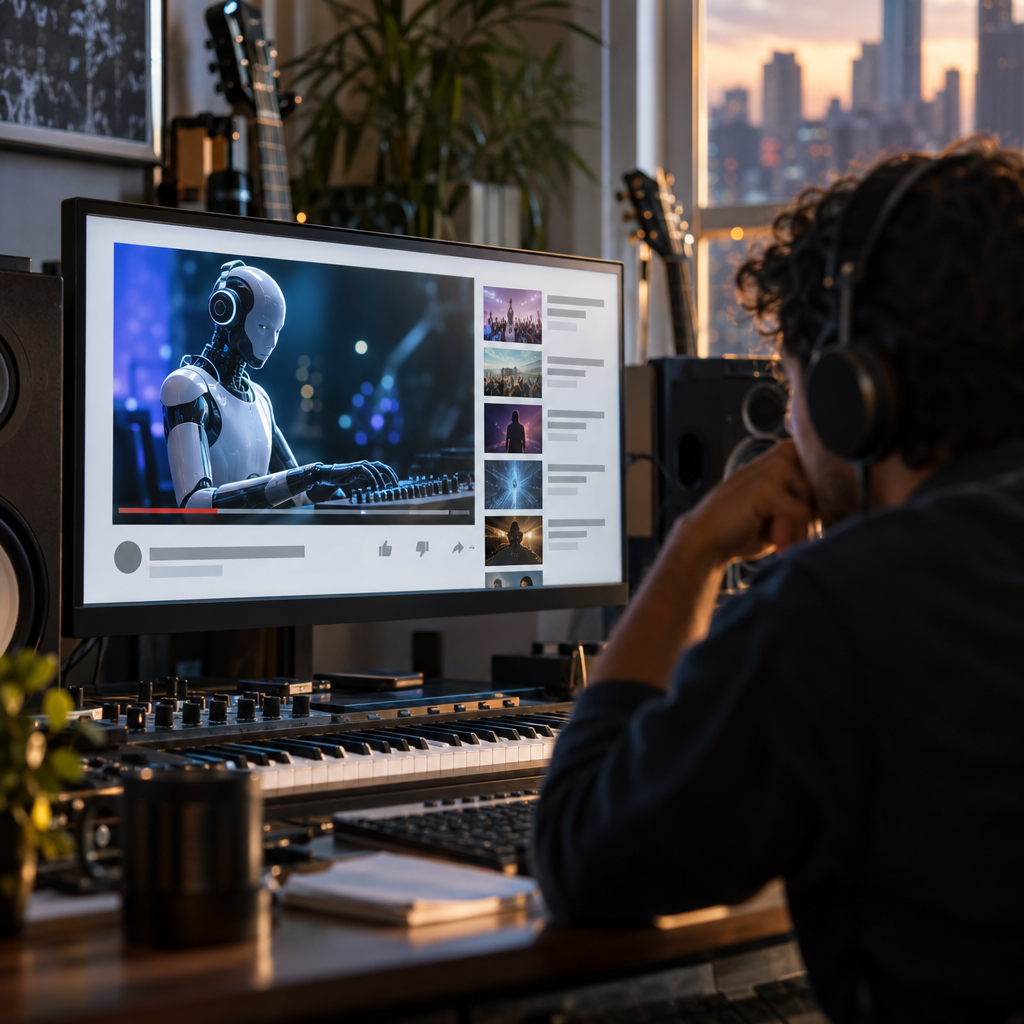
73 percent of consumers say they’d trust a brand less if they found out AI generated content wasn’t disclosed. That single stat should make every brand marketer sit up, because YouTube just made nondisclosure a lot harder to get away with. Its new rule requiring creators to label AI generated or altered music in videos isn’t just a platform policy update. It’s a preview of where consumer trust and AI labeling are headed across every channel your brand touches.
What YouTube Actually Changed
YouTube now requires creators to disclose when a video contains AI generated or substantially altered music, whether that’s a fully synthetic track or a human recording run through AI mastering and voice tools. The label shows up as a small disclosure tag on the video, similar to the “altered or synthetic content” flags YouTube already applies to deepfakes and manipulated video. Creators who don’t disclose risk content removal, demonetization, or account strikes.
On paper, this is a music policy. In practice, it’s a trust policy. YouTube has spent years building out its synthetic media disclosure framework (you can read the current guidelines directly via Google’s support documentation), and music was the last major content type without a clear labeling requirement. Now it’s covered.
Why This Signals More Than a Music Rule
Here’s the thing about platform policy: it rarely stays contained to the category it launches in. YouTube didn’t start with music because music is the biggest AI risk category. It started there because it’s the easiest one to detect and enforce. Audio fingerprinting technology is mature. Voice cloning detection is improving fast. Expect the same labeling logic to expand toward AI generated voiceovers, synthetic avatars, and AI edited product demos within the next product cycles.
Brands that treat this as a niche audio policy update are missing the bigger pattern. TikTok, Meta, and Instagram have all rolled out their own AI disclosure requirements over the past two years, and regulators are watching closely. The FTC’s endorsement guidelines already require clear disclosure when content is deceptive or misleading, and AI generated content that passes as organic or human made sits squarely in that risk zone.
Platforms are no longer asking creators to disclose AI use as a courtesy. They’re building enforcement infrastructure around it, which means brands that treat disclosure as optional are building campaigns on borrowed time.
The Trust Math: What the Data Actually Says
Trust in influencer content was already fragile before AI entered the picture. Our coverage of recent trust data showed that undisclosed AI involvement erodes audience confidence faster than almost any other content issue, including sponsorship nondisclosure. That’s a notable finding: audiences have grown relatively tolerant of “#ad” tags over the past decade, but AI labeling triggers a sharper trust penalty.
Why the gap? Sponsorship disclosure tells an audience “this creator was paid.” AI disclosure tells them “this might not be what it appears to be.” Those are different categories of trust risk, and consumers are treating them that way. Research from eMarketer and ongoing social platform studies from Sprout Social both point to the same conclusion: transparency about AI use correlates with higher brand favorability, not lower, even when the AI involvement itself is substantial.
That’s a counterintuitive but important finding for brand teams nervous about disclosure hurting campaign performance. It doesn’t. Hiding AI use hurts performance. Disclosing it, done well, barely moves the needle on engagement and protects you from the much bigger downside of getting caught.
What This Means for Brand Operations
If you’re running influencer programs that involve any AI tooling, and at this point most do, YouTube’s rule is your cue to formalize disclosure as a standard operating procedure rather than a case by case judgment call. A few practical moves:
- Audit your production pipeline. AI mastering tools, voice enhancement software, and auto generated background music are common in creator content and brand videos alike. Map where they show up before a platform or regulator maps it for you.
- Build disclosure into creator briefs. Don’t leave it to individual creators to interpret platform policy. Specify disclosure language and placement in the brief itself, the same way you’d specify hashtag requirements. Our piece on turning creator data into briefs covers how operational detail like this gets systematized at scale.
- Treat disclosure as a creative asset, not a compliance tax. Brands getting this right are folding disclosure into the content itself rather than bolting it on as an afterthought label.
- Loop in legal and compliance earlier. AI disclosure increasingly overlaps with FTC endorsement rules, and the two sets of requirements need to be managed together, not in separate workflows.
This isn’t just risk management, either. Brands that lean into AI transparency are finding it works as a differentiator. The data in our breakdown of AI production costs and creator trust pricing shows that creators who are upfront about their AI workflows are commanding comparable rates to fully organic creators, because audiences reward the honesty more than they punish the tool.
Where the Real Risk Lives
The compliance risk isn’t really about YouTube pulling your video. It’s about the compounding reputational cost of getting flagged publicly for nondisclosure in an environment where audiences are primed to be suspicious. A single viral callout about an undisclosed AI generated track in a sponsored video can do more damage than the original sponsorship underperforming ever would.
There’s also a format specific angle worth noting. Live and unscripted formats have consistently outperformed polished, heavily produced content on trust metrics, a pattern our team documented in live format trust research. AI labeling requirements add another reason to lean toward formats that are harder to fake and easier to verify. The same principle shows up in category specific research too: educational content that beats polished ads on trust tends to win precisely because it reads as unscripted and credible, the opposite of what a synthetic, undisclosed production feels like once discovered.
None of this means AI tools are off the table. It means the brands winning right now are the ones building disclosure into their process rather than scrambling to retrofit it after a platform policy forces their hand.
FAQs
Frequently Asked Questions
What exactly does YouTube’s AI music disclosure rule require?
Creators must label videos that contain AI generated or substantially AI altered music. The label appears as a disclosure tag on the video, and noncompliant content can face removal, demonetization, or account penalties.
Does this rule apply to brand sponsored content, or just creator uploads?
It applies to any video on the platform regardless of whether it’s sponsored. Brand campaigns that use creators are not exempt, and brands should assume the same disclosure obligations extend to their paid partnerships.
How is AI disclosure different from standard sponsorship disclosure?
Sponsorship disclosure informs audiences about payment. AI disclosure informs audiences about authenticity, specifically whether the content or elements of it were generated or altered by AI. Data suggests undisclosed AI use carries a steeper trust penalty than undisclosed sponsorship.
Will other platforms adopt similar AI labeling requirements?
Likely yes. TikTok, Meta, and Instagram already have disclosure policies for synthetic and AI altered content, and YouTube’s music specific rule suggests platforms are moving toward more granular, content type specific labeling over time.
Does disclosing AI use hurt campaign performance?
Available data suggests it doesn’t meaningfully hurt engagement when done clearly and early. The bigger performance risk comes from nondisclosure being discovered after the fact, which tends to trigger a sharper backlash than proactive transparency.
The practical next step: pull your creator briefs this week and add a standing AI disclosure clause, before YouTube’s enforcement, or a regulator, forces the rewrite for you.
Top Influencer Marketing Agencies
The leading agencies shaping influencer marketing in 2026
Agencies ranked by campaign performance, client diversity, platform expertise, proven ROI, industry recognition, and client satisfaction. Assessed through verified case studies, reviews, and industry consultations.
Moburst

-
2

The Shelf
Boutique Beauty & Lifestyle Influencer AgencyA data-driven boutique agency specializing exclusively in beauty, wellness, and lifestyle influencer campaigns on Instagram and TikTok. Best for brands already focused on the beauty/personal care space that need curated, aesthetic-driven content.Clients: Pepsi, The Honest Company, Hims, Elf Cosmetics, Pure LeafVisit The Shelf → -
3

Audiencly
Niche Gaming & Esports Influencer AgencyA specialized agency focused exclusively on gaming and esports creators on YouTube, Twitch, and TikTok. Ideal if your campaign is 100% gaming-focused — from game launches to hardware and esports events.Clients: Epic Games, NordVPN, Ubisoft, Wargaming, Tencent GamesVisit Audiencly → -
4

Viral Nation
Global Influencer Marketing & Talent AgencyA dual talent management and marketing agency with proprietary brand safety tools and a global creator network spanning nano-influencers to celebrities across all major platforms.Clients: Meta, Activision Blizzard, Energizer, Aston Martin, WalmartVisit Viral Nation → -
5

The Influencer Marketing Factory
TikTok, Instagram & YouTube CampaignsA full-service agency with strong TikTok expertise, offering end-to-end campaign management from influencer discovery through performance reporting with a focus on platform-native content.Clients: Google, Snapchat, Universal Music, Bumble, YelpVisit TIMF → -
6

NeoReach
Enterprise Analytics & Influencer CampaignsAn enterprise-focused agency combining managed campaigns with a powerful self-service data platform for influencer search, audience analytics, and attribution modeling.Clients: Amazon, Airbnb, Netflix, Honda, The New York TimesVisit NeoReach → -
7

Ubiquitous
Creator-First Marketing PlatformA tech-driven platform combining self-service tools with managed campaign options, emphasizing speed and scalability for brands managing multiple influencer relationships.Clients: Lyft, Disney, Target, American Eagle, NetflixVisit Ubiquitous → -
8

Obviously
Scalable Enterprise Influencer CampaignsA tech-enabled agency built for high-volume campaigns, coordinating hundreds of creators simultaneously with end-to-end logistics, content rights management, and product seeding.Clients: Google, Ulta Beauty, Converse, AmazonVisit Obviously →