


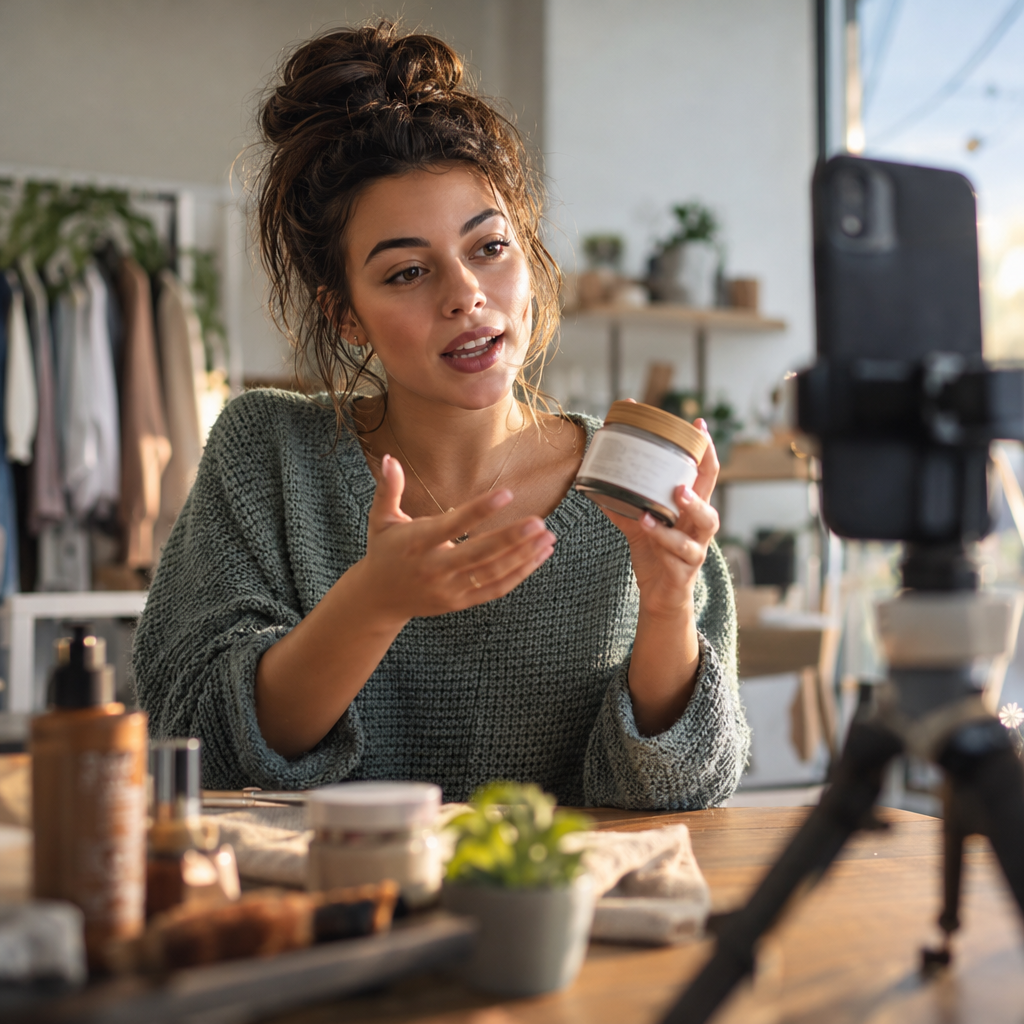
If your creator brief still says “just toggle the branded content setting,” you’re already behind. TikTok’s updated enforcement of its verbal disclosure requirement means sponsored videos need a spoken “ad” or “sponsored” callout within the first 30 seconds, not buried in a caption nobody reads. Brands that don’t script this into their creator agreements are exposed to takedowns, demonetization, and FTC scrutiny, all for a problem that a single line of dialogue could have solved.
What TikTok’s 30 Second Rule Actually Requires
TikTok’s branded content policy has always included a toggle that adds an on-screen “Paid partnership” label. For years, brands treated that toggle as the whole compliance job. It isn’t, and TikTok has made that increasingly explicit.
Under current enforcement, sponsored videos need a verbal or clearly audible disclosure within the first 30 seconds of runtime, not just a visual tag that disappears after a few seconds or sits in a caption most viewers scroll past without reading. The platform’s own TikTok for Business guidance frames this as part of its broader push for “clear and conspicuous” disclosure, language lifted almost directly from the FTC’s endorsement guides.
In practice, this means a creator saying something like “this video is sponsored by [Brand]” or “I partnered with [Brand] on this” within the opening seconds, spoken aloud, audible without needing captions turned on.
A text overlay that flashes for two seconds on a sound-on platform where most viewers watch with audio isn’t disclosure. It’s a checkbox. TikTok’s enforcement shift treats it as exactly that.
Why TikTok Moved Beyond the Text Label
Three forces converged here, and none of them are going away.
First, TikTok is a sound-on platform by design. Unlike feed-based platforms where silent scrolling is normal, TikTok’s engagement model assumes audio. A text disclosure that only matters to viewers who’ve muted the video is disclosure theater, not disclosure.
Second, accessibility pressure. Regulators in the US and UK have both signaled that disclosure needs to work for viewers who rely on audio cues, not just visual ones. The ICO and FTC have each pushed platforms toward multi-sensory disclosure standards rather than a single visual tag doing all the work.
Third, and probably the real driver: the FTC’s ongoing enforcement sweep against undisclosed endorsements. Every settlement makes platforms more nervous about being named as an enabler. TikTok tightening its own rules is partly a liability hedge. If you want the regulatory backdrop in full, the FTC’s endorsement guidance is the baseline every platform policy is now measured against.
This isn’t isolated to TikTok, either. The broader industry conversation around platform-default disclosure gaps has been building for a while, and it’s worth reading alongside our breakdown of native disclosure tools if you’re auditing your current creator workflow.
The Script Language Brands Need to Lock In
Here’s the part most briefs get wrong: they tell creators to “disclose appropriately” and leave the actual wording up to the creator’s judgment. That’s a gamble you don’t need to take.
Build explicit, pre-approved verbal disclosure language into every creator contract and brief. Not a suggestion. A script requirement, placed inside the first 30 seconds, non-negotiable.
- Acceptable phrasing examples: “This is a paid partnership with [Brand],” “Sponsored by [Brand],” “[Brand] partnered with me on this video.”
- Placement requirement: Spoken within the first 30 seconds of runtime, not buried after a hook or product demo.
- Tone flexibility: Let creators adapt phrasing to their voice, but require legal or compliance sign-off on the final wording before publish.
- Combine, don’t replace: The branded content toggle and on-screen label should still be used alongside the verbal cue. This is additive, not a substitute.
Some brands are hesitant to dictate scripts because it feels like it kills authenticity. Fair concern. But a one-sentence disclosure at the top of a video doesn’t gut creative freedom, and the alternative (a takedown or an FTC inquiry) kills a lot more than authenticity.
What Happens If Creators Skip It
Non-compliant videos can be flagged, limited in distribution, or removed outright under TikTok’s branded content policy. For creators who repeatedly skip disclosure, TikTok can restrict their ability to use the branded content toggle at all, which effectively locks them out of paid partnership work on the platform.
For brands, the exposure is different but arguably worse. The FTC doesn’t just go after creators. It names brands directly in enforcement actions when disclosure failures are systemic. If your agency or internal team ran the campaign, “the creator forgot” is not a defense that holds up.
There’s also a quieter risk: platform trust signals. TikTok’s recommendation algorithm has been reported to deprioritize content flagged for policy violations, including disclosure issues. A compliance failure doesn’t just risk a fine. It can tank the exact reach you paid for.
Treat verbal disclosure the way you treat usage rights or payment terms: a contract line item, not a creative suggestion.
Building This Into Your Operational Workflow
The fix isn’t complicated, but it does require touching three parts of your process that most teams treat as separate: briefing, contracting, and review.
Briefing. Add a disclosure script template to every creator brief, with 2 to 3 approved phrasing options and the 30 second placement requirement spelled out explicitly. Don’t leave it to inference.
Contracting. Make verbal disclosure a defined deliverable in the agreement, with language tying payment release to compliance verification. If you’re already building out clauses around cancellation or dropout risk, this fits naturally alongside the kind of protections covered in creator cancellation clauses.
Review. Someone on your team, not the creator, not the agency alone, needs to watch the draft video and confirm the spoken disclosure lands inside the first 30 seconds before it goes live. This is a five-minute check that prevents a five-figure headache.
If you’re running campaigns at scale across dozens of creators, this is exactly the kind of gap that contract-level oversight is designed to close. Manual spot checks don’t scale past a certain roster size, so build the requirement into the paperwork, not just the Slack message.
For brands running influencer-generated content through AI tools or repurposing creator footage into other formats, the disclosure requirement travels with the content. A verbal disclosure in the original TikTok doesn’t automatically carry into a repurposed cut unless you re-verify it, something worth cross-referencing against guidance on AI video disclosure risk if your team is repackaging UGC across channels.
A Quick Gut Check for Your Current Campaigns
Pull up your last five live TikTok branded content videos. Watch them with sound on, no captions. Can you hear the disclosure within the first 30 seconds without hunting for it? If the answer is no for even one, you have a compliance gap right now, not a theoretical future risk.
Industry benchmarking from eMarketer and platform engagement data from Sprout Social both point to the same trend: short-form video consumption is overwhelmingly sound-on, which is exactly why TikTok’s enforcement priority shifted toward spoken disclosure in the first place.
FAQs
Frequently Asked Questions
What exactly counts as a verbal disclosure on TikTok?
A spoken statement, audible without captions, that clearly identifies the content as sponsored or a paid partnership. Phrases like “this is a paid partnership with [Brand]” or “sponsored by [Brand]” satisfy the requirement when spoken within the first 30 seconds of the video.
Does the on-screen branded content label still matter if we add verbal disclosure?
Yes. The verbal disclosure is additive, not a replacement. TikTok’s branded content toggle and visual label should still be enabled alongside the spoken disclosure for full compliance.
Who is responsible if a creator forgets the verbal disclosure, the brand or the creator?
Both can face consequences, but the FTC has repeatedly named brands directly in enforcement actions tied to systemic disclosure failures. Contracts should assign explicit responsibility and build in a review step before publish to catch omissions early.
Does this rule apply to organic creator posts, not just paid campaigns?
The verbal disclosure requirement applies specifically to content using TikTok’s branded content toggle, meaning paid partnerships and sponsored content. Organic, non-compensated mentions of a brand don’t trigger the same requirement, though material connections (free product, affiliate links) typically still require some form of disclosure under FTC rules.
What happens to reach if a video is flagged for missing verbal disclosure?
Flagged videos can face distribution limits or removal, and repeated violations can restrict a creator’s ability to use the branded content toggle at all. This directly affects the paid reach a brand is counting on from the campaign.
How far back should brands audit existing creator content for this?
At minimum, review any currently live branded content videos and anything still running as part of an active paid media or whitelisting push. Older organic posts that are no longer boosted carry less immediate risk but are still worth spot-checking.
Next step: Add a mandatory verbal disclosure line item to your creator brief template this week, not next quarter. Script the phrasing, lock the 30 second placement, and make payment contingent on a compliance check before the video goes live.
Top Influencer Marketing Agencies
The leading agencies shaping influencer marketing in 2026
Agencies ranked by campaign performance, client diversity, platform expertise, proven ROI, industry recognition, and client satisfaction. Assessed through verified case studies, reviews, and industry consultations.
Moburst

-
2

The Shelf
Boutique Beauty & Lifestyle Influencer AgencyA data-driven boutique agency specializing exclusively in beauty, wellness, and lifestyle influencer campaigns on Instagram and TikTok. Best for brands already focused on the beauty/personal care space that need curated, aesthetic-driven content.Clients: Pepsi, The Honest Company, Hims, Elf Cosmetics, Pure LeafVisit The Shelf → -
3

Audiencly
Niche Gaming & Esports Influencer AgencyA specialized agency focused exclusively on gaming and esports creators on YouTube, Twitch, and TikTok. Ideal if your campaign is 100% gaming-focused — from game launches to hardware and esports events.Clients: Epic Games, NordVPN, Ubisoft, Wargaming, Tencent GamesVisit Audiencly → -
4

Viral Nation
Global Influencer Marketing & Talent AgencyA dual talent management and marketing agency with proprietary brand safety tools and a global creator network spanning nano-influencers to celebrities across all major platforms.Clients: Meta, Activision Blizzard, Energizer, Aston Martin, WalmartVisit Viral Nation → -
5

The Influencer Marketing Factory
TikTok, Instagram & YouTube CampaignsA full-service agency with strong TikTok expertise, offering end-to-end campaign management from influencer discovery through performance reporting with a focus on platform-native content.Clients: Google, Snapchat, Universal Music, Bumble, YelpVisit TIMF → -
6

NeoReach
Enterprise Analytics & Influencer CampaignsAn enterprise-focused agency combining managed campaigns with a powerful self-service data platform for influencer search, audience analytics, and attribution modeling.Clients: Amazon, Airbnb, Netflix, Honda, The New York TimesVisit NeoReach → -
7

Ubiquitous
Creator-First Marketing PlatformA tech-driven platform combining self-service tools with managed campaign options, emphasizing speed and scalability for brands managing multiple influencer relationships.Clients: Lyft, Disney, Target, American Eagle, NetflixVisit Ubiquitous → -
8

Obviously
Scalable Enterprise Influencer CampaignsA tech-enabled agency built for high-volume campaigns, coordinating hundreds of creators simultaneously with end-to-end logistics, content rights management, and product seeding.Clients: Google, Ulta Beauty, Converse, AmazonVisit Obviously →