


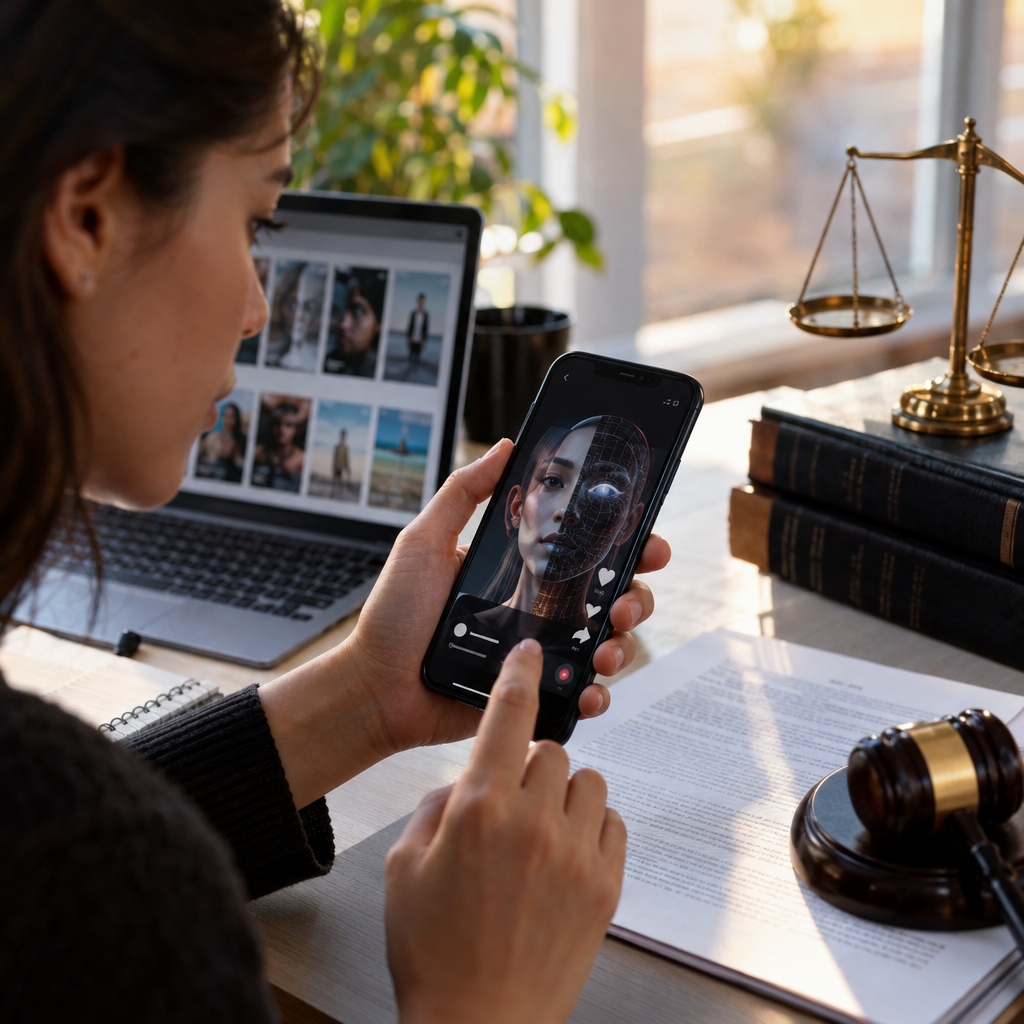
Forty three percent of marketers say they’ve already used AI to generate or augment influencer content, according to recent eMarketer survey data. Yet most of those campaigns are running with a single, often cosmetic, AI content label and nothing to satisfy the FTC’s separate disclosure requirement. That gap between “I used TikTok’s AI label toggle” and “I’m actually compliant” is where brands are quietly accumulating legal exposure.
AI generated influencer content labels aren’t optional anymore, and they aren’t a single checkbox either. Platforms want one thing. Regulators want another. Brands need both, applied correctly, on every asset that touches a synthetic voice, face, or script.
Two Different Labeling Systems, One Piece of Content
Here’s the confusion tripping up brand teams: TikTok’s AI generated content label and the FTC’s material connection disclosure are solving different problems, and satisfying one does nothing for the other.
TikTok’s label exists to tell viewers “this content was made or modified with AI.” It’s a platform integrity feature, rolled out alongside watermarking standards like C2PA, and it applies whether or not money changed hands. A creator using an AI avatar for a personal vlog needs the same label as a creator doing a paid AI-generated product demo.
The FTC disclosure, on the other hand, exists to tell viewers “this creator has a financial relationship with the brand being featured.” It has nothing to do with whether AI was involved. A fully human-shot sponsored post needs it. A fully AI-generated sponsored post needs it too.
A compliant AI-generated sponsored post needs both labels doing separate jobs: one flags synthetic media, the other flags a paid relationship. Neither label substitutes for the other, and regulators have made that distinction explicit.
Brands that treat the TikTok AI toggle as “disclosure enough” are making the same mistake teams made years ago with platform-default sponsorship tags. We covered that exact failure pattern in our breakdown of native disclosure tools and why relying on a platform’s built-in flag rarely clears the FTC’s bar on its own.
h3. Why does this matter more now than it did a year ago?
Because enforcement has caught up to the technology. The FTC has been explicit that its Endorsement Guides apply regardless of whether content is human-made, AI-assisted, or fully synthetic. The agency doesn’t care how the ad was produced. It cares whether consumers understood they were looking at one.
What TikTok Actually Requires
TikTok’s policy requires creators and brands to apply its “AI-generated content” label whenever a video contains realistic images, audio, or video that was generated or significantly edited by AI, particularly when it depicts real people saying or doing things that didn’t happen, synthetic voices reading a script, or digitally altered scenes that could be mistaken for reality.
The label itself is simple: a visible tag that reads “AI-generated content” attached to the video. TikTok also supports (and in some cases auto-detects) content made with its AI tools or third-party generators carrying C2PA metadata, applying the label automatically. But auto-detection isn’t universal, especially for content produced outside TikTok’s own creation suite and uploaded after the fact.
That’s the operational trap. If your creator used an external AI video tool (something like Synthesia-style avatars, voice cloning software, or an AI UGC generator), TikTok might not catch it automatically. The obligation to self-label falls on the uploader. Skip it, and you’re relying on TikTok’s enforcement team to catch the gap after the fact, which is a terrible place to discover a problem during a live campaign.
We’ve seen this exact scenario play out with affiliate content specifically. Our analysis of AI UGC generator outputs found that brands frequently don’t even know which assets in their affiliate pipeline were AI-touched, let alone whether they were labeled.
What the FTC Requires
The FTC’s standard hasn’t changed just because AI entered the picture, and that’s exactly the point. The FTC’s Endorsement Guides require clear, conspicuous disclosure of any material connection between a brand and an endorser. That applies to a human holding a product on camera and to a fully synthetic avatar reading a script a brand paid for.
Where AI adds a wrinkle is the question of “is this even an endorsement if no real human endorsed it?” The FTC’s position, reinforced in recent guidance and enforcement actions, is yes. If a brand uses an AI-generated persona, whether it’s a synthetic influencer or an AI clone of a real creator, and that persona expresses a preference, opinion, or review, it’s functioning as an endorsement and needs the same #ad or “Paid Partnership” treatment any human endorsement would need.
There’s a second layer most brands miss: if the AI content implies the persona personally used or tested the product, and it didn’t (because it can’t; it’s software), that’s potentially a deceptive claim on top of a disclosure failure. This is the same logic driving scrutiny in adjacent areas like drug and efficacy claims, where the FTC and FDA both care less about the medium and more about whether the claim is true and substantiated.
Stacking the Labels Without Cluttering the Post
Brands worry, reasonably, that piling on an AI label, a sponsorship disclosure, and platform branded content tags will bury the creative under compliance text. It doesn’t have to.
- Lead with the paid disclosure. “#ad” or “Paid partnership with [Brand]” should appear first, ideally in the first few seconds of a video or the first line of a caption.
- Apply the AI label as a secondary, platform-native tag. Use TikTok’s built-in AI content toggle rather than burying it in caption text. It’s designed to be visually distinct and viewers recognize it.
- Verbalize both when the format demands it. For voiceover-heavy or AI avatar content, a verbal mention (“this video uses an AI voice, and it’s a paid partnership with [Brand]”) covers viewers who skip text overlays entirely. We detailed the mechanics of verbal disclosure timing in our guide to TikTok verbal ad disclosure.
- Don’t rely on bio-level disclosure. A blanket “I sometimes use AI tools” in a creator’s profile doesn’t satisfy per-post obligations under either standard.
Two labels, applied cleanly, take up less real estate than most brands fear. The bigger cost is operational: building the habit of checking both boxes on every asset before it ships.
Where Brands Are Getting Caught Out
The riskiest scenarios aren’t the obvious ones. Nobody’s confused about labeling a fully synthetic AI spokesperson. The trouble shows up in the gray zones.
AI-enhanced but human-shot content. A creator films themselves normally, then uses AI to upscale video quality, generate a voiceover for a language dub, or add an AI-generated background. Does that need the label? Under TikTok’s policy, if the AI meaningfully altered what viewers see or hear, yes. Many brands assume “minor edit” and skip it, which is exactly the kind of judgment call that gets flagged in platform audits.
AI-summarized or AI-translated sponsored content. When a brand or platform tool auto-generates summaries or captions of a sponsored post, the disclosure can get stripped out in translation. This isn’t hypothetical. We’ve covered how AI-summarized sponsored posts have created liability precisely because the summarization layer dropped the #ad tag that existed in the original.
Deepfake-adjacent creative. Campaigns using AI to de-age a creator, generate a stylized version of their likeness, or produce “what if” scenarios carry disclosure stakes and reputational risk. Our deep dive on AI video and deepfake disclosure risk is worth a read if your creative team is experimenting with generative video tools at all.
The brands getting burned aren’t the ones ignoring AI labeling outright. They’re the ones who labeled the obvious synthetic content and missed the AI-assisted edits sitting in the middle of their content calendar.
Building This Into Your Contracts, Not Just Your Creative Review
Labeling is a content-level fix. The durable fix is contractual. If your creator agreements don’t require disclosure of AI tool usage upfront, you’re finding out about compliance gaps after the content is live, which is the most expensive time to find out.
Add a clause requiring creators to flag any AI-generated or AI-assisted elements before delivery, specify who’s responsible for applying platform AI labels (creator or brand’s social team), and confirm the creator understands FTC disclosure obligations apply independent of production method. This isn’t dramatically different from the work brands have already done tightening FTC disclosure contract clauses for standard sponsored content. AI just adds a new disclosure category to the same checklist.
For agencies managing creator rosters at scale, this is also an oversight question. If a sub-agency or network creator uses AI tools without flagging it, liability can roll uphill. That’s the same dynamic explored in our piece on agency vicarious liability, and AI usage is quickly becoming one of the most common blind spots driving those claims.
From a resourcing standpoint, this doesn’t need to be a massive lift. A pre-publish checklist, run by whoever already approves captions and hashtags, can catch 90% of gaps: Is AI involved? Is the TikTok label applied? Is the paid disclosure present and placed correctly? Three questions, every asset, no exceptions.
FAQs
Frequently Asked Questions
Does TikTok’s AI label replace the need for an FTC disclosure?
No. TikTok’s AI generated content label tells viewers that AI was used to create or alter the video. It says nothing about whether the creator was paid, so a separate #ad or “Paid Partnership” disclosure is still required whenever a material connection exists.
Do I need to label content that was only lightly edited with AI tools?
If the AI edit meaningfully changes what a viewer sees or hears (a synthetic voice, an altered scene, a digitally generated element that could be mistaken for reality), TikTok’s policy expects a label. Minor color correction or basic auto-captioning generally doesn’t trigger it, but the line is judgment-based, so when in doubt, label it.
Who is responsible for applying the AI label, the brand or the creator?
Whoever uploads the content to the platform is technically responsible for applying the label, but brands running paid campaigns should specify this explicitly in the contract rather than assuming the creator will handle it correctly.
Can a fully AI-generated spokesperson count as an endorsement under FTC rules?
Yes. If an AI-generated persona expresses an opinion, preference, or review of a product in paid content, the FTC treats it as an endorsement requiring standard disclosure, regardless of the fact that the “endorser” isn’t a real person.
What happens if an AI label gets stripped out during content repurposing or translation?
The brand still bears compliance risk even if the omission happened downstream, such as during automated summarization or translation. Brands should audit repurposed assets separately rather than assuming labels carry over automatically.
Next step: Pull your last 90 days of AI-touched creator content and run it through a two-question audit: does every AI-involved asset carry TikTok’s native label, and does every paid asset carry a clear, early-placed disclosure independent of that label? If either answer is no on more than a handful of posts, fix the contract language before the next campaign brief goes out, not after.
Top Influencer Marketing Agencies
The leading agencies shaping influencer marketing in 2026
Agencies ranked by campaign performance, client diversity, platform expertise, proven ROI, industry recognition, and client satisfaction. Assessed through verified case studies, reviews, and industry consultations.
Moburst

-
2

The Shelf
Boutique Beauty & Lifestyle Influencer AgencyA data-driven boutique agency specializing exclusively in beauty, wellness, and lifestyle influencer campaigns on Instagram and TikTok. Best for brands already focused on the beauty/personal care space that need curated, aesthetic-driven content.Clients: Pepsi, The Honest Company, Hims, Elf Cosmetics, Pure LeafVisit The Shelf → -
3

Audiencly
Niche Gaming & Esports Influencer AgencyA specialized agency focused exclusively on gaming and esports creators on YouTube, Twitch, and TikTok. Ideal if your campaign is 100% gaming-focused — from game launches to hardware and esports events.Clients: Epic Games, NordVPN, Ubisoft, Wargaming, Tencent GamesVisit Audiencly → -
4

Viral Nation
Global Influencer Marketing & Talent AgencyA dual talent management and marketing agency with proprietary brand safety tools and a global creator network spanning nano-influencers to celebrities across all major platforms.Clients: Meta, Activision Blizzard, Energizer, Aston Martin, WalmartVisit Viral Nation → -
5

The Influencer Marketing Factory
TikTok, Instagram & YouTube CampaignsA full-service agency with strong TikTok expertise, offering end-to-end campaign management from influencer discovery through performance reporting with a focus on platform-native content.Clients: Google, Snapchat, Universal Music, Bumble, YelpVisit TIMF → -
6

NeoReach
Enterprise Analytics & Influencer CampaignsAn enterprise-focused agency combining managed campaigns with a powerful self-service data platform for influencer search, audience analytics, and attribution modeling.Clients: Amazon, Airbnb, Netflix, Honda, The New York TimesVisit NeoReach → -
7

Ubiquitous
Creator-First Marketing PlatformA tech-driven platform combining self-service tools with managed campaign options, emphasizing speed and scalability for brands managing multiple influencer relationships.Clients: Lyft, Disney, Target, American Eagle, NetflixVisit Ubiquitous → -
8

Obviously
Scalable Enterprise Influencer CampaignsA tech-enabled agency built for high-volume campaigns, coordinating hundreds of creators simultaneously with end-to-end logistics, content rights management, and product seeding.Clients: Google, Ulta Beauty, Converse, AmazonVisit Obviously →