


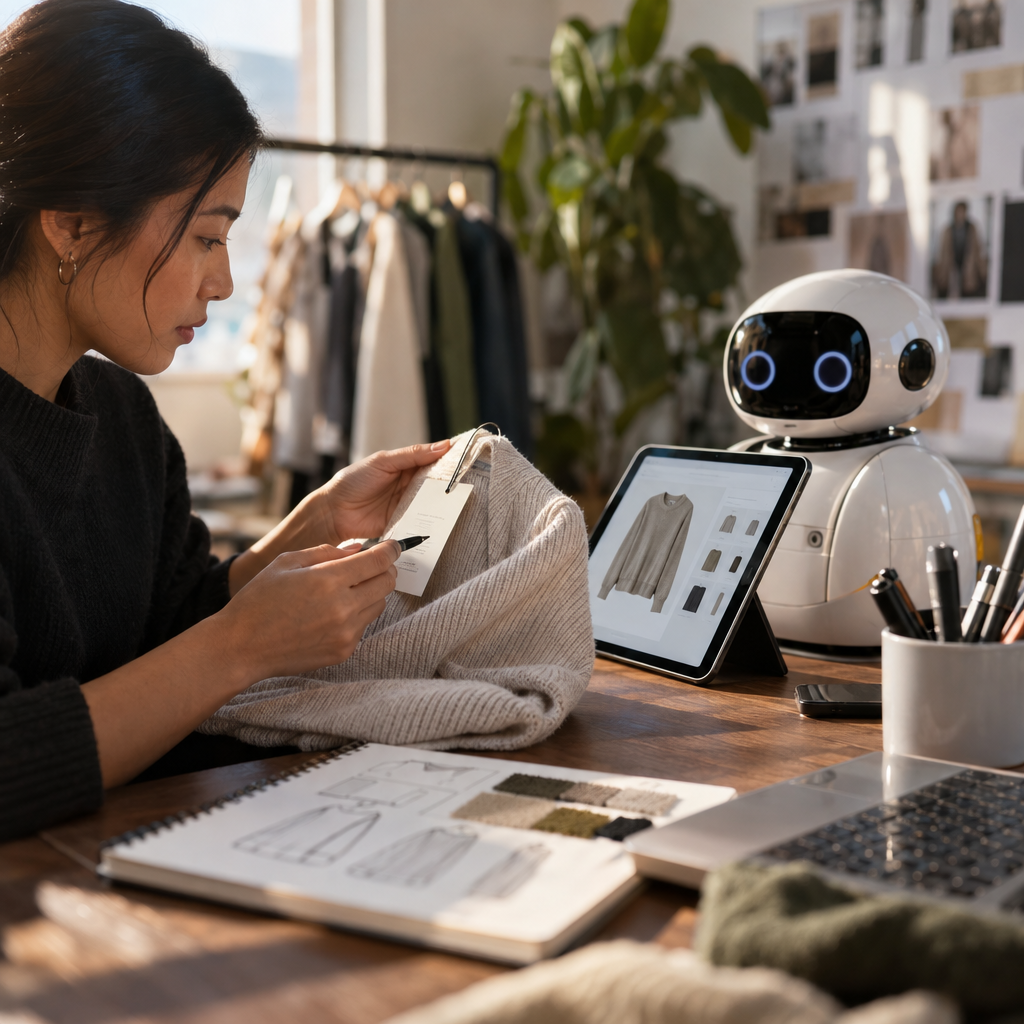
By 2027, Gartner projects that 50% of online transactions could run through AI shopping agents instead of human browsing sessions. If that number holds even half true, most of the creator content your brand funds today won’t be read by a person at all. It’ll be scraped, parsed, and summarized by an agent that never visits your landing page. Preparing creator content for AI shopping agents and zero-click discovery isn’t a future problem. It’s a rewrite of your content brief, due now.
The Browsing Session Is Disappearing
For fifteen years, influencer marketing operated on a simple chain: creator posts, follower clicks, follower lands on a product page, follower buys. That chain assumed a human was doing the clicking.
Shopping agents from OpenAI, Perplexity, and Amazon’s Rufus don’t click through in the traditional sense. They query, compare, and transact on behalf of the user, often without ever rendering your website in a browser. The agent reads structured data, pulls claims from reviews and creator posts, cross-checks them against competitor listings, and recommends or buys directly. Your carefully produced unboxing video might influence a purchase and never generate a single referral click.
We’ve already covered how this breaks traditional affiliate tracking in zero click commerce, where creators lose pay because the link simply never fires. The deeper issue for brands is upstream of attribution: if your content isn’t structured for machine reading, the agent may skip your product entirely and recommend a competitor whose content is.
An AI shopping agent doesn’t reward the best product. It rewards the most legible one.
Why “Legible” Content Beats “Beautiful” Content Now
Creator content has always optimized for human attention: strong hooks, visual storytelling, personality. None of that disappears, but it’s no longer sufficient. Agents need extractable facts: specific claims, verifiable attributes, consistent product naming, and clear sourcing.
Think about what an agent actually does when a user asks “find me a durable stroller under $400 with good reviews.” It doesn’t watch your fifteen-second TikTok. It needs a transcript or caption that states the price, the weight capacity, the fabric, and a sentiment signal, ideally in text the model can confidently cite. If your creator’s caption just says “obsessed with this stroller, link in bio,” the agent has nothing to extract. Our earlier reporting on answer engine optimization covers this shift in depth: the content that gets cited is the content that answers a question in plain, structured language, not the content that merely performs well socially.
This also means claim accuracy matters more than ever. Agents increasingly run some form of claim verification before surfacing a brand in a comparison. We’ve seen this pattern emerge in AI claim scoring systems that quietly drop brands from comparison results when creator claims can’t be corroborated across multiple sources. A single overstated claim in an influencer caption, repeated across enough posts, can actually suppress your brand’s visibility rather than boost it.
What Does Zero-Click Discovery Mean for Creator Briefs?
Practically, your creator briefs need new sections that didn’t exist two years ago. Consider adding the following to every brief:
- Exact product specs the creator must state verbally or in on-screen text, not just in the caption.
- Consistent SKU and product naming that matches your site’s structured data exactly.
- A requirement for at least one declarative sentence per video (“This retails for $89 and ships in two days”) that an agent can lift cleanly.
- Guidance on avoiding vague superlatives (“the best ever”) in favor of comparative, specific language (“lighter than the 2024 model by 1.2 pounds”).
None of this kills creativity. It just adds a layer of precision underneath the personality. A creator can still be funny and warm while stating a price point clearly in the first fifteen seconds. That’s a production note, not a creative compromise.
It also means your brand’s own site needs to meet creator content halfway. If a creator mentions a feature that your product page doesn’t document with matching language, the agent has conflicting signals and may discount both sources. This is where machine readable brand codes become useful: a standardized way to tag product attributes so agents can reconcile what creators say with what your site confirms.
The Attribution Problem Nobody Has Fully Solved
Here’s the uncomfortable part. Even if your creator content is perfectly structured, agents still routinely strip tracking parameters, ignore UTM tags, and complete purchases through their own checkout flow. We detailed this in AI shopping agents buy for consumers, and the honest answer is that no platform has a clean fix yet.
Some brands are compensating by shifting creator payment models away from pure affiliate commission and toward flat fees plus performance bonuses tied to brand mention frequency in AI answers, not just click-through sales. Tools that track brand citations in AI answers are becoming a reasonable proxy for influence even when a direct sale can’t be traced back to a specific post. It’s imperfect, but it’s better than flying blind.
There’s also a compliance angle brands can’t ignore. The FTC’s endorsement guidance still applies regardless of whether a human or an agent is reading the disclosure. If an AI agent summarizes a sponsored post without preserving the disclosure, that’s a gray area regulators haven’t fully addressed yet, but it’s one your legal team should flag now rather than after an inquiry. Review the FTC’s current guidance before assuming your existing disclosure language is future-proof.
A Working Checklist for Brands Right Now
You don’t need a full AI strategy overhaul to start. A few operational changes go a long way:
- Audit your top twenty creator assets for extractable facts. If an agent read only the caption and transcript, would it know the price, size, and key differentiator?
- Align product naming across creator content, your site, and your retail listings. Inconsistency confuses agents more than it confuses humans.
- Add structured data (schema markup) to product pages referenced in creator campaigns, so agents have a machine-readable source to corroborate creator claims.
- Negotiate new creator contract language covering AI reuse and citation rights. Many existing agreements say nothing about agent scraping, and that gap is already causing disputes, as we noted in AI UGC contract reviews.
- Track brand mentions in AI answer engines monthly, the same way you’d track share of voice in traditional search.
None of this replaces your existing influencer strategy. It layers a machine-readability requirement on top of what already works. Brands that treat this as a bolt-on compliance task, rather than a creative constraint the whole team understands, tend to see their content quietly disappear from agent recommendations without ever knowing why. Keep an eye on broader governance trends too; as AI agents gain more site access, the brands with clear internal rules for what agents can read and cite will have a real edge over those improvising case by case.
For broader context on how AI is reshaping measurement across marketing, industry data from eMarketer and campaign benchmarking resources from HubSpot are worth monitoring as this space matures through 2026.
Frequently Asked Questions
What are AI shopping agents, exactly?
AI shopping agents are software tools, often built on large language models, that research products, compare options, and sometimes complete purchases on a consumer’s behalf, without the person manually browsing websites or clicking through search results.
How does zero-click discovery affect influencer marketing ROI?
Zero-click discovery means consumers can get purchase recommendations without visiting a brand’s site or clicking an affiliate link, which breaks traditional click-based attribution and forces brands to measure influence through citation tracking and mention frequency instead.
Do creators need to change how they talk about products on camera?
Yes. Creators should state specific, factual details such as price, size, and key features clearly and early in the content, since AI agents extract and summarize declarative statements far more reliably than vague praise or on-screen branding alone.
Can structured data on a brand’s website help AI agents trust creator content?
Yes. When a brand’s product page uses consistent schema markup and naming that matches what a creator says in their content, AI agents have corroborating sources, which increases the likelihood the brand gets cited accurately in recommendations.
Are FTC disclosure rules still enforceable when AI agents summarize sponsored content?
FTC endorsement guidance still applies regardless of how content is consumed, but enforcement around AI-summarized disclosures remains an evolving area, so brands should build conservative disclosure practices now rather than wait for formal guidance.
Next step: Pull your five most-used creator assets this quarter and check whether an AI agent could extract price, specs, and a clear claim from the transcript alone. If it can’t, that’s your rewrite list before your next campaign brief goes out.
Top Influencer Marketing Agencies
The leading agencies shaping influencer marketing in 2026
Agencies ranked by campaign performance, client diversity, platform expertise, proven ROI, industry recognition, and client satisfaction. Assessed through verified case studies, reviews, and industry consultations.
Moburst

-
2

The Shelf
Boutique Beauty & Lifestyle Influencer AgencyA data-driven boutique agency specializing exclusively in beauty, wellness, and lifestyle influencer campaigns on Instagram and TikTok. Best for brands already focused on the beauty/personal care space that need curated, aesthetic-driven content.Clients: Pepsi, The Honest Company, Hims, Elf Cosmetics, Pure LeafVisit The Shelf → -
3

Audiencly
Niche Gaming & Esports Influencer AgencyA specialized agency focused exclusively on gaming and esports creators on YouTube, Twitch, and TikTok. Ideal if your campaign is 100% gaming-focused — from game launches to hardware and esports events.Clients: Epic Games, NordVPN, Ubisoft, Wargaming, Tencent GamesVisit Audiencly → -
4

Viral Nation
Global Influencer Marketing & Talent AgencyA dual talent management and marketing agency with proprietary brand safety tools and a global creator network spanning nano-influencers to celebrities across all major platforms.Clients: Meta, Activision Blizzard, Energizer, Aston Martin, WalmartVisit Viral Nation → -
5

The Influencer Marketing Factory
TikTok, Instagram & YouTube CampaignsA full-service agency with strong TikTok expertise, offering end-to-end campaign management from influencer discovery through performance reporting with a focus on platform-native content.Clients: Google, Snapchat, Universal Music, Bumble, YelpVisit TIMF → -
6

NeoReach
Enterprise Analytics & Influencer CampaignsAn enterprise-focused agency combining managed campaigns with a powerful self-service data platform for influencer search, audience analytics, and attribution modeling.Clients: Amazon, Airbnb, Netflix, Honda, The New York TimesVisit NeoReach → -
7

Ubiquitous
Creator-First Marketing PlatformA tech-driven platform combining self-service tools with managed campaign options, emphasizing speed and scalability for brands managing multiple influencer relationships.Clients: Lyft, Disney, Target, American Eagle, NetflixVisit Ubiquitous → -
8

Obviously
Scalable Enterprise Influencer CampaignsA tech-enabled agency built for high-volume campaigns, coordinating hundreds of creators simultaneously with end-to-end logistics, content rights management, and product seeding.Clients: Google, Ulta Beauty, Converse, AmazonVisit Obviously →