


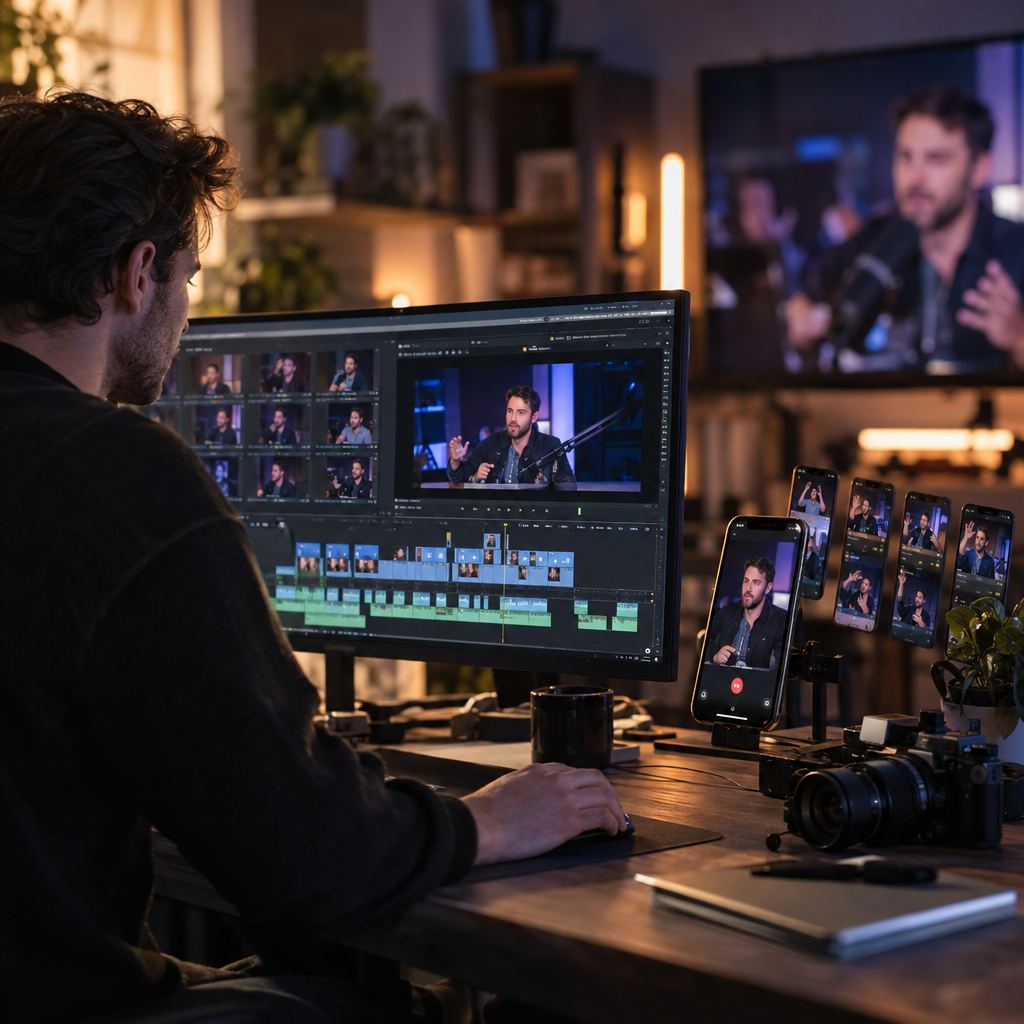
Twitch and YouTube streamers generate hundreds of hours of raw footage every month, and most of it dies the moment the stream ends. Meanwhile, brands are paying premium CPMs for polished vertical video that performs worse than a thirty-second clip ripped straight from a live broadcast. A clipping content strategy flips that math: it treats long-form streams as a raw material pipeline, turning hours of unscripted content into dozens of short clips that routinely land CPMs between one and five dollars. That’s not a typo. That’s the new arbitrage.
Why Clipped Content Beats Produced Shorts on Cost
Produced vertical video, the kind with lighting kits, scripts, and a creative brief, often runs brands eight to fifteen dollars in CPM once you factor production cost into the media spend. Clipped content skips almost all of that overhead. The footage already exists. The personality is already established. The audience trust is already baked in. You’re not paying for creation, you’re paying for curation and distribution.
That cost structure is why performance marketers quietly shifted budget toward clipping programs over the last two years. Platforms like TikTok and YouTube Shorts reward native-feeling, unpolished content with better organic reach, which compounds the paid efficiency. A clip that feels ripped from a live stream reads as authentic, not as an ad, and that perception alone can cut CPMs in half.
Brands running clipping programs report CPMs in the one to five dollar range because the content inherits an audience’s existing trust instead of building it from zero.
What Counts as “Clipping” in a Modern Content Strategy
Clipping isn’t just screen recording a stream and uploading it. A real clipping content strategy has three layers:
- Source selection: identifying streamers or long-form creators whose audience overlaps with your target buyer.
- Clip extraction: pulling the most emotionally charged, surprising, or quotable moments, usually 15 to 60 seconds.
- Reformatting and distribution: adding captions, vertical crops, and brand placement, then pushing across TikTok, Reels, and Shorts simultaneously.
This is different from traditional UGC sourcing. You’re not briefing a creator to make something new. You’re mining content that already exists and already has proof of engagement, since the original stream’s chat reactions and viewership spikes tell you exactly which moments will travel.
Where the Budget Actually Goes
A lean clipping program usually splits spend three ways: a flat or rev-share fee to the source creator for usage rights, a per-clip rate to clippers (often five to fifty dollars per approved clip depending on volume and quality), and media spend to amplify the top-performing clips. The clippers themselves are frequently a decentralized network, sometimes freelancers recruited through Discord communities built specifically around clipping contests for large streamers.
Brands entering this space for the first time often underestimate how much the clipper layer matters. A mediocre moment edited by a skilled clipper with sharp captioning and pacing will outperform a great moment poorly cut. This is less about the raw material and more about compression. You’re taking twenty minutes of stream and finding the eight seconds that make someone stop scrolling, a discipline not unlike the hook testing covered in thumb stop metrics.
Building the Source Relationship
You can’t clip what you don’t have rights to. Smart brands negotiate usage rights upfront, either through direct creator partnerships or through platforms that aggregate streamer licensing. Twitch and Kick streamers are increasingly open to flat licensing deals because clipping drives discovery back to their channel, a win-win that didn’t exist five years ago when clipping was mostly unauthorized fan activity.
The negotiation usually covers three things: usage window, platform exclusivity, and whether the brand can edit in product placement or only run clips as-is with a post-roll CTA. Get this in writing. Verbal handshake deals in the creator economy have a way of becoming expensive legal problems once a clip goes viral and the original streamer wants a bigger cut.
Measuring What Actually Matters
CPM is the headline metric, but it’s a vanity number if the clips aren’t driving action. The brands winning at this treat clipping like a funnel test, not a brand awareness play. They track:
- View-through rate past three seconds (the real indicator of hook strength)
- Comment sentiment (is the audience talking about the brand or just the streamer moment?)
- Click-through on the link in bio or pinned comment
- Branded search lift in the 48 hours after a clip spikes
That last one matters more than people think. A clip doesn’t need a CTA to drive conversion if it plants curiosity hard enough, a dynamic explored in depth in branded search lift strategies. Clipping content often skips the direct-response step entirely and just shows up as a bump in branded search the next morning.
Retention is the other number to watch closely. Because clips are short and already front-loaded with a strong moment, retention curves tend to look different than produced content. If you see a sharp drop at the five-second mark, the clip was cut wrong, not too short. The same retention logic that governs scripted hooks applies here, and it’s worth reviewing hook and retention scripts to understand what separates a clip that holds attention from one that gets skipped.
The Compliance Gap Nobody Talks About
Here’s where clipping gets risky. Because the content is pulled from a live, unscripted source, disclosure and brand safety controls are harder to enforce than in a produced ad. If a streamer says something off-brand mid-clip, or if the clip is extracted in a way that misrepresents the original context, brands own that liability the moment they amplify it with paid media.
The FTC’s endorsement guidelines still apply even when the content wasn’t originally created as an ad. If a brand pays to boost a clip and adds a CTA, that’s material connection, and it needs disclosure just like any other sponsored post. Review the FTC’s endorsement guidance before scaling a clipping program, because “we didn’t script it” is not a defense regulators accept.
Paid amplification of a clip triggers the same disclosure obligations as a scripted ad, regardless of whether the brand controlled the original content.
There’s also a brand safety layer specific to clipping: context collapse. A clip taken out of a two-hour stream can read completely differently than the full broadcast intended. Smart teams build a review step where a human watches the full source segment, not just the extracted clip, before approving it for paid spend.
Scaling Without Losing Quality Control
The temptation with a one to five dollar CPM is to flood the zone. More clips, more creators, more platforms. But volume without a filtering system produces noise, and noise erodes the trust that made clipping cheap in the first place. The programs that scale well build a tiered approval system: junior clippers submit raw cuts, a senior editor or brand lead approves the top 20%, and only approved clips get paid media behind them.
This mirrors the lessons from high-volume UGC operations more broadly. Scaling content without a clone-feel or quality collapse requires the same structural discipline described in high volume UGC series planning. The channel is different, the principle isn’t: throughput only works with a filter.
Some brands are also pairing clipping with faceless or anonymized creator formats to reduce reputational exposure, especially in categories like finance or health where a single streamer controversy can taint an entire campaign. That approach, covered in faceless creator channels, works well alongside clipping because it diversifies the risk away from any one personality.
Operationally, treat clip performance like you’d track any ambassador relationship, revenue and retention first, vanity metrics second. The same tracking logic used in ambassador content calendars applies directly here: a clipping dashboard should show cost per acquisition by source creator, not just views per clip.
Tools and Platforms Worth Knowing
You don’t need custom software to start. Most clipping programs run on a combination of a clip-mining tool (to flag high-engagement moments in VODs), a captioning and editing tool for fast vertical reformatting, and a media buying platform to push the winners. TikTok Ads Manager and Meta Business Suite both support the kind of rapid, low-budget testing clipping programs rely on, since you’re often running ten small-spend tests to find the two clips worth scaling.
For tracking engagement trends across the clipped content ecosystem, platforms like Sprout Social and benchmark data from eMarketer help contextualize whether your CPMs are actually beating category norms or just riding a temporary algorithm favor.
Next step: pick one streamer or long-form creator whose audience already overlaps your buyer, license a month of clipping rights, and run a small-budget test across ten clips before committing to a full program. The one to five dollar CPM is real, but only if the filtering and compliance steps happen before the media spend, not after.
Frequently Asked Questions
What is a clipping content strategy?
A clipping content strategy involves extracting short, high-engagement moments from long-form streams or videos and reformatting them as vertical shorts for platforms like TikTok, Reels, and YouTube Shorts, typically paired with licensing agreements and paid amplification.
Why do clipped shorts achieve lower CPMs than produced content?
Clipped shorts skip production costs entirely and inherit an existing audience’s trust and attention, which makes them read as native content rather than ads. This authenticity combined with zero creation overhead is what drives CPMs down to the one to five dollar range.
Do brands need permission to use clips from a streamer’s broadcast?
Yes. Usage rights should be licensed directly from the original creator or through a platform that manages streamer licensing. Using clips without permission, especially for paid amplification, creates legal exposure.
Does the FTC require disclosure on clipped content?
Yes. If a brand pays to boost a clip or adds a call to action, that counts as a material connection under FTC endorsement guidelines, regardless of whether the brand scripted the original content.
How do you measure success in a clipping program?
Track view-through rate past three seconds, comment sentiment, click-through rate, and branded search lift rather than relying on CPM or view count alone, since those headline numbers don’t confirm the clip drove any business outcome.
What’s the biggest risk in scaling a clipping program?
Context collapse. A clip pulled from a longer broadcast can misrepresent the original intent, creating brand safety issues. A human review of the full source segment before approving paid spend is the standard safeguard.
Top Influencer Marketing Agencies
The leading agencies shaping influencer marketing in 2026
Agencies ranked by campaign performance, client diversity, platform expertise, proven ROI, industry recognition, and client satisfaction. Assessed through verified case studies, reviews, and industry consultations.
Moburst

-
2

The Shelf
Boutique Beauty & Lifestyle Influencer AgencyA data-driven boutique agency specializing exclusively in beauty, wellness, and lifestyle influencer campaigns on Instagram and TikTok. Best for brands already focused on the beauty/personal care space that need curated, aesthetic-driven content.Clients: Pepsi, The Honest Company, Hims, Elf Cosmetics, Pure LeafVisit The Shelf → -
3

Audiencly
Niche Gaming & Esports Influencer AgencyA specialized agency focused exclusively on gaming and esports creators on YouTube, Twitch, and TikTok. Ideal if your campaign is 100% gaming-focused — from game launches to hardware and esports events.Clients: Epic Games, NordVPN, Ubisoft, Wargaming, Tencent GamesVisit Audiencly → -
4

Viral Nation
Global Influencer Marketing & Talent AgencyA dual talent management and marketing agency with proprietary brand safety tools and a global creator network spanning nano-influencers to celebrities across all major platforms.Clients: Meta, Activision Blizzard, Energizer, Aston Martin, WalmartVisit Viral Nation → -
5

The Influencer Marketing Factory
TikTok, Instagram & YouTube CampaignsA full-service agency with strong TikTok expertise, offering end-to-end campaign management from influencer discovery through performance reporting with a focus on platform-native content.Clients: Google, Snapchat, Universal Music, Bumble, YelpVisit TIMF → -
6

NeoReach
Enterprise Analytics & Influencer CampaignsAn enterprise-focused agency combining managed campaigns with a powerful self-service data platform for influencer search, audience analytics, and attribution modeling.Clients: Amazon, Airbnb, Netflix, Honda, The New York TimesVisit NeoReach → -
7

Ubiquitous
Creator-First Marketing PlatformA tech-driven platform combining self-service tools with managed campaign options, emphasizing speed and scalability for brands managing multiple influencer relationships.Clients: Lyft, Disney, Target, American Eagle, NetflixVisit Ubiquitous → -
8

Obviously
Scalable Enterprise Influencer CampaignsA tech-enabled agency built for high-volume campaigns, coordinating hundreds of creators simultaneously with end-to-end logistics, content rights management, and product seeding.Clients: Google, Ulta Beauty, Converse, AmazonVisit Obviously →