


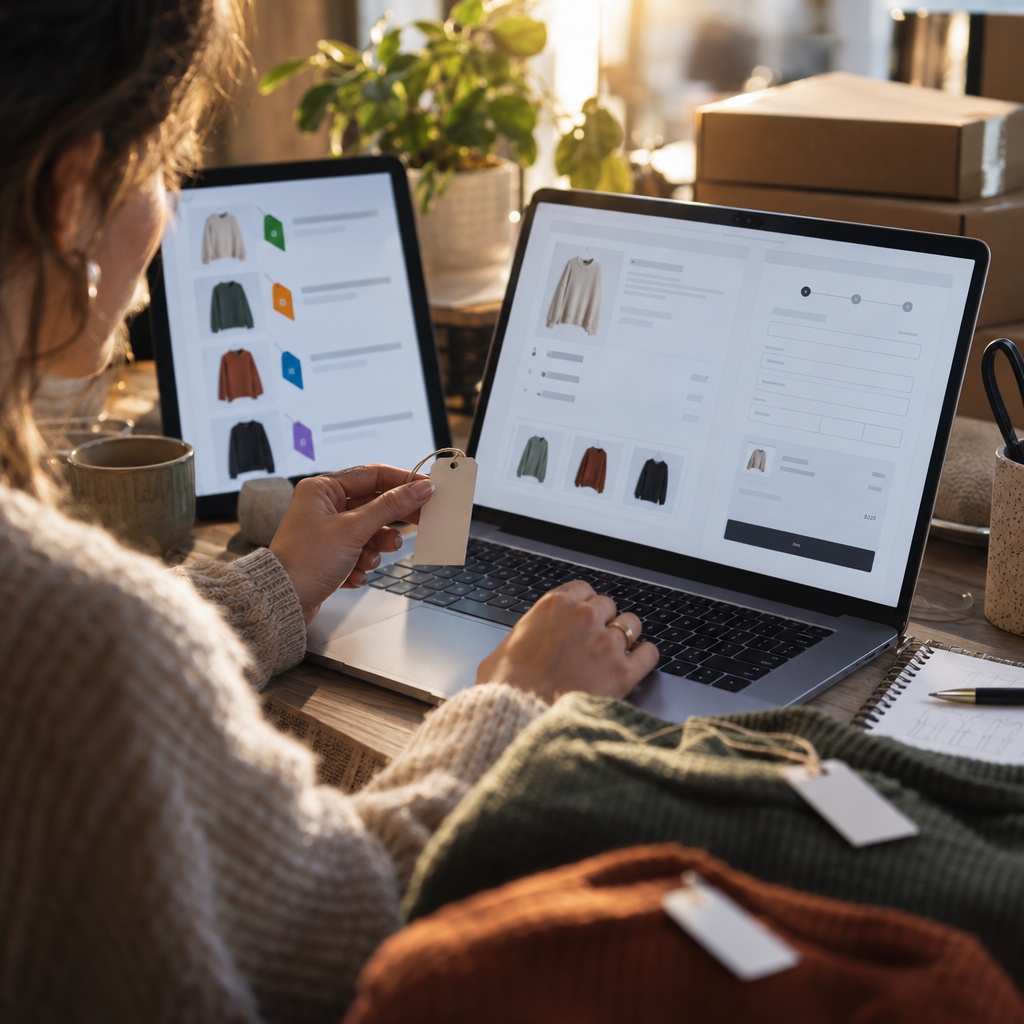
73% of TikTok users say the platform inspired an unplanned purchase, and Instagram’s checkout now lets them buy without ever leaving the app. If your shoppable video still treats the product link as an afterthought tacked onto a caption, you’re leaving revenue on the table. Designing for native checkout is a different discipline than designing for click-through, and most brand teams haven’t caught up yet.
This isn’t about slapping a “Shop Now” sticker on existing UGC. It requires rethinking pacing, framing, and even where you place your hook, because the purchase decision now happens inside the video experience instead of after it.
Why Native Checkout Changes the Creative Brief
For years, shoppable video was a two-step process: hook the viewer, then hope they tapped a swipe-up link or bio URL that dumped them onto a slow-loading product page. Attrition at that handoff was brutal. Every extra tap cost you buyers.
TikTok Shop and Instagram’s in-feed checkout collapsed that funnel. Now the product card, the add-to-cart button, and sometimes the entire purchase flow live inside the same vertical frame as the content. That means your video isn’t just a top-of-funnel teaser anymore. It’s doing the job a landing page used to do.
When checkout lives inside the video, every second of runtime is either building purchase confidence or burning it. There’s no second chance on a separate landing page to recover a weak pitch.
That shift demands creative briefs that account for tap zones, product card placement, and the exact moment a viewer’s thumb is most likely to move toward “buy” instead of “scroll.”
The Three-Second Rule Still Applies, But So Does the Last Three Seconds
Everyone obsesses over the hook. Fair enough, since thumb stop metrics still predict most of your watch-through rate. But shoppable video adds a second pressure point: the closing beats, where the product card actually appears on screen. If your CTA shows up before the viewer has any reason to want the product, you’ve wasted the impression. If it shows up too late, you’ve already lost the impulse window.
Designing the Shoppable Frame: Where Product Cards Actually Sit
Both platforms auto-place product tags in predictable zones, usually bottom third or as a floating pill near the caption. Smart creative teams now shoot with that overlay zone treated as dead space from the start, the same way broadcast editors used to leave room for lower-third graphics.
- Keep primary product demonstration in the upper two-thirds of the frame so the tag doesn’t block the proof moment.
- Avoid dense on-screen text in the bottom third during the final five seconds, when the shop card is most likely to auto-expand.
- Use directional cues (a glance, a hand gesture, a pause) to nudge the eye toward the tag without feeling like a forced ad read.
- Test both platforms separately. Instagram’s checkout card renders differently than TikTok Shop’s, and a frame that looks clean on one can look cramped on the other. The shoppable video specs for cross-platform shoots are worth building into your production checklist before day one.
Pacing for a Purchase, Not Just a View
Standard retention scripting optimizes for completion rate. Shoppable video optimizes for something harder to measure: purchase intent at a specific timestamp. That means slowing down slightly at the moment of product reveal, even if it costs you a few percentage points of watch-through.
Brands running unboxing to review arcs have found that a one-second pause before the price reveal actually increases add-to-cart rate, because it mirrors the natural beat of a real recommendation. Rushing past the price feels like you’re hiding something.
What Actually Converts Inside the App
Not every content format translates to native checkout equally well. Here’s what’s performing in practice right now, based on patterns across brand case studies and creator agency reporting.
- Before and after demonstrations. Visual proof paired with a tappable card closes faster than a verbal pitch. The structure behind before and after scripts maps almost perfectly onto the checkout moment, since the transformation itself becomes the CTA.
- Get the look and styling content. Fashion and beauty creators tagging multiple SKUs in one video benefit enormously from native checkout, since viewers can buy the exact item shown instead of guessing which product matches. See how get the look videos are structured for multi-tag performance.
- Comparison formats. Viewers arriving at a comparison video are already in decision mode. A product card at the resolution point converts at a noticeably higher rate than cold discovery content, which is why comparison format videos remain a reliable shoppable template.
- POV and discovery hooks. These work well for cold traffic but need a longer runway before the tag appears, since the viewer needs time to orient before being asked to buy.
What doesn’t convert as well? Pure entertainment formats with the product bolted on at the end. The intent mismatch is too wide. Viewers who came for a joke rarely pivot to a buying decision in the final two seconds, no matter how prominent the tag is.
Compliance and Disclosure Inside a Shoppable Frame
Here’s where a lot of brand teams get sloppy. Native checkout doesn’t change your disclosure obligations, it just makes them easier to bury. The FTC’s endorsement guidance still requires clear and conspicuous disclosure of material connections, and a tiny #ad tag buried under a product card overlay doesn’t meet that bar in most interpretations.
Build disclosure into the verbal script, not just the on-screen text. If your product card is sitting in the same visual zone as your required disclosure language, you’re asking for overlap issues on smaller devices. Run a device check on both a budget Android screen and an iPhone before launch, because what looks clean on a production monitor can get crowded fast on a six-inch display.
A shoppable video that converts but fails disclosure review isn’t a win, it’s a liability sitting in your content library waiting to get flagged.
Measuring What Actually Matters
Standard engagement metrics (views, likes, shares) tell you almost nothing about checkout performance. You need platform-native commerce analytics: add-to-cart rate from video, checkout completion rate, and time-to-purchase from first view. TikTok Shop’s seller dashboard and Meta’s commerce manager both surface this data, but most teams still default to reporting view counts because that’s what they’re used to pulling.
Track branded search lift alongside direct checkout numbers too. Some shoppable video drives purchases outside the app entirely, especially for higher-consideration categories where buyers want to research before committing inside a social checkout flow.
According to eMarketer’s social commerce research, social commerce spending continues to climb faster than overall e-commerce growth, which means the brands building measurement infrastructure now will have a real reporting advantage within a few quarters.
Production Workflow: One Shoot, Multiple Commerce Formats
You don’t need separate productions for TikTok Shop and Instagram checkout, but you do need to shoot with both tag placements and both aspect ratio behaviors in mind. A single session can generate multi angle creative that covers discovery content, comparison content, and a dedicated shoppable cut, all from the same raw footage.
The efficiency play here matters more than it sounds. Agencies running lean influencer budgets are increasingly structuring briefs around one demo script, three native edits logic: shoot once, edit for platform-specific checkout behavior, and avoid re-briefing creators every time a new placement spec rolls out.
Platforms themselves offer guidance worth checking before every major creative refresh. TikTok’s advertising resources and Meta’s business tools documentation update tag placement specs regularly, and a frame that was compliant last quarter can get clipped by a new UI element without warning.
FAQs
Frequently Asked Questions
What is shoppable video on TikTok and Instagram?
Shoppable video is content with embedded product tags that let viewers purchase directly inside the app, through TikTok Shop or Instagram’s native checkout, without being redirected to an external website.
Does native checkout actually increase conversion rates compared to link-outs?
Generally yes, because it removes the friction of leaving the app, switching to a browser, and waiting for a page to load. Brands typically see higher add-to-cart rates when the purchase path stays inside the native experience, though results vary by product category and price point.
Where should the product tag appear in the video frame?
Most platforms auto-place tags in the bottom third of the screen. Design your shot composition to keep key product demonstration in the upper two-thirds so the tag doesn’t obscure the proof moment viewers need before buying.
Do disclosure requirements change for shoppable content?
No. Material connection disclosures still need to be clear and conspicuous regardless of whether the content includes native checkout. Build spoken disclosure into the script rather than relying solely on small on-screen text that can get crowded by product cards.
Can one video work for both TikTok Shop and Instagram checkout?
Often yes with minor edits, but tag placement and card rendering differ between platforms. Test the final cut on both platforms before launch to confirm the overlay doesn’t block key visual or disclosure elements.
What metrics matter most for shoppable video performance?
Add-to-cart rate from video, checkout completion rate, and time-to-purchase matter far more than views or likes. Standard engagement metrics don’t correlate reliably with actual commerce outcomes.
Start your next shoppable brief by designing the closing five seconds first, then build the hook backward from there. The purchase moment, not the scroll-stop moment, is now the part of your video doing the heaviest lifting.
Frequently Asked Questions
What is shoppable video on TikTok and Instagram?
Shoppable video is content with embedded product tags that let viewers purchase directly inside the app, through TikTok Shop or Instagram’s native checkout, without being redirected to an external website.
Does native checkout actually increase conversion rates compared to link-outs?
Generally yes, because it removes the friction of leaving the app, switching to a browser, and waiting for a page to load. Brands typically see higher add-to-cart rates when the purchase path stays inside the native experience, though results vary by product category and price point.
Where should the product tag appear in the video frame?
Most platforms auto-place tags in the bottom third of the screen. Design your shot composition to keep key product demonstration in the upper two-thirds so the tag doesn’t obscure the proof moment viewers need before buying.
Do disclosure requirements change for shoppable content?
No. Material connection disclosures still need to be clear and conspicuous regardless of whether the content includes native checkout. Build spoken disclosure into the script rather than relying solely on small on-screen text that can get crowded by product cards.
Can one video work for both TikTok Shop and Instagram checkout?
Often yes with minor edits, but tag placement and card rendering differ between platforms. Test the final cut on both platforms before launch to confirm the overlay doesn’t block key visual or disclosure elements.
What metrics matter most for shoppable video performance?
Add-to-cart rate from video, checkout completion rate, and time-to-purchase matter far more than views or likes. Standard engagement metrics don’t correlate reliably with actual commerce outcomes.
Top Influencer Marketing Agencies
The leading agencies shaping influencer marketing in 2026
Agencies ranked by campaign performance, client diversity, platform expertise, proven ROI, industry recognition, and client satisfaction. Assessed through verified case studies, reviews, and industry consultations.
Moburst

-
2

The Shelf
Boutique Beauty & Lifestyle Influencer AgencyA data-driven boutique agency specializing exclusively in beauty, wellness, and lifestyle influencer campaigns on Instagram and TikTok. Best for brands already focused on the beauty/personal care space that need curated, aesthetic-driven content.Clients: Pepsi, The Honest Company, Hims, Elf Cosmetics, Pure LeafVisit The Shelf → -
3

Audiencly
Niche Gaming & Esports Influencer AgencyA specialized agency focused exclusively on gaming and esports creators on YouTube, Twitch, and TikTok. Ideal if your campaign is 100% gaming-focused — from game launches to hardware and esports events.Clients: Epic Games, NordVPN, Ubisoft, Wargaming, Tencent GamesVisit Audiencly → -
4

Viral Nation
Global Influencer Marketing & Talent AgencyA dual talent management and marketing agency with proprietary brand safety tools and a global creator network spanning nano-influencers to celebrities across all major platforms.Clients: Meta, Activision Blizzard, Energizer, Aston Martin, WalmartVisit Viral Nation → -
5

The Influencer Marketing Factory
TikTok, Instagram & YouTube CampaignsA full-service agency with strong TikTok expertise, offering end-to-end campaign management from influencer discovery through performance reporting with a focus on platform-native content.Clients: Google, Snapchat, Universal Music, Bumble, YelpVisit TIMF → -
6

NeoReach
Enterprise Analytics & Influencer CampaignsAn enterprise-focused agency combining managed campaigns with a powerful self-service data platform for influencer search, audience analytics, and attribution modeling.Clients: Amazon, Airbnb, Netflix, Honda, The New York TimesVisit NeoReach → -
7

Ubiquitous
Creator-First Marketing PlatformA tech-driven platform combining self-service tools with managed campaign options, emphasizing speed and scalability for brands managing multiple influencer relationships.Clients: Lyft, Disney, Target, American Eagle, NetflixVisit Ubiquitous → -
8

Obviously
Scalable Enterprise Influencer CampaignsA tech-enabled agency built for high-volume campaigns, coordinating hundreds of creators simultaneously with end-to-end logistics, content rights management, and product seeding.Clients: Google, Ulta Beauty, Converse, AmazonVisit Obviously →